Game Publishing reports and market data
Documents

Marketing Indie Games as a Developer vs. Publisher
The primary driver of commercial success in the indie game sector is the inherent quality and conceptual appeal of a title, rather than marketing efforts alone.
- Stray Fawn Studio successfully validated their early game concepts by running crowdfunding campaigns, notably raising 75k for their first title, which provided the initial capital to pay developers a modest wage.
- Long Early Access periods can lead to market fatigue; for one title, a 2.5-year Early Access phase resulted in a 1.0 release that failed to generate significant renewed interest, even after an influencer campaign targeting 18,000 contacts.
- Marketing efficiency is significantly higher when a game has mass appeal, as it reduces the need for manual, labor-intensive efforts to 'dig for attention' in niche communities.

What Every Indie Dev Can Learn from Balatro’s Success
The commercial performance of Balatro serves as a definitive case study for the viability of premium-priced indie titles in a market increasingly saturated by free-to-play models.
- Balatro’s success demonstrates that a premium, non-monetized model can thrive by prioritizing a complete, consistent player experience over the grinding or segmented loops typical of free-to-play games.
- The game achieved high engagement and virality by focusing on a compelling, skill-based core loop that encourages players to share their high-score achievements.
- Authentic developer engagement is a critical marketing asset; the developer 'Local Thunk' maintained a consistent, transparent persona on platforms like X and Discord, which helped build player trust and community resonance.
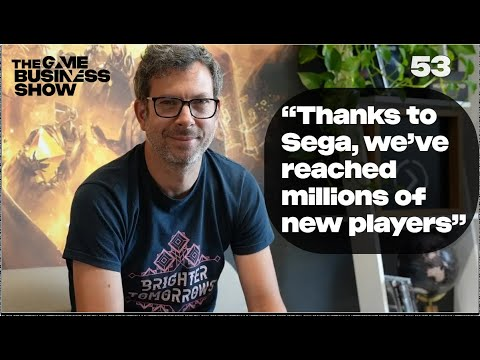
Life after Sega: Can Relic and Amplitude rejuvenate strategy games
Relic Entertainment and Amplitude Studios are navigating a pivotal transition following their departure from Sega, marking a broader industry shift toward independent agility within the strategy game sector.
- Relic Entertainment and Amplitude Studios have transitioned to independent operations following their departure from Sega to prioritize operational autonomy and community-focused development.
- Relic Entertainment is implementing a tiered production system that separates flagship titles from smaller, experimental projects under the 'Relic Labs' initiative to reduce financial risk and overhead.
- Amplitude Studios is maintaining its focus on the 4X strategy genre with a dedicated team of approximately 170 professionals, prioritizing deep engagement with its existing player base over mass-market expansion.

UA Financing Reshapes Mobile Publishing with Tilting Point
The mobile gaming industry is undergoing a fundamental transformation, shifting away from traditional third-party publishing models toward flexible, data-centric financing and strategic studio integration.
- Tilting Point launched a $150M user acquisition (UA) fund to provide non-dilutive, risk-sharing capital to mobile developers, allowing studios to scale live titles without sacrificing equity.
- UA financing functions as a predictable, capped-fee model where the publisher funds future cohorts and takes a small, fixed percentage of revenue, leaving the remaining upside to the developer.
- Tilting Point has shifted its business model from third-party publishing to a dual-pillar strategy focused on UA financing and first-party acquisitions of independent studios.
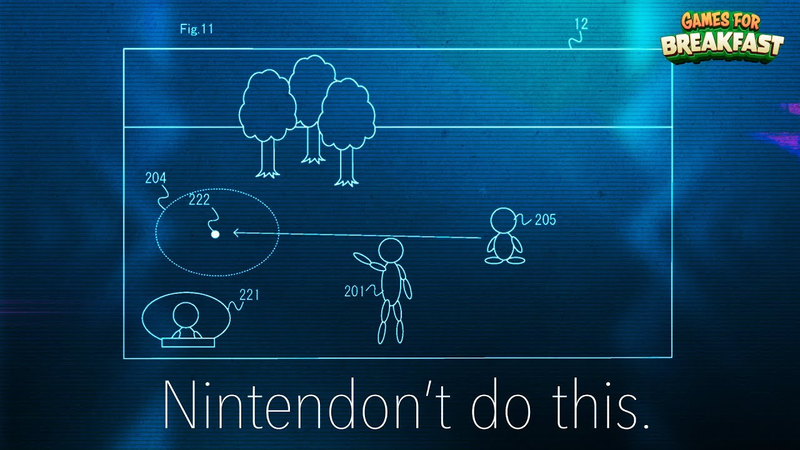
Pokemon's Patent Problem, Virtual Boy Returns, and Borderlands 4's PC Launch | Games For Breakfast
The contemporary gaming landscape is currently defined by a tension between legacy preservation, aggressive monetization, and the disruptive influence of emerging technologies.
- Nintendo is facing backlash for aggressive monetization strategies in the Pokémon franchise, specifically the use of subscription-gated content and time-limited competitive seasons.
- Nintendo has secured a broad U.S. patent for core summoning mechanics, raising industry concerns that the company may use the filing to stifle independent developers through litigation.
- The PC launch of Borderlands 4 suffered from significant technical instability, serving as a prominent example of the risks associated with releasing underbaked software.

TWIG #348 Roblox’s Big Bet, Blizzard's Mobile Chaos & Destiny Rising’s Flop
The global gaming industry is currently navigating a period of significant structural transition, characterized by the failure of high-fidelity mobile ports and the evolution of platform-based monetization.
- The global gaming industry is projected to grow by 3.4% to $188.8 billion in 2025, with console gaming serving as the primary growth driver at 5.5%.
- High-fidelity mobile ports of core franchises, such as Destiny Rising and Warframe Mobile, are failing due to prohibitive user acquisition costs and poor audience alignment, signaling that outsourcing mobile development is no longer a reliable growth strategy.
- Roblox is aggressively increasing developer payouts and introducing social features like Roblox Moments to boost platform GDP, though only 1% of creators on the platform currently achieve successful monetization.
Call of Duty Movie Is Finally Happening!
The announcement of a live-action Call of Duty film, developed in partnership with Paramount, has sparked significant debate regarding the viability of transmedia strategies for mature, multiplayer-focused gaming franchises.
- Paramount is developing a live-action Call of Duty film, a move critics view as a reactive attempt to address the franchise's declining market share and internal studio instability.
- The project faces significant skepticism because the Call of Duty brand lacks the character-driven narrative depth and consistent identity found in successful adaptations like Super Mario or Sonic the Hedgehog.
- Industry analysts argue that the franchise's core appeal is rooted in competitive multiplayer mechanics and a 'military action hero' fantasy, which does not translate well to cinematic storytelling.

Battle of the Release Dates, Blizzard Sues Turtle WoW & Capcom Blames Sony | Games For Breakfast
The contemporary video game industry is defined by intense competition for player attention, where the release of "juggernaut" titles creates significant market volatility.
- The upcoming 2025 release of Grand Theft Auto 6 is expected to dominate the industry news cycle, forcing widespread recalibration of release calendars across the sector.
- High-demand launches like Silksong, which reached over 587,000 concurrent players, create significant market volatility and infrastructure strain that can overwhelm digital storefronts.
- Unlike the film industry, the high time investment required for video games makes direct competition a major threat to commercial success, forcing smaller studios to adopt agile strategies to avoid being overshadowed by juggernaut titles.

Marathon, Mayhem, and the State of AAA | 363
The contemporary AAA gaming landscape is undergoing a profound crisis characterized by bloated budgets, protracted development cycles, and a systemic loss of institutional knowledge.
- The AAA gaming sector is suffering from a systemic crisis defined by bloated budgets, protracted development cycles, and a loss of institutional knowledge that results in generic, risk-averse titles.
- Investor confidence in traditional high-budget, long-term development is waning, forcing a structural shift toward smaller, more agile teams and iterative, fun-focused projects like Astro Bot.
- A clear geographic divide has emerged, with studios in Japan, China, and Eastern Europe increasingly outperforming legacy Western publishers in creative cohesion and quality standards.
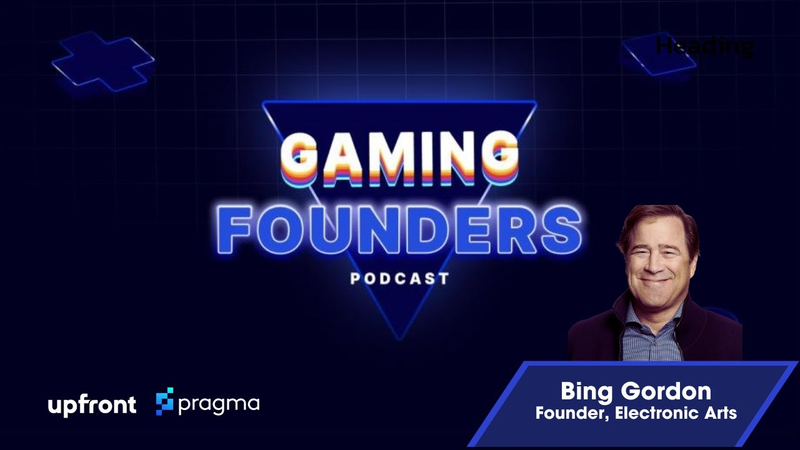
From Struggling Startup to Gaming Giant: Bing Gordon's EA Odyssey
Electronic Arts emerged in 1982 with the ambitious thesis that video games would eventually eclipse the music and film industries in cultural and economic scale.
- Electronic Arts reached an IPO in 1989, seven years after its 1982 founding, achieving $70 million in annual revenue during a period of rapid industry growth.
- Founders must prioritize mission-driven hiring, as employees who are not aligned with the core mission are likely to leave when the company faces inevitable scaling challenges.
- Product-market fit is the primary responsibility of a founder, and it should be defined by a computer-falsifiable metric rather than anecdotal evidence.
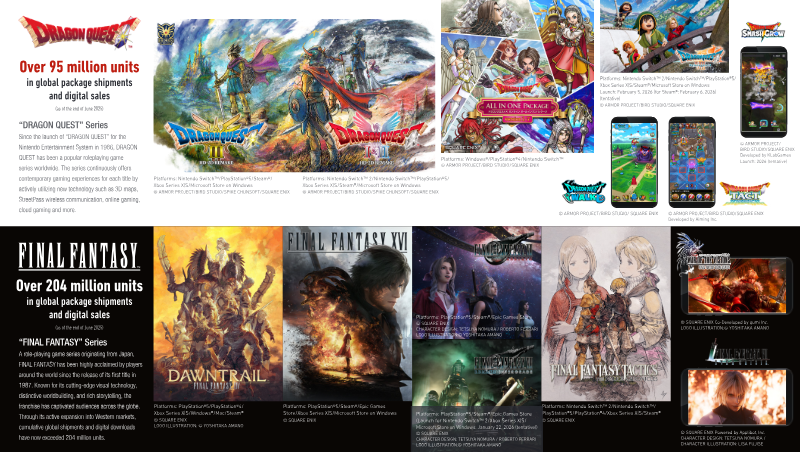
Square Enix Special Feature: Erdrick Trilogy Reimagined
The Dragon Quest franchise continues to expand its global footprint, reaching over 95 million units in total shipments and digital sales as of June 2025.
- The Dragon Quest I & II HD-2D Remake is scheduled for release on February 5, 2026, across Nintendo Switch 2, PlayStation 5, Xbox Series X|S, and PC.
- The Dragon Quest franchise has reached 95 million units in total shipments and digital sales as of June 2025.
- The Final Fantasy franchise has surpassed 204 million units globally as of mid-2025, driven by Final Fantasy XIV: Dawntrail and Final Fantasy VII Rebirth.

Can Battlefield 6 Fix Everything Fans Want?
The upcoming release of Battlefield 6 has generated significant industry buzz, positioning the title as a formidable challenger to the long-standing market dominance of Call of Duty.
- Battlefield 6 has generated significant commercial momentum, securing 2.7 million wishlists and approximately $35 million in pre-order revenue on Steam.
- Industry projections estimate total sales for the title will reach 10 to 15 million units, with some analysts suggesting it could potentially outperform Call of Duty for the year.
- Development oversight has been centralized in Los Angeles under industry veterans to improve production focus, moving away from the previous reliance solely on the DICE studio in Sweden.