Transcript
My guess is we still are in a still premium uh sorry, a premium free-to-play or in-app purchase model on mobile. But, what we've shown with Balatro is there is a market for the right games as a premium price point. So, perhaps no, we're not seeing a full swing everything's premium now, but we can see there's an opportunity for premium games to do well. And, you know, we're proving it with Balatro, and we hope there are other games that can do that, too. Hello world. This is the PocketGamer.biz Podcast. I'm your host Peggy Anne Salz and Brian. Well, Brian Baglow is off doing something fantastic for Scottish Games Week, and we'll be reporting back on that. But, in the meantime, here we are looking at amazing games. We always hear it has to start with an amazing game. Well, it also has to start with an amazing strategy. And, that's what we have here today because my guest did
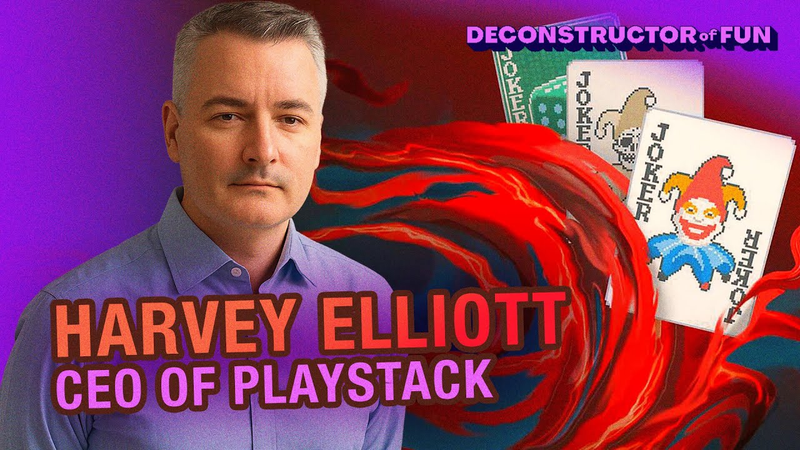
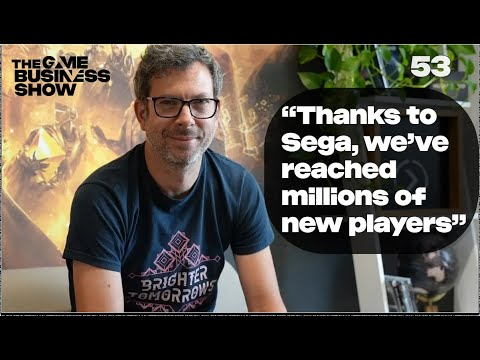
both. He turned one great game into a premium success story. And, that is rewriting the playbook for indie publishing. If you don't believe me, well, he was also the keynote at PG Connects in London telling this story. So, the name of the game is Balatro or Balatro. We'll hear about that in a moment. It launched on PC and console, made the leap to mobile, more power to it, and now a top-ranking app on the app store. No gimmicks, just a brilliant game, a smart bet, and a publisher who can pick them. So, that's how we come to you, Harvey Elliott, CEO of Playstack. It's first of all, great to have you. And hey, what a great hunch, right? Uh well, thank you very much, and uh great to be here. And uh yes, hopefully a little more than a hunch. We'll you'll you'll find out. Yes, indeed. Well, I mean, it's a fantastic story, and it's great to sit down and unpack it with you because it is such a success story. You've had a 9-year career at EA before founding
Playstack in 2016, and in that time you've been involved in many well-known gaming brands. But then again, there's this one, and this one, Balatro, it didn't just launch well, it has been charting. Um so, let's start there. You were sure of the results from the first, or were you surprised like the rest of us? Uh I mean, I think everyone has to be surprised by it. We knew we had all the right ingredients. So, for us, those are the most the things that we can control, you know, what do we think the game loop is, how compelling is it, what do we think the appeal of the IP or the content could be, who do you think the audience is going to be, how well will it resonate. All of the things around there really built up um in a really positive way before we released the game. We could also get a very good sense of consumer and community engagement with, you know, early tests, concepts, and the like. And also influencers who uh love the game and want to talk about the game. I'm I'm sure we'll unpack a bit of that, but going in, no, we didn't know it would be
as big as it is, but we all had that hunch, that feeling that it could be really big, and it was our job to make sure it did the very best it could. Um but we didn't know. No one should really know. Well, that's what also makes it exciting, you know, and then we have great opportunities like this one to to unpack that. Um so, yes, obviously more than luck, a lot behind it in picking and knowing the game that has commercial potential. But let's just rewind for a moment. Let's go back to it. I said Balatro, I said Balatro. What is it? Give us a 60-second history, uh story rather, of the game, you know, who it is, who built it, how you got involved. Great. Yes, happy happy to do that. And to answer the question, is it Balatro or Balatro, we're not 100% sure. We had a meeting with the developer very early on when we were recording our announce trailer and we needed to say in the VO, "Hey, it's Balatro." And we said, "How do you pronounce it?" And I
think he said Balatro. And then we were on a call a couple of weeks later and he called it Balatro. And so, we never really know 100% but we quite like Balatro. But the great thing is whenever it's talked about, you know, we won a few awards with it. We're lucky to be able to go up and and collect awards and when it's called out in the nominees list, they'll either say Balatro or Balatro or another variant. And he always tweets, "It's pronounced Balatro." And it's always the same tweet and of course you can never tell from that. But um what it is, it's an incredibly satisfying roguelike deck builder. It's got a very very compelling core loop. It's inspired by the rules of poker but there's no gambling or real money changing hands. It's using that as a play mechanic and your job is just to score the most insane and highest score you possibly can and that just really caught on. Quite a loop cuz I can think of player types. I mean, it feels to a number of the player types that we know of. You know, it's not just competitive to to to score the highest. What what is it about it in your view? I mean, it is a
great game. What made it that game? We wish we could spot absolutely every This is the bit that makes it magic. We can look at the things that we think make it magic. So, that loop is incredibly quick. It's quick and it's rewarding and you get an immediate result. There is a little endorphin hit every time you get a great score and the game does a brilliant job of introducing what we call jokers but they're effectively modifier cards that change the way the game will score or how things will result and you can also change the position of the jokers so they play in a different order. And when people start discovering that little loop, they start engineering a higher score themselves. So, there's a bit of chance, there's a lot of skill, there's a lot of player sort of and investment and that's all rewarded in that that quick core loop. So, we just got addicted to it very, very quickly. And when we're addicted to it quickly, we like to think we have a good sensibility as gamers, and therefore we could see others will get addicted to
it. So, our job is to help package it and position it and get it to the right players at the right time and and you know, really get them to experience it. But, it the core loop is the magic. It's just so compelling and it's so fun. And you got involved because exactly that. You were just, you know, brought in and you thought, what? If it's a magnet for me, it'll be a magnet for players everywhere? We're lucky because we have a fantastic discovery team. The discovery team is the group of people we have at Playstack whose job is their simple job brief is meet every developer with every game, and their job is to bring them in to us and tell us whether they're going to be great and why. And everyone here loves playing games, and we, you know, we where we have an opportunity we'll put everyone together playing a game and seeing how it goes. They found this game really, really early. Uh we managed to find it before it had much presence anywhere else. It's not somewhere people would have spotted it. Um and we got in touch with the developer and said, we just really want to say hi. We really love what you've done and what a phenomenal game. And it's a great starting place.
Um and we show our passion for the game. We hear what the developer's got in mind and think, oh my goodness, this thing's going to be phenomenal because we love it now and it's, you know, we were 8, 9 months from release. So, you know, think how much games change in that period of time. Um but we got to be involved and we got to shape it and got to position it. You mentioned magic yourself about the game. I want to go to another point um because you've been quoted as talking about the strategies. The strategy is nearly as exciting as the game itself. I mean, the strategy, you said yourself, and I quote, "We have no option but to release it as a premium game, and that turned out to be the magic." What do you mean by that? Well, with a free-to-play game, you're allowing players to make a investment of some sort, normally monetary, maybe it's advertising, but something that will then adjust the game mechanic for them, generally to their favor. It might unlock more features, it might not unlock um ability to replay again. Those deliberate things didn't sit with the
loop of the game that we had, where you're you're discovering the Jokers through play. The Jokers bring the additional elements to you as you play the game. And we don't ever want to create a barrier to you playing and experiencing the game. So, the free-to-play monetization models that we're familiar with, whether it's advertising or or in-app purchase, would have adapted the game in a way that would be different for different players. And we have a a principle that everyone should get the the best experience always with all the products, all the games. And we wanted them to experience the best of Balatro, so that they're discovering it and playing it and and learning it the way everyone else gets to. So, what we couldn't have is audiences doing, you know, different loops or grinding away to get unlocks or get cards. We want everyone to get the full experience right from the start. So, very simply, it had to be premium. We wanted to create one delivery, you get the game, and make the best of it as you can. And you made the point, Harvey. I mean, if it's that level of skill, you know, you don't change poker for every player.
Um you keep the rules as they are, and the players grow into that, and they are invested in it anyway. So, at some point, you know, you don't always need to make a game free-to-play, and you've proven that. No, um I mean, sometimes free-to-play is is absolutely the right model, and and, you know, you've you've unpacked many games and many experiences, and you know this very, very well. Um for Balatro, we know that the meta game is very important, you know, the structure, the unlocks of Jokers, the things you can do, different decks you can unlock, uh different Jokers you can unlock, leveling up your cards, leveling up your Jokers. Those are all things that you can do in the game, but they had to be at a at the pace of the player playing it. So, it just created this arbitrary rule, um, which which actually means that you invest as a player knowing that it's your skill that determines your progression and I think that's very very rewarding as a player and because the loop is, I think, very small, it feels very short, you just I'll just do it
again. I'll just do it again. And then you end up, oh my god, there's 3 hours gone, or 12 hours gone and in fact, our medium play time is, I think, in excess of 30 or 35 hours on a um on a player base, something in that region. So, it's it's very very, um, hooky. Oh, I bet there are people just eye-watering, you know, eyes watering thinking, oh, if I could only get ads into that, right? 30 hours of engagement, that is gold. Yeah, they I mean, they the numbers are, as I say, eye-watering. It's it's well I mean, we're definitely well over 30 hours on on average and I haven't checked that stat for a little while and and we're what we're surprised by is that the longevity of the game has been, you know, as I said, you can look at all the ingredients and say, this is fantastic, we've got all the things that make the game great, but you can never know until you release it whether those things actually are the exact thing that people want to see or hear at the exact time you're releasing them. So, we're learning that the game has got a phenomenal tail to it. It's got a lot of long-term engagement and so, those stats will just continue to rise.
Well, I'll stay there with you. Stats, numbers, how is it doing up to this time? So, premium sales are well in excess of 6 million units now. On mobile, we should talk about that specifically because we've had to look at it differently as a premium game on mobile. I think that market is generally not considered a highly lucrative market to release a game in and if you were most developers, including us, would look at that market and think it probably ought to be a free-to-play or premium, uh, sorry, in-app purchase based game rather than a premium title. But because we had that compulsion and that loop and the reasons we've talked about already to release it as a premium app, we went for it as a premium app and it's done extremely well. Um, and we're able to do quite a lot of things that you would do with a free-to-play game and, you know, user acquisition marketing and performance marketing. We can do that with a premium app, but the monetization's instant, you know, they bought it, great, we got it. They didn't buy it, no revenue. It's a great way to be able to plan. Because you're challenging the market narrative here and that's exciting because, you know,
the data says the vast majority of games, uh, the revenue from those games, those are games that are five years or older. So, new titles, new titles struggle. And yet, we look at yours, right? It's a it's a rare success story. Um, and charting, as I understand, just behind Minecraft. Yes, and uh, I think we're at the top two or top three of the all-time premium games, um, market. Uh, it's sold over a million units on iOS and over units on Android. So, we're fairly close to parity across the platforms. Um, and I think it's certainly in the top three, uh, premium games on on store and maybe we'll get to be top two as time passes. And that not not too much you have to achieve after that, right? Well, we'd like number one, but Minecraft is doing phenomenally well. Beating Minecraft, now that would be something. But, it does seem with this with within reach because, um, you know, it is that success. But,
I'm just curious for the model itself, you know, premium mobile. Is it is it having its moment or is this just you're just an outlier? I I think that's quite hard to assess. We are going to, uh, we are looking at another premium title we will release and that will give us a a benchmark and a comparison, I think.
One and two then when you're charting. Well, we'll we'll get a lot of data, that's for sure. My guess is we're still in a still premium uh sorry, a premium free-to-play or in-app purchase model on mobile. But, what we've shown with Balatro is there is a market for the right games as a premium price point. So, perhaps no, we're not seeing a full swing everything's premium now, but we can see there's an opportunity for premium games to do well. And yeah, we're proving it with Balatro, and we hope there are other games that can do that, too. Just curious because, you know, you were the one your team was the one to take a look at this. I mean, we have a vast audience of developers and companies who would love to get your
attention. Is there any idea, any way we can lift the lid a little bit on what you find attractive in a game? What one would have to have to come to you since you're in the market for it? Yeah, there's there's actually quite a lot. We you know, we do talk, and we it's important we're games publisher, we're games players. We love the games industry. I've been in it a long time. We don't have the passion for the industry and the passion for the games that people create. Then, of course, we shouldn't be doing this. We can find something else to do. So, the passion and the belief in the games is really important. But, actually, it also can't just be about that. There are lots of things we love about games. We need games that we can see those mechanics that hook. Uh we care about quality. We you know, we know that high quality does make a big difference in market. So, we want to see that the game design is innovative, that it's either inventing a new category or it's extending a category in a very compelling way. So, we don't want all sorts of runs. We want to know that the developer is a high-caliber developer or capable of being a high-caliber developer. So, we
know that they have what it takes to finish a great game and deliver it to the quality that we would all expect it to be when it releases. Um we're looking at the game loop. We're analyzing it either uh through our internal play test, external play tests, uh some audience testing. So, we're looking at the attractiveness of the loop of the game or the design of the game, whatever the game might be, we want to know that core is compelling. And we want to know that when we're involved as Playstack, we're here to help make a difference. So, we're never never just trying to take a slice of what the developers already going to get. We're here to grow a market with a developer, and our commercial model, our business model is about partnering with a developer to enable their success. So, all those things go into the pot as we're assessing games. If it's got a great design, if it's got a team behind it that we can believe in, if we can make a difference, and we can find it an audience it may not have got without it, um then we're very likely to want to get involved. Mhm. And you've also proven that in what you're doing, because you know, I'm thinking about a solo dev came up with
this. So, it's not that I have to come in there, you know, full force. I can also be, you know, a dev with a great idea, but also, of course, everything I need to back that up, as you said yourself, you know, the ability to take it to the next level has to be there already. But, I don't have to be next level from the start. I can come to you at the beginning of my career. Yes, absolutely. And you're right. I mean, Balatra is a solo dev, um somewhere in Canada. He's created this game. He's built the product, the game that he loves, he's passionate about. It's also finding a phenomenal audience. So, all those things are coming together really well. Uh and we work with teams of all sizes. Um solo devs are fantastic when they've got absolutely everything in one person, you know, that is amazing. But, larger teams can also get an awful lot done, and we've we've seen a lot of success with larger teams, smaller teams. The magic and the thing, the commonality between all of it is it's a great game that's right for an audience
that they've done something special with. Another thing I'm thinking about, when I think it's sort of like the playbook that you're rewriting here, Harvey, um is also, you know, what you would expect, which is always that decay curve, right? You have a huge launch, and then, you know, just sort of Peters off. And you, however, um Balatro you've held strong. So give me an idea into what helps you most keep the momentum going there. Well, audience and player engagement is is huge. So the fact the game has got a lot of longevity. So yes, it's a premium purchase. We've sold it once but people are still playing it you know, months after they bought it and continue to engage. So that really helps. The game has some very sticky hooks where you know, you get a ridiculously high score you can achieve these amazing combos in the game. It's very easy to capture that and post a video and so there's an awful lot of Balatro content out there online and people achieving insane things with with the scoring and eye-watering things.
I'll never score as high as some of these players but it's stuff that they can then talk about and share. So there's a virality to it that is just creating resonance. The developer's got a great personality that comes out through his posts on X. You can he is engaged in the Discord forums. There is a character behind the game that is only the persona you know, we we only refer to him as Local Thunk. That's the developer. It's not about him as a person. It's him as the developer and I I really like that. It gives It says the game matters. He's going to talk about the game. He's a Because because people want authentic authentic Yes. developers. They want to feel that the game is authentic. So his being there and and and you know, and being consistent. I think that's probably as you pointed out a big part of this.
Exactly and the game is incredibly well reviewed. I mean, we've got five-star ratings or something like 4.9 4.7 certainly those
sort of ratings on iOS and Android. We released the game on Apple Arcade. I think it's sitting at 4.9 on there. The audience ratings are phenomenal. On Steam it's overwhelmingly positive. So we've we've got a great audience of players there and they continue to regard the game so highly. Um and so that's giving it a tail and and it's carrying on. But we're also because there's a great game there's a great developer, we're able to work with other developers with other games completely unattached to Playstack and we've managed to put together I think five different packs of collaborations now where there are different games appearing in Balatro and Balatro is appearing in other games. And so there these collaborations are keeping the story of Balatro alive. Um and then just little tiny things. It was um is on uh the latest season of Black Mirror, there's a moment at the start of uh one of the episodes where a character is playing Balatro on his screen. Um the latest Superman film launched. Uh
James Gunn, who was uh asked in an interview um you know, what do you do with your spare time? He says, "I'm doing press junkets and I'm playing Balatro. I have no spare time." And those things were just um we're floored by them. Did you pay for this, Harvey? That is gold.
I don't think we could afford it if it were. But uh you know, and that's it's just fantastic. That is something. I mean, organic is is so important and um I was just thinking because you've been interviewed, of course, many times. Um and you've described it as a content magnet, you know, something that people gravitate toward. Um so yeah, you're proving it that uh you um you just sort of let them go. Your influence for community is is running without without having to pay. That's great. Yeah, it's it's still a lot of work. We want to keep them engaged. We have um fantastic marketing team here. They're great at working, you know, to find things influencers may like, but they they do run with it phenomenally well and no, we're not paying them, but they will earn from their their views and
their videos, so they're hopefully got a good ecosystem from it, too. Um and then on mobile, we're really lucky because it's a premium app, but the creatives that we're using are resonating really, really well with the audience. So, we're getting a a ROAS probably 200% ROAS on uh direct sell only, so non-organic, so organic will get an uplift too as well, which means, you know, within reason we can run performance marketing campaigns for a premium app on mobile, which I don't think a lot of people are able to do.
No. No. I I want to stay there because that's just it, profitable UA. Anyone would want to do that. And on a $9.99 game. So, what is your channel mix? What's looking like it's working? Maybe there's something that out of the gate didn't work and we can learn from both, Harvey. So, so please do please do share.
what we're finding traditional UA channels do work. So, we've been uh Instagram's been working through the Facebook platform, Meta. Uh TikTok is
resonating really well. We've had some great content uh that we've been able to create from that. Um, when we announced one of the collaborations, uh Ben Starr, who does a lot of voice over work in the industry, is a phenomenal character for not just the games industry, but also he dressed up as Jimbo, uh one of the Jokers from Balatro, and he did a uh a marketing campaign for us announcing the collaborations. And we've been able to create some fantastic content from that. So, there's a lot of assets that resonate that aren't you know, they're not the traditional things, not just a sequence of gameplay and then fail you try, which, you know, does work for some campaigns, but not all. It's not just a you know, live action stage thing where someone's saying, "I've been playing this game and you should play it, too. It doesn't have this, it doesn't have that." It just has this sort of um a personality to all of the creatives that do do resonate really well. There's a character to them. Uh the work we've done with Ben Starr as Jimbo has been just entertaining and and enjoyable. And fun things capture, you know, people capture people's imagination and capture
their engagement. So, one of the creatives we put together um was inspired by the Ben Stiller creatives. We actually just used an old school computer screen because a Balatro has a screen effect that makes it look like it's a raster on a CRT monitor, and we slowly zoom in on it, and the game is obviously building and building, and it just works really, really nicely for short-form content. It suits TikTok really well. We actually got phenomenal feedback from TikTok who said, "This is a best-in-class example of UA on our platform." So, when we're very excited by that. And you know, the so sequence just has that sort of irreverence and that style that matches what the other creatives have done without just trying to do everything we've ever done crammed down to into 15-second short. You know, it's it's it's inspired by, but it sits alongside. It's not like an edited version. It works really well. I mean, you probably have this this ongoing discussion, I would be willing to to to guess because it's a phenomenal success.
But at the same time, you have to sort of stay with your strategy. It might be that you're saying, "Oh, you know, we could do this, and we could do that, and we could make it into its own brand, and we could take it out." I mean, you're already on Black Mirror and elsewhere. So, it's easy to get very excited about what this can be. And then at the same time, you sort of have to rein yourself back in and say, "No, we have a community. They look at this as as a you know, as a skills game. It's a loop. It's something we can't go crazy with." What does that What does that creative tension feel like at Playstack? Cuz you could go very, very far with this. We could. But you But you also are staying in line. So, so something is something is telling you what balance to aim for. Well, very simply, the game is actually what matters the most. All this other stuff, the attention, the coverage, the collaborations are fantastic. They help add validation to
what we're doing, but we know and Playstack is fundamentally about what is the game, who's it for, what's going to make it special. And so, all the other stuff's exciting. You know, the awards we've been able to win awards and collect awards that we didn't expect to win, the Game Awards, DICE Awards, a BAFTA. They are phenomenal. But the game is still what matters the most. The other things just they're great accolades to correct collect and it it's you know, we're very proud of them, but we know we can only earn them by making a better and better game. So, what we're really doing is we're working on an update to Balatro, which will hopefully broaden the content in the right way for the audience that we know and we love. And that is coming at some point when it's ready. So, we haven't got a date for it. I can't announce it. We don't know yet, but I can say it's coming and we do know that that update is going to be true to the core of Balatro. It's not going to take us off into new directions and outside of of where Balatro sits. The other stuff helps add some attention to it and some noise, but really we care about the game
the most. Mhm. To that earlier point as well, Playstack doesn't just publish Balatro. We have a lineup of games that we're very proud of and so, we have a team of people who are very much focused on making sure Balatro continues to be successful, continues to find new audiences, that it's it's you know, taking advantage of opportunities where there's a collaboration or a partnership with someone that we can do. Um, but we have teams of people working on other games, some that have released and are doing very, very well. Um, Abiotic Factor is a PC and console game. Uh, it just came out in July as version one. It's been in early access for a year, uh, but it just came to version one in July. Uh, we've got a number of new releases coming up later this year and our job as a company is sort of keep people focused on their bit and allow them to make the best of those games and have other people working on other games and other titles. so for Playstack, you know, we'll have a we have a lineup of games that will comfortably take us into 2027, you know, knowing what's coming and when.
Um, but obviously when you have a a hit game like Balatro, you want to make the very best for it and you want to achieve the very best for the developer. I like that. You're not going to make the mistake of Hollywood and make a sequel that makes you wish they never had, you know? Um, you're going to stay true to what you have. You talk about collaboration. I just want to zoom in on that for a moment because I thought at the first when you said it, oh yeah, it's like cross promo, but no, it sounds quite different. So, what do you mean by collaboration and how is that sort of, you know, raising all ships? Well, the great thing is we love games. We know we can't publish them all much as we might like to and so the team here and Local Thunk are fans of a whole host of games that we're playing and enjoying. And every now and then one of them just sends a message or we send a message saying, hey, we love what you're doing. And they go, oh my goodness, it's the Balatro guys or oh my goodness, you know, we've reached out and Dave the Diver's reached out to us or whatever and um, and those are sort of, you know, hey, love what you're doing. We love what
you're doing. Hey, let's do a collaboration. What a collaboration for Balatro? We have a card game. So, mostly it's new face cards that you can choose in the settings like I want the Vampire Survivors face sides or the Dave Dave the Diver face cards or Cyberpunk 2077 and and those are in the game and you can turn them on and you can play with a pack of cards themed to IP or games that you know and love. Yeah.
For some of the partners, their games have a bit more um, space to include bits of Balatro. So, in Dave the Diver, one of the islands you can get to, you can play a game of Balatro there and that's one of the challenges you challenge a character, I think it's called Jimbo. Um, it's you challenge the character and you play the game and you beat him and it's actually a little version of Balatro inside Dave the Diver. In uh, Cyberpunk 2077
mini games if I can just It's like a mini game, yeah, it's a mini game inside that game. It's it's always a challenge you might have to do that is the mini game of Balatro or a mini game creative in Balatro, but it's part of to accomplish whatever the objectives that island might be. In Cyberpunk 2077, um there are little
tags of these jokers spray painted on the pillars and there's a little side quest if can you find them all? And you're exploring the world and you look for these little side quests. And in their game, there you can dress your characters so they've got merch with uh this sort of a distorted version of a joker on a Cyberpunk t-shirt you can put on your character. And you can buy that t-shirt in the Cyberpunk merch store. So, in real life. So, we can actually physically wear that and those those collaborations are just they're not because they're going to make money, they're because they're fun and they're like Easter eggs in every game and they just they're just cool and there are some amazing ones. I've just named two, but as I say, total is probably about 30 different collaborations that have happened. That is fascinating for me because you're basically doing in-game advertising of your games. Yes. Yes. And the but they're not Yeah. very subtle
Yeah, really subtle. None of them you can't click those little spray tags and go, "Oh, Balatro available now. Buy it in the you know, it doesn't say that." It's just just a little hint there. It's
a little hint. So, it's it's it's almost like an extra reward for fans of games that oh, that's in there. Great. You know, it may not trigger any sales. It's just it's a nod. It's like this game you like and that game you like and they've come together. Don't want to say anything about other approaches, but you know, then it makes sort of cross promo or offer wall sound a little bit sort of in your face. This is subtle. This is interesting. You might be on to a model in a model right here, Harvey. I you know, I sincerely hope so. Very interesting cuz think about it. I mean, what happens in real marketing? You have to see a brand 20 times before it registers. I'm going to see it 20 times or bits of it almost like clues in a way, you know, did you see that? Was that the Joker? Did I really see that? And so you're reinforcing the game within your portfolio of games. Very smart. That might be really breakthrough here and as you as you develop more and more. Yes, I think so and and it's exactly it. It's those
it's it's familiarity through repetition. It's just, you know, seeing it and wondering what it is and creating that inquisition where people think, I wonder what that was and what if I found that and they start to dig and then they discover Balatro and that's great and they discover Cyberpunk through us although quite a lot of people have played that. Very interesting. Might date myself slightly but it reminds me when I was looking for clues in Twin Peaks. I'm it's exactly the same. Cuz I was hooked on it. You could download books about it. I mean, I was deeply in it. There's a clue here. And here you go. There's I saw that game. I saw that bit. That's very very smart. Um let's flip it and talk to you about the publisher model, you know, because both been in the industry quite a while and we know what what the publishing model was. We also know about the, you know, the the thinking about it at first. It was very sort of, um you know, what do you look for in a partner and there was a lot of
concern about finding the right partner. What do you wish developers knew or understood more about your model? I think publishing model um of old, right? It's a back to your Twin Peaks eras. People would make a game and they didn't have a relationship with the people who manufactured the cartridges or pressed the CDs to be able to make that game appear in retail. So the publisher job of old was to take a game, create the, you know, get the binary, create the gold master, obviously QA it, test it, whatever, and do all the submission, the store work, and the marketing, and the promotion. And of course with digital that's all blurred, such that anyone could be a publisher, anyone can create a game and publish the game. What we see as the model is we have a solo dev who made Balatro. So, if we continue to follow Balatro for a moment, he probably does know quite a lot about how to market a game, you know, writing about a store text. He's seen the store text. He's seen the screenshots. He knows these things. There's quite a lot of work involved in engineering that text or engineering the
screenshots, creating the gameplay videos, creating the game loops. Someone's got to do that. Um the work in Balatro early on was to get people to know about the game before we released the game and build their interest in it. So, we did a lot of outreach to influencers. So, we built an influencer community that we thought would really resonate well with Balatro through a lot of research and targeting. All of these things, whatever they are, that key art, designs, videos, trailers, content marketing strategies, and relationships with platforms, I think do help launch games and make games successful. Someone has to do it. And we're good at it because we do it frequently. We do it for lots of games, so we know more about it than people who've maybe done it once every 3 years. And someone needs to do that work, and if it's a developer doing that work, either a solo dev or a team of 16 or whatever, that's still time not spent making the game better. And back to my earlier point, we're here to share a enlarged pool with a developer. You know, we're not here to take a slice from what the developer is going to make anyway. We're here to make
the pie pop bigger. We're here to make a game successful. And so, the model that works, the model that we believe in, is we can't make any money from the game unless the developer is making money from the game. So, our job is to make sure we're clear with them about what we believe the game is going to do, what our expectations for the game could be, and we set forecasts that we think are sensible, sort of the base or the median case. It's a sensible forecast based on the quality of the game, the audience we think the game's for, some benchmarking against other games that have existed in market already, but with hope and belief that we can get to a higher market. So, your very first question, you know, did you did you have a hunch it was going to be big? Yeah, we did. We had a hunch it was going to be huge. We did not predict it would be as huge as it is. Our biggest model, our ceiling, our highest numbers were lower than we're achieving. Um but that's okay because I think you want to have conservatism in your numbers. So, we're not saying, "Well, I'll just tell you what, I'll I'll buy this house ready for when the money comes in to pay for it." You know, you you we want people to be successful
early on. And we want to share that success with the developer, and that is the model that we believe in. So, you know, developers, not all will need publishers, and that's okay. But if you are looking for a partner to do the things that you can't do or you haven't got the capability for or the experience with, then a publisher is a good route. You want to make sure you're aligned on the outcomes. So, you know, we're successful when you're successful. But the thing you're sharing, the market potential is bigger because you've partnered with someone. Nobody needs someone just to come and take, you know, a slice of revenue away from you. They've got to be able to do something to make a a bigger pot. And we're establishing a voice for Playstack and a voice for our developers that I think is beyond what a developer would be able to do on their own. And I think that, you know, that makes it worth working with somebody like us. And no matter how we might sound, we we just want to believe in each game individually. We care about every title. We care about the success of every game. And we're only going to sign up to make a game when we believe
it will be successful. And the developer should only be making a game because they believe it will be successful. And since we're only going to succeed together or fail together, we're all aligned going in. So, the it's models of alignment. It's having uh belief in what the other person does is going to be additive to the the overall experience for consumers. And then commercially, you know, if we're sitting there and looking back, you think, "Well, it actually did what we said it would do. We beat what we said we'd do, and we're happy with that. We knew going in if it would if it would sell that median number we'd all be happy. Yeah. And that's where you need to be now because, you know, the deals aren't happening and it really is all about sustainable and profitable growth. And that means, yes, not everybody wants to own the world. Um you take that piece uh and you think about it as you said yourself very sensibly. You know, I think that was the awakening of everything we've seen in the games industry is you know, to be realistic. Absolutely. And we can all get caught up and you mentioned my 9 years at EA and
EA did have some good budgets to spend on our games to create them. Um that model doesn't exist in the same way today. Now, it doesn't mean everyone should live an impoverished life. No, absolutely not. It just means make sensible choices about how big the game is going to be and what the game's going to care about. Make that brilliant. Make that exceptional. It doesn't need to be AAA development budgets. But what it will do is if it if you've got that right, that core of the game is right, you've got opportunities to take it further later. You've got opportunities to to turn it into new things or take it into new directions. Uh and everyone's feeling successful from it. And unfortunately, games have become expensive to make in some cases and you just you know, every penny you spend you have to make before anyone's in profit. So, it is trying to apply quite a strong business brain to those sorts of decisions early on. Mhm. That's why I think a lot of your in-game in-game model, you know, that's uh doesn't cost anything at all and look how successful it is. That is That is
brilliant uh by the way. You're also
and it gives us all, you know, us and the other developers with our games content we can talk about. And people love to talk about games and talk about things that they've seen and things they've discovered. And the more we can do to create things like that together, have you seen when these two games came together? I think does it does extend the market for sure. Speaking of the markets, you know, you are a champion for Indies. That's why it's just a delight to speak with you because it's encouraging. It's so easy to be discouraging. You're encouraging, but you're also looking at the opportunity and talking about the opportunity in the overall UK games industry, which you've also said has the opportunity, the potential to lead in indie publishing. Um How can you be so sure? What What needs to happen to unlock this potential? Well, a few things. I mean, you know, if you're looking at the industry broadly, what we all need is good support of the
environment that we're in. So, that's government support through tax breaks and and credits. Uh it's you know, support through local uh institutions, businesses, councils, whatever it is. I hope they're listening in, by the way, because you're absolutely right. They don't always listen. That's fine. We say it often enough, they will. Um One of the things that makes the UK so special for game development is we have all the skills have been here or have been developed here for, you know, decades in games development. You know, we're not uh a nation with a specific specialism. We are where a lot of the games industry started, and a lot of that talent, that inherent knowledge, sits here. Um the UK is not an incredibly expensive place to make and build things. You can live here comfortably with a reasonable salary. Uh other parts of the world, some you can live very reasonably for very uh very little. Sometimes you need to earn quite a lot to be able to live reasonably. And I think the UK is generally quite balanced. Uh we have been lucky to have had video game tax
relief for uh probably, I don't know, 15 years or so, something in that, maybe a little longer. It's It's adapted, it's become the VGX. There's a little bit of a shift in in how that works, but generally it's quite supportive. There's definitely more that uh can be done to sustain this industry, and the growth of the games industry from the UK and a lot of the great games have come from the UK. So, the basics are the talent has definitely been here and is here and we can nurture that talent. Government support means that we can ensure our budgets remain competitive when you look at some of the lower cost locations. And the lower cost locations can be very compelling, but they tend to have specialisms. They could be a bit more technical or a bit more artistic. We have that rounding of sort of all the skills you need to develop, create, and publish games, support games here in the UK. And thanks to our smaller geographical footprint, you can get most places pretty quickly. Now, the barriers of communication have already reduced, right? We're We're talking online. There's a lot of connectivity, which has shortened that, but there's also a
familiarity when you can go and see somebody, shake their hand, and say hello, and talk to them about what they're doing, and uh one of the things I always talk about, you know, we can hang up a meeting and the meeting's over. But if you're in a meeting together, you end the meeting and oh, let's go get a coffee or let's go get a drink or what are you doing next? And And that is possible because you're together. So, the UK, we have that there's a togetherness feeling. I think the culture of the industry that's come from the people that have been here over the decades is one of collaboration and positivity. I very rarely hear games companies or people from rival games businesses talking anything other than friendly about what they're doing. You never hear that competitive, "Oh, I'm going to take you down." There's none of that, right? These are people who are in the industry creating and love that and that gets shared. So, positivity, a great culture, a great environment, all the skills, all the talent, a little bit of government support that could always be better. That means we've got the ingredients again, kind of like you looking at a
game. We've got the ingredients for a great business and connectivity from UK to anywhere in the world. We're publishing games from both hemispheres, uh from all continents, uh in almost all geographies. we have a a language that's very commonly used in video games and video game development. English is a very strong language. We have a great geographical basing for it. So, yeah, all those components work for us. And another component all of this is of course talent. Now, the UK has it because of the heritage, of the history. But, what are some of the meaningful ways you think the industry can help the next generation of game makers? Well, I think that's, you know, one of my personal, um, initiatives really, or initiatives makes it sound too big. It's a thing a thing I care about is that we all do a little bit to give back. Now, Playstack is not a huge business. We're between 65 and 70 people. Um, we are predominantly UK, but we have people in, uh, all all over the world
actually, a small hub in, uh, California around West Coast USA, a few people in Canada, a few people in continental Europe, and then just over half based here in the UK, mostly centered in London. Um, and what I've said is out of those people, I want everybody to do something to give back to the community. So, they don't all know this yet, so head heads up everyone. They all have an objective that by the end of this year they've done one thing to involve themselves in the community. It could be to go and give a careers talk to a local school. It could be to do a presentation at, uh, a conference. It could be to, uh, put together a class to teach people. Um, but everyone has to do one thing to help somebody else just understand a bit more about the games industry. Lovely.
We've We've set a program, uh, we call it the Playstack Insiders Day. We're going to run it once a year. We invite students or people at equivalent student level who are maybe on the first steps of their games design or computer software courses and say, "Well, come into the office and just ask us
questions about what the games industry is." And we'll tell them stuff. They get notepad and a pen. They also get an awful lot of insight. if they're an artist they've got a showreel, let's review their showreel with them and tell them what we see. So, all of this is about just trying to give helping hands to people coming up through the industry and make informed choices. And then the third thing we're doing, and don't forget we're only 70 people, so you know, we can't do everything, uh is we open up two internship positions. One is a three-month internship to cover the summer needs, one is a one-year internship. Where somebody comes in with a specific need that we have uh for to fill those, you know, three-month or 12-month periods. And something that they need to accomplish. And we use those two to say, well, you're going to get to the end of this, you go back, you will finish your course. If this has worked, you're going to come back and apply to us and you'll apply to other people with some experience under your belt. Now, I accept those things feel small, they are quite small. We're a small UK business. But if everyone in the UK, everyone in the UK industry, whether they're publishers or developers, did something like that, we will bring that whole next generation of talent up with us. And there are other
things we do once people join the company. We hire interns, we hire uh graduate people every year. And we want to give them a good career progression, and that's something else we've done internally. But from an outreach standpoint, everyone in the games industry should be able to do something like that. And just just help everyone take one step forward. I I truly applaud that, Harvey. You make me wish I was a developer cuz I'd just be able to get in there and soak it up with all of you like a sponge. But that is so important. It is those first steps. Absolutely. And we are of course we're approachable. And don't forget I said that my discovery team have been told to meet every developer with every game, so they have to answer. So, they have to have to see if you can just find out a little bit about everything. So, yes, we're definitely here for that. So, let's pretend that I'm a dev. I have a great prototype. I have my pitch deck. What would make you, maybe not say yes right now, but get your interest and get us moving to that second conversation?
Well, it's it's great. I had this conversation somebody um at the weekend. They were asking, you know, would you take a game on paper? You know, someone writes a great design, would you take a game on paper? And the answer is, well, yes, in theory. But, we also get a lot of games that are prototypes. So, there's the tools available to us to create a prototype of a game are so amazing these days that it's pretty hard not to have a prototype for most games. So, if you've got a prototype for most games and a paper design for one other, the prototypes probably will win out because they can convey what they're thinking more accurately. So, whatever it is you're sending, whether it's paper paper prototype, whether it's a gameplay video, whether it's a a digital prototype that actually works, we want something that conveys what your game is so that we can go, "Okay, we get it." Now, the human mind is built to create references to things that we're familiar with. So, of course, we're going to look at, "Oh, it's a bit like this game or that game." But, what we really like is when it's not like any of the games that we were thinking it might be a bit like, and we go, "Oh, it's new." Or it's done something new for a game category that existed before. So, we're
looking for that. Now, I said the desired discovery team is to meet every developer with every game. We're trying. We can't answer everyone completely, but we want to make make that be a flow of, you know, people submit something, you tell them what they think, we can feed back on it, and we try and make that flow work really well. And um we don't set, and perhaps it's another framing, we don't set maximum or minimum budgets for our games, right? We're not determined to spend certain amount. But, of course, if a game is asking for multi-millions and another game is asking for, you know, tens of thousands or hundreds of thousands, the hundreds of thousands game has to perform at a lower level just to get back its money and get to that point where people are successful together. So, the barrier is sort of what's the game, where do we think it might fit, where could we take it by working with these developers, and how quickly will everyone start to feel the success of it? And that doesn't set genre or category. I used to have two categories we would never look at. I said we will never do
an American football game and we'll never make a horror game. The horror game is cuz I haven't had young children. My youngest is now 13. He'll watch scarier stuff than me. So, horror's back on the table, good news. American football, I don't understand it. I'm sorry. I probably will not sign off on American football game. There are probably better people to make that. Other than that, doors are open. Mhm. Okay. Well, you've had a massive hit. And you have other very, very high-performing games. But, that's never the whole story, Harvey. You know, there's always the one that you got right. There's always the one you didn't get right or the one you'd like to rethink if you just had the chance. Tell me a little bit about that in your life. You know, you've made a bet, you've had a great hit, but there are some hits and there are some misses. What about the misses in your life? Well, we all have them. And, you know, that that's the games industry, right? We We see tens of thousands of games releasing every year. We talk about a
few hundred that do really, really well. And then, a you know, a small number that are exceptional. Um so, you can't work in the games industry as long as I have without your fair share of misses and missed titles. Um there are two types of miss, I think. There's the type of miss where we all tried our darnedest to make the best possible thing we could possibly make. We released it and it was rubbish or nobody liked it or nobody wanted it. Those mistakes tend to be If the game's rubbish, something went wrong in development that we didn't catch or we talked ourselves out of being a big problem. Um I have a couple of those. I don't want to name them cuz it will upset people. But, there are some games that I just wish we'd never tried to release, that we just called it early and said, "These aren't going to be good enough." Mhm.
Um the other kind of miss is where you have a game that is really good, but it didn't quite have the either the missing element that made it super sticky or the missing component or it was directly against another game that had just the things that you were trying to to put into your game, but they came out
earlier and sooner. Um I'm not a big fan of going to big events like E3 or China Joy. I They're brilliant events, don't get me wrong, but I'm just oh my god, look at all the games that are happening and they're all coming out when and they're all right on top of us. But when you're not there, they sort of find their space. They find their own moment to shine and actually those microcosms are just They are that. It's a microcosm. It's everything all at once and what do you think? Um The misses that I'm most regretful of are games that even today, and this is I'm talking about games that I probably I was designing or working with the teams designing 20 25 years ago. Even today those mechanics would be phenomenal and you think, "Well, Harvey, probably you're in a good position where you can make some of those games happen now." Actually, you're probably right, but we have a lot of choice and this is the difficulty. Um But there are some mechanics for games that I just regret we never finished making. We never put out. Um there are
two big games at EA. Again, I'm probably not allowed to say what they are, but we had two games from beloved EA franchises, so games that predated my time at EA that were really ripe for reinvention. And there were a couple of designs that I thought would just really, really clever, really innovative, big projects, but really dynamic. And as I think today about those mechanics, I think they could be applied to games today just as easy as they could have been applied 20 years ago. So there are some games in my past that I wish we'd made and maybe just maybe we'll actually make one of those now that there's a little bit of breathing room here. I encourage you to do that, Harvey. I've had so many interviews with companies that are saying, "You know what? We're going to look back." They're going back to like, you know, and there are places to do this. You probably know this cuz you're the industry, but you know, there are places to look back in the archives of of um you know, video games that are that are sort of long lost and long forgotten and revive them. And I've been talking with a number of
devs who are saying, I'm going back there to get my inspiration for the next round. So, you know, there is something to be said for it. If you're still thinking about it, then it has legs. I I do agree. Yeah? You'll have to get me in a year's time to see what I've done. Yeah, well, you've got a lot on your plate. I mean, come on, let's be serious, but it's all moving in the right direction. It's just a fascinating discussion with you and also very, very positive at a time when you know, it's very, very easy to say it it it can't be done or it's going to be much, much harder or we're not in for this. I'm curious what you say to yourself as a sort of motivational mantra or motto or something, because it is so easy to think and be overwhelmed by the negatives at this point in time. How are you able to keep so positive, Harvey? Well, it's it's a great question. I mean, I do think moments like this and these sorts of um podcasts and shows
really help, right? Because they force you to stop and look at where you are today and just say, what have you done? And you know, CEOs of businesses, our job is to look ahead, to look to the future and think, where will we be? Where will we be in 3 months, 6 months, 9 months, 12 months, 18 months? The more successful we are, the further we can raise our horizon. So, through the success of Balatro, Abiotic Factor, Case of the Golden Idol, Rise of the Golden Idol, games from uh the last couple of years with Playstack, we've been able to lift our horizons and start looking further. And I can tell you, where I can see to is very positive. Um the games industry is growing. It is still growing every year. The economics did break and that's caused horrendous impact to people in the industry. And no matter how positive I feel about Playstack and where we're going, you can't help but see and feel sad for people who've lost their jobs and seen restructuring, seen changes. But the hope is still there. The industry is growing. These are talented people. That wasn't the right thing for whatever reason, but there is hope. If
they've got the appetite to go again, there will be an opportunity for them to do something in this growing market. We're not shrinking. We're not all chasing a short smaller and smaller market every year. And that's why I think we still have that positivity and there's not that aggressive competition we were talking about earlier. We're all able to bring new to the market and they can all coexist and they can all be part of this market. And so that feels positive to me. Um but because I can lift my horizon just that little bit, we've got some good success behind us. We know that the strategies we put in place, which I'll quickly touch on. I was writing a strategy document because that's part of my job to say where are we going and where are we headed. And I closed it and went on holiday and I came back and I reopened my strategy document, but I'd forgotten where I saved it. So I searched strategy and it opened up a strategy document I'd written in 2019. And so I opened that and I compared it to my 2025 strategy. And the basics of the business are exactly the same. You know, the same approach, you know, developer first, building audiences and communities around the game experiences that we love. Looking for games that extend or reach
beyond the games that already exist in market. Those things are the same. The main thing that was different is the example games in our lineup in 2019 were completely different to the lineup games that we have in 2025. And it means that the strategies can hold true for a longer period. And it's like investing in shares or in a market. You know, there'll be volatility, but the general trajectory is up. It's up and to the right. And that's the games industry. We're on a trajectory of up and to the right. So our job is to try and smooth those lumps. Job as a leader in this industry, whoever you are and whatever capacity, is to figure out how to smooth over the bumps today knowing that the market is growing, the opportunities are growing, the sector is still doing incredibly well, and my goodness, it's we're in a creative industry. We can make things that delight and entertain and cheer people up on their down days and carry them through the difficult moments and it's fun and it's exciting and it's engaging. And if you're in this industry and you can't feel that positivity for what
you're doing, then there are other industries that might be really good for you because perhaps this isn't the one. Yeah, that is true because this is gaming at the end of the day and there is at the core of everything the passion. And and that's what I felt in this conversation, Harvey. It has been delightful and we're ending on the note of, you know, games, the passion, great way to round it out because with every guest we do the same thing. Um we ask, what's your favorite game right now to unwind? And of course, um in your case had to laugh because uh uh you know, it's what you're maybe doing when you're not taking cold calls from football fans in England who mistake you for Harvey Elliott, the Liverpool midfielder. So, that's that's an interesting twist. Um what are you doing when you're not taking those calls and telling them, nope, sorry, I'm just the CEO of Playstack? Well, just on that one very quickly. I went to I was on holiday in North Devon a couple of weeks
ago and I booked a restaurant and I went in and they gave us the nicest table by the window and you could see out to the ocean. It was phenomenal. He came in and said, "Oh, I was hoping for a different Harvey Elliott." Well, I don't mind. I'll take the table, but thank you. It was a nice pub, but I was suggesting the other Harvey Elliott might eat somewhere a little bit more um high-end. But um I mean, I think, you know, what I play, I play games that are enjoyable and fun and I'm I hate to be Well, I'll go backwards slightly. In the old days, I could say, "I'm playing this." And you'd say, "Oh, I'm playing that, too. that's amazing. And most of the time, if I say I'm playing this game, no one else is playing it. They're all playing something different. But today, I'm going to tell you a game that everyone should be playing. I love Mario Kart World, and I'm The reason I did that, we took the Switch to on holiday. Um it did rain. We were in the UK, so we had some rainy days and some sunny days. And the rainy days, we just put it on as a family. We were playing Mario Kart, and we're laughing, and we're having fun. And I know it's a well-established franchise. It's been around for years and years and years. We just loved it.
It was enjoyable. Uh the free-roaming mode was really nice. It was just a relaxing game. It was fantastic to put on. Um I also realized at home that uh my gaming PC was significantly out of date. We had the better one in the family. My son, who's now 20, has a really nice gaming PC, but university term time, it goes with him. So, his uh revision can all be done to a high standard. Uh so, I thought it's time to build a new gaming PC for myself. So, I self-sourced all the bits and components to build a PC, started with the graphics card, figured out the graphics, the motherboard, all the components, the case, the lighting, everything. Uh because Playstack's releasing Void Breaker in about 4 weeks' time, and it's a phenomenal game by another solo dev, this time based in Brighton in the UK. Uh he's made one other game for us before called The Entropy Centre, that I genuinely loved. And uh I thought, you know what? I haven't got anything to run it on. So, I built a PC, rolled rolled my sleeves back up. And so, Void Breaker is installing, and I'll be playing that
tonight. Lovely. Well, this has been uh much more than I had expected, Harvey. I expected a master class, and like, yeah, this is premium, this is working, this is UA. Um and got so so much more. I cannot thank you enough, Harvey. And I am so excited about what's next for you. And maybe looking forward and looking back a little bit, maybe you'll be coming out with those retro games. who knows. Maybe. But, thank you very much for your time. I've really enjoyed it. This show is all about how to do your job better, how to make an amazing game, how to market it. And you have a say. So, if you have a story or know someone we need to shine a light on, then we would love to hear from you. We want to hear from you. We want to reflect the reality of the mobile games market in all its wonderful complexity and strangeness. So, if you have any suggestions for us, if you have any feedback for us, you can always get in touch. You can email us at
[email protected]. You can find us on Twitter @pgbiz, and you can reach out to us through the pocketgamer.biz website. If you're interested in listening to all of our podcasts, you can find them at pocketgamer.biz/podcast, and we would love to hear your thoughts on future shows. And we've got you covered on all the major platforms. So, subscribe to the audio podcast, as Brian said. Look for us on YouTube. If you want to read it, hey, you can do that, too, because we have a companion post for you, as well, on the pocketgamer.biz website.
Tune in again for the next edition of the pocketgamer.biz podcast, and we look forward to speaking to you in the near future. Until then, I'm Brian Baglow. I'm Peggy Anne Salts, and that's a wrap until next week.
Auto-generated captions from YouTube — names and numbers may be misheard.
Key insights
7 takeaways · ~3 min read- 01Balatro’s success demonstrates that a premium, non-monetized model can thrive by prioritizing a complete, consistent player experience over the grinding or segmented loops typical of free-to-play games.
- 02The game achieved high engagement and virality by focusing on a compelling, skill-based core loop that encourages players to share their high-score achievements.
- 03Authentic developer engagement is a critical marketing asset; the developer 'Local Thunk' maintained a consistent, transparent persona on platforms like X and Discord, which helped build player trust and community resonance.
- 04Publishing strategy for indie titles should prioritize 'sensible' development budgets, focusing on exceptional core mechanics rather than attempting to match AAA production costs.
- 05When evaluating new titles, publishers prioritize functional prototypes over paper designs, as prototypes more accurately convey the game's unique value proposition and potential for innovation.
- 06Cross-game collaborations, such as the partnership between Balatro and Dave the Diver, serve as effective, organic marketing tools that leverage shared fanbases and mutual respect between developers.
- 07The games industry remains on a long-term growth trajectory, and the primary role of leadership is to apply business discipline to 'smooth over' market volatility while maintaining creative focus.
Ask AI about this video
Cite this video
Citation
Generating citation…



















Comments