VideoThe Game Business
Life after Sega: Can Relic and Amplitude rejuvenate strategy games
16 Sept 202531 min video
Transcript
In the past, relics taken a long time to get games to market. And those long gaps between games means we lose touch a little bit with player behaviors, with trends, and we're out of mind, out of sight, and out of mind for the players. So, making games faster is a key ingredient to our strategy. If the industry was not in a crisis, that would have never happened. You change things when you know there is a crisis basically. Uh, and I think it was the right move for both sigas. Hello and welcome to the Game Business Show. Today we have two interviews for you. They are both connected of course and both were conducted during our recent trip to Gamescom. The first interview is with Relic Entertainment, the real-time strategy studio responsible for Company of Heroes on the 40,000 Dawn of War and Age of Empires 4. And our second is with Amplitude, the 4X strategy game developer behind Endless Space, Endless Legend, and humankind. As well as being leading studios in the strategy genre, they were both up until last year part of Sega's army of
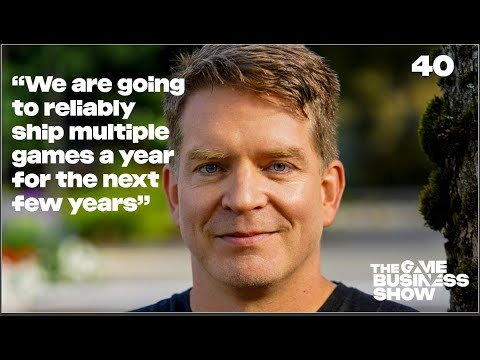
strategy studios, which still include Creative Assembly, Sports Interactive, and Twooint Studios. But both Relic and Amplitude have since bought their freedom and are now looking to forge a new future, not just for them, but for the entire strategy genre. So, we'll kick off with our interview with Relic Entertainment CEO Justin Dwell, followed immediately by our chat with Amplitude Studios Roma Dewab De Janice. So, please check them out.
Hello and welcome to the show.
Thanks, Chris.
How has it been since going independent? How have you found the the journey from corporate ownership to independence?
Well, it's a it's a huge change obviously. I mean, I think Relic has spent the entirety of its existence as a developer. And in my career, I've just been a developer. And now we're more we're actually publishing our own games. We're having to learn a lot of new skills, uh, a lot more about the industry. uh we're in touch with parts of the industry that we didn't know anything about before. Uh so that's a huge change. And we're a little smaller
than we used to be. And because we're doing a wider variety of things and we have fewer people,
everyone's kind of wearing more than one hat now. And I I think there's a lot of uh there's a lot of growth that comes with that, but there's also it's a lot of change and it's uh it's stressful. But I think when we first left Sega, it was a lot of chaos. We didn't really know the direction we were going, our ambition. Uh, and it's exciting. It's hard work, but it's exciting.
What have you had to learn? What's been the hardest thing to have to learn? I mean, I imagine the list of learnings is quite high. What's the thing that's taken you by surprise?
The thing that's been the hardest is probably seeing behind the curtain. Again, not knowing as much about publishing. And now we've learned so much and and really understanding that the actually the power that we have in doing that uh is the biggest learning.
When you say power, is that that ability
to be a lot more direct with players or or
uh a little bit of that? But it's also it's about agency, you know, these decisions that we have to make about what we do when we do it. Uh I think as well just the real need to be faster. And I don't think that's limited to Relic. I think that's industrywide. We're all learning that the ways of the past didn't serve us ultimately and I think that the urgency of that has been uh really important.
Well, Relic is seen as one of the leaders in the strategy genre, right? Historically, it's, you know, iconic with Company of Heroes, Lawn of War, all those sort of titles. Um, but how mindful of you of that reputation? You're a smaller team and you've got to try and live up to that, right?
Yeah, it's it's high expectations for sure. And I think the player expectations of every sequel we do get higher and higher. We are associated with the genre. Of course, it's close to our hearts.
Really, what we're trying to do is chart the path to the future of the genre. We don't believe that we're just going to keep making the same games we've always made.
Yeah.
It has to advance. It has to evolve. And we're excited about that. We've learned so much from the the games we've released, watching how players engage with the content, watching how players engage with the modes, and understanding what people necessarily don't like or don't like anymore, and finding ways to we prototype new ideas and we we build playable prototypes just to test those ideas out. And that part's exciting. Uh, and we we feel a responsibility to be part of the group of studios leading that.
I mean, obviously you say that and that's completely true. But the other thing that you have been doing, one of your I think one of you have got a three-part strategy and one of those strategy is
your legacy, right? And it's those remast you just launched the dawn of war.
We did
and it seems to have gone down very very well.
It has gone down very very well. We're really excited about that. It's one of my favorite relic games if not you know my favorite relic game. So I was very excited when we had a clear picture of what we wanted that to be and making making sure we got that blend of what we changed and what we didn't change uh
just right. I'm really happy with how it turned out and it's really nice to see how players have responded to that as well.
I don't know how you felt about it, but seeing a Dawn of War game coming out that isn't got your logo and it feels
I don't know how you felt about it. I felt it felt wrong to me.
Well, I mean it's it's obviously that franchise is is near and dear to us. We care about it deeply and I'm so impressed with what the team at King Art have done. Watching those trailers is just fantastic. So, hats off to them. Uh we have a long history with the franchise and obviously that multiple decades relationship with Games Workshop is very strong. So we're just excited to see what what they do.
You're very kind.
No, it's true.
It looks fantastic.
It did look good. It did look good. But you you're talking about chart in the future and changes and one of the things that you are doing a smaller games. So um what tell me about this this Earth versus Mars.
Okay. So I mean let me step back a little bit and talk about our vision for games. So, we know that Relic is known for a certain kind of game expectations for spectacle and scale of and scope of
the game.
We're still doing that. We're still Relic. Having said that, we also know that I think in the past, Relic's taken a long time to get games to market. And those long gaps between games means we lose touch a little bit with player behaviors, with trends, and we're out of out of mind, out of sight, and out of mind for the players. So making games faster is a key ingredient to our strategy. Now that applies to our bigger games. We're still going to make big meaty strategy games, but those will take multiple years. We know that we want to innovate. We know we want to take risks. We want to take risks with genre, with IP, uh with technology. And to do that, we have to find a way to do it with less risk. And so that's the idea behind Earth versus Mars, which is part of our Relic Labs. And that is a way for us to, like I said, take some risks, have some fun. Yeah.
Uh, and do it in a way where we're not spending what we would on a bigger relic game, and it gets to market more quickly.
It's interesting cuz we had probably
monsters on the show about three or four weeks, and they obviously they're still they insist they're still making AAA games as well, but they've got a team of people, possibly multiple teams that plan to put out a game every year or every 18 months. There's a similar uh idea for it. And
I was going to ask what what's the benefits of that but it seems to be a learning you know it's about
learning is a big part of it actually and I think that uh you learn so much when you launch a game and if you only launch a game every 5 years
you reduce the cadence of that learning and I think that's uh that's one of the advantages of it and we're really excited about it and it gives the teams a you know a place to to play and uh make the games that they're passionate about in a shorter time frame. and we love our logo games, but really it's nice to get something in the market.
I think I read an interview with you where you were talking about not necessarily reinventing every wheel every time you go into a new game. And the reason why that rang to me is uh we did an interview with Interactive a few months ago and they talked about how he
he made up these numbers. cuz these numbers aren't true. But Hitman one cost $100 million to make and Hitman 2 cost 60 million and Hitman 3 cost 20 million and Hitman 3 is the best and most critically acclaimed and most commercially successful of the three. Right. And it's that cuz that franchise approach is that is that the sort of thing that you're looking at?
Uh we'd like to do that. I mean I think that is isn't always what happens. I think sometimes the
the budgets go up, the expectations go up. I think that the trick is to change to be careful about what you change uh and that especially when you go over long time spans technology advances uh visual quality expectations go get higher. So uh there's there's a balance for sure but really making sure we leverage the investment we make in technology and our game designs over years instead of starting from scratch because that reinventing the wheel each time is is what makes things take a long time.
Yeah. And time is ultimately what the budgets really are, right?
Exactly.
Yeah. Let's go back to the Dawn of War
remastering.
Sure.
Um,
what did you learn from it? Is there anything that about it that surprised you?
Well, we learned a lot. A lot of it, the project involved some code archaeology cuz it's such an old game and some of the build systems that we used didn't exist. The environment wasn't the same. Um, and so it was a bit of an experiment in can we even do this at the beginning. Uh, it's amazing. We have some of the team that made the original still at the studio. So, they got to go back and look at their work from 20 years ago, which was uh interesting. A key learning is that there's still an appetite for these games.
And it's I think it's not limited to love for Dawn of War. I think it extends to RTS. People like playing these games. And so,
like I said, we can't just keep making the same games, but there is something so sticky and so much fun about them. Uh, it sort of reinforces our belief that being in the strategy space is a great place for Relic.
Well, I was gonna ask about this because there's I I don't know where the information comes from, but there's this
perception the strategy genre is stagnating or it's in a difficult spot. What's your take on it then?
I I think it could stagnate. Uh, and that's what I was talking about before with our belief that Relic is one of the studios that can take the genre forward, has to take the genre forward. And so our work to understand what no longer works for players, what no longer appeals to players is is so important for us. So I think there's strong evidence there that we're on, you know, that the strategy is not it's not in decline. Uh it's still very much a strong place to be.
Obviously, you were part of this family of strategy studios. I don't know how close you work together with Creative Assembly and Amplitude and all those sort of folks. And now that you're sort of apart from them, does that
I don't know. Does that change? Does that change anything when you're sitting there trying to move the genre forward? Are you Is that a good thing you're more competitive now? I don't know.
I think it makes us more competitive actually. I mean, I feel like the sister studios when we were part of Sega, it was very friendly. We didn't really work together on a technology base or content creation base. The studios are all quite
different. Uh but certainly it was friendly and I remain friends with those studios. Yeah,
but we do feel we have we have it's up to us to solve this for Relic.
I remember Creative Assembly worked on Halo Wars 2 and then you guys worked on Age of Empires 4 and I'm like, "Oh, what's a
Microsoft flirting with both Sega Studios? Um, I didn't know there was about some internal competition, but um but it but it's it's great. I mean, what do you where do you hope to take Relic? What's your goal? What's your five years? Where do you where do you hope to be?" So there are I'll talk about the parts of our business. So we have our our catalog of games uh the Company of Heroes franchise series. We have the Dawn of War franchise and Space Marine. Uh we're very lucky to come out of Sega with those titles with Relic. So part of it is serving those titles, serving those players. And you saw the first part of that which is the Dawn of War definitive edition. Uh we intend to do more of that. The second piece really
which is Company of Heroes 3. I mean that game clearly Company of Heroes is RIP is very important to us. Uh it had it had a rocky launch uh you know um and but we've worked consistently and very hard to turn that around.
Um and that's it's it's showing promise. It's showing improvement. So we'll continue to do that.
We also think about the future of of games and as I mentioned we have this ambition to still make big you know meaty strategy games. That's one part. And the second piece again is Relic Labs and continuing to experiment and learn from that. In five years, I'd like to look back and be able to talk about our ability to support the catalog with with updates and new content, you know, build Company of Heroes 3 where we want it and have launched, you know, another needy strategy game and have some built something around Relic Labs. Uh, yeah. So, Reddit Labs updates for existing games, remasters, um uh and uh and a big
meaty game.
That's a Have you got are you big enough for that?
Well, that's a great question. Uh uh we're we're working on it. I think the other piece that's really central to that is we we are publishing our own games and I think as I mentioned, we're learning from that. So, being able to look back and see how we've
we've adapted, we've gotten better at that, uh is is a big part of it, too. It's It sounds exciting um but also terrifying I imagine as well.
Well, I mean what's the alternative?
Well, you're obviously doing this at a very tricky time in the games industry, a very turbulent time and but obviously you are specialists and specialists seem to be doing better than the at most at the moment. You've got all this stuff going on, but where do you see the risk? Where are you most wary? Well, I I think the risk lies in our ability to adapt. So, we have to adapt to the pace. So, we need to be faster when it comes to scaling. I I think scaling a project
team or whatever it is. The old playbook was if you need a bigger team, you just hire more people in the studio. And I I don't think anyone would say that's the way to do it now. So, in addition to publishing games, our games, um, we've also been much much faster and stronger at working with external partners. And I think that's part of the key as well. So, if we
if we don't succeed in expanding our our capacity that way, that's that's a big risk, I think, as well. Going too far with project budgets is a risk as well. I think we need to stay close to the players. Uh, that's that's a huge change for Relic, too. I mean, Relic has been around for a long time and that gives us a lot of strengths. It also means there are some of the ways that the studio grew up that no longer apply. I think one of those is being connected to the players and I think we do engage with the players. We could do a better job of that and we are trying to do a better job of that.
I guess publishing helps with that. Taking on that role yourself allows you to have a direct relationship.
Absolutely.
Have you had to hire up a big publishing internal team with it?
I don't like the word big. I mean, yes. Yeah.
Yes, we are. We are hiring people on the on the on the publishing side to help us. And again, it's
it's all learning. I think that u as long as we can maintain that excitement to learn to do this, I think we'll be uh we'll be on our way.
Well, I know it's been a difficult, you know, 5 years, however long it's been for.
Yeah.
But I also know that with independence brings focus and um energy and and and you know, speed a lot of the time. Absolutely. I mean, there's a necessity for that, but there's also a fire in our bellies. I mean, this it's it's ours to take where we want to take it. It always has been, but this is really I feel like that agency we've gained is crucial as well.
Well, good luck with it. Thank you so much for your time and I look forward to playing uh Earth versus Mars.
Oh, fantastic. Thank you.
Thank you.
That was our chat there with Relic CEO
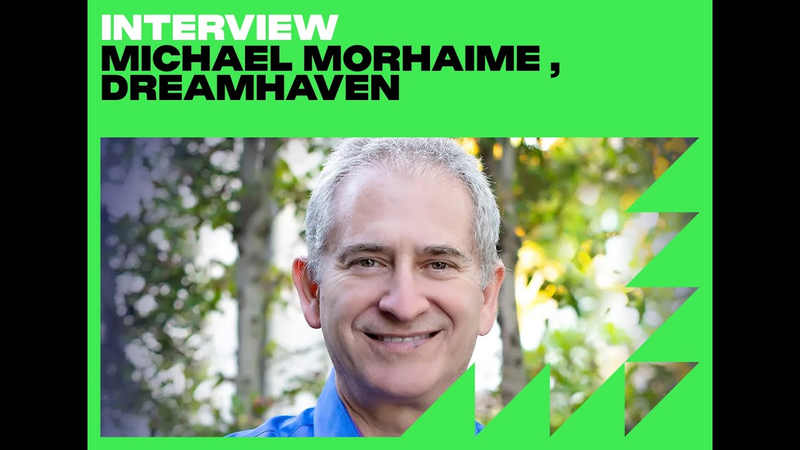
Justin Dwell. Now onto our next interview with Amplitudes Roma Deber De Janeise.
Hello Roman. Welcome to the show.
Hello. Thank you.
I said this before we we pressed record. I love the mirror of this because when I last spoke to you it was 2016. I think you just recently been acquired by Sega and I just joined gamesindustry. And now I'm independent in the game business. You've gone independent since then. But you said at the time that um uh you didn't set up the company for independence. That wasn't your goal. Um, but did you find corporate life not to your liking?
Uh, I love to be able to do the games I want to make, right? And and for me, independence or corporate um is just a way to achieve my goals.
When we joined Sega and probably at the time we must have discussed this, I'm sure um I had a game I was dreaming about which was Humankind
and I knew that I could not do it by myself. and knew I needed to have someone by my side uh kind of a big
brother to help me uh get there because it was extremely ambitious game. So for me what matters is amplitude the games we make and now it's all about how we make them.
Mhm.
Okay. So what's different then? What's what do you what do you mean by that? So of course when you are in a bigger group
um there's a difficulty in you know in taking the decisions uh it takes it takes time basically and when you're indie and suddenly fall in uh in the corporate world I think quite a few creators could be shocked by the organization around you um the planning that it takes the seducing it has to take as well you which is different you know for us you know when we want to do something uh we regroup you know with a bunch of people who decide we do so that is different but when you want to work on a game that you will need to advertise to millions of people you need
to accept that you know you will need to convince a lot of people around you you will need uh to have an organization around you to reach that goal
but now what's interesting is thanks to to to that moment that we had uh with Sega we we reached you know this millions of new players we could not have reached before but now they're aware of us now they are playing our games now they're following us uh so now the bet is by being indie again um can we still speak to them and we believe that we can
well let's let's talk about then the how did it come about then how were we able to negotiate your independence
um I mean if the indust was not in a crisis that would have never happened. Uh I mean I mean you change things when you know there is a crisis basically. Uh and I think it was the right move for both SE and us you know they had strategy which was different than one we had. Uh but strangely enough it it came
to us to realize that we're not fit the strategy was like
h there's a plan where are we in the plan? I don't think we are really fitting in that plan. So, it's then engaging on the conversation on, okay, I don't think we're fitting in your vision. Um, should we uh maybe uh move out? And and it was not an easy answer. It was not like, oh yes, oh, by the way, that's what I wanted to talk about. That's not what happened. It took a long time. I mean, it took us more than a year to to to to really uh agree and find the way forward uh to to to split ways. It's a challenging time of the industry, but at the same time, I know that if you're a specialist in something, you might be in a stronger position than most at the moment. But how did you find sort of getting the funding? And I thought it would be easy, although we're in a crisis because exactly what you said because we had we're living with the IPs. Uh we're living with a huge community, um a back
catalog of games. Uh so we thought it we're sure it would be easy. So we we actually ourselves bought back amplitude from Sega with first no backing initially. Um but very quickly we look for backing. Um and then to be honest we've been lucky. Uh it was not easy but it was quick in a way. So we could say easy but we're just lucky because we find the right people who are looking for games like ours the best at what what we do with a very active community. So again describing uh amplitude doing that and really fast people to sign and say well that's it that's what we want uh what do you need uh well okay so it sounds easy but um but again when I discuss with everyone else around me it's like we've been lucky.
Yeah. Yeah. Well I you are you are known for that that that sort of forex sort of strategy genre. So there is an element and we we've spoken to loads of people on the game business show now and when
we talk to a lot of publishers not all of them but a lot of them particularly smaller ones mid-size ones and investors they're looking for people that can do that do something very you know not necessary small but niche or or targeted that has the potential to go bigger and I think you sort of fit that bill. So I thought if anyone was going to be able to find it with the IPs, with the fan base already, I think I think so. Although I I agree it is hard. I know it's not easy for anybody, but I think perhaps you've you had that going for you.
I I think for us we always dreamt to be, you know, the the biggest of the smallest niche and again be identified as being, you know, the ones to go to.
Um
and I think we are the first players of our games. Uh so it was kind of easy to to go there for us. it was natural for us to go to to to do that. So,
how many are there at amplitude now?
So, if we look at the studio uh side were 145.
Okay.
Uh plus, you know, we have uh between 25 and 30 people on on the games together side which now is split from the studio.
So, what was that last one?
The games together is like the platform that we use to to speak with the players but we have also like other companies and Sega actually is still uh using games together for for the games. Oh, I think because well I think when we spoke last time you might have been about 60 or something like that which was eight years ago and you had dreams of being 100. I'm trying to remember the interview. Yeah.
The day we left Sega we joined Sega were 52 and the day we left we were 170 if we take everyone.
Wow. Yeah it's quite that's quite a growth journey. So they have helped. Um but have you had to change anything as a result of going indie? Is there any been is there any have you had to add things or take things away or
um well the thing is we did rely on a lot of services uh from Sega right we were got used to have experts on some fields um that were on their side. So the first thing that we had to do uh was sometimes to to find back some expertise uh especially you know data and stuff we really got used to to working with data while we were at Sega but now being
indie uh suddenly was like okay we're missing the services so we had to to to grow on that side uh on how we were running live ops to grow our teams as as well because we see our games as being live op games basically. So yeah, completing that and but the first thing we did was to to also find also a publisher for our next game because
it's too big out there to be alone. I love the idea especially with you know 170 people if you to have
Yeah. Well, I'll talk about Hooded Horse in a moment. Um you um but let's talk about because you do specialize in this genre.
What is what's what's the what's the state of the genre at the moment? I'm not too familiar with it. Has it grown much? Obviously I know Civilization and things like that. So if we look at where we were 15 years ago, so when we started Amplitude, the genre has grown a lot. Actually the first time we had the idea of creating amplitude, we looked at kind of the sales number of civilization at the time. It was estimation from you know some analysis. Um and was at the
time was C4 and was around 2 million. Uh but it was still huge. It was like cool you know a force could sell 2 million copies. So we said to to to go and and create amplitude. Now C6 if they take all the players they have all across all platforms it's what 16 million players even more you know and all our games are between two and three and a half million players.
Oh wow.
So it is a huge niche but then if you look around us um you know you don't have a lot of 4x on PC and consoles. I would consider um the the products games as kind of forex as well. They tend to use CR strategy as a as a naming but it's definitely in that area. So I think with Paxis products and amplitude I think we are kind of the three kind of studios kind of mastering the genre but then what's interesting as well if you leave that aside for a second and you look and take your phones one of the
most successful genre on phones is for uh free to play. So in a way it's very different but the idea is there.
How can you take a step up then if two to three and a half million the other ones doing 16 million right where how what's your
I think you can't do that overnight. I think you need to have patience. You have to be consistent in the games you deliver in conquering players and keep them with you.
So it's also about servicing your games basically. So that's what we want to do. Uh we want to grow our uh universes. Um that's also why you know we would say to to work on that that um TV series uh with the passion features uh for the endless universe to keep speaking to new players differently and servicing our games every month you know every year and you know we have uh you know I mean a good recipe I mean if you look at it you know and this space 2 is seen as one of the best space war played out there and this legend on the fantasy side and
humankind there's a very interesting you know uh influence you know between humankind and civilization going both ways and I think we have a lot of common players as well actually so it's uh for for me it's just the beginning of something that will take maybe 15 20 years to reach but it's getting there
okay well let's talk about your next game endless legend 2 I got that right yeah um and you signed a published deal with Hooded Horse who who we're here with is it two weeks that sort of the journey from signing what getting that in that publishing deal. Was that right?
Uh the the publishing deal with Hedor was very quick, surprisingly quick. So first of all, I have to say I was actually a big fan of their games, but it took me a while to realize that,
you know, I was playing only strategy games at home and then I realized after 6 months that all these games I was playing were all coming from hooded horse.
Um and it was around the time when we decided to to go indie. So, so then you know um managed to to get a the contact
of Qued Horse to say hey the uh yeah
don't you want and and then we had Tim Bender basically the boss of uh uh horse was
really he did yes we want to work on that was an legend you know so so basically we're both fans of each other's games basically so I think we have maybe one day of difficult negotiations on stuff we did not agree on we took one day I mean I mean I've in other deals where it could take months to to get forward
and and the same because in a way they are small as well. So if team wants to do it, he will do it. He doesn't have to ask 20 people around if they agree on that. And it's the same on our side. We can go quick as well.
Don't have to have 20 meetings and uh yeah getting signed off from the CFO and if
so endless legend, how does it compare? You talked about how ambitious humankind was and stuff like that. How does it compare in terms of scale and ambition you've got? So I think history is is a I
think more massive you know history uh anyone could easily get into history fantasy or sci-fi it's matter sometime of taste we have players I mean I have players tell me your best game is the legend and the next day your best game is you know endless pace and the next day you know it's humankind and it's always about I think taste uh and sensibility so I think on endless legend I mean it's definitely is a massive game. Uh but I don't think we'll, you know, we'll be at 16 million on endless legend. You know, we'll be always, you know, in a more like kind of a niche in a niche. Uh but, you know, the endless legend one is around 2.5 million players. Um and and we believe that today with all players we have from in humankind can only grow that quite a bit, but not 16 million.
No. No. I was going to end on this question like what's your ambition? Where do you want to go? What are you hoping to achieve as a company? Not just vendors legend. We talked about that a little bit, but what is your goals?
I mean, if we had a simple goal would be to be the best, you know, studio in making Forex and that's it. Uh, that's what we love. That's what we know how to do. Uh, sometimes we need to tell people that we are good at that. Um, but for for us, Forex is not about just game design. It's it's game design meets art and it's all about you know creating these amazing universes around your your game design. Um it's about im immersing the players uh in the world who are creating and when we started you know that it was a stale genre uh visually and artistically but I think today what we have is is you when you're going to spend hundreds of hours in our games you know so so it should be pleasing for your eyes and your ears uh you know so it should be about yeah loving that so that's what we want to do to do this amazing art piece uh that are the best uh game design in forex Wow, it's lovely answer. Thank you so much for your time. Good luck with the launch of the game and I hope that it uh
well and the development of it and I hope it goes well.
Thank you.
Thank you. That's it for today's episode of the Game Business Show. Thank you for tuning in. You can get all your latest news, interviews, analysis, and data by signing up to our newsletter at the business.com. Until next time, thank you for tuning in.
Auto-generated captions from YouTube — names and numbers may be misheard.



















Comments