Game Publishing reports and market data
Documents


GungHo Business Report Vol. 31
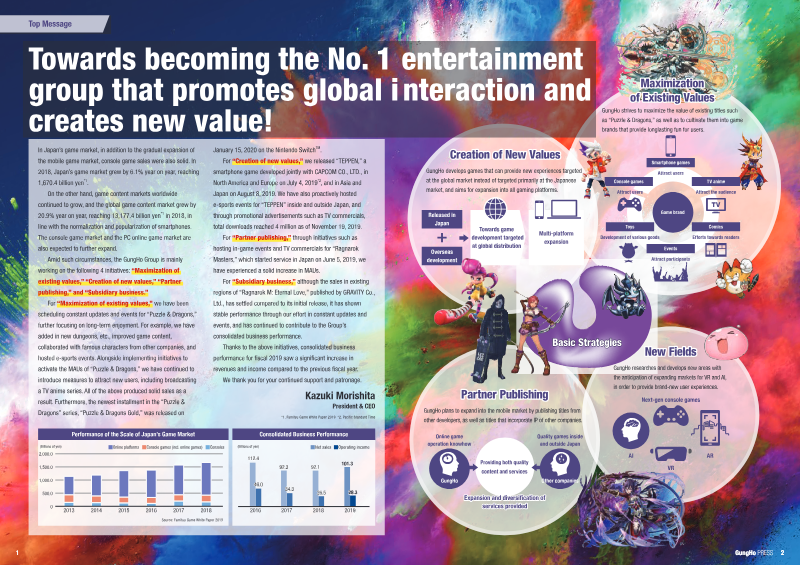
GungHo Online Entertainment’s business strategy centers on maximizing the value of established intellectual properties while simultaneously cultivating new gaming experiences for a global audience.
- GungHo reported strong fiscal 2019 financial results with consolidated net sales of 101.39 billion yen and an operating income of 28.35 billion yen.
- The company maintains a robust development pipeline with nine new gaming titles currently in progress across mobile and console platforms.
- Flagship title TEPPEN achieved significant market traction, surpassing 4 million downloads by late 2019.

COLOPL Integrated Report 2022
COLOPL is navigating a period of strategic transition following a challenging 2022 fiscal year, during which the company experienced a 13.9% decline in net sales and a 27.7% decrease in operating profit within its core Entertainment Business.
- COLOPL experienced a significant financial downturn in fiscal year 2022, with net sales declining by 13.9% and operating profit falling by 27.7% in its Entertainment Business.
- The company maintains a strong balance sheet to support its turnaround strategy, reporting approximately 55 billion yen in cash and 76.6 billion yen in total net assets as of September 2022.
- Management has set a target to reverse the current downward financial trend by the fiscal year ending September 2024 through a focus on high-quality IP and emerging technology integration.

Koei Tecmo Holdings Integrated Report 2022
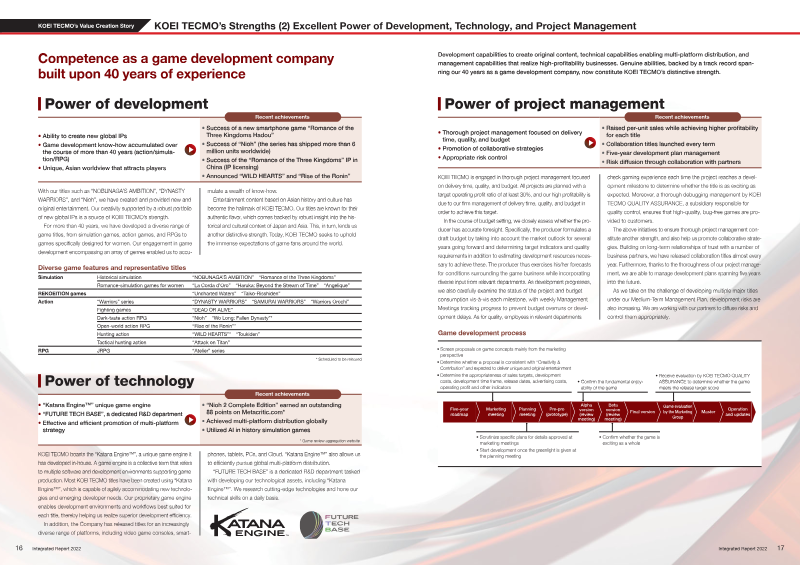
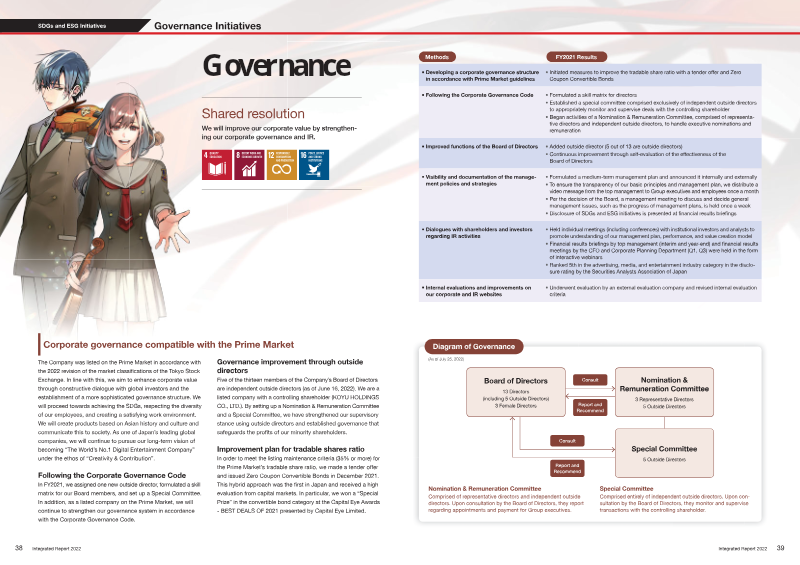
Koei Tecmo Holdings maintains a consistent trajectory of financial expansion, marked by twelve consecutive years of profit growth.
- Koei Tecmo has achieved twelve consecutive years of profit growth and is targeting 100 billion yen in net sales and 40 billion yen in operating profit by fiscal year 2024.
- Overseas sales accounted for nearly 50% of total revenue in fiscal year 2021, driven by a strategy of global expansion for Asian-themed historical intellectual properties.
- The company maintains a robust financial position with total assets exceeding 219 billion yen and a consistent shareholder distribution ratio of 50%.


Koei Tecmo Holdings Integrated Report 2023
Koei Tecmo Holdings aims to establish itself as the world’s leading digital entertainment company by synthesizing creative innovation with disciplined financial management.
- Koei Tecmo achieved record-high sales of 78.4 billion yen in fiscal year 2022, more than doubling the 37.6 billion yen reported in 2013.
- The company maintains a 50% total distribution ratio for shareholders, supported by a conservative financial policy of expensing all development costs as they occur to avoid future impairment losses.
- Operational stability is bolstered by an industry-leading 4.6% employee turnover rate, attributed to competitive compensation and comprehensive training programs.
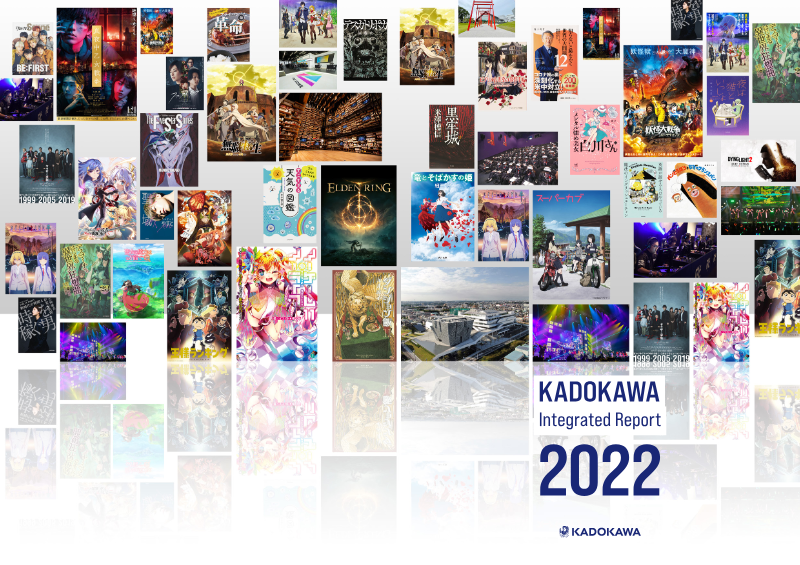
Kadokawa Integrated Report 2022
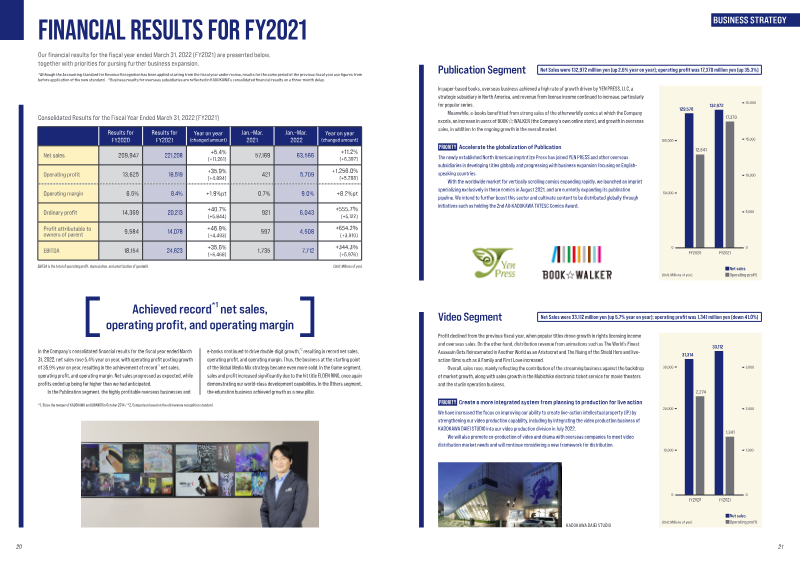
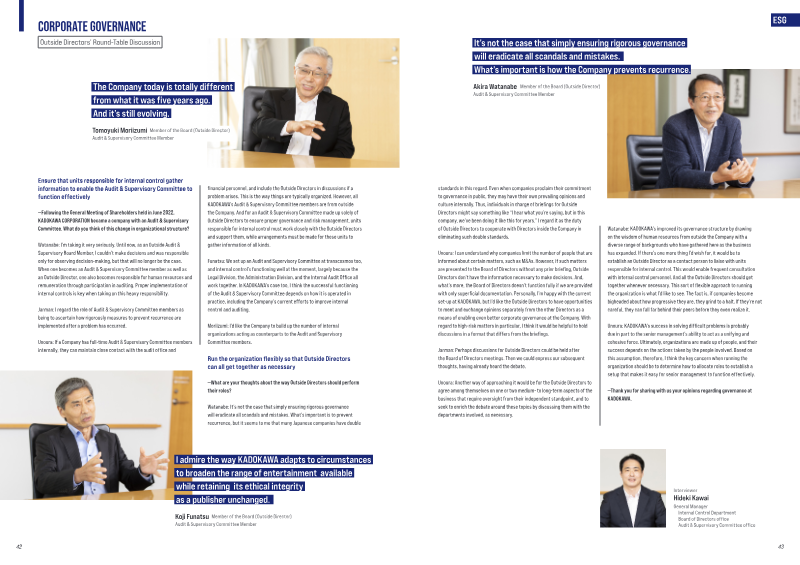
Kadokawa operates as a comprehensive media enterprise centered on a "Global Media Mix" strategy, which seeks to maximize the value of intellectual property by deploying content across publishing, animation, gaming, and digital platforms.
- Kadokawa achieved consolidated net sales of 221.2 billion yen for the fiscal year ending March 2022, with operating profit increasing by 35.9% year-on-year.
- The gaming segment was a primary growth driver, recording an 89.5% increase in operating profit during the 2022 fiscal year, bolstered by the success of Elden Ring.
- The company has set a mid-term growth target of 250 billion yen in net sales by 2025.
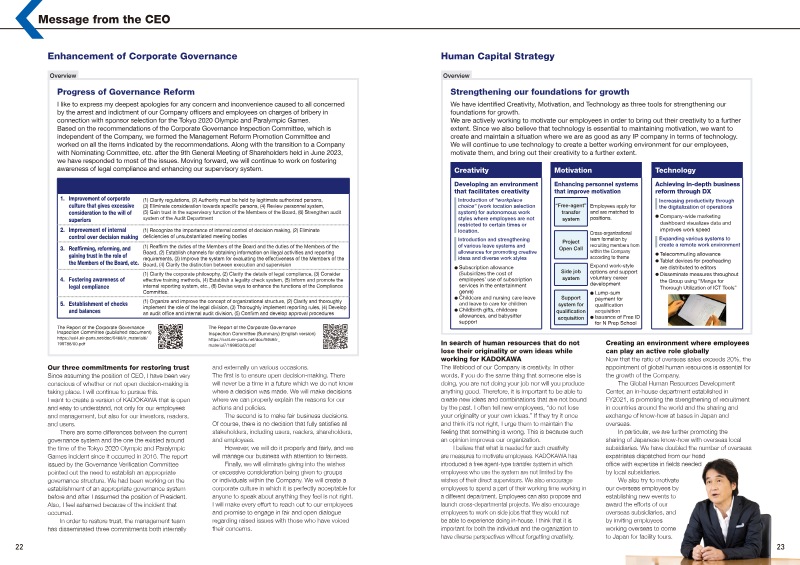
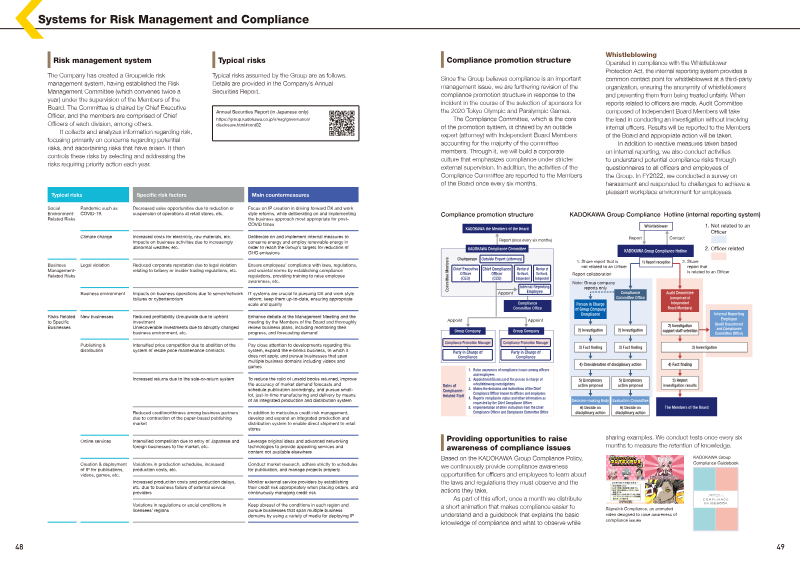
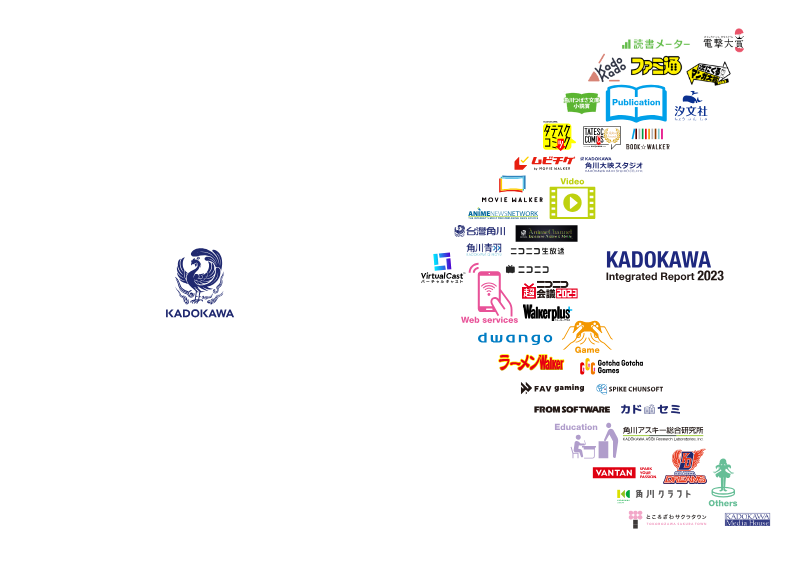
Kadokawa Integrated Report 2023
Kadokawa operates as a diversified entertainment conglomerate centered on a media mix strategy that maximizes intellectual property value across publishing, video, games, web services, and education.
- Kadokawa achieved consolidated net sales of 255.4 billion yen and an operating profit of 25.9 billion yen for the fiscal year ending March 2023.
- The global success of the game title Elden Ring was a primary growth driver, helping to increase overseas net sales to 20.5% of total revenue.
- The company delivered a total shareholder return of 528.0% over the reporting period, significantly outperforming the TOPIX index.
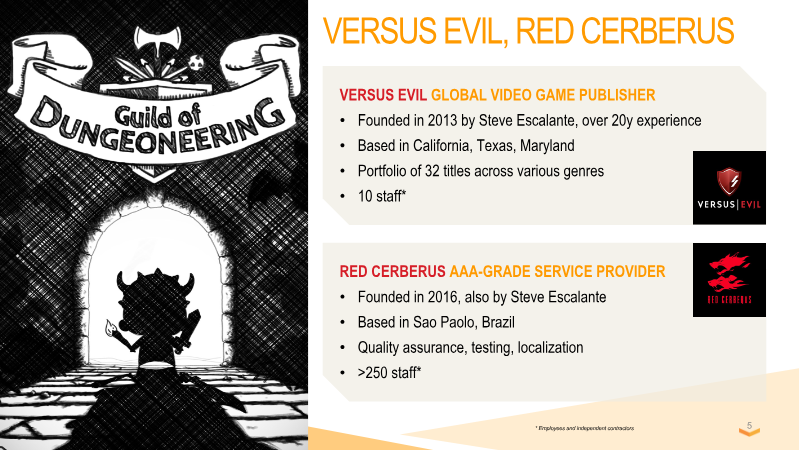


Acquisition: Versus Evil and Red Cerberus
TinyBuild Inc. has finalized the acquisition of Versus Evil, a global video game publisher, and Red Cerberus, a Brazil-based AAA-grade service provider.
- TinyBuild Inc. acquired publisher Versus Evil and service provider Red Cerberus for a total maximum consideration of $31.3 million, consisting of $12.5 million in upfront cash and up to $18.8 million in deferred share-based payments.
- The acquisition is projected to be marginally accretive in 2021 and approximately 10% accretive to earnings in 2022.
- The combined entities generated $12 million in revenue with an EBITDA loss of $0.2 million during the 2020 fiscal year.
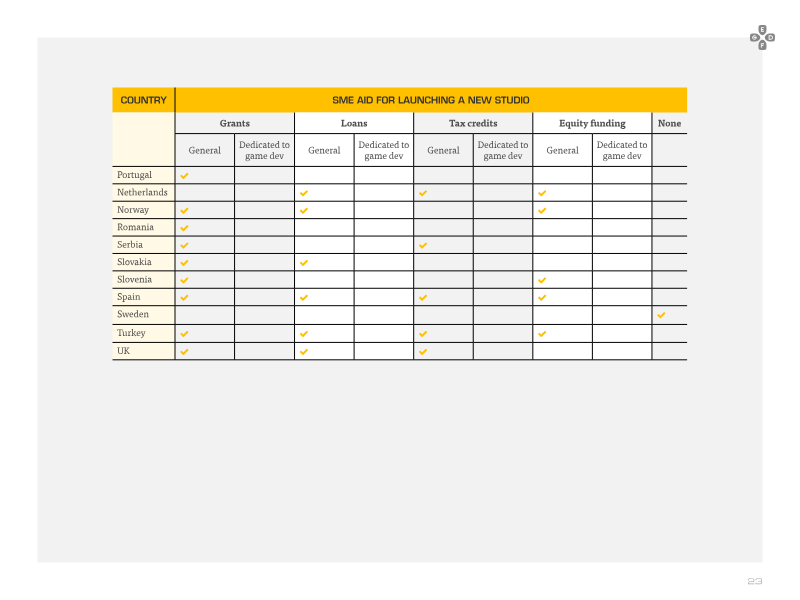
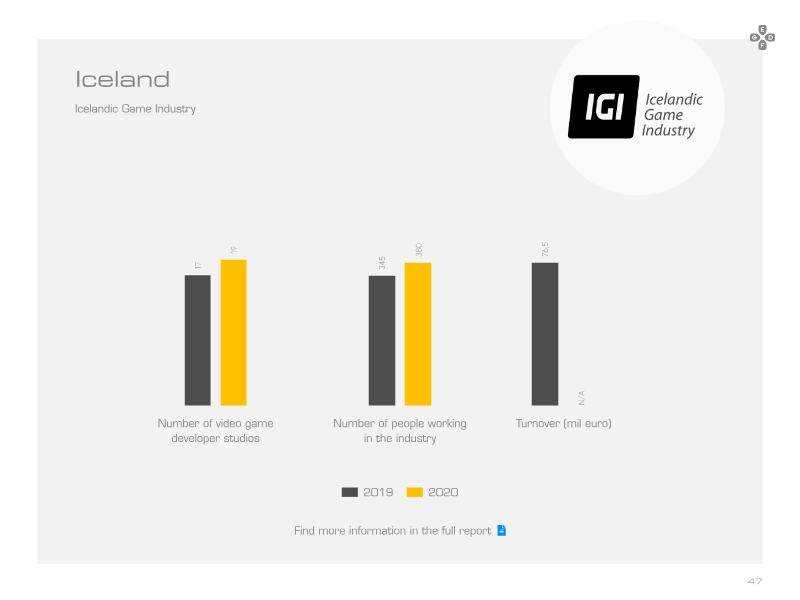
2020 European Video Games Industry: Insights Report
The European video games industry demonstrated remarkable resilience and economic vitality throughout 2020, serving as a critical pillar of the digital economy despite the operational disruptions caused by the global pandemic.
- The European video games industry generated a total turnover of €16.6 billion in 2020, supported by 74,000 employees across 4,600 studios.
- Sweden has emerged as a major growth engine, with industry turnover nearly doubling from €1.87 billion in 2018 to €3.31 billion in 2020.
- The industry is underpinned by a strong educational pipeline consisting of over 400 institutions that provide specialized game development and vocational training.

State of the Industry Report 1999
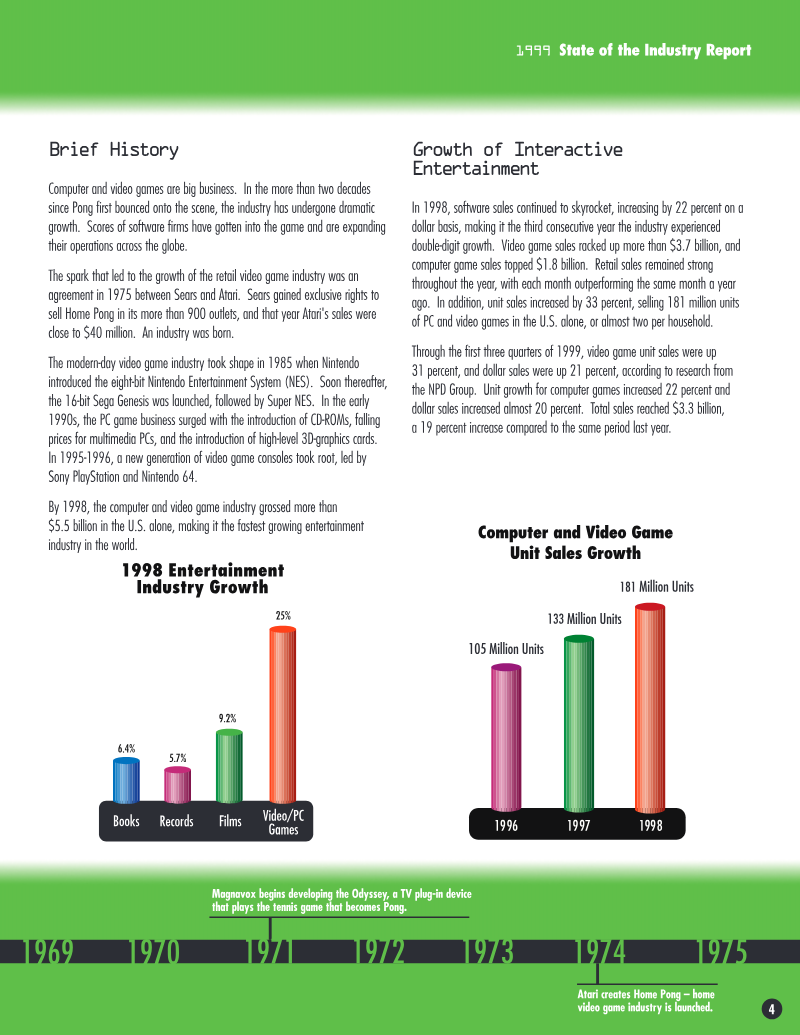
The 1999 State of the Industry Report provides a comprehensive overview of the interactive entertainment sector, documenting its rapid evolution into a dominant force in the global home entertainment market.
- The U.S. interactive entertainment industry reached $5.5 billion in sales by 1998, marking three consecutive years of double-digit growth and positioning software revenue to rival motion picture box office receipts by the end of 1999.
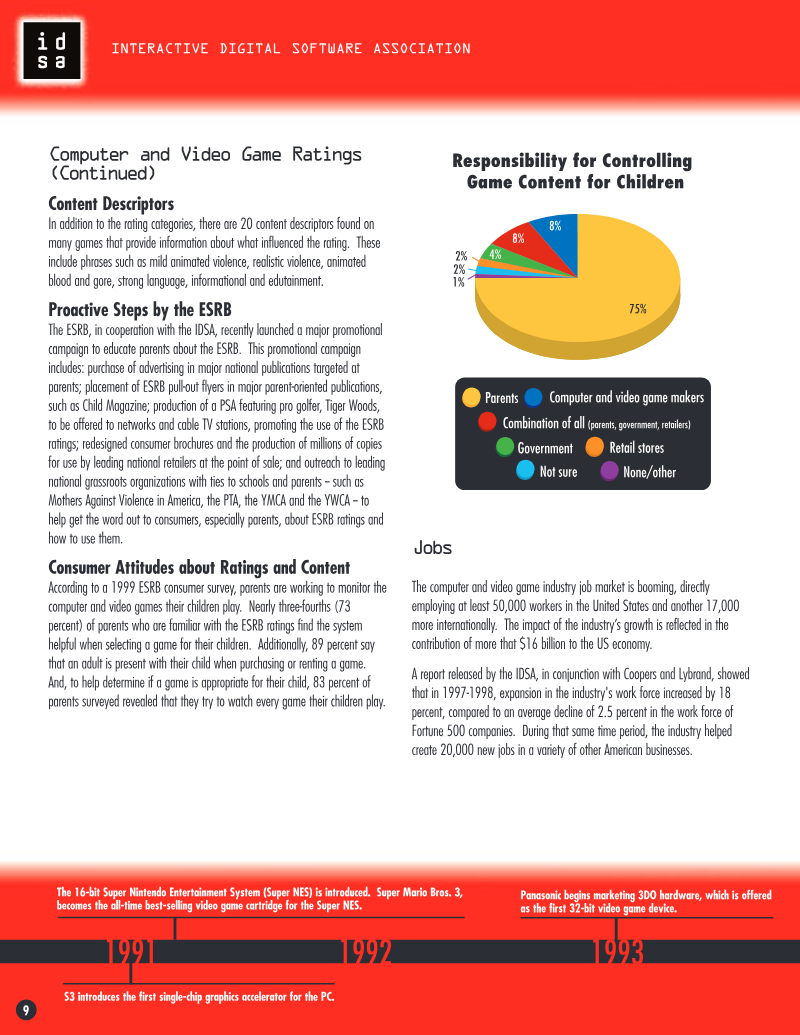
- The industry is a significant economic driver, directly employing 50,000 workers in the U.S. and contributing over $16 billion to the national economy.
- Gaming has shifted to a mainstream adult demographic, with individuals aged 18 or older now comprising 69 percent of PC players and 54 percent of console players.



Annual Review 2022: Ukie
The UK games industry demonstrated significant economic resilience throughout 2022, achieving a record market valuation of £7.16 billion and contributing £5.26 billion in gross value added to the national economy.
- The UK games industry reached a record market valuation of £7.16 billion in 2022, contributing £5.26 billion in gross value added to the national economy.
- The #RaiseTheGame diversity and inclusion pledge now covers 50% of the industry’s total headcount.
- The Digital Schoolhouse network expanded by 47% in 2022, providing educational support to over 3,350 students to address talent pipeline challenges.
Revenue & Top Companies: Romania 2025
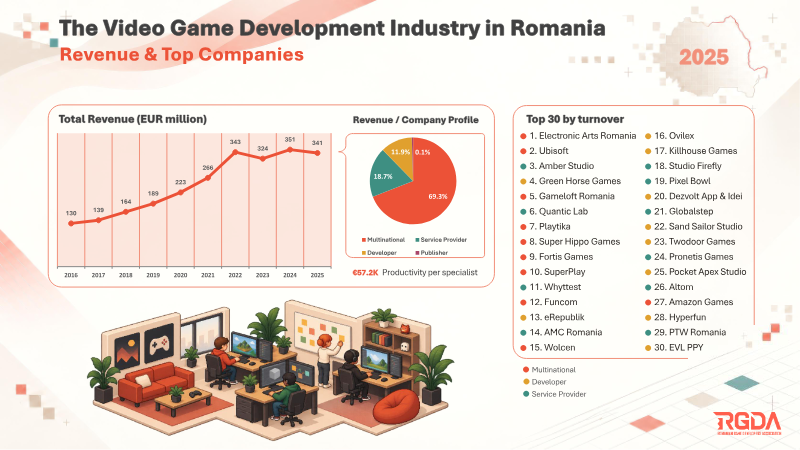
The Romanian video game industry has demonstrated significant resilience and structural evolution, reaching a total revenue of 351 million EUR by 2025.
- The Romanian video game industry reached a total revenue of 351 million EUR in 2025, supported by a workforce of 6,000 professionals.
- The sector has shifted from a service-heavy model to a balanced mix of development and publishing, resulting in a 2.5-fold increase in game releases over the last two years.
- The industry is comprised of 234 active studios, with major international players like Electronic Arts Romania, Ubisoft, and Gameloft ranking among the top 30 companies by turnover.


Gaming Report 2026: Choose Your Player
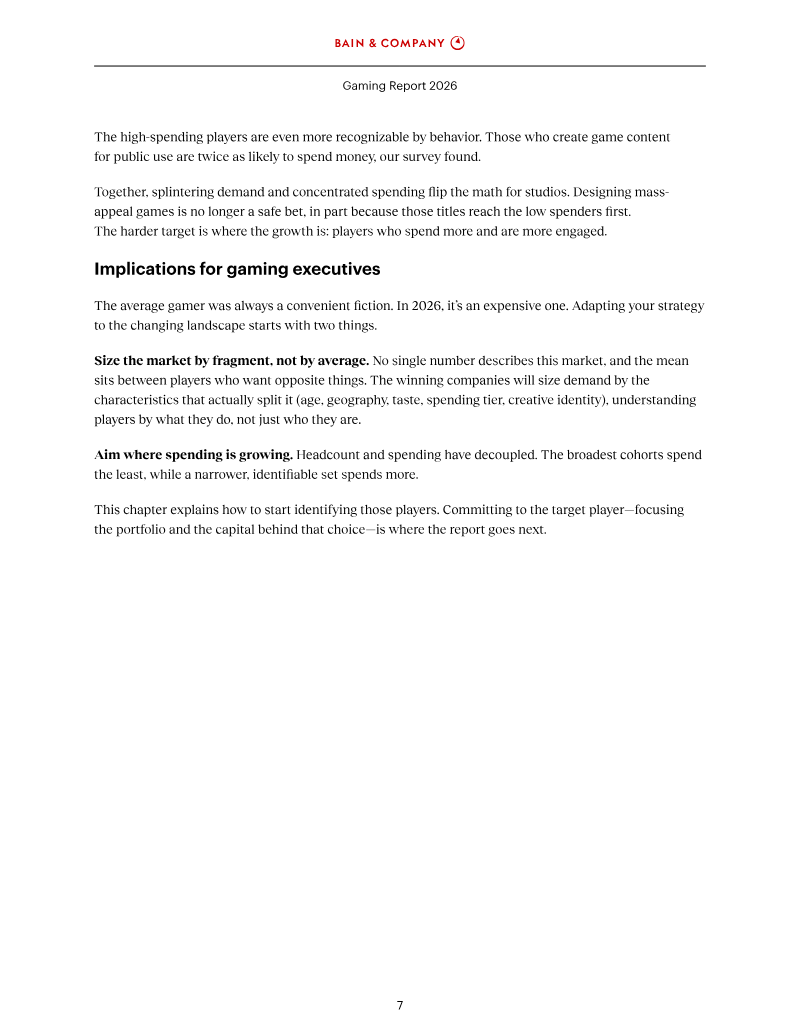
The gaming industry has reached a critical inflection point where the concept of the average player has become obsolete.
- The gaming market has shifted from a supply-constrained environment to one of infinite choice, where success now requires deep engagement with specific player segments rather than broad, unfocused appeal.
- Focused games—those designed for a specific, identifiable audience—achieved an 83% commercial success rate, significantly outperforming the 50% success rate of unfocused titles.
- Player preferences are highly fragmented, with no single experience type (such as story-driven, sandbox, or multiplayer) capturing more than 26% of the market, and two-thirds of gamers preferring to stick to familiar franchises or existing habits.