Game Engines reports and market data
Documents
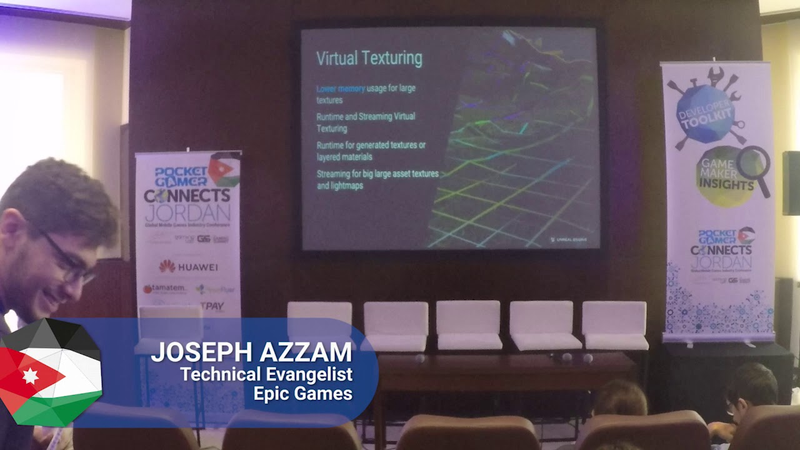
Unreal Engine and the Epic Ecosystem
The Epic Games ecosystem centers on the philosophy that the company’s success is intrinsically linked to the success of its developers.
- Unreal Engine operates on a royalty-based business model where developers pay a 5% fee only after their projects achieve commercial success, following a shift to free access in 2015.
- The Epic Games Store supports the ecosystem by charging a reduced 12% commission, while the Unreal Marketplace provides a revenue stream for creators through a catalog of over 9,000 products.
- Epic Games uses Fortnite as a live testing ground to develop and refine engine features like the Chaos physics engine, real-time ray tracing, and virtual texturing.
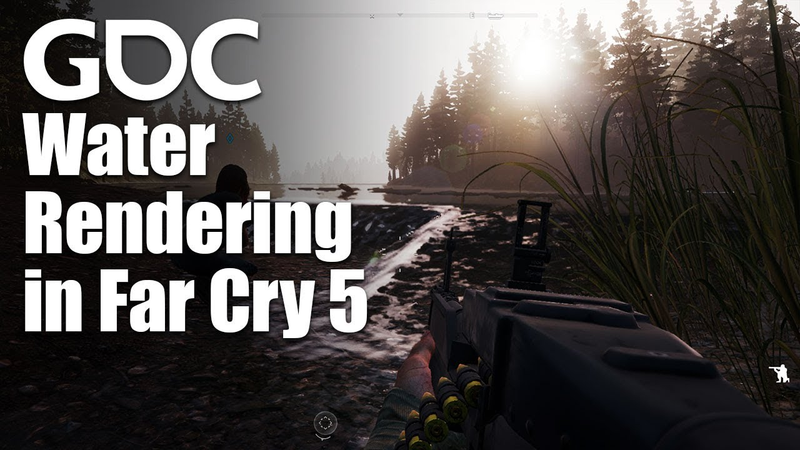
Water Rendering in Far Cry 5
The modernization of water rendering in Far Cry 5 centers on transitioning from manual, sector-based placement to a procedural, spline-based architecture.
- Far Cry 5 utilizes a unified water system that replaces previous fragmented methods with a single engine function, handling water quadtrees, streaming height maps, and dynamic water levels for rivers, lakes, and waterfalls.
- The rendering pipeline employs screen-space tessellation using a 16x16 tile grid, where constant density is achieved by mapping instance IDs to draw calls via an indirect arguments buffer.
- To optimize performance, the team implemented a distance-based Level of Detail (LOD) approach for surface shape calculations, reducing texture fetches from nine per pixel for nearby water to three per pixel for distant water.
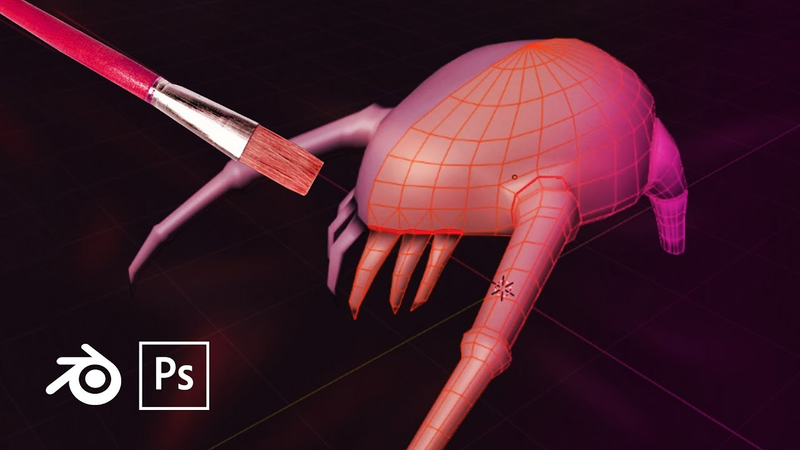
3D Texturing Basics (Unity + Blender 2.8 Tutorial!)
Effective 3D texturing relies on a precise workflow that bridges the gap between geometric modeling and visual presentation.
- Manual UV unwrapping in Blender is the professional standard for maximizing texture space and ensuring high-quality visual output, as it provides superior control over resolution compared to automated tools.
- Strategic seam placement in inconspicuous areas is the critical foundation for flattening 3D surfaces into 2D planes while maintaining texture detail.
- Integrating Photoshop with Unity via PSD files creates an efficient workflow where Unity automatically updates any changes made to the source texture files.
The Alchemy and Science of Machine Learning for Games
Machine learning is fundamentally transforming game production by shifting development from manual, rule-based programming toward data-driven automation.
- Machine learning is shifting game production from manual, rule-based programming to data-driven automation, specifically for generating complex assets like real-time animations, dialogue, and lip-syncing.
- Studios are successfully integrating experimental machine learning tools by colocating researchers with developers to prototype solutions using proprietary datasets.
- Automated systems are currently most effective for scalable, complex tasks such as traffic simulation, game balancing, and automated quality assurance testing.
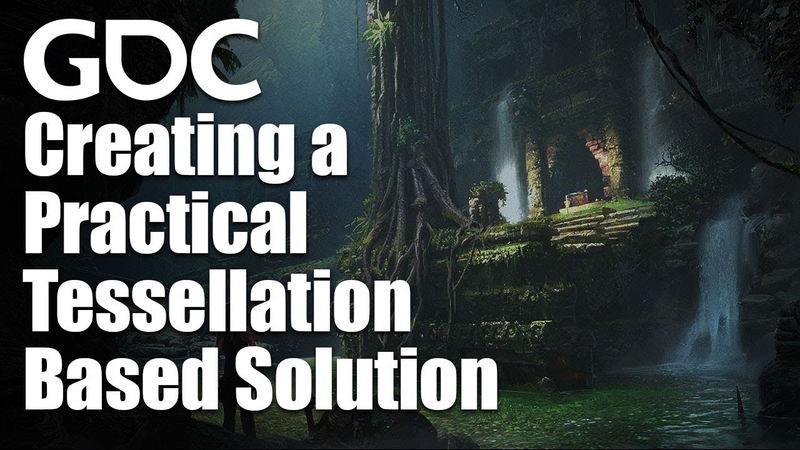
From Shore to Horizon: Creating a Practical Tessellation Based Solution
Eidos Montreal’s internal research and development division focuses on creating scalable technical solutions that facilitate cross-studio collaboration and enhance visual fidelity across major titles.
- To maintain rasterizer efficiency, the ocean mesh uses tessellation factors that avoid triangles smaller than 16 pixels in screen area, as recommended by AMD GNC architecture guidelines.
- The system utilizes a radial ocean mesh divided into 100-meter by 100-meter patches, which are displaced using vector displacement rather than simple height maps to properly simulate water churn and lateral movement.
- Open water motion is generated by mixing eight Gerstner waves in descending order of frequency, where smaller waves are deformed by larger ones to increase realism and reduce crest pinching.

Photogrammetry is the Future! So Don't Be Left Behind Featuring Jonathan Holmes | GduX.me
The modern game development landscape is undergoing a fundamental shift toward photogrammetry and expansive asset libraries, which have become essential standards for achieving photorealistic environments.
- Approximately 50 to 60 percent of major game studios now utilize photogrammetry and expansive asset libraries to automate repetitive manual tasks.
- Photogrammetry shifts the artist's role from labor-intensive asset generation to higher-level creative composition and environmental storytelling.
- Industry competitiveness is increasingly defined by technical agility and the ability to adapt to evolving software ecosystems rather than adherence to legacy workflows.

2.5D is Easier Than You Think (Unity Tutorial)
The development of 2.5D games—defined as 2D gameplay experiences that incorporate 3D depth and environmental elements—can be significantly streamlined by leveraging native Unity tools.
- Developing 2.5D games in a 3D Unity project environment eliminates the labor-intensive process of manually layering individual 2D PNG files.
- Unity’s native terrain system enables rapid environmental iteration by allowing developers to paint background depth and mountains directly into the scene.
- Sprite shapes serve as an efficient alternative to traditional tile-based systems by generating walkable surfaces as lightweight meshes with custom textures and edge colliders.
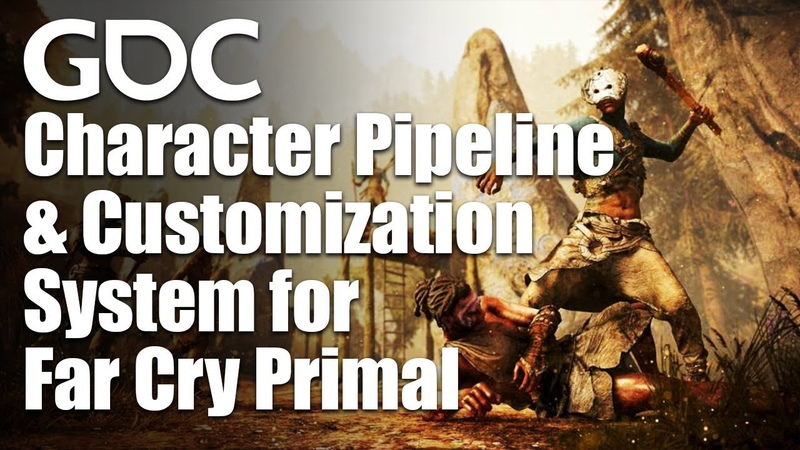
Character Pipeline and Customization System for Far Cry Primal
The development of Far Cry Primal necessitated a fundamental shift in character production, moving away from restrictive, software-specific workflows toward a flexible, cross-platform architecture.
- The character pipeline transitioned from a 3ds Max-centric model to a flexible, Python-based architecture that supports both Maya and 3ds Max, enabling a unified interface for artists.
- The 'Wolfskin' data-oriented system enables real-time asset hot-reloading and modular development, reducing character integration time from hours to minutes.
- A deterministic DNA-based generator replaced random spawning to allow for curated asset combinations, simplified debugging, and seamless integration of gameplay-driven gear upgrades.

Audio Overview (Unity Tutorial!)
Effective audio design is a critical component of game development, often accounting for a significant portion of the player experience.
- Unity’s Audio Mixer uses snapshots to apply environmental effects like reverb or echo, enabling seamless acoustic transitions between distinct game spaces.
- Animation events are the primary method for synchronizing sound effects, such as footsteps or combat, by embedding triggers directly into animation timelines.
- Spatial audio and crossfading for ambient loops are managed through trigger zones defined by custom scripts and gizmos based on player positioning.
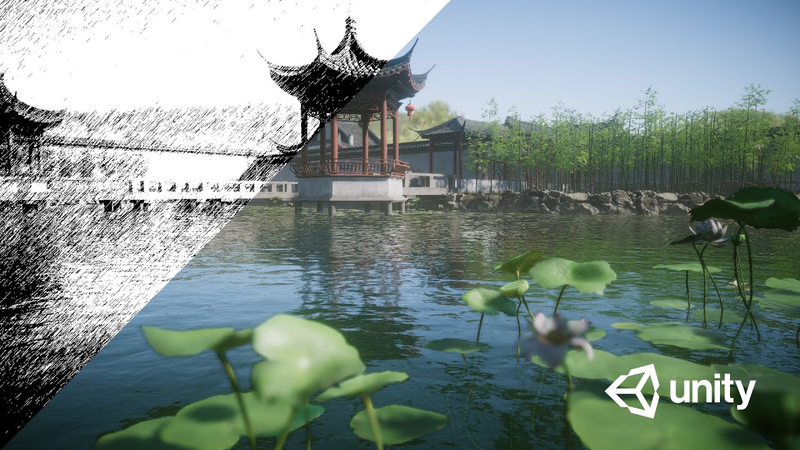
From 2D to 3D in a SNAP! (Unity Snaps Tutorial)
This analysis examines the utility of Unity’s Snaps asset ecosystem as a bridge for developers transitioning from 2D to 3D game design.
- Unity Snaps modular asset packs enable rapid 3D level construction through a drag-and-drop workflow, significantly accelerating the transition from 2D to 3D development.
- Integrating ProGrids with Snaps assets ensures precise alignment, which eliminates common technical issues like mesh clipping and spatial misalignment.
- ProBuilder allows developers to perform in-engine mesh manipulation—such as face extrusion and geometry subdivision—without requiring external 3D modeling software like Blender.

The Latest Graphics Technology in Remedy's Northlight Engine
Remedy Entertainment’s Northlight engine represents a significant shift in modern game development by transitioning from traditional screen-space rendering techniques to geometry-aware DirectX Raytracing.
- Remedy's Northlight engine supports ray tracing by building top-level acceleration structures every frame, while handling deforming geometry via a compute shader that updates static buffers on the GPU before the bottom-level builder processes them.
- Ray-traced shadows provide accurate contact points and soft-shadow transitions, but shooting 16 rays per pixel at Full HD resolution incurs a performance cost of approximately 80 milliseconds.
- To optimize material binding for DirectX 12, the engine packs all material parameters into a single buffer and reserves dedicated space in the descriptor heap, allowing for draw calls without additional bindings.

Physic Scientist to Game Engineering with Joschka Pottgen | Game Dev Unchained Episode 208
The transition of high-level scientific expertise into game engineering highlights a significant convergence between particle physics and real-time simulation.
- The gaming industry has become a primary driver of innovation in parallel computing and virtual environments, with its technological advancements now being adopted by the automotive and scientific research sectors.
- High-level scientific expertise, such as that from research environments like CERN, is increasingly vital to game engineering due to the industry's growing demands for automation, build systems, and high-performance computing.
- To overcome resource constraints, smaller studios should move away from redundant proprietary tool development and instead prioritize reusable systems and open-source practices.