Game Development reports and market data
Documents

Game Essays as Critical Media and Research Praxis
"Game Essays as Critical Media and Research Praxis" argues that playable, interactive works can serve as a legitimate form of critical media and humanities research, analogous to the established video essay in film studies.
- Game essays are proposed as a legitimate form of critical media and humanities research, analogous to the established video essay in film studies, using playable, interactive works to interrogate game culture and the processes behind game creation.
- The author grounds the 'game essay' in Adorno's conception of the essay as an anti-methodical, exploratory form, treating game essays as experimental research instruments that test hypotheses rather than finished products.
- The work adopts a 'thinking through making' digital humanities perspective, arguing that the design process itself produces valid knowledge and deriving a concept called 'ludic a posteriori knowledge' as an anti-method opposed to instrumental and formalist game research.


Source Code and Formal Analysis: A Hermeneutic Reading of Passage
This analysis argues that the source code of video games can yield interpretive insight into their meaning without depending on the creator's stated intentions.
- The analysis argues that a video game's source code can yield interpretive meaning independently of the creator's stated intentions, using Jason Rohrer's 2007 game Passage as its case study.
- The author contends that prior hermeneutic readings of Passage by Parker, Harrer, and Robinson and colleagues rely too heavily on Rohrer's public statements, whereas the code offers an independent route to interpretation.
- Hardcoded symbolism identified in Game.cpp includes mapping the avatar's death onto the player's death and a rule permitting only one spouse per playthrough, which the analysis reads as monogamous and heteronormative.

GameNet and GameSage: Videogame Discovery as Design Insight
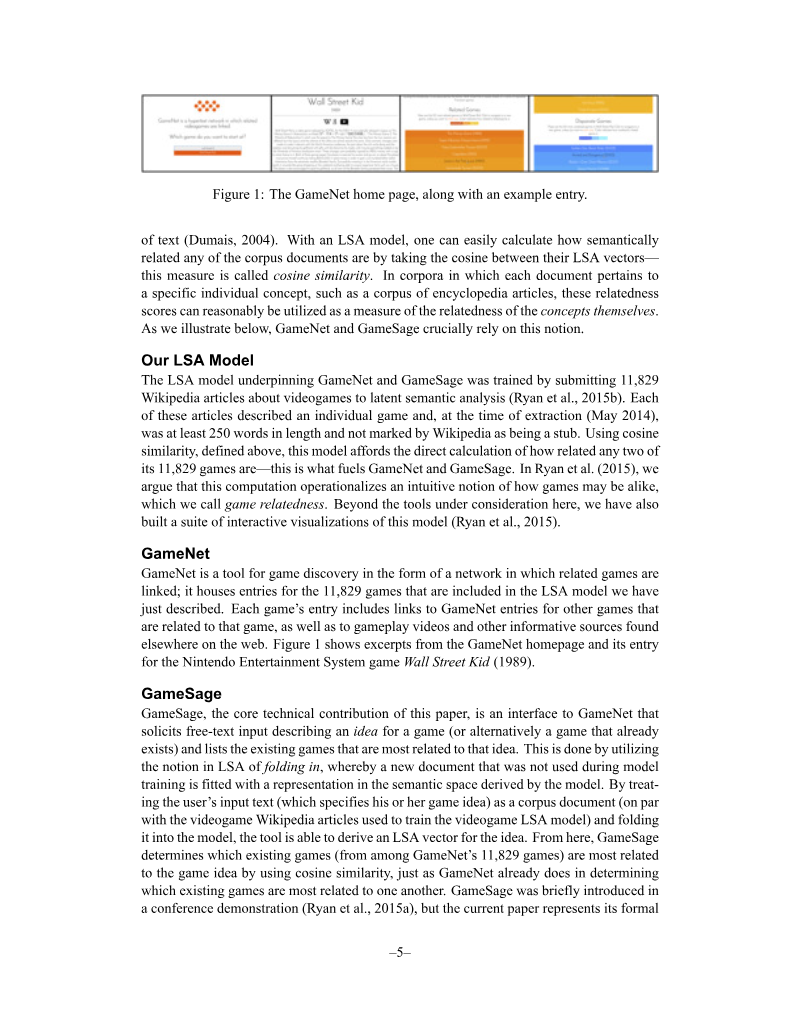
GameNet and GameSage present a videogame discovery system designed to help game designers locate related prior work in an industry where the volume of new releases has outpaced any individual's ability to survey existing games.
- GameNet and GameSage target a discoverability problem in game design: the volume of new releases has outpaced any individual's ability to survey existing games, which the authors link to blockbuster-driven, bandwagon-style development.
- In a controlled study of 182 undergraduate game-design students over 15-minute sessions, participants using GameSage and GameNet discovered an average of 14.16 games versus 6.49 with general web search.
- The tools surfaced far more unfamiliar titles: 80.3% of games discovered were new to participants, compared with 47.0% for the baseline.

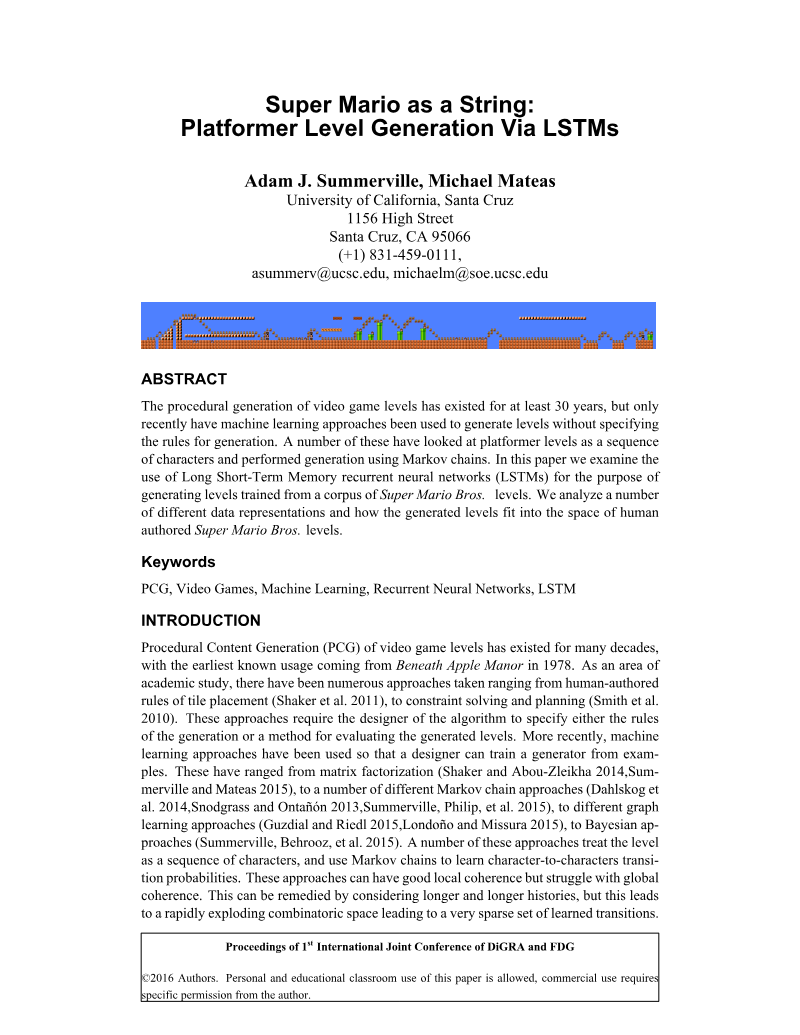
Super Mario as a String: Platformer Level Generation Via LSTMs
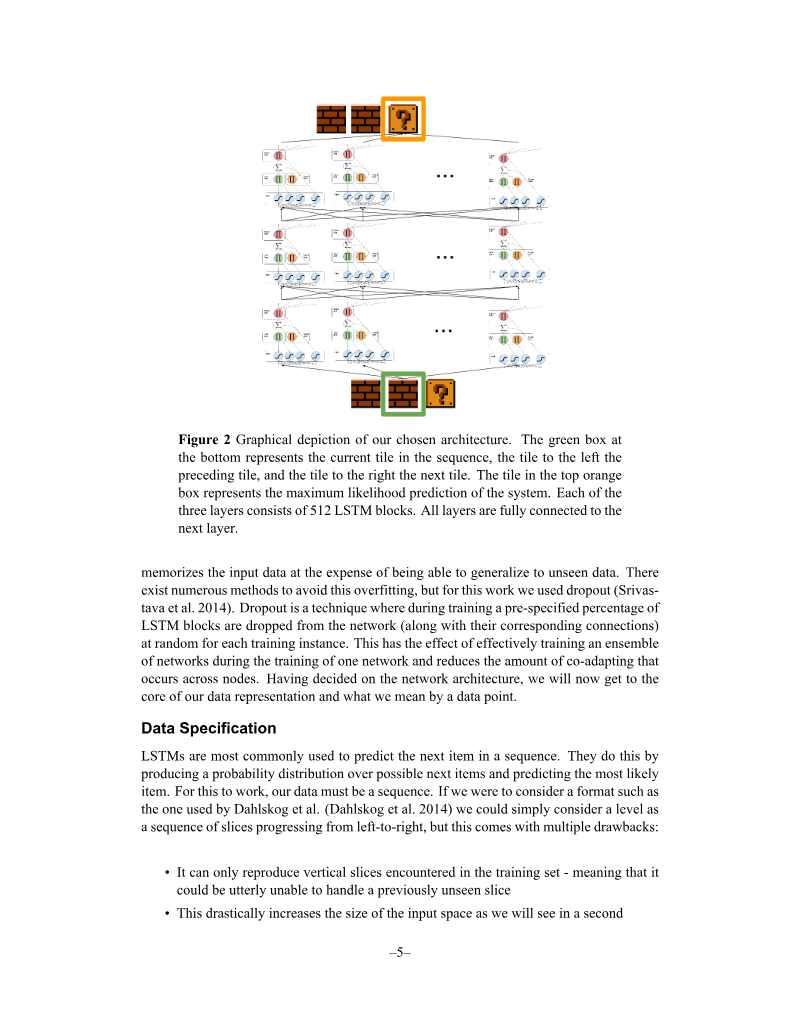
Researchers applied Long Short-Term Memory (LSTM) recurrent neural networks to the procedural generation of Super Mario Bros. levels, arguing that LSTMs, by mitigating the vanishing gradient problem, can capture longer-range structural dependencies than the Markov-chain and graph-based generators that have struggled with global…
- Applying LSTM recurrent networks to Super Mario Bros. level generation aims to capture longer-range structural dependencies than Markov-chain and graph-based generators, which have struggled with global coherence.
- The strongest result came from encoding player path information: the best configuration, combining snaking tile ordering, path data, and column depth markers, reached a negative log-likelihood of 0.0177.
- The best configuration produced levels that a simulated agent could complete 97 percent of the time, compared with a previously reported best of 66 percent for machine-learning-based level generators.



Creative Communities: Shaping Process through Performance and Play
"Creative Communities: Shaping Process through Performance and Play" argues that play can disrupt entrenched assumptions within communities of practice and foster innovation, and it proposes a "context provider's framework" under which creative hubs and universities design spaces that support creative process.
- The authors argue that play can disrupt entrenched conventions in communities of practice, such as generic game-engine styles and oversaturated videogame genres, which they claim limit creative output.
- They propose a 'context provider's framework' in which creative hubs and universities design spaces and conditions that support creative process, while acknowledging that a community of practice itself cannot be designed.
- The Development Cultures study (2014) ran for six months with reflective seminars and two game jams, and participation grew from 23 to 46.


TIGA Genre Report 2016
The UK game development landscape in 2015 was defined by a strong preference for action and adventure titles, which accounted for 24.21 percent of all releases.
- Action/Adventure is the most common game genre, with over 45 releases, followed by Arcade and Puzzle/Trivia, each with over 30 releases.
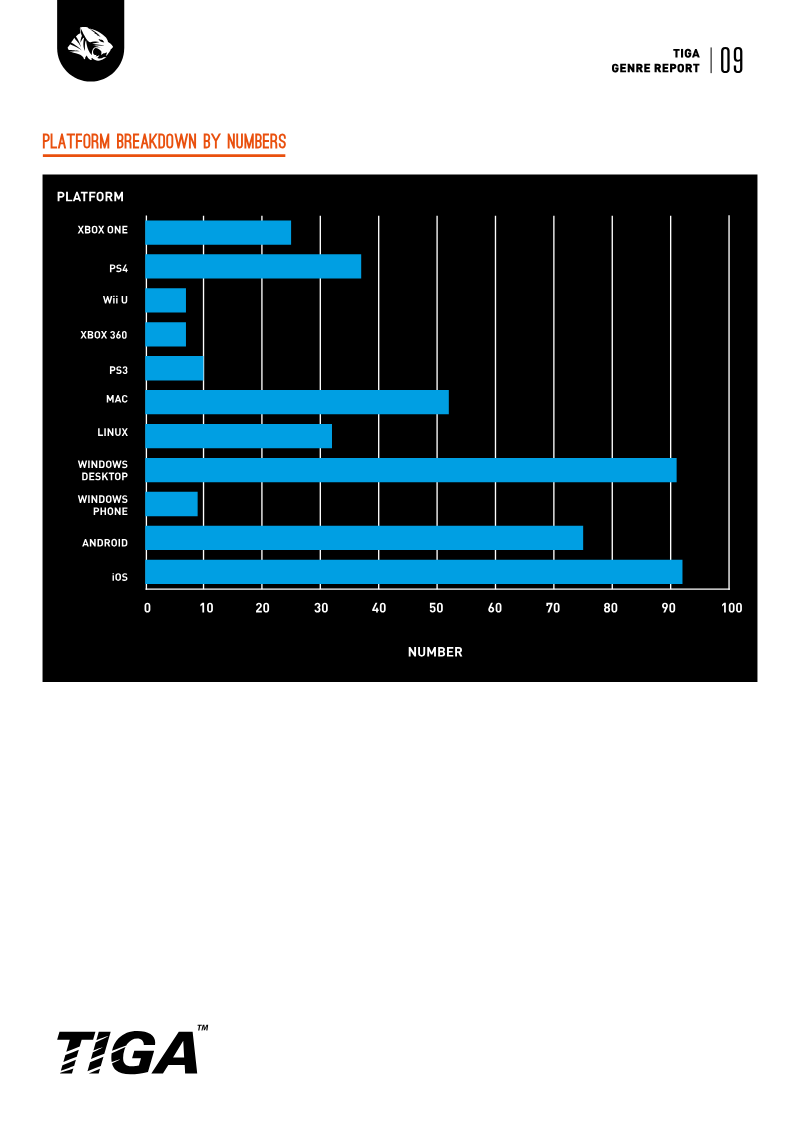
- Mobile platforms (iOS, Android, Windows Phone) show a higher number of releases in Casual, Puzzle/Trivia, and Action/Adventure genres compared to other genres.
- Desktop platforms (PC, Mac, Linux) have a significantly higher number of releases in Action/Adventure and RPG genres, with over 70 and 60 releases respectively.


How to Enable Digital Growth in Europe
The European Game Developers Federation (EGDF), which unites national trade associations from 13 countries and represents over 1,600 of Europe's 3,200+ studios, mostly SMEs, sets out a policy agenda to help the continent's game industry grow in the digital economy.
- Network neutrality is crucial for the European games sector, as easing it risks dividing Europe, allowing network providers to slow access to competing virtual services, and strengthening dominant media companies over independent developers.
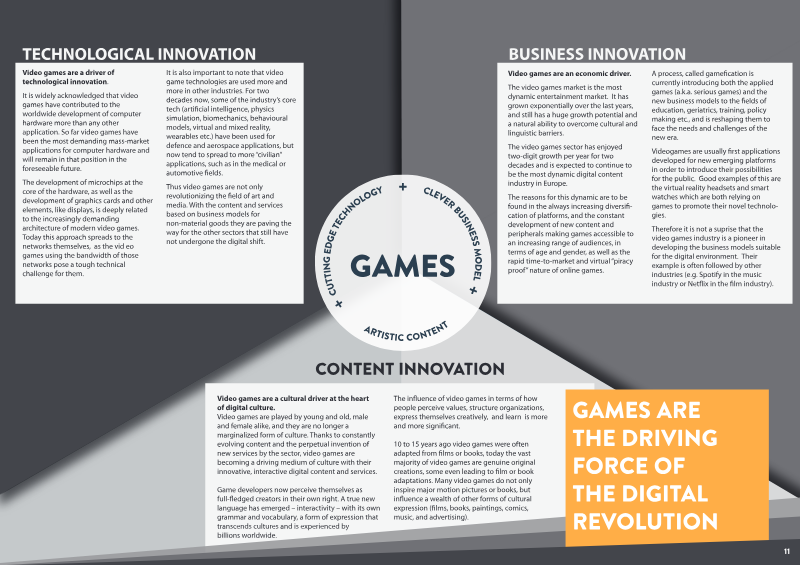
- Video games are a driving force in the digital revolution, creating a new interactive language that transcends cultures and influences other forms of cultural expression like films, books, and music.
- European game developers are frequently targeted by patent trolls, with legal battles in the US potentially costing hundreds of thousands to millions of Euros and fully occupying developers.
Meaningful Choice in Game Level Design
Meaningful choice in game level design functions as the primary driver of player engagement, regardless of whether a game follows a linear or open-ended structure.
- Meaningful choice is driven by systemic agency, which allows players to make discernable, integrated decisions that satisfy the psychological needs for competence, autonomy, and relatedness.
- Effective level design balances predictability with complexity, creating a 'sweet spot' that encourages pattern recognition while requiring active learning to achieve mastery.
- Games like Doom, Dead Space, and Halo utilize orthogonal unit differentiation to force players to evaluate surroundings and adapt mental schemas in real time, preventing repetitive gameplay.
Metagame Balance For eSports & Fighting Games
Game balance in competitive titles, particularly fighting games, often suffers from a disconnect between developer data and player perception.
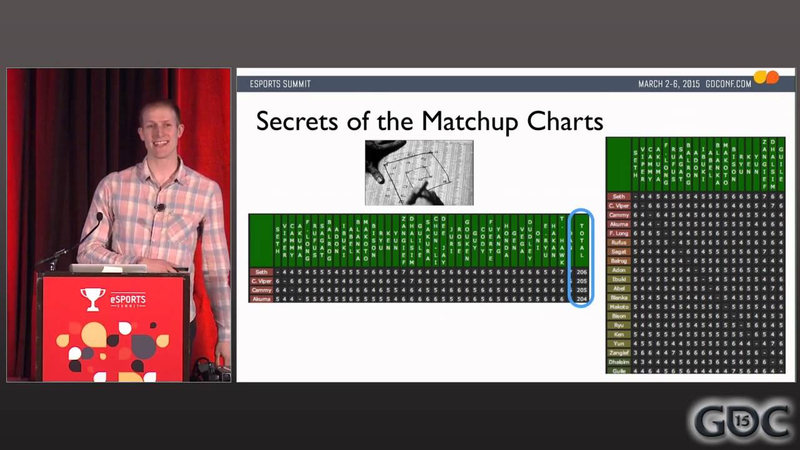
- Developers should shift from relying on simple win-rate averages to using game theory and linear programming to analyze character matchups as a matrix of win probabilities.
- By treating the meta-game as a formal 'selection game,' developers can calculate the theoretical bounds of character frequency to predict meta-game shifts before they occur in live environments.
- This methodology identifies three distinct categories of imbalance: characters that are always excluded, those that are sometimes dominant, and those that are always dominant.

PlayRaven CEO: We don't make clones
PlayRaven operates on the core thesis that the mobile gaming market is saturated with long-standing titles, necessitating a commitment to original, innovative free-to-play experiences rather than clones.
- PlayRaven maintains a lean, 23-person team structure to foster agility and cross-pollination of ideas across multiple small, simultaneous development projects.
- The studio enforces a 'burn the boats' policy that mandates exclusive focus on original free-to-play content, prohibiting the development of clones to force mastery of the business model.
- Innovation is driven by a culture of extreme transparency, utilizing open meetings, public beta programs, and external feedback to accelerate the company's learning cycle.

Why you should visit Korean game show G-Star
G-Star serves as a critical window into the distinct operational and cultural differences between the South Korean and Western gaming markets.
- Independent game development at G-Star reflects a universal artistic framework that mirrors the experimental sensibilities found at Western events like E3 and Gamescom.
- Large-scale Korean studios frequently struggle to penetrate Western markets because their attempts to adopt Western tropes, such as mafia-themed narratives, often lack cultural authenticity.
- The South Korean gaming market maintains a cautious, delayed approach to virtual reality technology, contrasting with the aggressive investment and adoption trends observed in the West.
A brief history of Iceland's game developers
The Icelandic game development industry has evolved from a resource-dependent economy to a burgeoning technology sector characterized by high technical literacy and early adoption of digital entertainment.
- CCP Games established the viability of the Icelandic gaming industry by proving that local studios could successfully compete on a global scale.
- The 2008 financial crisis caused significant industry stagnation due to the overextension of local banking institutions, forcing a national pivot toward an innovation-led economy.
- The success of Plain Vanilla in the mobile trivia market served as a critical catalyst for restoring industry confidence and fostering a new wave of entrepreneurship.