Game Design reports and market data
Documents
Soft launch Sonar #6: Is Capybara GO the next big hit from Habby?
The mobile gaming industry is currently defined by a strategic shift toward iterative design, where developers prioritize refining proven mechanics over original intellectual property.
- Mobile developers are increasingly prioritizing the refinement of proven mechanics over original IP, utilizing genre-mashups like merge, roguelite, and puzzle systems to optimize retention.
- Habby is shifting from hyper-casual roots toward complex hybrid-casual titles by integrating deep meta-layers such as collectible talent cards, gacha mechanics, and social casino elements.
- To combat rising user acquisition costs, 4X strategy studios are employing rapid prototyping and diverse creative hooks—including fantasy and survival mini-games—to validate concepts before global launch.
Brawl Stars': Learnings from the Removal of Loot Boxes
Brawl Stars underwent a significant strategic pivot between 2021 and 2024 to combat declining engagement and revenue, moving away from a reliance on loot boxes toward a more transparent, deterministic progression model.
- Removing loot boxes from Brawl Stars initially caused a decline in engagement, forcing the team to pivot toward a system that balanced player choice with long-term progression.
- The introduction of 'Stardrops' and a re-engagement program for returning players resulted in a 60% month-over-month increase in Daily Active Users (DAU).
- The team learned that shipping multiple major changes simultaneously creates 'noise' in data, making it difficult to isolate the impact of individual features on player behavior.
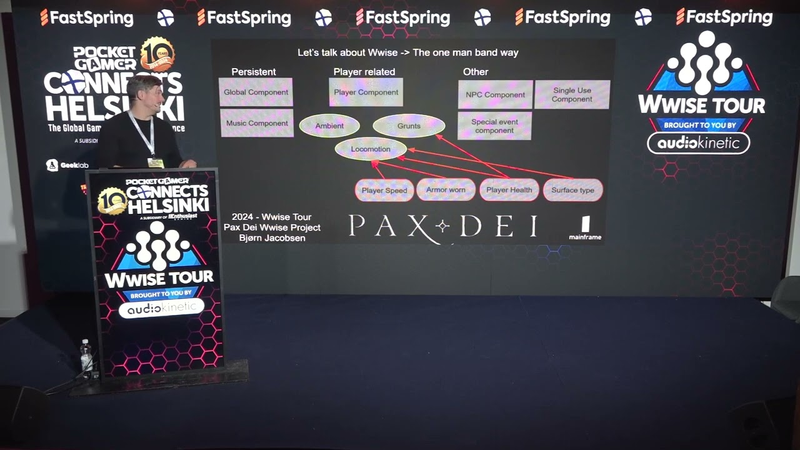
Session: One Man Band AAAudio Department - Bjørn Jacobsen, Mainframe Industries.
Managing the audio landscape for a massive, systemic open-world title like Pax Dei requires a shift from manual asset triggering to a highly automated, data-driven architecture.
- A solo audio lead can achieve AAA-level fidelity in a systemic open-world game by prioritizing a data-driven Wwise architecture over manual asset triggering.
- The system utilizes global RTPCs, states, and switches that update every half-second to dynamically adjust audio based on variables like altitude, weather, time of day, and terrain slope.
- Performance in dense environments is maintained through component pooling, persistent audio components, and strict voice management that limits active virtual voices to the player's immediate biome.
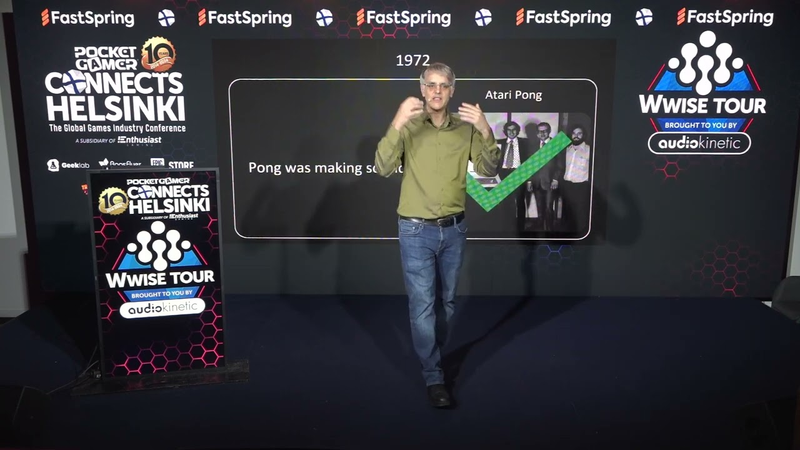
Session: Navigating 50 Years of Evolution in Interactive Audio - Simon Ashby, Audiokinetic.
The evolution of interactive audio over the past half-century reflects a continuous tension between hardware limitations and creative ambition.
- Future interactive audio production faces a massive scaling challenge, with some upcoming titles projected to require up to 50 million individual audio elements.
- To manage exponential asset growth without unsustainable headcount increases, the industry must transition to AI-driven workflows for tasks like mixing, text-to-speech, and procedural sound propagation.
- The evolution of interactive audio has been defined by a shift from hardware-dependent sound design to flexible, sample-based workflows that decouple creative goals from technical constraints.
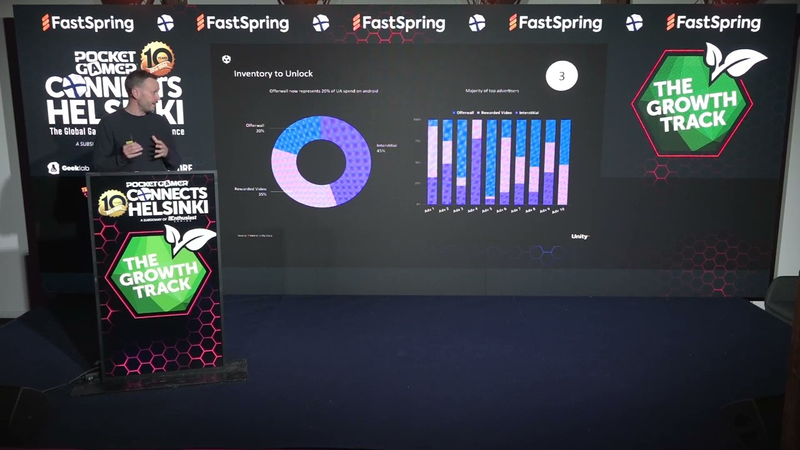
Session: Rewards Unlocked: Accelerating Game Growth with Rewarding User Experiences - Danny Cormack.
The rewarded user acquisition (UA) landscape is experiencing significant growth, driven by a shift toward privacy-centric environments and the performance limitations of traditional UA channels.
- Offer walls now account for 20% of total Android ad spend across all Unity channels, reflecting a significant shift in user acquisition strategies.
- Unity's 'Unity Rewards' web-based solution for iOS is currently in beta and showing strong performance, with 4x the ARPU and 3x the day-7 ROAS compared to Android campaigns.
- Internal Unity data indicates that offer wall users demonstrate superior retention from day 0 to 30 and higher LTV from day 0 to 60 compared to traditional video ad channels.

Saying NO to Millions revenues?! Balatro: Power combo of Poker & Solitaire.
Balatro stands as a premier example of high-concept game design, successfully blending poker mechanics with roguelike deck-building elements to create a deeply addictive experience.
- Balatro, a premium poker-themed roguelike, has demonstrated strong engagement with daily active users (DAU) growing from 25,000 to 100,000 between its launch and October 14th.
- The game exhibits high retention metrics, with an average session duration of 12 minutes and seven sessions per day, totaling approximately 90 minutes of daily gameplay per user.
- If Balatro were converted to a free-to-play model with standard ad monetization, it could potentially generate approximately $350,000 per month in revenue based on its current user base.
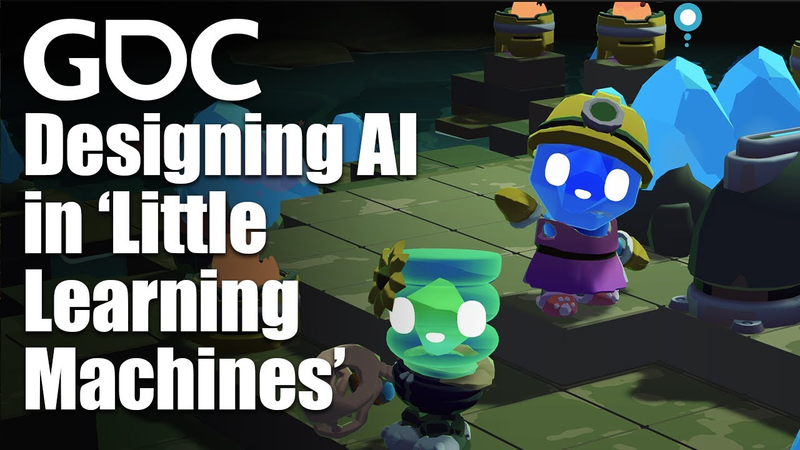
'Little Learning Machines' Postmortem: A Game About Training Neural Networks
Little Learning Machines aims to democratize the complex field of reinforcement learning by transforming the traditionally code-heavy research process into an accessible, visual game mechanic.
- Little Learning Machines enables real-time reinforcement learning (RL) in-game by reducing training times from 16 hours to under 5 minutes through architectural optimizations.
- The game utilizes Proximal Policy Optimization (PPO) via a customized version of the ML-Agents trainer, employing fully connected networks ranging from 128 to 512 neurons.
- To achieve rapid training, the developers prioritized discretizing the game space and time, which simplifies decision-making for the neural networks compared to continuous environments.

Escape From Hadrian's Wall with Jim Gray | 356
The modern landscape of virtual reality development is defined by a transition from high-budget, tethered corporate projects toward agile, independent production models.
- The VR industry is shifting from high-budget, tethered corporate projects toward agile, independent production models focused on standalone hardware.
- Developers are increasingly abandoning proprietary engines in favor of Unreal Engine to improve efficiency for gameplay-focused titles.
- Commercial viability for independent studios now relies on iterative development cycles that incorporate community feedback early in the process, rather than the traditional AAA singular launch model.
Metagame Mastery: Growing Games Beyond Core Loops
Modern live-service games increasingly rely on standardized metagame features to drive player retention and habitual engagement.
- Social features like guild-based competitions and gifting mechanics can increase player engagement by up to 300% during live events.
- Studios are shifting toward using off-the-shelf infrastructure for metagame systems to accelerate development and focus resources on tailoring player experiences.
- Centralized tooling is essential for managing live-service economies, enabling remote configuration, A/B testing, and machine learning models to predict churn and lifetime value.
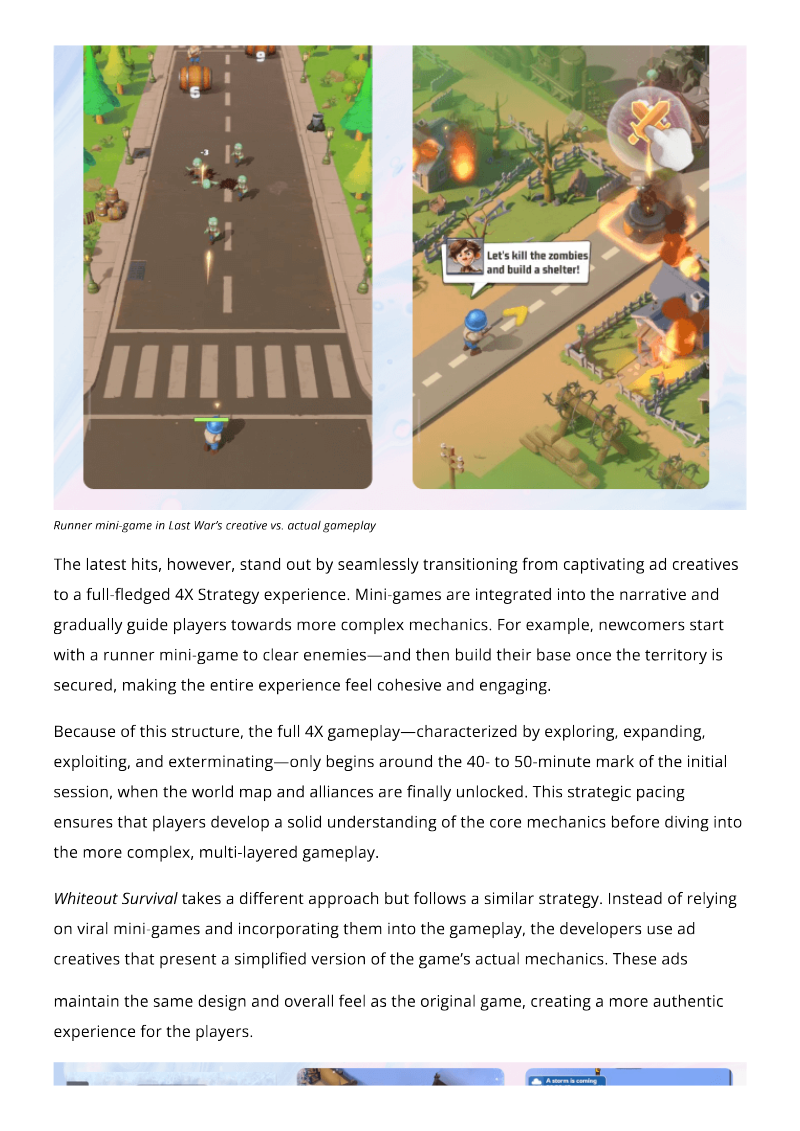
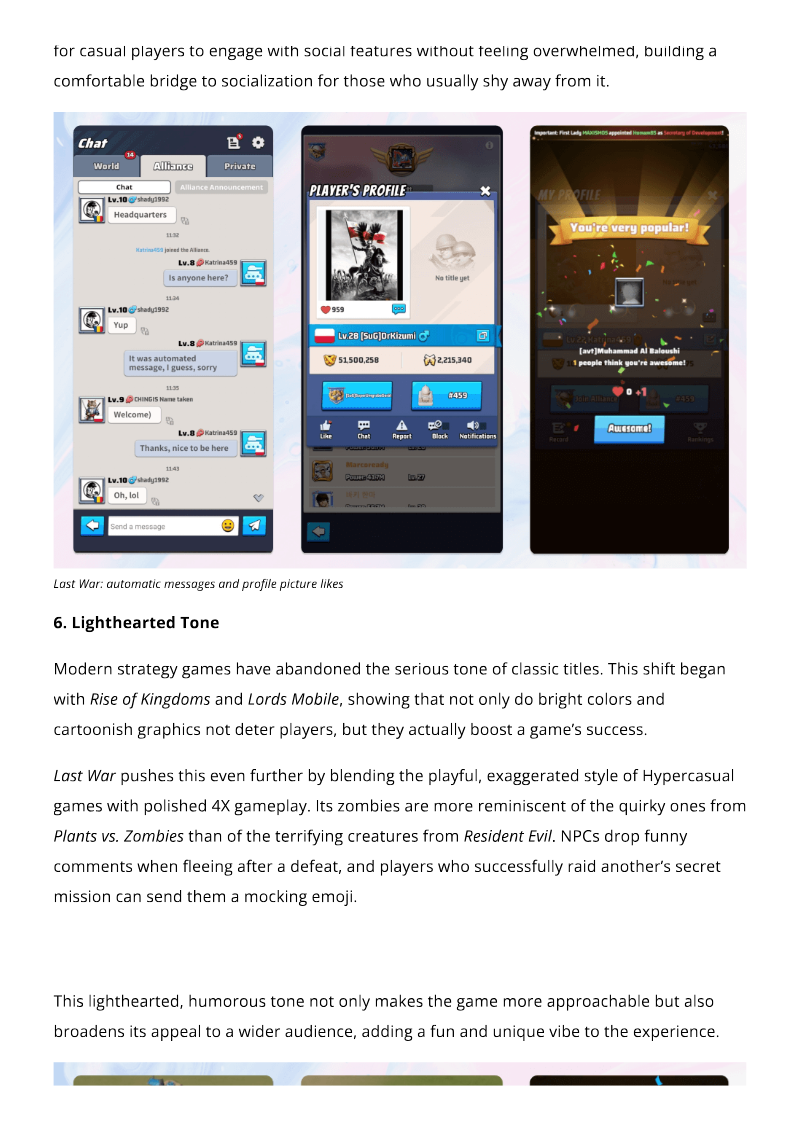

Expanding the 4X Audience: Lessons from Last War and Whiteout Survival
The 4X strategy genre has undergone a significant evolution, transitioning from a niche, hardcore-focused market to a broader, more accessible landscape.
- The 4X strategy genre generated $5.8 billion in 2023 by shifting from hardcore, complex mechanics to more accessible, casual-friendly designs.
- Titles like Last War and Whiteout Survival have successfully expanded their user base by integrating simplified onboarding, intuitive progression, and cohesive mini-games.
- Modern 4X monetization has pivoted from aggressive gacha mechanics toward a model focused on low-cost in-app purchases and premium passes to encourage consistent, smaller transactions.

Cup Heroes: Voodoo's new hybridcasual hit making $160k/day! Steady growth w/ adplacement excellence
Cup Heroes, a hybrid-casual title published by Voodoo, has emerged as a significant revenue driver since its February 2024 soft launch.
- Voodoo's hybrid-casual title Cup Heroes is generating approximately $160,000 per day in combined revenue, with a significant portion driven by ad monetization.
- The game utilizes a unique bulk-sale monetization mechanic where each purchase provides a 10% discount on the next item, incentivizing players through a sunk-cost fallacy loop.
- Cup Heroes deviates from standard survivor-genre mechanics by removing traditional XP leveling in favor of a skill-selection system between waves that requires currency or ad engagement.

Making of Thronefall: Final Devlog
The development of the medieval base defense game Thronefall concluded with the release of version 1.0 on Steam and the Nintendo Switch, marking the end of a three-year production cycle.
- Thronefall evolved from a failed turn-based card game prototype into a successful action-oriented strategy title over a three-year development cycle by a two-person team.
- The tower upgrade system was significantly expanded during development, growing from four initial variations to sixteen distinct options.
- The team utilized asset-bashing techniques and iterative level design inspired by historical ruins to maintain a rapid production pace.