Game Design reports and market data
Documents

Let's Review Your Games — Ep. 013
Indie game success hinges on the ability to capture player attention immediately through polished first impressions and clear, intuitive design.
- Prioritize the first five minutes of gameplay, as this window is the primary determinant for player and streamer retention.
- Sound design accounts for up to 60 percent of the player's sensory experience and should be prioritized over music to establish immersion.
- Trailers must utilize an appetizer-entree structure, starting with high-energy action to secure interest before transitioning into narrative context.

My Sister Learns Game Dev In 25 Days
This account details a 25-day intensive mentorship program designed to teach game development fundamentals to a beginner using the Unity engine.
- A project-based curriculum that mandates daily small-scale builds effectively bypasses 'tutorial hell' by forcing the application of core concepts like physics, UI, and debugging.
- The 25-day intensive program successfully transitioned a programmer with no prior C# or game engine experience into a developer capable of creating a polished, original game.
- Rapid iteration is a primary driver of skill acquisition, as evidenced by the participant moving from basic 2D/3D mechanics to complex 3D modeling and shader implementation within three weeks.

2.5 gamers x Live AM(F)A #8 - Ask Me Anything @ February 19 5:00pm CET
Modern mobile game development requires a sophisticated approach to user acquisition and data management in an increasingly privacy-centric landscape.
- Developers should prioritize internal testing and beta tracks over global releases to maintain store visibility and maximize feature potential in a privacy-centric environment.
- To bypass the limitations of Apple’s SKAdNetwork and the decline of IDFA, studios are shifting toward creative-level attribution and on-device calculations.
- Early-stage game ideation should be validated using conversion-based campaigns on platforms like Facebook, as these provide more accurate audience behavior data than click-based metrics.

Let's Review Your Games — Ep. 012
Successful indie game development requires a strategic synthesis of focused design, clear marketing hooks, and high-production-value promotional assets.
- Prioritize the development of smaller, polished, and mechanically distinct titles over over-ambitious open-world projects to avoid unguided or empty player experiences.
- Differentiate a game in a crowded marketplace by synthesizing familiar genres with a specific, unique visual or mechanical twist.
- Treat game trailers as narrative frameworks where sound design—specifically synthesized or layered audio—is used to dictate pacing and emotional impact.

Let's Review Your Games — Ep. 011
Success in the modern indie game market depends on the ability to communicate a distinct, compelling hook within seconds.
- Marketing assets must communicate a game's genre, setting, and unique mechanics within seconds to overcome high saturation on the Steam storefront.
- Trailers should prioritize high-action sequences, rhythmic musical drops, and professional sound design to guide viewer emotional response, even if the game build is incomplete.
- Developers should replace bloat-heavy tutorials with contextual prompts integrated directly into gameplay to facilitate immediate player engagement.

Which Engine Is Best? (Unity / Godot / Unreal / Game Maker)
The selection of a game engine is a strategic decision that significantly influences a developer’s creative output, technical workflow, and long-term career trajectory.
- The choice of game engine is a strategic decision that dictates a developer's creative output, technical workflow, and long-term career trajectory.
- Unreal and Unity offer advanced features like real-time global illumination but present steep learning curves that can lead to bloated, generic-looking projects for small teams.
- Specialized 2D engines like GameMaker provide a constrained environment that promotes faster iteration and a distinct, personal artistic style by avoiding the complexity of 3D pipelines.

Top Secrets to Build Better Games
The modern game industry faces a structural crisis characterized by ballooning development costs and extended production timelines that have outpaced revenue growth.
- The traditional AAA development model is becoming unsustainable due to development costs and production timelines that have outpaced revenue growth.
- Studios must pivot from rigid, manufacturing-style planning to a model that prioritizes rapid iteration, core gameplay loops, and player-centric design.
- Leadership must move away from the 'confidence trap,' where bureaucratic consensus and rigid milestones replace expert-driven vision and early validation of a project’s core thesis.

Let's Review Your Games — Ep. 010
Technical optimization serves as the foundational requirement for modern game success, as player reception is heavily influenced by frame rate stability, remappable controls, and support for ultra-wide displays.
- Optimization and stable frame rates are critical for positive player reviews, as technical performance issues can significantly detract from the user experience.
- Integrating the Steam API directly into a game allows players to wishlist titles via an in-game overlay, which is more effective than redirecting users to an external URL.
- Effective game tutorials should avoid intrusive, constant voice-over narration that dictates player actions, as this can negatively impact engagement.

The Smart Way to Extend Your Game's Lifecycle
The game industry is currently undergoing a strategic shift toward cross-platform development and direct-to-consumer monetization models to combat rising production costs and shrinking budgets.
- Developers can significantly increase profit margins by utilizing alternative web shops like Xsolla, which charge 5-6% in fees compared to the 30% commission standard on major mobile, Steam, and console platforms.
- Successful free-to-play monetization requires integrating revenue models—such as in-app purchases, subscriptions, or ads—into the core game design early to avoid player friction and ensure the economy feels natural.
- Extending a game's lifecycle can be achieved by porting titles to new platforms, transitioning premium games to free-to-play models, or adding multiplayer functionality to legacy titles to drive new sales.
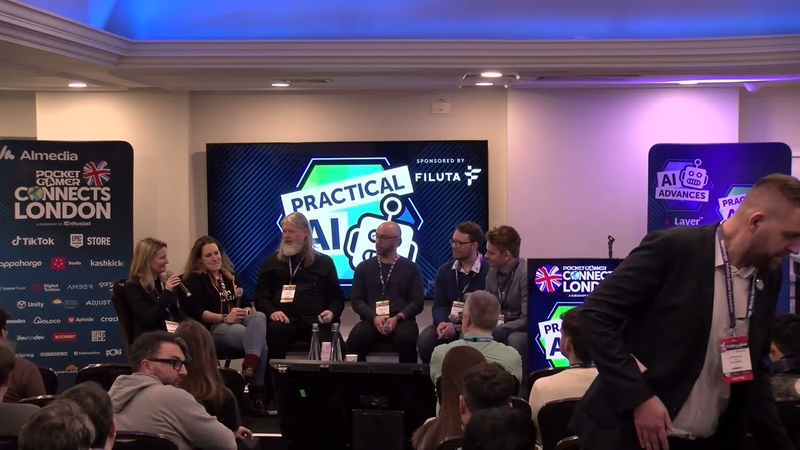
Panel: Supercharging Development – How AI Tools Can Augment Everyone.
Artificial intelligence is poised to fundamentally transform game development over the next five years, primarily by enhancing non-player character behavior, procedural content generation, and data-driven analytics.
- AI is projected to fundamentally transform game development over the next five years by enhancing NPC behavior, procedural content generation, and data-driven analytics.
- Integration of AI tools requires a shift toward rigorous software engineering practices, specifically the implementation of robust continuous integration pipelines and automated code quality management.
- AI acts as an augmentative tool that enables smaller teams to achieve greater scale and hyper-personalization by automating repetitive technical tasks and bug detection.
How To Make Games Alone (And SHOULD YOU?)
The development of independent games involves a spectrum of production scales, ranging from solo efforts to collaborative team-based projects.
- The decision to scale from a solo developer to a team should be dictated by the specific technical and design requirements of the project rather than a general desire for company growth.
- Solo development provides maximum creative autonomy and agility, but often requires outsourcing specialized tasks like music and sound design to maintain professional production standards.
- Transitioning to a team-based model enables the realization of ambitious 'dream projects' that exceed the capacity of a single developer, though it introduces increased production friction and slower development cycles.

Gaming Today with Studio GM Chris Stone | 362
The gaming industry is currently navigating a significant post-pandemic correction characterized by a shift away from the unsustainable growth, aggressive over-hiring, and inflated salary expectations that defined the previous few years.
- The gaming industry has shifted from a pre-COVID era of easily accessible $100 million budgets for AAA projects to a current environment where investors are significantly more risk-averse.
- Remote and hybrid work models have disrupted traditional project management, as the lack of in-person interaction makes it difficult to gauge individual productivity, maintain team shorthand, and build the trust necessary for effective leadership.
- Managing remote teams requires a personalized approach, as managers must account for varying home-life constraints and individual work styles rather than relying on standardized, pre-prescribed recipes for team composition.