Game Design reports and market data
Documents
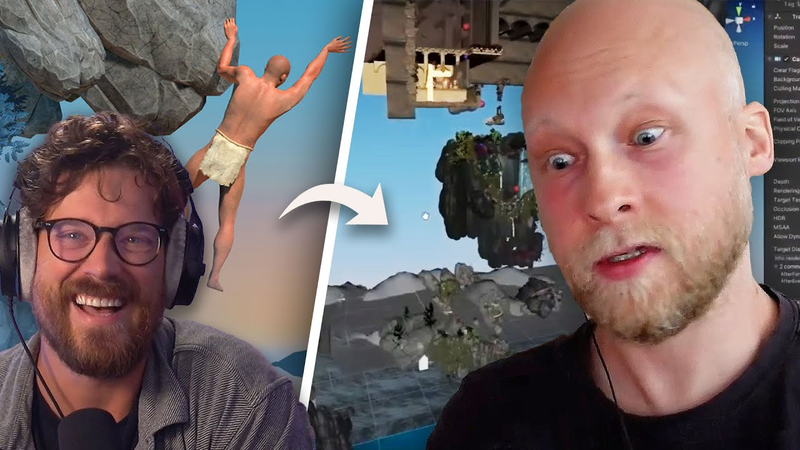
What A $1,000,000 Game Looks Like In Unity (PontyPants' "A Difficult Game About Climbing")
A Difficult Game About Climbing demonstrates how sophisticated technical optimization allows a single developer to achieve high-fidelity visual results within Unity.
- To maintain high performance and keep draw calls around 100, use MeshBaker to combine individual meshes and create texture atlases, which significantly reduces the overhead caused by multiple materials and draw calls.
- For precise gameplay in rage-style games, use an orthographic camera setup to ensure consistent player movement and avoid the visual distortion inherent in perspective rendering.
- Implement a foreground camera layer to render non-climbable objects in perspective, using depth-ramping shaders to darken these elements as they approach the camera to visually communicate their status to the player.
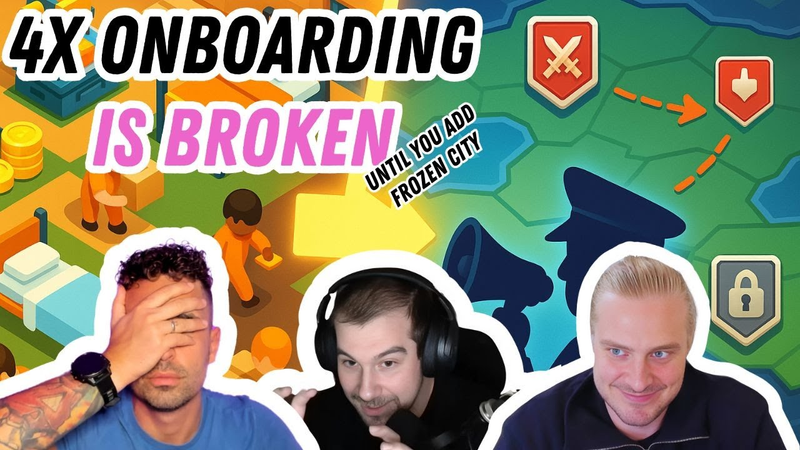
🚨Lands Of Jail: Prison SIM meets 4X strategy. It's Frozen City + Whiteout + Toy Factory & scaling
Lands of Jail represents a significant evolution in mobile game design, successfully merging idle simulation mechanics with the high-stakes environment of 4X strategy.
- Lands of Jail generates approximately $200,000 in daily revenue by successfully merging idle simulation mechanics with 4X strategy gameplay.
- The game utilizes a hybrid-casual framework, transitioning players from casual resource management—such as operating a prison toy factory—into complex, map-based warfare.
- The development team at EWorld employs a user acquisition strategy that leverages AI-generated content and viral-style tropes to maintain low cost-per-install metrics.
Pontypants: Making Games Alone, Burnout, Coming Up With Viral Ideas & Finishing Games | Ep. #044
Successful indie game development requires a strategic balance between personal creative passion and rigorous market awareness.
- Game development success often relies on identifying unique movement or physics mechanics, such as the mouse-driven hammer physics in Bennett Foddy's games, which provide depth for exploration.
- The final 10% of game development is critical because it is the stage where the core identity of the project is often discovered, frequently during periods of high stress and emotional pressure.
- While strong mechanics like those in 'Balatro' can drive viral success, a focus on mood, story, and aesthetic properties—similar to 'Bioshock'—can effectively satisfy a niche audience of approximately 100,000 players.
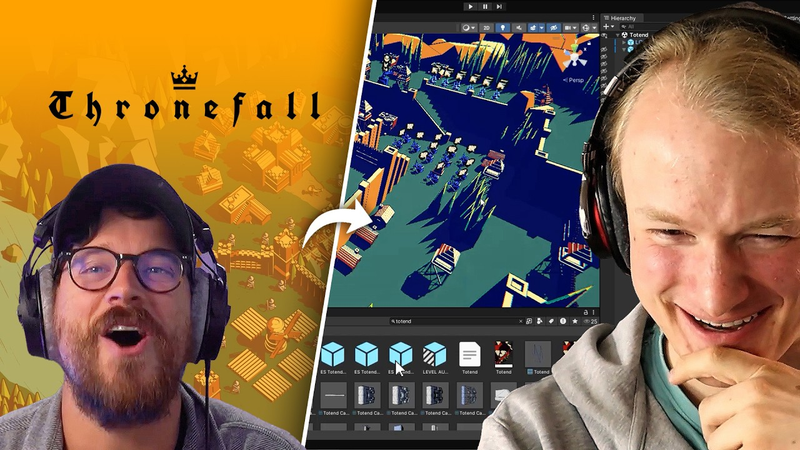
What A Million Dollar Game Looks Like Behind The Curtain (Jonas Tyroller's "Thronefall")
The development of Thronefall demonstrates that indie game success relies on prioritizing development speed and visual cohesion over rigid technical perfection.
- Prioritize development speed and visual cohesion over technical perfection to ensure rapid iteration and a polished final product.
- Utilize a minimalist, low-poly aesthetic combined with strategic lighting and color theory to achieve high-quality visual identity without the cost of complex assets.
- Centralize game balance using ScriptableObjects to enable rapid, global adjustments to mechanics and weapons without the need to edit individual prefabs.

Full Steam Ahead: How Steam trends influence Mobile games?
The mobile gaming industry is increasingly leveraging Steam as a primary incubator for market validation, utilizing successful PC titles to identify engaging mechanics and creative loops for mobile adaptation.
- Mobile developers are increasingly adapting Steam hits into mobile titles, with some 'copy-paste' clones generating significant short-term revenue, such as one title that earned $1.3 million in ad revenue within 90 days.
- Successful mobile adaptations often involve 'remixing' Steam mechanics into established mobile genres, such as integrating survival or idle mechanics into 4X strategy frameworks, rather than performing direct ports.
- Genre-specific mechanics like digging simulators, Plinko-style roguelites, and idle RPGs show high potential for mobile conversion due to their simple, repeatable loops that align with mobile play patterns.
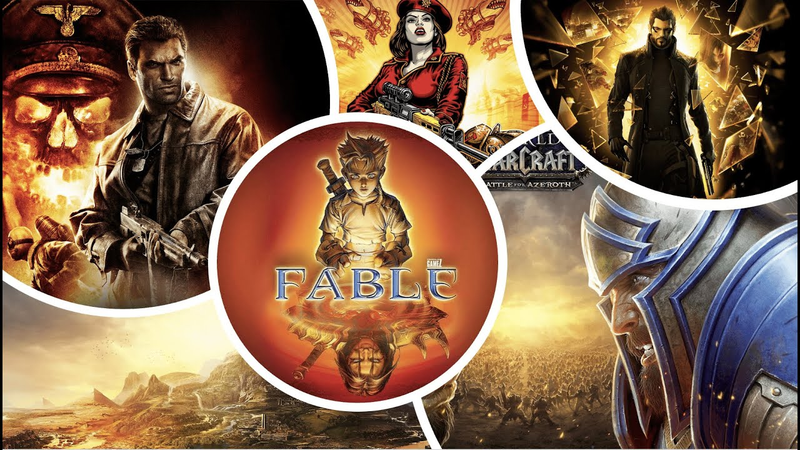
Games That Made Us
The recent induction of four titles into the World Video Game Hall of Fame—Williams Electronics’ Defender, Rare’s GoldenEye 007, id Software’s Quake, and Bandai’s Tamagotchi—highlights the industry’s ongoing effort to codify historical significance through metrics of icon status, longevity, geographical reach, and influence.
- Triple Dot has acquired AppLovin’s mobile gaming portfolio for $800 million, a deal encompassing 10 global studios and 2,500 employees across 23 cities.
- The acquisition is valued at a low multiple of 0.6 times revenue and 3.5 times EBITDA, reflecting a high-risk strategy for the buyer.
- AppLovin is divesting these assets to prioritize its high-growth advertising business, while Triple Dot faces the operational challenge of managing live-service games and in-app purchases without prior experience in those areas.
Six Figure Game Idea Workshop - Day #2
Securing funding for independent game development requires a strategic, multi-faceted approach that balances community-driven crowdfunding with professional publisher partnerships.
- Steam wishlists are a primary driver of success, with a conservative conversion rate of approximately 10% from wishlist to sale.
- Publisher funding tiers are generally based on projected ROI: small indie titles typically receive $50,000–$250,000, while medium-sized titles secure $250,000–$400,000.
- A successful 60-day launch plan for crowdfunding requires preparing a high-quality trailer and campaign page in private, followed by building an email list as the foundation for all marketing.
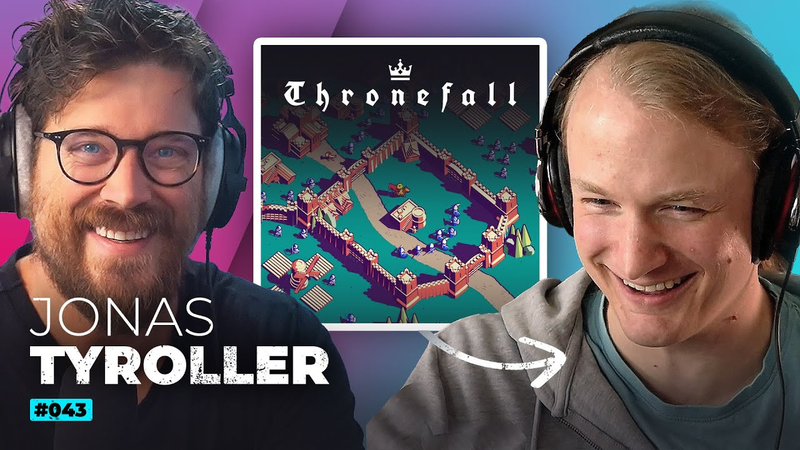
Jonas Tyroller: Making Games Alone Again, Project Overload, Profitable Game Ideas | Ep. #043
Solo game development requires a disciplined approach to project management, where the limited number of major releases in a career necessitates rigorous commercial validation before long-term commitments.
- To achieve full-time indie success, developers must prioritize efficiency and validate ideas rigorously before committing years of development, as the ROI on long-term projects is often not guaranteed.
- Working with a team can be more cost-effective than working solo; sharing royalties is a secondary concern compared to the necessity of partnering with people who improve the project's quality and output.
- Game performance can be significantly optimized by using scripts to merge individual meshes into single objects at runtime, which reduces draw calls and improves frame rates.

Squad Busters 2.0 and Supercell's YOLO Game Launch Strategy
Supercell’s Squad Busters 2.0 represents a strategic pivot from a casual, broad-market mobile game to a midcore-focused experience.
- Supercell has abandoned its traditional 18-month iterative testing cycle in favor of an aggressive 'YOLO' launch strategy, prioritizing rapid market entry over the rigorous internal feedback gauntlets that previously defined its success.
- Squad Busters 2.0 is underperforming financially, with monetization metrics currently falling below one dollar per download.
- The game suffers from a lack of cohesive identity, remaining caught between the strategic depth of auto-battlers and the real-time action of brawlers, which contributes to persistent issues with gameplay chaos and limited depth.
Six Figure Game Idea Workshop - Day #1
Achieving six-figure revenue in the independent game industry requires a strategic shift from creative experimentation to a disciplined, market-validated development model.
- A successful game concept relies on a 'hook' that differentiates it from oversaturated genres, such as realistic story-driven horror or standard top-down action-adventure games.
- The 'Big Butt' method involves creating a unique pitch by combining a familiar genre with an unexpected twist, such as 'Bioshock but with Willy Wonka' or 'a dungeon crawler but with rhythm.'
- A game's value is derived 99% from the strength of its core idea and only 1% from the actual production, emphasizing that a compelling hook is more critical than mechanical innovation.
If You Want To Make Games Alone... WATCH THIS
The decision to pursue solo game development versus team-based collaboration centers on the trade-off between creative autonomy and the increased probability of commercial success.
- The primary goal of team composition should be 'talent density,' where you only bring in partners who can perform specific tasks better than you to improve the overall quality of the final product.
- Revenue sharing with partners or publishers is largely irrelevant to financial viability because game success follows an exponential distribution, meaning you are either far above or far below your break-even point regardless of a 50% split.
- Partnering with others increases the likelihood of a project's success, often providing a greater net benefit than the cost of splitting royalties.

Building Hit Games from Scratch on Roblox with Twin Atlas
Twin Atlas has established itself as a premier developer within the Roblox ecosystem by successfully scaling from individual creator roots into a sustainable, professionalized studio.
- Twin Atlas maintains a portfolio of Roblox experiences that regularly reach 50,000 to 100,000 concurrent players and includes three titles that have surpassed 1 billion total plays.
- The studio prioritizes long-term sustainability over short-term spikes by focusing on recurring revenue and player retention rather than quick, high-churn monetization models.
- Twin Atlas formed through a strategic merger of two existing studios to pool resources and maintain independence, allowing them to compete with venture-backed developers without relying on external funding.