Game Design reports and market data
Documents
Daniel Mullins: Making Games Alone (ish), Burning Through Savings & Failing Upwards | Ep. #042
The trajectory of independent game development is defined by a strategic blend of creative intuition, financial pragmatism, and iterative learning.
- Daniel Mullins attributes much of his early career success to luck, including an unsolicited $5,000 contract for a children's math game he received at age 18 after a stranger discovered his early work online.
- To ensure high streamability, Mullins designs games around 'whoa' moments—unexpected shifts in gameplay similar to those in Bioshock or Portal—which provide streamers with natural opportunities to display reactive personality.
- When working with publishers, developers should be wary of 'greenlight' deals where the publisher takes a revenue percentage without providing significant value-add services or marketing support.

Dear Creatives, I Bet You Can Relate. Let's fix it!
The primary challenge for independent game developers and creative professionals is the tendency to juggle an excessive number of projects, leading to paralysis and a lack of focus.
- Optimize creative output by adopting a rigid project hierarchy consisting of one main project, one side project, and multiple low-priority learning or tool-development tasks.
- Evaluate project viability using the Ikigai framework, which requires the intersection of personal passion, existing skills, market demand, and financial sustainability.
- Mitigate the sunk cost fallacy and shiny object syndrome by treating every project as a calculated bet with a defined exit strategy and estimated return on investment.
Game Dev Mistakes Nobody Is Talking About
The discussion between indie developers Matt Dabrowski and Thomas Brush identifies critical pitfalls that often hinder the success of independent game studios.
- Prioritize a strong, immediate 'hook' that captures player interest within the first five seconds of a trailer to remain competitive in a saturated market.
- Avoid rigid, formal Game Design Documents in favor of flexible, living documents that evolve alongside the project's development.
- Allocate significant development time to essential but often underestimated tasks such as UI design, controller remapping, and platform-specific integrations like Steam.

Sam Lake: "I had to take six months off after Alan Wake 2"
The development of Alan Wake 2 represents a pinnacle of interactive storytelling, characterized by the complex integration of live-action sequences, musical elements, and narrative-driven mechanics.
- The intense development of Alan Wake 2 required Sam Lake to take a six-month sabbatical to recover from the project's unsustainable production demands.
- Remedy Entertainment has transitioned to a co-creative director model to support the studio's growth and the management of multiple concurrent projects.
- The studio is scaling its intellectual properties through strategic partnerships, including a collaboration with Annapurna Pictures to develop film and television adaptations.
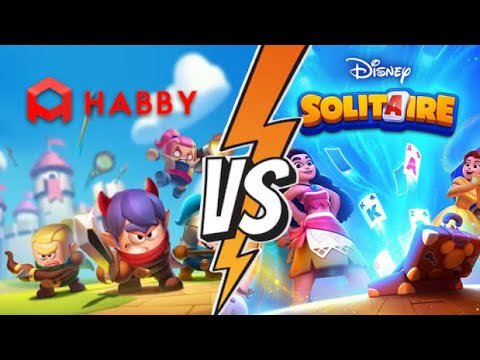
Habby's Wittle Defender vs Disney Solitaire: One of them is a Future Hit!
The mobile gaming landscape is currently defined by two distinct strategies: the aggressive application of legacy intellectual property (IP) to saturated genres and the iterative refinement of hybrid-casual mechanics.
- Habby is scaling revenue by applying a standardized meta-layer—featuring roguelike abilities, stat-based power scores, and squad RPG elements—across diverse core gameplay loops.
- The soft-launch title 'Wittle Defender' utilizes idle tower defense mechanics to target 'dead time' consumption, intentionally reducing the high-cognitive-load requirements of active-input mobile games.
- Major publishers are leveraging legacy IP like Disney and Candy Crush to secure a cost-per-install (CPI) advantage in the saturated solitaire market, currently dominated by titles like Grand Harvest.
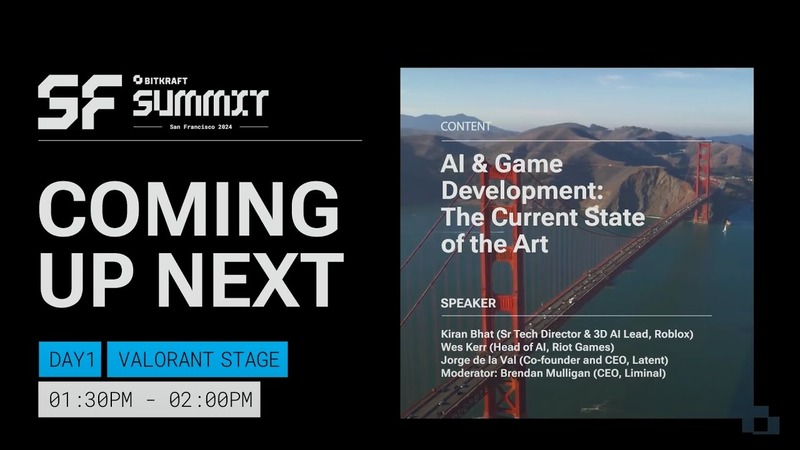
AI & Game Development: The Current State of the Art | BITKRAFT Summit 2024
Artificial intelligence in game development is shifting from a focus on technical novelty toward a strategic emphasis on product-market fit and tangible player value.
- The primary challenge in AI game development is not the underlying model technology, but rather the product-market fit and the ability to create compelling player experiences that enhance retention.
- Riot Games prioritizes AI integration that supports core gameplay and player retention, deliberately avoiding flashy, disruptive features that do not directly improve the player experience.
- Roblox is investing heavily in a foundational 3D model to simplify content creation, identifying 3D generation as a major, largely unexplored frontier compared to text and image modalities.
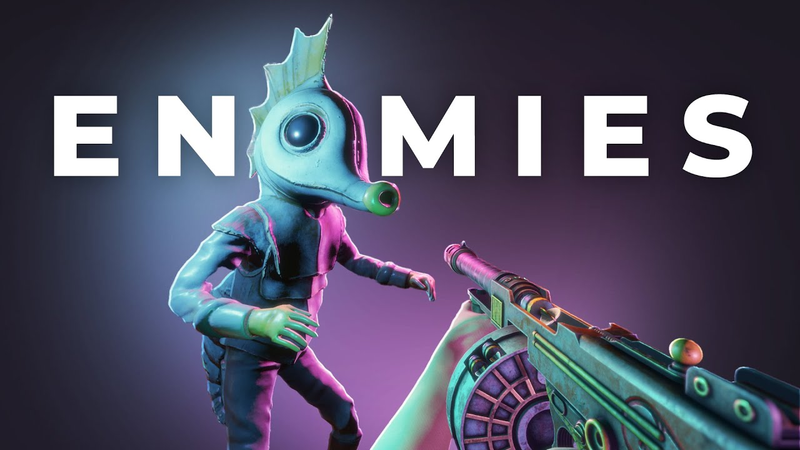
Adding Enemies That Are ACTUALLY FUN To My Indie Game (Devlog)
The primary objective of this development process is to create a unique, engaging enemy for an indie game by leveraging existing code structures rather than building from scratch.
- Efficiency in game development is maximized by using parent prefabs and modular logic to repurpose existing attack patterns and behaviors for new enemies.
- New enemy functionality can be created by swapping visual assets and animation controllers on established base code rather than building systems from scratch.
- Gameplay balance is achieved by implementing specific delay mechanisms that provide players with a fair reaction window to retreat from incoming attacks.

Kingdom Come: Deliverance 2 director hopes “AI revolution” will allow him to make games faster
The creative director and co-founder of Warhorse Studios, Daniel Vávra, discusses the successful launch of Kingdom Come: Deliverance 2, which achieved 2 million units sold within its first two weeks.
- Kingdom Come: Deliverance 2 sold 2 million units within its first two weeks, meeting internal projections based on pre-order data.
- Warhorse Studios scaled its team to 250 employees over a six-year development cycle that included navigating the COVID-19 pandemic.
- The studio attributes its commercial success to maintaining creative autonomy under Embracer Group, avoiding the trend-focused 'corporate product' model common in modern AAA development.
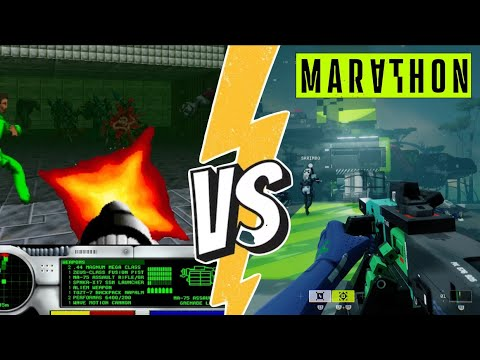
Bungie’s Marathon: Will the Lightning Strike Twice?
Bungie’s upcoming title, Marathon, represents a strategic pivot from the studio’s established narrative-driven success with Destiny toward the competitive extraction shooter genre.
- Bungie is pivoting from narrative-driven titles to the competitive extraction shooter genre with Marathon, scheduled for a September 2025 release on PC and consoles at a $40 price point.
- The game features 18-player matches with a high-stakes gameplay loop where the anticipated survival rate is under 50%.
- To achieve mainstream success beyond the niche extraction shooter market, Marathon must prioritize RPG-style meta-progression over the genre's traditional focus on punishing gear loss.
Still Crushing It: Why Minecraft Refuses to Die
Minecraft remains a dominant global force in the gaming industry, having surpassed 550 million users.
- Minecraft has reached a global user base of over 550 million, maintaining long-term relevance by functioning as a cross-generational cultural phenomenon rather than a traditional gaming product.
- The franchise prioritizes long-term brand equity over aggressive in-game monetization, relying instead on a robust physical retail ecosystem including toys and apparel to capture market value.
- Analysts are divided on whether the brand should synchronize in-game content launches with major media events like film releases to drive immediate digital revenue.

The Secret Weapon Of Sound Design For Indie Games
Effective sound design serves as a critical tool for indie game developers to establish atmosphere, build immersion, and guide player perception.
- Use subtle, layered ambient sounds like reverb and pitch shifting to create depth and immersion, rather than relying on constant noise.
- Incorporate intermittent, low-frequency effects spaced minutes apart to build suspense and prevent players from identifying repetitive audio loops.
- Leverage audio to suggest complex environments and world-building, effectively compensating for visual limitations in resource-constrained indie projects.
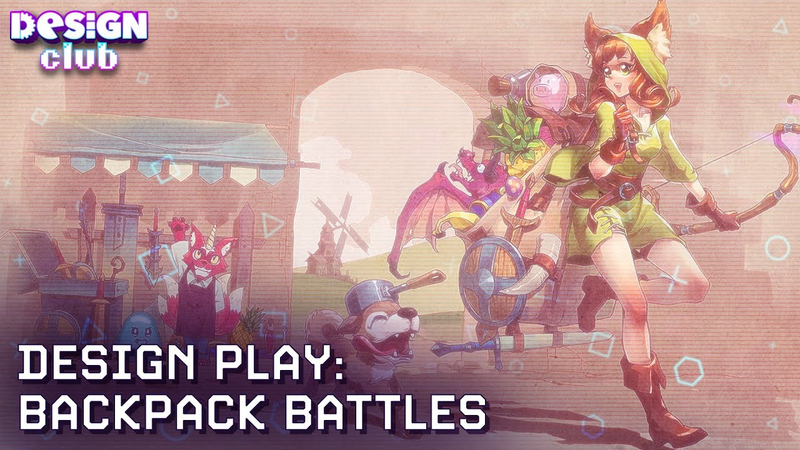
Backpack Battles: Game Designer Ride-Along | Design Club
Competitive games-as-a-service titles face significant risks when developers implement unannounced balance changes.
- Asynchronous design in auto-battlers removes time pressure, allowing players to focus on complex build optimization and long-term tactical planning rather than real-time reflexes.
- Integrating all crafting recipes and item interactions directly into the game interface eliminates the need for external wikis, significantly improving player accessibility.
- Competitive games-as-a-service titles risk eroding player trust and increasing unnecessary bug reports when balance changes are implemented without transparent patch notes.