Game Design reports and market data
Documents

Why Video Game Developers Love Remakes
The prevalence of video game remakes is driven by a combination of strategic risk mitigation, operational efficiency, and creative opportunity.
- Remakes serve as a risk mitigation strategy by providing a clear, pre-defined vision, which reduces the uncertainty and decision-making overhead associated with developing entirely new intellectual property.
- Studios utilize remakes to train staff on new tools and development pipelines, such as transitioning from Unreal Engine 4 to 5, without the added complexity of inventing a new game concept simultaneously.
- Remakes provide a productive outlet for large development teams during the 'pre-production' phase of a new project, preventing the need to assign staff to low-value busy work while core directors prototype the next title.

How to Pitch Mattel the Perfect Game with Marcus Liassides, Mattel Digital SVP
Mattel is aggressively transforming its digital strategy by leveraging its extensive portfolio of over 800 iconic brands, including Barbie, Hot Wheels, and Masters of the Universe, to establish a dominant presence across mobile, console, and metaverse platforms like Roblox.
- Mattel is pivoting from a traditional licensing model to a collaborative strategic partnership, prioritizing long-term cultural relevance and community engagement over immediate monetization.
- The company is leveraging a portfolio of over 800 brands, including Barbie, Hot Wheels, and Masters of the Universe, to expand across mobile, console, and metaverse platforms like Roblox and Fortnite.
- Mattel currently manages over 50 active digital projects, supported by a hybrid model that combines external licensing with internal self-publishing capabilities following the acquisition of the Mattel163 joint venture.

Assassin’s Creed creator Patrice Désilets: “I have two or three games left”
The independent development landscape is currently undergoing a significant shift as veteran creators move away from the constraints of large-scale publishing toward self-determined, iterative production models.
- Patrice Désilets, creator of Assassin’s Creed, is shifting toward a self-determined production model at his 70-person studio, Panache, to maintain creative autonomy over projects like 1666: Amsterdam.
- Désilets estimates he has only two or three major titles left in his career, signaling a move toward high-impact, iterative development rather than large-scale corporate output.
- Independent developers are increasingly rejecting the volatile live-service model in favor of sustainable, player-focused projects that prioritize long-term viability over aggressive monetization.
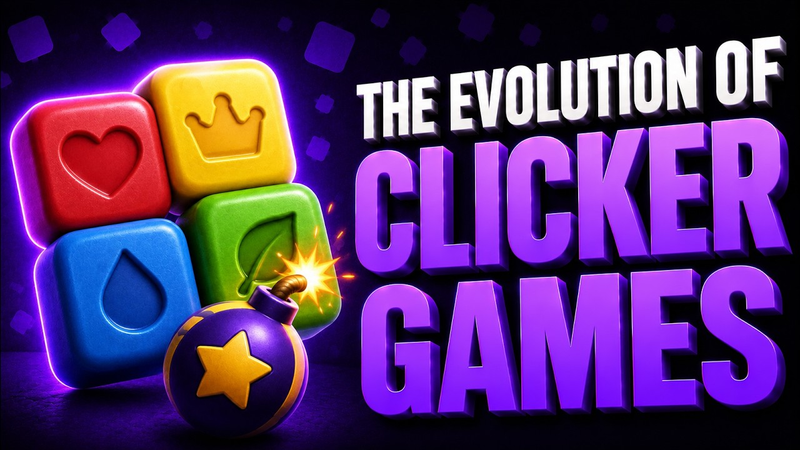
Clickers Genre Explained
The evolution of the clicker—or blast—genre represents a strategic shift from deterministic, puzzle-heavy gameplay to a more casual, luck-driven experience.
- The blast genre shifted from high-friction, strategy-intensive puzzle designs like Pet Rescue Saga to streamlined, luck-driven mechanics that prioritize accessibility.
- Toy Blast and Toon Blast successfully captured market share by replacing complex scrolling boards and saga maps with static board structures that lowered the barrier to entry.
- Toon Blast achieved significant commercial success by refining the blast model, eventually generating double the revenue of its predecessor, Toy Blast.

NYT Games' Virality, AI, and the Future
The strategy behind New York Times Games centers on creating highly shareable, human-crafted experiences that foster social connection.
- New York Times Games prioritizes human-crafted, artisanal puzzle design over automated systems to ensure long-term brand value and high-quality player experiences.
- The core growth strategy relies on creating highly shareable, narrative-driven gameplay, such as Wordle and Connections, which naturally foster social connection and organic user distribution.
- The organization explicitly avoids Unity in favor of proprietary, shared technology and is currently hiring native iOS, Android, and web engineers to support internal development.
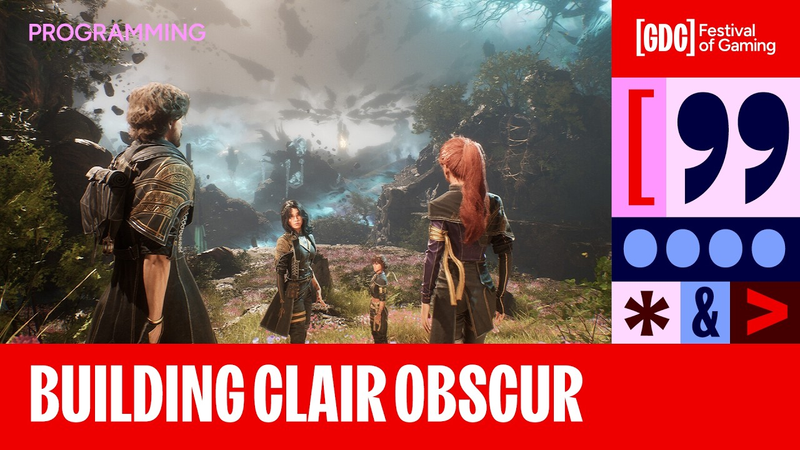
Clair Obscur Expedition 33: Small Team, Massive Game | Technical Secrets Behind Making Hit RPG
Sandfall Interactive achieves the ambitious scope of the role-playing game Clair Obscur: Expedition 33 by utilizing a lean, four-person programming team that prioritizes a vanilla-first development philosophy.
- Sandfall Interactive developed the 30+ hour RPG 'Clair Obscur: Expedition 33' using a core programming team of only four people by offloading 95% of gameplay logic to Unreal Engine Blueprints.
- The studio utilized a build farm to optimize development efficiency, reducing the total game packaging time from 2.5 hours to 50 minutes.
- To empower designers, the programming team created a comprehensive Blueprint API that allows non-programmers to access complex systems like quest status, inventory, and battle logic without writing C++ code.

Did Apple really resolve its EU dispute? | Week in Mobile Games podcast
Apple’s recent attempt to resolve its regulatory dispute with the European Union regarding the Digital Markets Act remains contentious.
- Apple has updated its App Store business terms in response to EU Digital Markets Act (DMA) scrutiny, setting commission rates at 26% for standard App Store apps, 20% for those using alternative payment processing, and 15% for apps that link out to external payment methods.
- Roblox is facing increased pressure from international regulators, including a three-month mandate from Australian authorities to improve child safety measures after reports that adults could still contact minors on the platform.
- The mobile idle RPG 'Digimon New Century' (referred to as Digimon Up) generated $10 million in player spending across Google Play and the App Store during its first month following its July 15, 2024, launch.
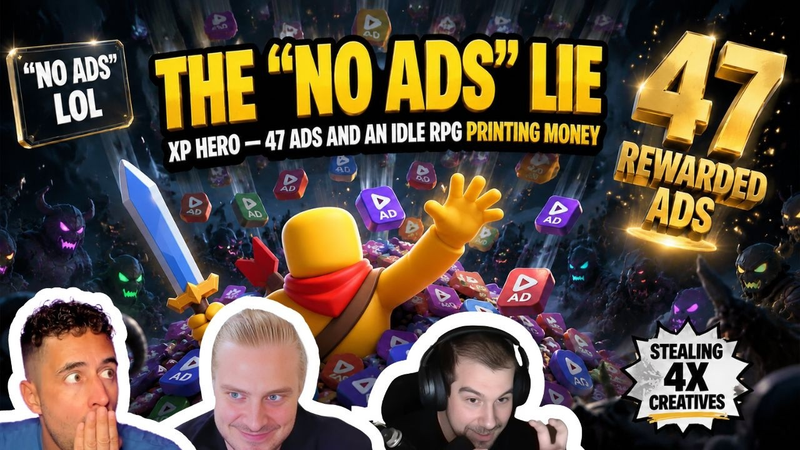
⚔️ 47 Rewarded Ad Placements and a "No Ads" Lie: Inside XP Hero's $400K/Day Idle RPG
XP Hero, an idle RPG developed by Supercent, represents a highly aggressive approach to mobile game monetization, currently generating an estimated $400,000 in daily revenue.
- Supercent’s idle RPG 'XP Hero' generates approximately $400,000 in daily revenue, with 53% of that income derived directly from a dense ecosystem of 47 rewarded ad placements and frequent interstitial ads.
- The game relies on a high-value cohort model where 20% of the player base generates 90% of total revenue, prioritizing aggressive short-term monetization over long-term retention.
- The developer utilizes an AI-driven creative strategy that produces over 1,300 marketing assets every three days to capture a broad audience quickly.

My Five Year Indie Game Launched. My Mind Is Blown
The launch of the indie title Twisted Tower, a five-year development project, has achieved significant commercial and critical success upon its release.
- After five years of development, the indie game 'Twisted Tower' achieved significant commercial success, reaching the Steam front page and the top of the platform's charts.
- The game currently maintains a 95% positive review rating on Steam.
- Community-driven beta testing was instrumental in the final 23-day launch sprint, with testers actively identifying and reporting bugs to stabilize the build.

Arkane veterans Harvey Smith and Ben Horne reunite: “We’re going back to the games we love”
Black Pony Immersive, a new independent studio founded by industry veterans Harvey Smith and Ben Horne, aims to revitalize the immersive sim genre through a commitment to single-player, narrative-driven experiences.
- Black Pony Immersive, founded by Harvey Smith and Ben Horne, is a new independent studio focused on developing single-player, narrative-driven immersive sims.
- The studio operates with a core team of 26 U.S.-based professionals and utilizes a milestone-based funding model to maintain financial control.
- The founders explicitly reject games-as-a-service models, prioritizing a singular, cohesive creative vision over industry trends.
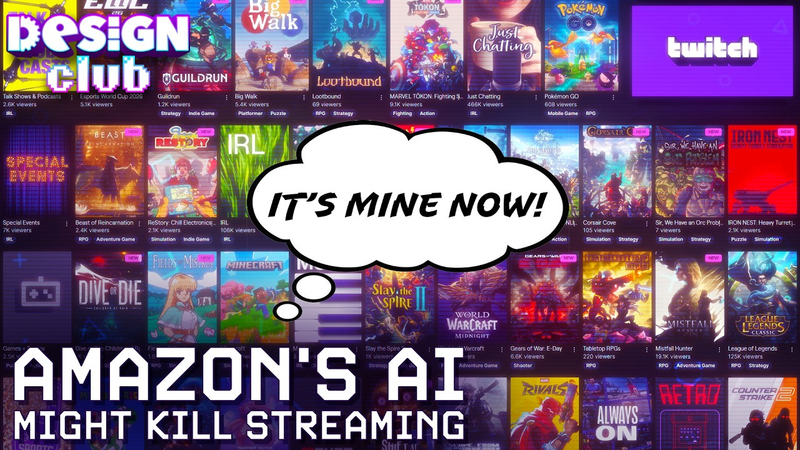
Can Twitch Train AI on your Game? | Design Club
Twitch’s recent policy shift, which defaults user content into a training pool for generative artificial intelligence, represents a significant escalation in the conflict between platform-level data harvesting and creator autonomy.
- Twitch has automatically opted all users into a program that allows Amazon to use broadcast content—including profile assets, chat logs, and video streams—to train generative AI models.
- Users must manually navigate to their security and privacy settings to opt out of this AI training program, as it is enabled by default for all accounts.
- The inclusion of third-party intellectual property in streams, such as game footage, sponsor logos, and trademarked apparel, creates significant legal and ethical uncertainty regarding who owns the rights to the data being fed into AI models.
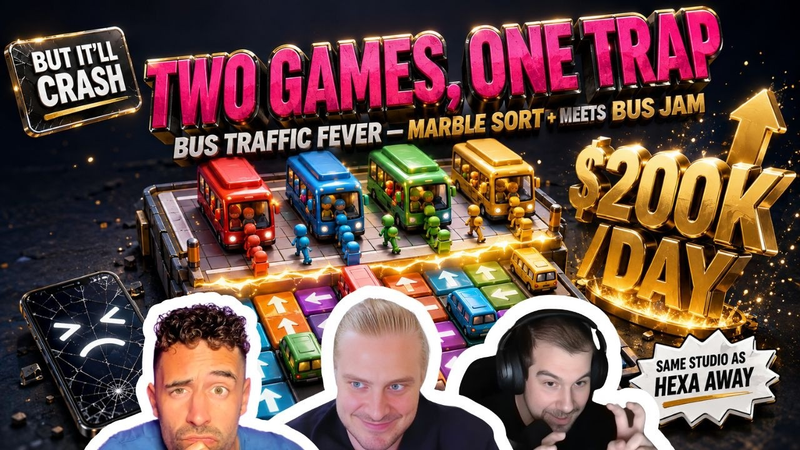
🚌 Marble Sort Meets Traffic Jam: Bus Traffic Fever Review!
Bus Traffic Fever, a puzzle title developed by the Japanese studio Goodroid, has emerged as a significant market force since its March soft launch.
- Bus Traffic Fever, developed by Goodroid, generates $200,000 to $500,000 in daily revenue, with 75% of earnings coming from rewarded advertisements.
- The game has scaled to 400,000 daily downloads and nearly 2 million daily active users since its March soft launch by combining marble sorting and traffic jam mechanics.
- Retention is driven by intentionally slow-paced, punishing gameplay that forces 30- to 40-minute level durations, leveraging the sunk-cost fallacy to increase revive and multiplier monetization.