Game Design reports and market data
Documents
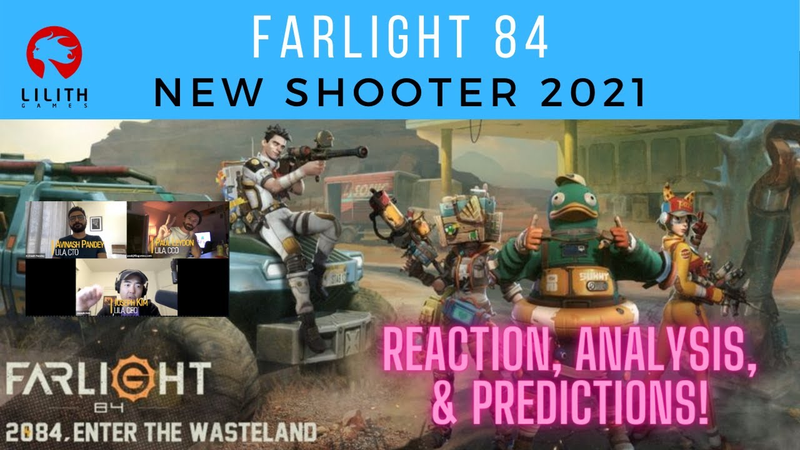
Farlight 84 - New FPS Shooter in 2021 | Reaction & Analysis
Farlight 84 represents a strategic entry into the competitive battle royale market, aiming to capture the mobile and cross-platform audience through a blend of high-fidelity aesthetics and fast-paced, class-based combat.
- Farlight 84 targets the mobile and cross-platform battle royale market by combining class-based combat with unique movement mechanics like jetpacks and legged vehicles.
- The game utilizes Unreal Engine to support a 40-player map structure, specifically optimized for mobile hardware performance.
- The core gameplay loop integrates squad-based tactical objectives with a persistent social hub model similar to Fortnite to drive player engagement.
How to Go from Good to Great
The transition from a mediocre creative team to a high-performing unit requires a fundamental shift from hyper-competitive individualism to a culture rooted in vulnerability and collective growth.
- Riot Games transitioned its visual effects department from a toxic, ego-driven environment to a high-performing unit by replacing scapegoating with a culture of vulnerability and collective growth.
- The implementation of 'campfires'—structured, informal gatherings—was the primary mechanism used to dismantle interpersonal barriers and foster open communication among artists.
- Long-term creative success is driven more by soft skills like adaptability and openness to feedback than by immediate technical proficiency.

I MADE & RELEASED a game in 60 minutes
Rapid game development is achievable through a disciplined workflow that prioritizes core mechanics and iterative refinement within a strict one-hour timeframe.
- Rapid game development is achievable within a 60-minute timeframe by prioritizing core mechanics and iterative refinement over complex feature sets.
- Technical implementation should focus on foundational systems like raycasting for input control and kinematic physics for immediate gameplay feedback.
- Modular design allows for the sequential integration of essential features, such as ball movement, score tracking, and audio feedback, to maintain development speed.

Procedural World Generation of Far Cry 5
The development of Far Cry 5 relied on a sophisticated procedural pipeline designed to manage the immense scale of the game world while maintaining artistic control and environmental consistency.
- Ubisoft developed a procedural pipeline for Far Cry 5 that automated complex world-building tasks, including freshwater network generation, biome distribution, cliff geometry creation, and fog density mapping.
- The procedural system operates on a sector-based granularity of 64 by 64 meters, allowing developers to bake data locally under the camera, across specific map sections, or within the camera's frustum to optimize performance.
- Cliff generation is driven by terrain slope thresholds, which are then remeshed to remove stretched quads and processed with flow simulations to create realistic geological stratification and erosion effects.
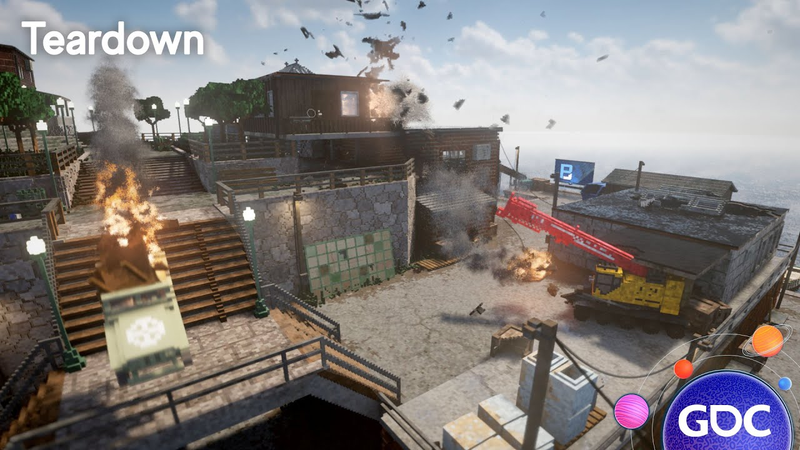
GDC Plays Teardown with Dennis Gustafsson
Teardown represents a significant technical achievement in the gaming industry, originating as an experimental project focused on ray tracing and voxel-based destruction.
- Tuxedo Labs developed a custom engine that replaces traditional polygons with volumetric voxel data, enabling deep integration between physics simulation and ray-traced rendering.
- The engine utilizes ray marching in fragment shaders to achieve high-fidelity lighting and complex environmental interactions, such as advanced fluid dynamics.
- Core gameplay logic was transitioned to Lua scripting to lower the barrier for modding, which facilitated significant community-driven growth and content expansion.
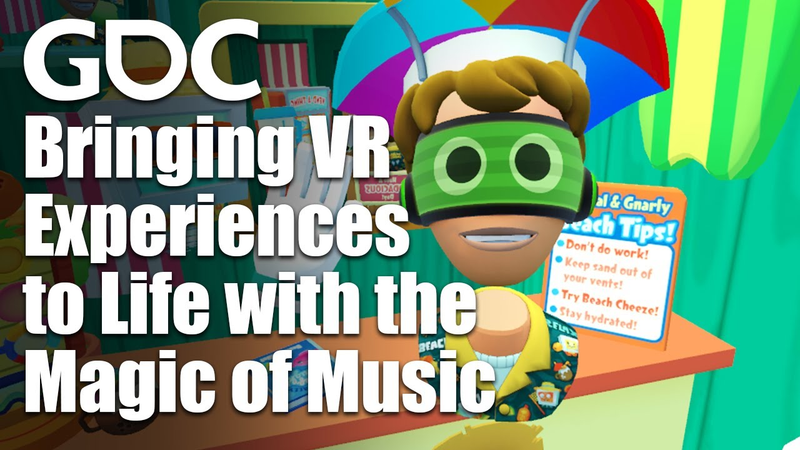
Bringing VR Experiences to Life with the Magic of Music
Immersive virtual reality experiences rely on the strategic integration of audio to bridge the gap between digital environments and player perception.
- In VR, treat all audio as multi-mono by separating stereo files into individual channels placed within the 3D environment to leverage spatialization rather than relying on standard stereo output.
- Utilize VR-specific input data, such as head rotation and hand positioning, to drive musical feedback that guides player interaction and helps them understand if they are progressing toward a goal.
- Design UI elements like buttons, levers, and knobs to function as musical instruments, using pitch and spatial audio to provide intuitive cues that help players navigate complex virtual environments.
Superstar Session: Wordscapes: How the World’s Most Popular Word Game Boosted LTV by 40%
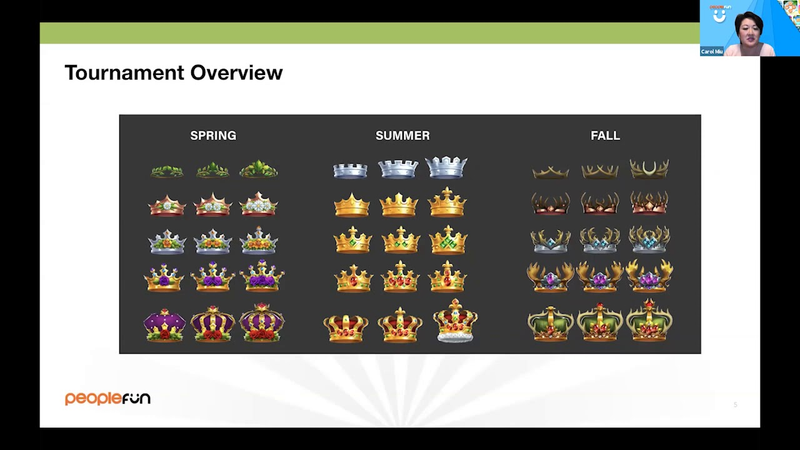
PeopleFun achieved a 40% increase in the lifetime value of the mobile title Wordscapes by shifting toward vanity-driven live operations and seasonal content.
- PeopleFun increased the lifetime value (LTV) of Wordscapes by 40% by shifting to vanity-driven live operations and seasonal content.
- The studio successfully reduced coin payouts by 50% without negatively impacting KPIs by introducing exclusive crown rewards within a 13-week tournament structure.
- Sticker collections increased both in-app purchase and ad-based ARPDAU by over 20% while doubling level completion rates among top players.
Case Study: Ubisoft's Escape Rooms
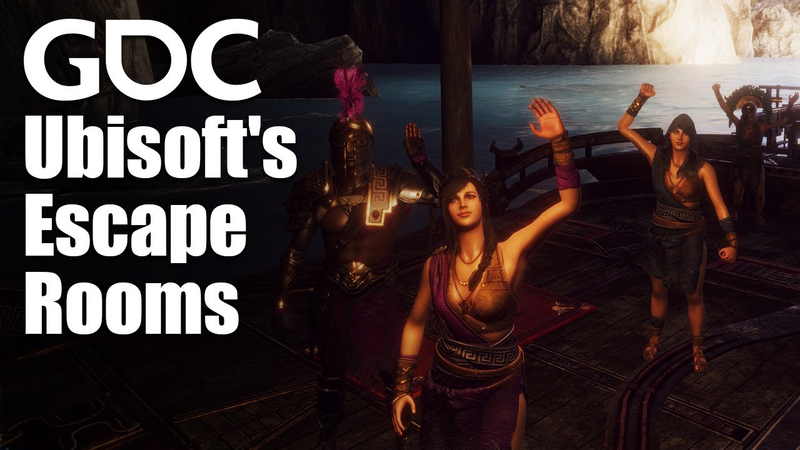
Ubisoft Blue Byte has successfully pioneered a location-based entertainment model by leveraging its intellectual property to create immersive virtual reality escape rooms.
- Ubisoft Blue Byte expanded its VR escape room portfolio from one title in June 2018 to two by May 2019, scaling their partner network from zero to 200 locations worldwide in less than a year.
- The games are designed as multiplayer-only experiences for two or four players, utilizing a mirrored two-player design to simplify development and ensure consistent session completion within a 60-minute window.
- To ensure accessibility for non-gamers and diverse age groups, the design mandates non-violent gameplay, simple one-button controls, and room-scale movement that avoids complex locomotion.

Netcode for Multiplayer Games | Glenn Fiedler, Avinash Pandey, and Chris Wegman
Successful multiplayer game development hinges on the strategic selection of networking architectures that align with specific genre requirements and technical constraints.
- Multiplayer architecture must be chosen based on genre needs: deterministic lockstep is efficient for low player counts, while server-authoritative models are required for large-scale environments like battle royales to ensure state integrity.
- Developers should avoid building custom networking solutions from scratch, as it is a high-risk, multi-year endeavor that should only be pursued if networking is a core pillar of the studio's long-term engine strategy.
- Industry standards are shifting toward modular frameworks and genre-specific templates within engines like Unity and Unreal to allow teams to prioritize gameplay over commodity infrastructure.
War Remains: Using LBE to Transport Audiences to WWI
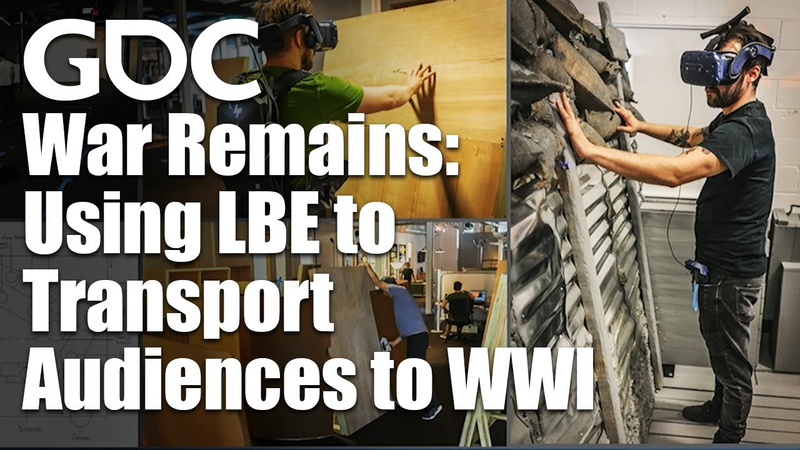
War Remains serves as a pioneering model for location-based virtual reality, designed to bridge the gap between historical education and visceral emotional engagement.
- War Remains utilizes a 650-square-foot physical set integrated with high-fidelity VR to create a persistent, tactile illusion of the 1917 Battle of Passchendaele.
- The experience achieves sensory immersion by ensuring every visual element in the virtual space corresponds to a tangible physical prop, such as sandbags and foam flooring.
- Technical immersion is enhanced through floor-integrated transducers and professional foley work that simulate the physical impact of artillery and drum fire.

GDC Plays Bugsnax with Young Horses
The development of Bugsnax represents a successful synthesis of iterative prototyping and systemic design, evolving from disparate concepts like on-rails photography and summer camp narratives into a cohesive, observational puzzle experience.
- Young Horses transitioned Bugsnax from an on-rails, physics-based capture game to an open-ended experience by layering complex creature behaviors and narrative-driven puzzles over the core mechanics.
- The development team utilized a modular logic system that allowed specific behaviors, such as hiding in bushes, to be applied broadly across different creature types rather than hard-coding actions for individual bugs.
- To address player confusion regarding character motivations and the protagonist's role, the team implemented an interview mechanic and a narrative framing device that establishes the player as a journalist.
Designing Compelling AI Character Interactions in VR Using Body Language
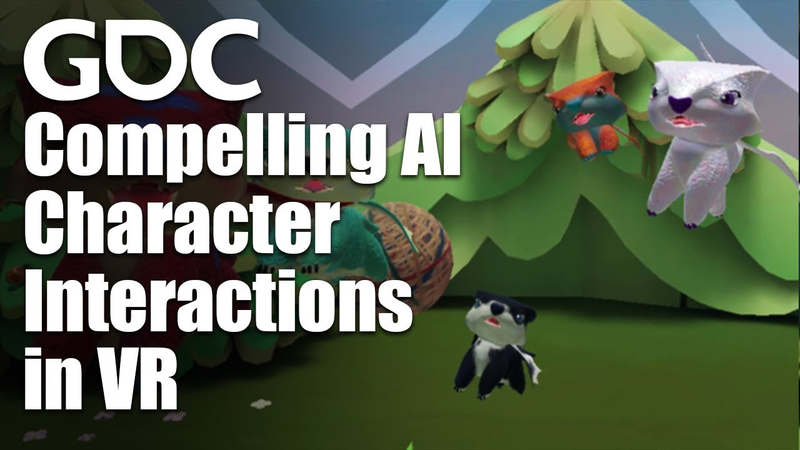
Body language serves as the primary mechanism for establishing believable AI interactions within virtual reality, often outweighing the importance of complex dialogue or high-fidelity animation.
- Body language, specifically spatial presence and vertical positioning, is more effective than dialogue or high-fidelity animation for establishing believable AI interactions in VR.
- Designers should use physical cues like scale and proximity to communicate power dynamics and guide player behavior, eliminating the need for intrusive text-based menus.
- Managing attention pressure is critical, as excessive proximity, eye contact, or character density can trigger player anxiety even with benign AI.