1 free read left. Create a free account for unlimited reading + AI research.
Create free account
UK Games Fund – 2020 Opportunities
Key insights
6 takeaways- 01The UK Games Fund provides early-stage developers with up to £25,000 in total grant funding, consisting of an initial £5,000 grant followed by a potential £20,000 award.
- 02The program targets small studios with fewer than 10 employees, specifically aiming to bridge the gap between initial concept development and market readiness.
- 03The 2020 funding cycle follows a structured timeline: initial video pitches and online applications lead to March interviews, a summer development phase, and an autumn showcase at events like EGX.
- 04Applicants are evaluated on both project-based development and long-term business sustainability, with a focus on team capability, unique selling points, and market strategy.
- 05High-production value for pitch videos is explicitly discouraged; the fund prioritizes clarity regarding the game’s commercial viability and the applicant's development plan.
- 06A core requirement of the program is participation in a mid-year pitch feedback event, where developers engage in speed-dating sessions with publishers and funders to refine their business presentations.
Ask AI about this video
Transcript
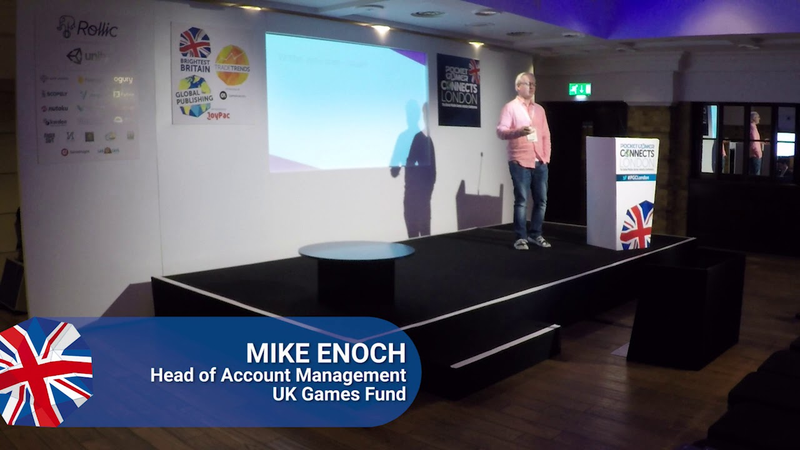
Well, yeah, thanks for joining me. Um, so yeah, UK Games Fund. Uh I'm head of account management UK Games Fund, which means I kind of look after uh funded companies. I also sort of manage the application process, uh that kind of thing. So uh first of all, a little bit about us. Uh most people know us as UK Games Fund, but actually the company name is uh UK Games Talent and Finance CIC. Uh the CIC bit uh means that we're not-for-profit. Uh it also means you've got like a defined community, which is kind of on the screen there. It's a UK early stage uh games developers.
Basically, in the UK games ecosystem. Uh there's more about that kind of thing on our website, so I'll let you kind of look that up if you want to. Uh we're actually founded by quite an experienced team. We've been doing this for about 10 years. Previously, we did the uh Prototype Fund, which is also funded by the UK government. Um And yeah, so uh alongside UK Games Fund, which is kind of our major program, we also do Tranzfuser, which is for um kind of recent graduates. I'll I'll say a little bit more about that in a second. Um The other side of it I should talk about really is kind of uh the journey we've been on. Uh we've been funding companies as UK Games Fund for about 5 years now, so we've done five uh different funding rounds. Uh one thing about the funding we do, it's kind of we we fund the risky early stage stuff. Um and it's quite hard to kind of know the potential of an early stage project when you kind of seen it at concept stage. There's not much of a demo and that kind of thing. Um so one of the things we've started to do is kind of get more contact with companies,
work with them throughout the year, kind of get to know them better. Uh cuz by having more contact, we have more information and by having more information, we make better decisions in terms of kind of who we're funding and you know, we we understand them more and that kind of thing. Um The other thing about that that kind of journey that we take people on is that um quite often people are very game-focused and they want to, you know, focus on the game, make the game as good as they can. They're not necessarily focusing on kind of business development skills and pitching skills that they need to get the the funding to get their game to market after after we fund them. So another benefit to us working with people a bit longer term um is it kind of helps them develop those skills uh both to pitch to us and to other people. So moving swiftly on. Um so yeah, so what's on offer at the moment? I'm going to talk about our kind of two programs briefly, but I'm mostly focused on uh the the actual Games Fund today. Uh so I'll mention Tranzfuser. Um
Tranzfuser, since it's it's open to graduates um it will be announced, I think, next month. Um essentially, it's it's for recent graduate teams within the last 2 years. Uh they get kind of an initial £5,000 award to do like a development competition thing during the summer. Uh and then we take them to a big trade show towards the end of the year. Um and they can kind of pitch to us for for full funding at that point. Uh along the way, there's kind of webcast stuff, there's various learning opportunities, there's community access, they can talk to other funded companies and stuff like that. Uh so there's a range of things we do to try and help uh the graduates out as they they're on that journey towards creating an enterprise. Um beyond that, the main thing I'm talking about today, UK Games Fund round six is open right now. Um so it's going to sound quite similar, um but it's not. Um so it's for all UK-based game developers uh with less than 50 employees. Usually, we we tend to fund smaller than that, though, like less than 10. Uh most companies come to
us might only have a handful of people. Um and we basically, yeah, as I said, we we tend to fund risky early stage stuff, so we're doing all night P projects. Uh generally, it's it's pre-release, quite early stage. Um we will fund things up, you know, up to the point where it has released. After release, not so much. Um and yeah, so the standard process, you basically apply for apply to to take part with an online form. Um we give you a small grant of £5,000 to sort of do some dev work during the summer. So it's sounding quite similar to Tranzfuser. Um so do the development during the summer, then pitch to us at a big show again towards the end of the year and get a full grant at that point. So we've kind of learned some things from the Tranzfuser program, we've brought that across to the Games Fund program. But on the Games Fund side, it's it's a lot more hands-off. Like there is some webcast content to help you out and access to community, but it's not like with the graduates, it's more kind of looking after them and
stuff like that. With companies, it's more we trust you to get the job done and pitch to us at the end. Um there's also kind of a a pitch practice event as well, which I'll talk about in a moment. Um the grants, when you get to the big show at the end of the year, it's up to £20,000, so the total kind of cash support is £25,000 uh plus the other the other bits and bobs I've mentioned. Um and yeah, final note, if you're kind of a more advanced stage with a more advanced company and you kind of already got all the business stuff sorted out um then you know, there there are there is a lot of potential that we might offer you different terms, including kind of immediate funding, but that's very much at our discretion and it's all part of the same application process. So just apply as normal and if we think that, you know, you're you're at a too advanced stage for the standard program, we would consider alternatives. So how does it work? Uh um what I'm what I want to do essentially is just run you through the events that we have for the UK Games Fund program. Just kind of give you an
idea of what we're doing throughout the year and how it works to give you an idea what it means to take part and hopefully, you know, hopefully you'll want to take part with us. So January, uh we're open for applications right now. Uh there's an online form to fill in. Uh there's guidance alongside that. Um basically, it's it's like a little bit of information about your company, a little bit of information about your project, kind of high-level descriptions generally. Um we we really want to know what the key kind of innovation is, what's unique selling point, what's going to make you stand out in the market. Um there's also some kind of rough costings, estimates, things like that. None of it's kind of, you know, it doesn't have to be final, just estimate the best you can. Uh hopefully it's self-explanatory. You can also reach out to us. Um and yeah, there's also kind of a new thing, like if you've applied to us last year uh a new thing we've added is is this kind of business sustainability and growth plan, which is like an extra four questions. Um and essentially, that is asking a bit about the future of you as a business beyond this project. Um so
although we do project finance, we're measured on your kind of business outcomes and kind of in terms of jobs secured and jobs sustained, that kind of thing. So we want to know a bit about the business as well. Previously, we've asked for similar kind of information, but it's been part of the video and various other things. Uh now we've kind of put a specific part of the form to sort of get that information a bit a bit more directly. Um so yeah, so that's January. Uh applications open right now. Um once you've done that uh there's also video pitches part of the application process, so maximum 2 minutes long. Um we suggest essentially that you cover these these four topics here. So you and your team. Um we really want to know basically that you've got the capability to do this to a commercial commercially competitive level. So we want to know a bit about you and your team and the background. Uh a bit about your games, we want to see it. So do if you've got any kind of concept work or an early demo, then, you know, capture some footage of that throw that in the video.
Let's see what it is. Uh we want to know what's special about it. Um we want to know a bit about your market in terms of, you know, how are you going to make this a success? So, you know, what else is out there? Which bit of the market are you targeting? You know, what kind of sales are you looking for? That kind of thing. Just give us an idea of of what it is you're thinking sort of business-wise. and then your plan. Um obviously, you'll be working with us a little bit throughout the year, so you may not have fully developed this, but kind of give us an idea of what it is you're planning to take to the consumer show. Um you know, and beyond that, you know, what what plans do you have at this early stage in terms of getting to market and who you might approach for further funding and stuff like that. Usually, our money won't get you to market. You know, usually you're looking for funding after that from someone else, so. Um and all these things are equally important, so we do recommend, you know, use up the full 2 minutes, spend 15-30 seconds on each of these. If you've got any spare time, you know, put it into another one, spend a bit more and, you know either address your weaknesses to mitigate that or, you know, play to your
strengths to show us what's good about it. Um ooh, more things to click through. Uh video production not an issue, that's the other thing. Um some people are worried about, you know, oh, do I have to hire a company to do this really flashy pitch video? And like, no. You do not need to do that. Just, you know, capture some footage of some stuff, show it on the screen, mash it together. Can be a you know, can be captured on your mobile phone, we don't care. Uh that's totally fine. Uh it must contain the right information, though. If you don't have all of this stuff covered, then you may get rejected. Uh we do use these these videos as kind of an early filter stage, so we we need to know about this stuff. All right, so moving swiftly on. So assuming you get through that, uh we basically will shortlist some applicants um and invite them to interview. So um it's going to be kind of a week in March, I think, and possibly 2 weeks in March. We'll we'll basically um schedule out some some face-to-face kind of Uh we we tend to do these over like a
video call, so there'll be a few of us our end plus you at your end. Uh webcam really good idea, essential. It's like much easier to understand someone if you've got body language and stuff like that. Um Now, as far as how that actually works, like just so you don't worry about it overly much. Um essentially, we just we we rewatch the video pitch beforehand so that we know kind of who you are and what the game is. Um and we do quick introductions, then we get a bit get a bit of an update from you on on where you're at and what might have changed since you applied. Uh and then we just ask some questions from the panel basically to you anything that was a bit unclear to us in your application. Um so, we'll do that for short-listed applications and then we'll we'll kind of make decisions quite quickly, hopefully in March, uh but definitely by April uh is the plan for this year. Um so, yeah, we'll notify you in April and then you're basically into development, so uh we'll pay you the initial award, so the the 5,000 pounds get split into two payments of 2,500 pounds. Uh the initial
awards you get before you get started on development. Um and then June, July, August, essentially um you just work on your game uh towards the consumer show. Um and you basically give us a sort of a short video update so we kind of get an idea of what it is you're working on and what progress you're making towards the uh towards that kind of consumer show. Uh we also, as I mentioned with the Transfuser thing, we we do have some content community stuff where we're kind of we're doing webcasts on kind of managing your scopes, some development issues, pitching advice, stuff like that. Um so, there's some of that going on as well. You can kind of opt into that uh as part of the program. Um Yeah, so once you've been doing the development, um we we also kind of halfway through that we have like a a pitch feedback event, so essentially it's a it's an actual face-to-face meeting. Uh we haven't booked a venue yet, but essentially, you come to uh venue, uh meet us all. Um you can see in this picture here, it's a the venue from last
year. We had kind of had everyone in there. It's kind of like a speed-dating kind of setup, so all the companies get a table, you sit down at your table with your with with your gear. Um we get some publishers and funders and ourselves and we kind of go around each of the tables and you get like five or six uh pitches uh live pitches to to actual that actual publisher types and funder types. Um And the crucial thing about this is we give you immediate feedback, so we'll tell you what we want to hear and what you've done well and what you've done badly. Um and it's it's based on the idea that like most pitches you do to publishers and things like that tends to be around a table and it's you've met quickly and you go and you do it and you you sit down around a table and have a chat. Um and there's one of our directors sort of says that, you know, it takes you 10 of those meetings to get used to the idea of having those meetings before you're comfortable and you manage to pull it off and succeed, so we're trying to get you through like five or six of them in a day and with feedback, um so that when it comes to you pitching to us later in the year,
you know, you've got a better chance of success cuz we're going to tell you exactly what we want to hear to to improve your pitch, so uh so, we do that kind of midway through the program. Um these are some of the some of the meetings going on. Um And then yeah, so we we then we've got a big showcase event in the autumn. Uh so, I've mentioned that a couple of times. Uh we haven't actually booked an event yet, um so it's just autumn, but it'll probably be sort of September or October. Um last year we went to EGX, uh we had kind of two big areas. We kind of had a Games Fund area and a Transfuser area kind of attached together. Um and basically, we provide you with kind of a standard kind of indie space within that, so it's usually like a you know, a little setup with a a backboard, some art on it, stuff like that, uh space for a PC and a screen. Um And yeah, there's a lot There's actually one thing that we found with this is actually a lot of intangible benefits to coming along to that. Like we've we've had scouts from publishers and funders that come around and look at all the games. We've had people get publishing deals off the back of showing at at the show, so um so, it's a really good thing
to do. There's actually a lot more to it. We genuinely want you to get a lot out of it, so um and while that's going on, we also um we have like private rooms, which is this in picture in the middle. Uh we got private rooms for doing pitches for the full grant, so we we basically um we get you to come along and pitch to us for the full grant at that point as well, so that's like the 20,000 pound part of the grant. Um so, you kind of pitch to us there and we talk it through. Uh last year we were lucky enough to fund everyone that we took along, so that was great uh from the UK Games Fund side of things. And then yeah, so if you get the grant and you're awarded the grant at um at the trade show, then you're basically into grant-funded development, so that basically runs uh from sort of usually like November time into March. Uh it is tied to financial year, so you need to spend it within that sort of five to six uh month period, but that shouldn't really be a problem. Um and it's at that point it's um incurred and defrayed uh
costs, so um and it's UK-based labor costs only, so it's contractors via invoice or uh employees or directors via uh PAYE. Um so, yeah. Um Hopefully, that's fairly straightforward. I don't think I really need to say anything else about that. Uh one thing I forgot to mention is the the other half of the initial award, the two the other 2,500 pounds gets paid before the uh before the event, the consumer event, um so that you've got money to to help you with that as well. Um And yeah, so applications are open right now uh and also any questions. That's pretty much it. Microphone, please. Do we have a question for Mike? We have one question here, lady with the mic. She's coming. Sorry, I'll just shout out. Yeah, we need it we need it on the mic. All right. It's coming. It's for It's for complex audio purposes. Hi, thanks for that. Just to clarify, so
you apply by the 3rd of February. Yeah. And then that's shortlisted and videos will be invited or everyone who applies so gets invited to the to apply by the 3rd and then we basically, everyone who's applied with a written application, we'll send you a link to upload the video. Um and you've got like a week to upload that video, so it's worth working on the video now this month uh alongside your your written application. Um and then yeah, we we'd invite you to upload the video. Uh then we do like a review of those in the following couple of weeks. Um and then we'll need to do some sort of scheduling to arrange the interviews, so the shortlisting happens in February and the shortlist will be invited to the interviews in March uh essentially. Great, thank you.
Summary
The UK Games Fund, a not-for-profit organization operating under UK Games Talent and Finance CIC, provides critical financial and developmental support to early-stage game developers across the United Kingdom. With a decade of experience in government-backed funding, the organization focuses on high-risk, early-stage projects, typically supporting small studios with fewer than 10 employees. The primary objective is to bridge the gap between concept development and market readiness by offering both capital and professional mentorship, specifically targeting business development and pitching skills.
The funding process for the 2020 cycle follows a structured, multi-stage timeline. Applicants submit an online form and a two-minute video pitch, which serves as an initial filter. Selected candidates undergo interviews in March, followed by an initial £5,000 grant to support development through the summer. A key component of the program is the mid-year pitch feedback event, where developers engage in speed-dating style sessions with publishers and funders to refine their presentation techniques. The cycle culminates in an autumn showcase, such as EGX, where participants can secure an additional £20,000 in grant funding.
The program emphasizes transparency and accessibility, noting that high-production value for pitch videos is unnecessary; content clarity regarding the team, the game’s unique selling point, market strategy, and development plans is the priority. While the fund primarily supports project-based development, it also evaluates the long-term business sustainability and growth potential of the applicant companies. By providing a combination of financial resources, industry exposure, and iterative feedback, the UK Games Fund aims to foster a more competitive and commercially viable independent games ecosystem.