City Builder reports and market data
Documents

Making New ISLANDERS Content Live
The development of ISLANDERS centers on a minimalist, iterative design philosophy that prioritizes intuitive gameplay and strategic depth over complex mechanical systems.
- The development team prioritizes a minimalist design philosophy, focusing on adding new building types like seaweed fields and monuments that integrate into existing scoring systems without increasing core complexity.
- Technical stability is maintained by shifting from procedural generation seeds to object-position-based save states, which mitigates compatibility issues and ensures consistent player experiences.
- Performance is optimized through efficient asset handling and mesh baking, while resource-intensive features like road systems and mobile ports are intentionally excluded to keep development costs manageable.
How to Randomly Generate Levels (and Islands)
Procedural level generation offers a scalable method for creating infinite game content, but successful implementation requires a structured, iterative approach.
- Prioritize handcrafted design during the prototyping phase to establish quality benchmarks and define core gameplay loops before automating content generation.
- Implement a hybrid generation approach by using predefined, handcrafted assets as building blocks rather than calculating individual geometric vertices.
- Utilize trial-and-error placement algorithms where objects are dropped into random positions and validated against specific constraints, discarding invalid placements until a suitable location is found.
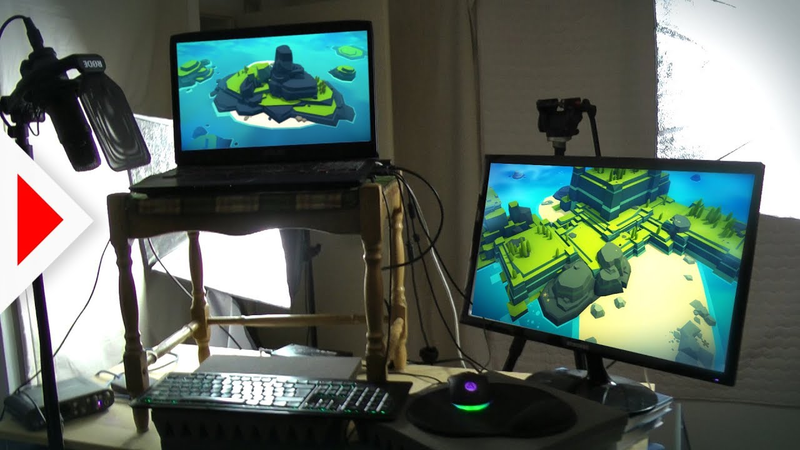
Game Dev: The Week Before Launch (Devlog)
The final week of development for the indie title Islanders highlights the technical and logistical hurdles inherent in preparing a game for a Steam launch.
- The final week of development for Islanders focused on critical technical stabilization, specifically resolving Linux build compatibility, dynamic batching failures from multiple light sources, and mesh transformation errors.
- The development team utilized Unity’s frame debugger, iterative testing, and community-sourced troubleshooting to address performance bottlenecks before the Steam launch.
- To maintain productivity and morale during the high-stress pre-launch period, the team employed a dual-project workflow, working on a separate platformer project during daily livestreams.
How We Made ISLANDERS - (Indie Game)
The development of the indie game Islanders serves as a case study in the effectiveness of rapid prototyping and iterative design within small, focused teams.
- A three-person team developed Islanders in just four months as part of a bachelor program, proving that small, focused teams can produce polished titles through rapid iteration.
- The development process relied on short-term prototypes lasting only one to two days to test mechanics, allowing the team to discard complex features like real-time resource management and meteors.
- Transitioning from a real-time model to a turn-based system was a pivotal design choice that removed player pressure and prevented late-game economic inflation.
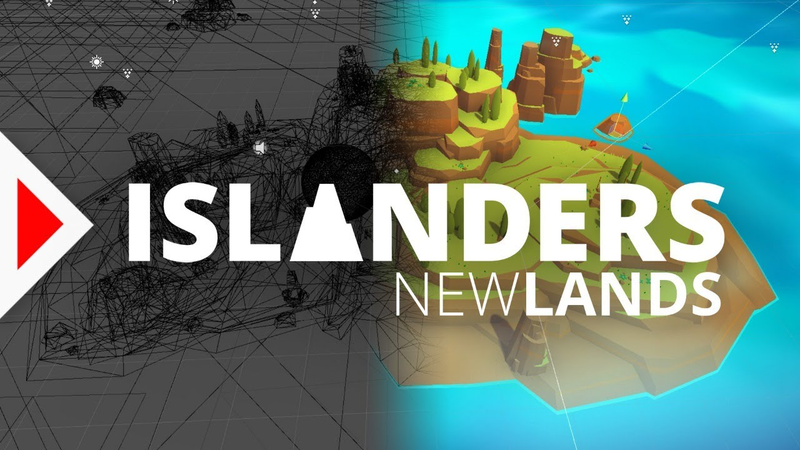
ISLANDERS - Making New Islands (Live)
The development of the strategy game Islanders centers on a sophisticated procedural generation system designed to produce infinite, aesthetically consistent island layouts.
- A three-person development team utilized a modular, step-by-step procedural generation system to create infinite, aesthetically consistent island layouts.
- The system employs specialized generators and heat maps to automate the placement of terrain, resources, and decorative elements while maintaining structural balance.
- Development focused on managing complex Unity engine variables, including mesh filtering, pivot points, and object clipping, to ensure visual coherence.
ISLANDERS - All you need to know. (Devlog)
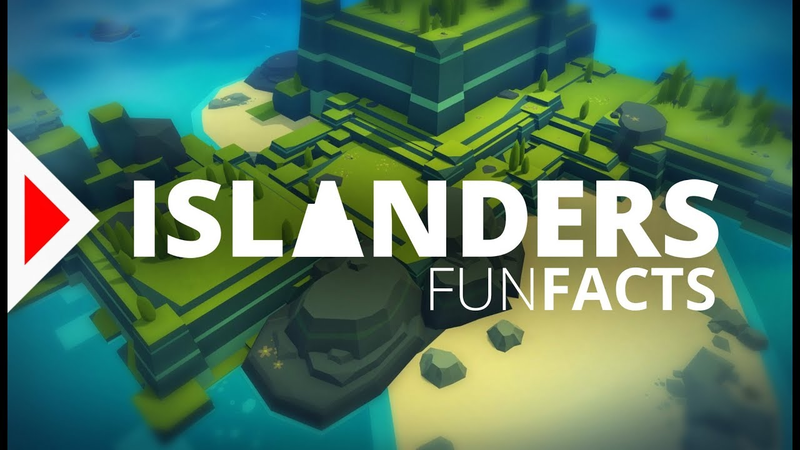
Islanders is a minimalist, casual strategy game designed to be accessible to a broad audience while offering significant depth for players seeking a challenge.
- Islanders is a minimalist strategy game developed by a three-person team over a four-month period as a university project at HTW Berlin.
- The core gameplay loop centers on procedural island generation and a deck-building mechanic where players strategically place buildings to maximize scores based on proximity bonuses.
- The game features 30 distinct building types, each with unique environmental constraints and range-based scoring requirements.
ISLANDERS Gameplay - (Developer Playing)
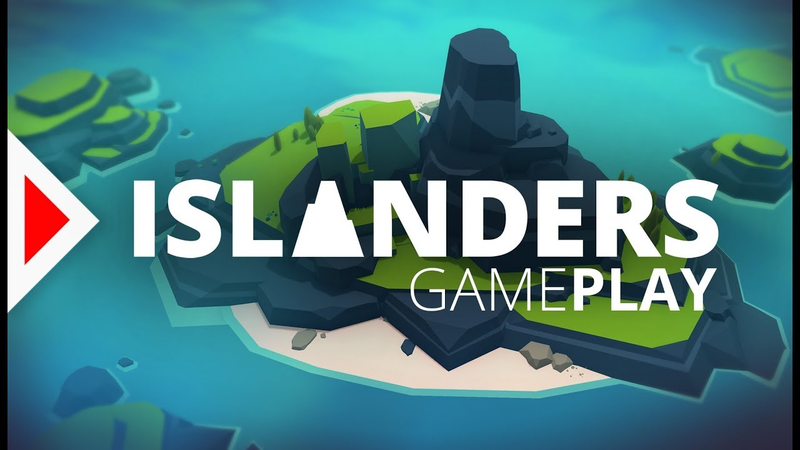
Islanders functions as a minimalist, procedurally generated strategy game that prioritizes accessible, high-score-driven city building over traditional resource management.
- Islanders is a minimalist, procedurally generated strategy game that replaces traditional resource management with a high-score-driven loop focused on spatial optimization and proximity bonuses.
- The game was developed by a three-person team over a five-month period, evolving from a university assignment into a commercial PC release.
- The technical architecture relies on the Unity engine for development and Blender for 3D asset creation, prioritizing a non-violent, aesthetic-focused gameplay experience.
ISLANDERS - Surprise! We made a game.
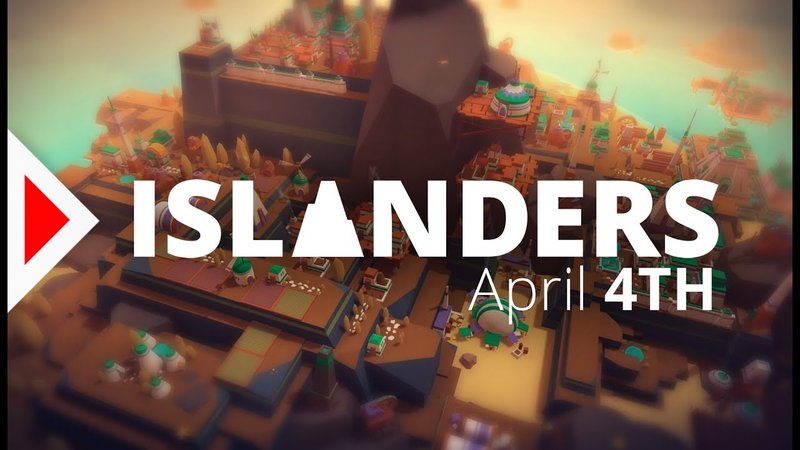
Islanders is a strategy-based optimization game centered on the construction of aesthetic settlements across procedurally generated islands.
- Islanders is a strategy-based optimization game developed by a three-person team from the HTW Berlin game design program.
- The game is scheduled for a Steam release on April 4 with a target price point between five and ten dollars.
- The core gameplay loop focuses on earning points through the strategic placement of buildings within procedurally generated environments.

Resolving complex urban challenges with gaming
The CIV Lab initiative addresses the growing crisis of urban development by leveraging gaming mechanics and technology to solve complex city-planning challenges.
- Approximately 40 percent of recent gaming industry investment is currently directed toward the development of city-builder simulation games.
- Urban planners and architects are increasingly utilizing commercial gaming titles, such as Grand Theft Auto, as professional diagnostic tools to identify real-world infrastructure bottlenecks and social challenges.
- The CIV Lab initiative utilizes digital mock-ups and virtual environments to test urban solutions before physical implementation, aiming to reduce inefficiencies in cities like New York, Helsinki, Lisbon, Amsterdam, and Eindhoven.
EA Finland on live services game design with SimCity BuildIt
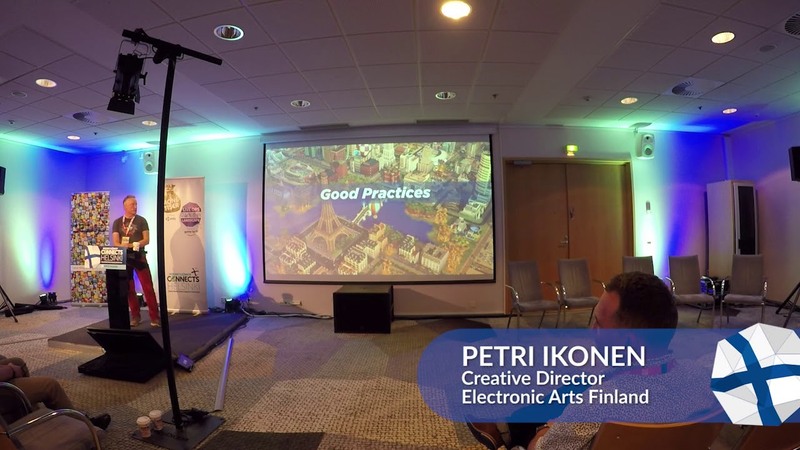
The transition from initial game development to live service operations requires a fundamental shift in organizational structure and design philosophy.
- Successful live service management requires transitioning from a product-based mindset to treating the game as an evolving entity that relies on continuous monitoring and iterative design.
- Development teams should be divided into three specialized units: a reactive team for troubleshooting, a live operations team for weekly content and A/B testing, and a development team for long-term roadmap execution.
- Studios must invest in robust live tools during the initial development phase to effectively track player behavior and optimize key performance indicators post-launch.

Unpleasant Design - When Bad Design is Used to Hide Problems - Extra Credits
Unpleasant design, frequently categorized as hostile architecture, functions as a deliberate strategy to exclude specific populations—primarily the homeless—from public spaces.
- Unpleasant design, or hostile architecture, is a deliberate strategy used by municipalities to exclude marginalized populations—specifically the homeless—from public spaces rather than addressing the root causes of societal issues.
- Common architectural interventions include benches with center armrests or angled surfaces to prevent sleeping, metal flanges on ledges to deter skateboarding, and hydrophobic paint to discourage public urination.
- Advanced hostile tactics include the deployment of high-frequency sound emitters, such as the 'mosquito' system, and the strategic placement of seating to force individuals into retail environments.
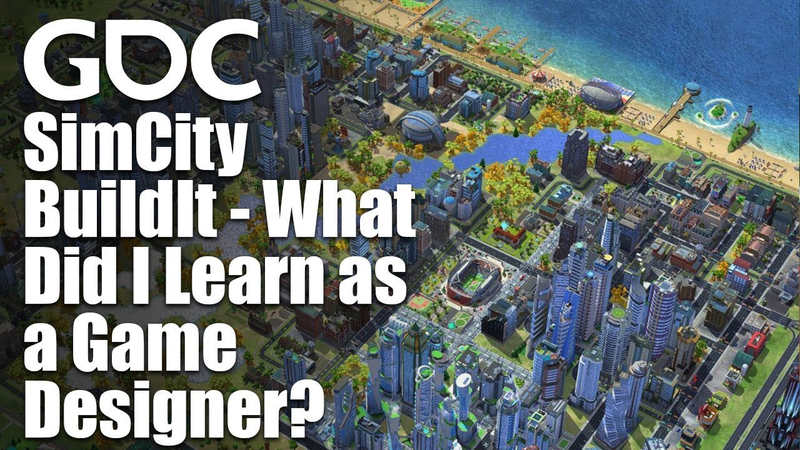
SimCity BuildIt - What Did I Learn as a Game Designer?
Adapting the SimCity franchise for mobile requires a fundamental reimagining of core mechanics rather than a direct port of PC-based systems.
- Adapting legacy PC simulation titles for mobile requires a fundamental reimagining of core mechanics rather than a direct port, focusing on simplified interfaces and non-punitive gameplay loops suitable for short sessions.
- Development teams should transition to agile, collaborative structures that prioritize radical honesty and player-first thinking to enable rapid iteration based on data-driven insights.
- High-quality mobile products can be delivered within compressed timelines, as demonstrated by the ability to move from initial concept to worldwide release in under 18 months.