City Builder reports and market data
Documents

Exploring SimCity: A Conscious Process of Discovery
The development of SimCity centers on the philosophy that sandbox games thrive when built upon simple, modular systems that encourage emergent gameplay.
- Sandbox game development should follow a breadth-first approach, layering core mechanics, feedback, and player tools incrementally to justify development effort through actual gameplay experience rather than theoretical design.
- Avoid the 'complexity rabbit hole' by keeping individual simulation components simple; early prototypes for SimCity (2013) showed that over-engineering systems like power plants created unmanageable UI and performance requirements.
- Performance in sandbox simulations requires avoiding global loops; instead, use bucketed systems and round-robin scheduling to propagate navigation and agent information across frames.
Agile live services – The secret sauce to building a long lasting mobile game product
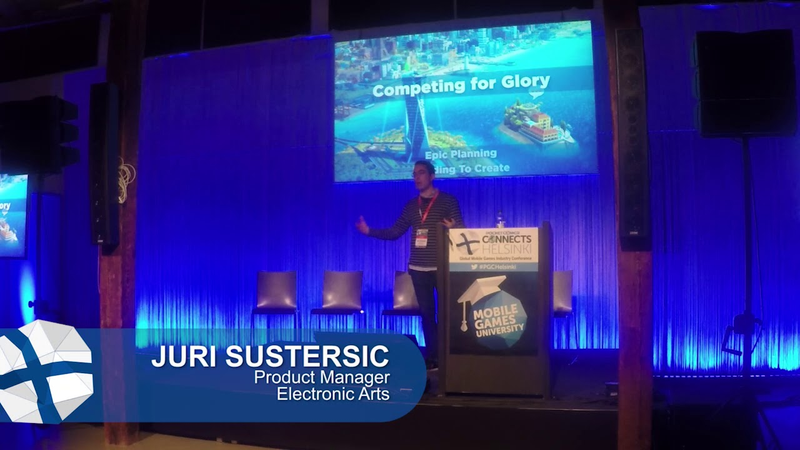
The primary objective of live service management in mobile gaming is to extend a product's lifecycle by transitioning from initial qualitative design assumptions to data-driven, quantitative iterations.
- Live service management shifts mobile game development from initial design assumptions to quantitative, data-driven iterations that treat the launch as the beginning of the product lifecycle.
- Long-term success in free-to-play titles is exemplified by SimCity BuildIt, which has maintained sustained growth in both engagement and revenue since its 2014 launch.
- A/B testing serves as the primary methodology for optimizing monetization and gameplay, allowing developers to refine pricing and mechanics based on actual player behavior.
Scalable servers for social city builders on a budget
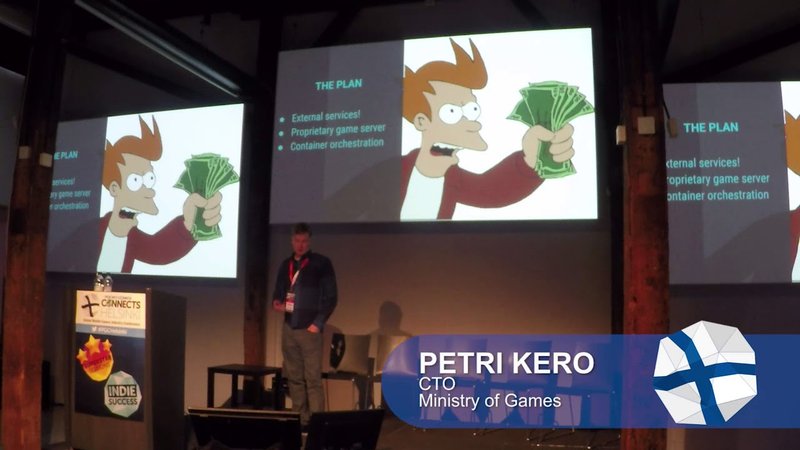
The development of social mobile games requires robust backend architectures capable of managing high-frequency player interactions, persistent world states, and real-time global economies.
- Use the Elixir programming language and Erlang virtual machine to handle tens of thousands of concurrent users through fault-tolerant, actor-based, in-memory state processing.
- Prioritize a 'build versus buy' strategy by developing only proprietary game mechanics while outsourcing standard operational tasks to managed cloud services.
- Maintain player and guild states in-memory to enable real-time social features like chat and trading, using databases only for persistence and disaster recovery to reduce latency.

Monetizer: Downtown Showdown
Downtown Showdown, a mobile free-to-play title developed by COLOPL’s North American division, functions as a hybrid experience that blends city-building mechanics with competitive strategy elements.
- Downtown Showdown by COLOPL’s North American division is a hybrid mobile title that merges traditional city-building resource management with competitive raiding and defensive mechanics.
- The game’s core progression is gated by population milestones, which force players to engage with city-building and quest systems to unlock new content.
- The title employs a three-tier currency model consisting of gold (soft currency), specialized metal (earned via competitive showdowns), and premium gems.

FTUE: Downtown Showdown
Downtown Showdown, a mobile title from Japanese publisher COLOPL, serves as a case study in the adaptation of city-building mechanics for Western markets.
- COLOPL is utilizing 'Downtown Showdown' as a strategic vehicle to adapt Japanese city-building design sensibilities for Western markets in Europe and North America.
- The game hybridizes traditional urban simulation mechanics with competitive, combat-oriented progression systems similar to 'Clash of Clans'.
- The monetization model relies on standard free-to-play mechanics, specifically using premium 'diamonds' to bypass construction timers and wait times.

Analysing the monetization of Fallout Shelter
This analysis examines the monetization strategy and technical performance of Bethesda’s Fallout Shelter, contrasting its economic model with industry standards set by titles like Marvel: Contest of Champions and Boom Beach.
- Fallout Shelter achieves commercial success by prioritizing brand engagement and gameplay loops over the high-frequency, high-spend monetization models typical of mobile industry leaders like Marvel: Contest of Champions and Boom Beach.
- The game’s monetization strategy is notably conservative, capping its maximum in-app purchase at $20 and maintaining an average purchase price under $10, diverging from the industry-standard $100 price ceiling.
- Monetization relies on the sale of 'lunch boxes' rather than direct hard currency, creating a unique economic loop that lacks traditional reciprocity metrics found in competing titles.
Monetizer: Royal Revolt 2
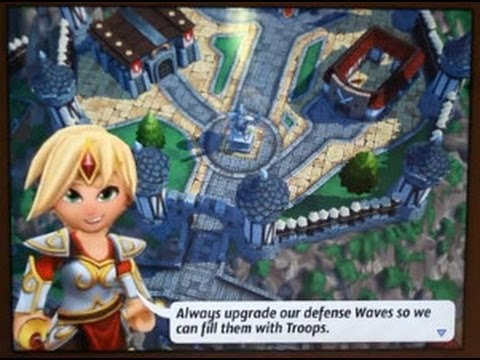
Royal Revolt 2, developed by Flaregames, is a mobile title that integrates city-building mechanics with tower defense gameplay.
- Royal Revolt 2 utilizes a dynamic 'percentage fill' resource mechanic where players purchase a percentage of their storage capacity rather than fixed amounts, creating a fluctuating exchange rate tied to progression.
- The game employs a high-value conversion tactic by offering a permanent 'third builder' as an incentive for a significant one-time hard currency purchase.
- Hard currency (gems) is integrated into core progression by allowing players to directly purchase experience points, accelerate construction, and unlock additional troop or spell slots.

Monetizer: GREE's Dragon Realms
Dragon Realms, a city-building card-based RPG developed by GREE for Western markets, serves as a case study for analyzing free-to-play monetization strategies and user experience.
- GREE’s Dragon Realms utilizes a hybrid genre approach by combining Western-style city-building mechanics with Asian-market card-based combat systems.
- The monetization model employs a dual-currency system where gold manages resource progression and gems facilitate premium actions like speed-ups and summons.
- To drive revenue, the game utilizes transaction bands ranging from $2 to $100, incorporating a discount currency ratio to incentivize larger real-money purchases.
Monetizer: CastleVille Legends
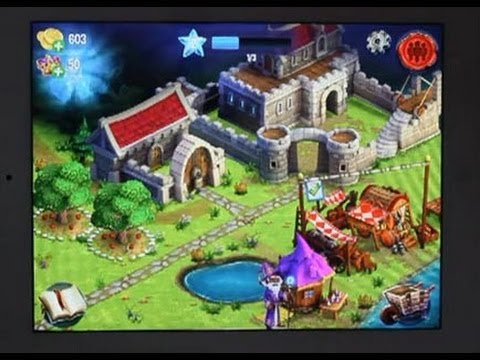
CastleVille Legends represents a strategic shift for the franchise, moving toward a character-driven narrative while maintaining the core mechanics of a free-to-play simulation game.
- CastleVille Legends utilizes a dual-currency model featuring soft currency (coins) and hard currency (crowns) to facilitate in-app purchases.
- In-app purchase pricing is tiered, with coin bundles ranging from 69 pence to 39.99 pounds and hard currency bundles reaching up to 69.99 pounds or 99.99 dollars.
- The game employs HTML5-based dynamic retail strategies, enabling real-time adjustments to pricing and bundle content based on player behavior and market demand.