Card Battler reports and market data
Documents
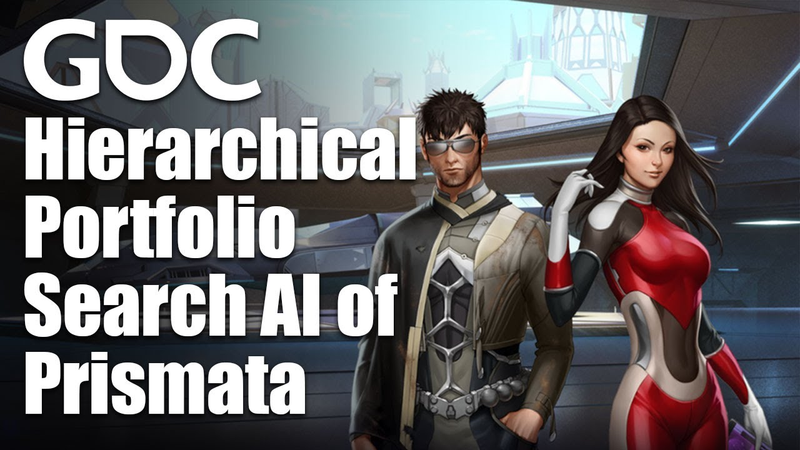
Playing Your Cards Right: The Hierarchical Portfolio Search AI of Prismata
The Hierarchical Portfolio Search system provides a robust framework for managing complex decision-making in strategy games like Prismata, where massive state spaces and multi-unit control requirements render traditional AI approaches insufficient.
- Hierarchical Portfolio Search (HPS) solves the state-space explosion problem in complex strategy games by decomposing game logic into a 'portfolio' of tactical algorithms, which are then combined and evaluated by a high-level search algorithm like Alpha-Beta.
- The HPS system allows for modular difficulty scaling by adjusting the search depth or the complexity of the tactical algorithms included in the portfolio, enabling developers to create everything from random-move bots to expert-level AI.
- By restricting the AI to a predefined set of tactical moves rather than allowing it to generate arbitrary actions, designers can prevent 'emergent' but undesirable behaviors while maintaining high-level strategic intelligence.
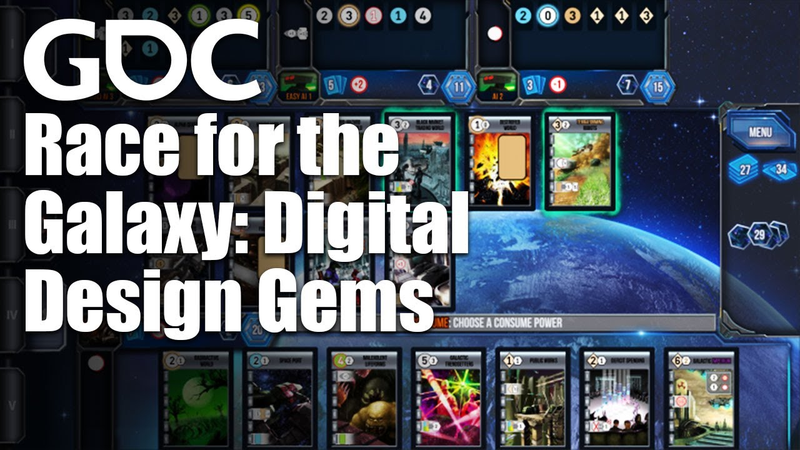
Board Game Design Day: Race for the Galaxy: Digital Design Gems
The successful transition of tabletop experiences into digital environments relies on selecting titles with structured, phase-based mechanics that favor strategic decision-making over physical tactility or social negotiation.
- Digital board game adaptations should prioritize asynchronous gameplay features, such as contextual prompts and automated rule execution, to reduce analysis paralysis and allow players to manage multiple games simultaneously.
- To maintain a vibrant community, developers should display both active and inactive multiplayer games in the lobby to broadcast a high level of activity, even if some games are not joinable.
- Developers should implement a system of 'attention tokens' to triage game events, ensuring that critical moments (like a major move) lock the screen while secondary events (like drawing cards) proceed in the background to maintain both speed and legibility.
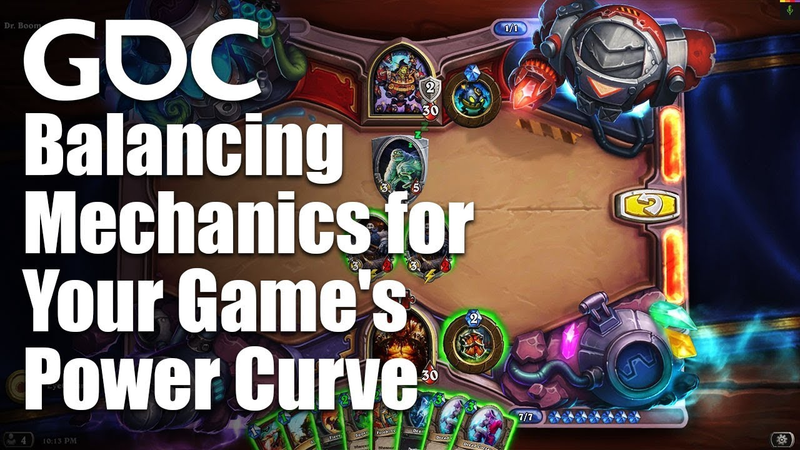
Board Game Design Day: Balancing Mechanics for Your Card Game's Unique Power Curve
Effective card game design relies on the strategic calibration of power curves, which are inherently non-linear due to the trade-offs between card cost, flexibility, and the risk of game termination.
- The power of a card is defined by its ratio of utility to cost, where higher-cost cards must provide significantly greater impact to justify the lack of flexibility and the difficulty of playing them late in a game.
- Games with automatic resource generation, like Hearthstone, require lower power ceilings for high-cost cards because players are guaranteed to reach those mana thresholds, whereas games like Magic: The Gathering must offer massive power payoffs to incentivize players to reach higher costs.
- Granularity in resource systems—such as Magic's ability to use color-specific mana or decimal-like cost adjustments—provides designers with more balancing 'knobs' compared to systems with rigid, chunky cost structures like Pokémon.
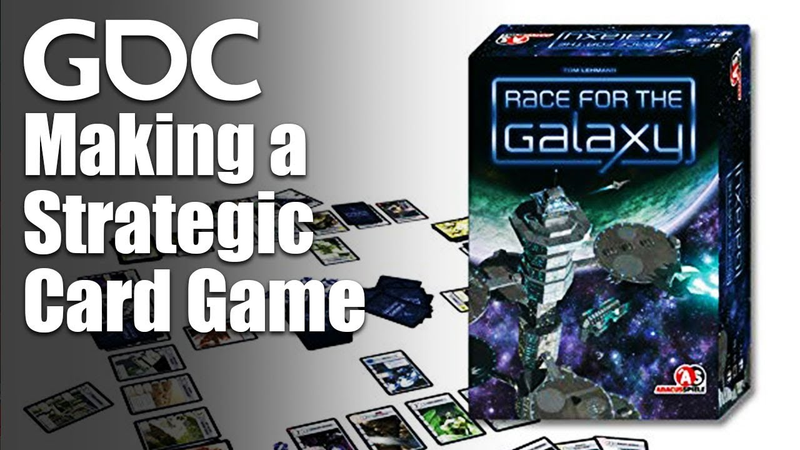
Designing Race for the Galaxy: Making a Strategic Card Game
Race for the Galaxy functions as a strategic card game that prioritizes player agency and economic tension by utilizing a dual-purpose card system.
- The core economic tension is driven by a dual-purpose card system where players must choose between using cards as currency or as permanent empire-building assets.
- Simultaneous action selection eliminates traditional turn-order constraints, allowing for a faster, high-stakes environment focused on tactical bluffing and hidden information.
- Anti-snowballing measures, such as individual bonuses for consume and trade actions, prevent dominant players from monopolizing resources and ensure long-term balance.
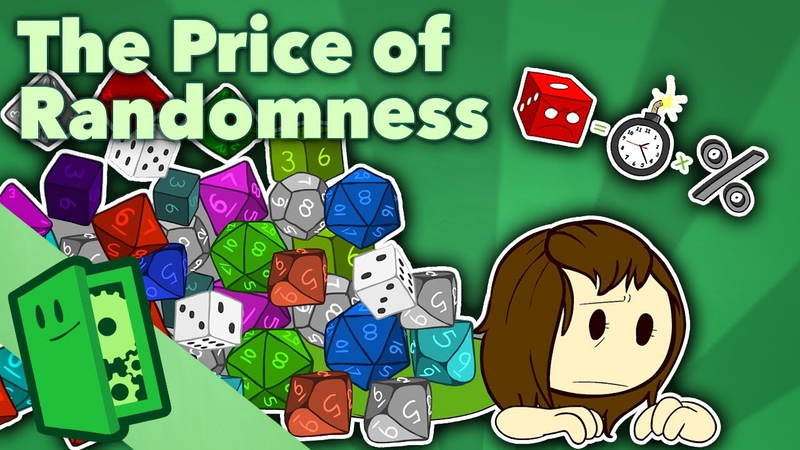
The Price of Randomness - Balancing RNG - Extra Credits
The design of random number generation (RNG) in video games requires a structured approach to balance strategic depth with player satisfaction.
- Portnow’s Postulate defines player frustration as the product of time lost and the probability of that loss occurring, serving as a diagnostic tool for balancing RNG.
- The 'true time cost' of a loss must account for cumulative progress, such as rank degradation or the time spent earning entry currency, rather than just the duration of a single match.
- In games like Hearthstone, a loss is effectively doubled in time cost because it negates the progress gained from a previous win, increasing the frustration threshold.
Games You Might Not Have Tried - ep 14 - Mechs, Monsters and More! - Extra Credits
This analysis examines a curated selection of video games chosen for their unique design contributions, innovative mechanics, or unconventional approaches to established genres.
- Designers can successfully innovate by prioritizing specific core mechanics—such as moral decision-making in Frostpunk or time-loop puzzles in Minit—over broad market appeal.
- Games like Hunt: Showdown demonstrate that integrating high-stakes permadeath and PvE elements can create unique tension within the established battle royale genre.
- Complex, legacy-style mechanical depth remains viable in modern gaming, as evidenced by the success of the tactical combat in Tower of Time and the systems in BattleTech.
Balancing Cards in Clash Royale
The core objective of balancing in Clash Royale is to cultivate a dynamic and healthy meta-game that prioritizes strategic depth and gameplay variety.
- Balancing prioritizes maintaining the unique identity and soul of each unit over rigid mathematical formulas, using mechanical complexity as the primary differentiator between card rarities.
- The development team employs a standardized 10% increase in damage and hit points per level to ensure consistent unit interactions throughout the player progression experience.
- The balancing process relies on a synthesis of data analysis, community feedback, and developer intuition to identify gameplay gaps and monitor usage versus win rates across all skill levels.
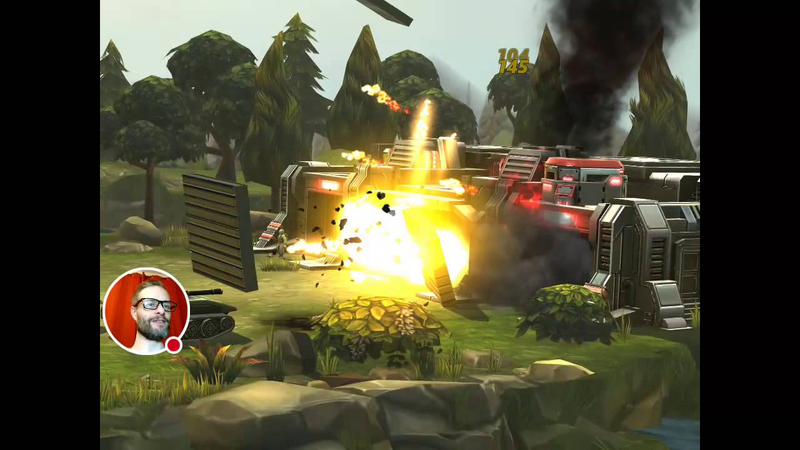
FTUE: League of War: Mercenaries
League of War: Mercenaries serves as a contemporary military base-battler reboot developed by MunkyFun and published by GREE.
- League of War: Mercenaries is a modern base-battler reboot developed by MunkyFun and published by GREE, serving as a successor to the original 2013 title.
- The core gameplay utilizes a lane-based, rock-paper-scissors tactical system where players manage credit-based energy, unit cooldowns, and specific unit counters.
- The game’s metagame is built on a multi-currency economy involving gold, bolts, and oil, alongside complex squad composition and unit upgrade systems.
How Supercell built an nonsensical session rhythm into Clash Royale
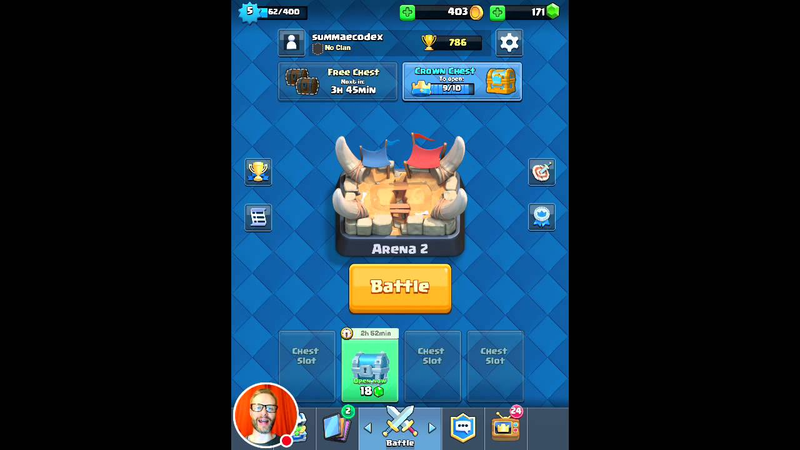
Clash Royale utilizes a sophisticated retention strategy by integrating a subtle, covert energy system into its chest reward mechanic.
- Clash Royale uses a chest reward system as a covert energy-gating mechanic, providing four slots to create a psychological sense of structure and completion.
- The game design encourages a 12-to-15-minute session rhythm, which is the optimal time required for players to fill their available chest slots.
- By framing limitations as a reward-collection loop rather than a traditional energy bar, the game avoids the negative player sentiment typically associated with restrictive gating.
GotW: BattleHand
BattleHand, a card-battling RPG developed by the London-based startup Another Place and published by Kongregate, serves as a notable entry in the mobile gaming market.
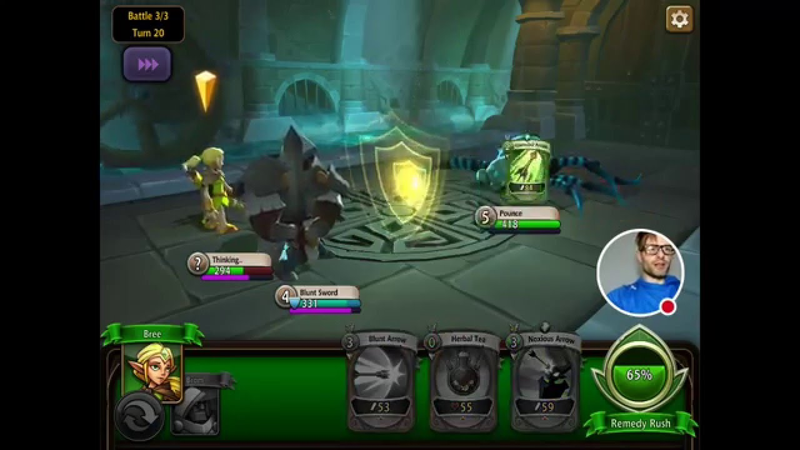
- BattleHand is a mobile card-battling RPG developed by London-based startup Another Place and published by Kongregate, targeting the mid-core Western market.
- The combat system utilizes a turn-based, team-oriented structure that incorporates elemental affinities—such as earth, water, and fire—to dictate tactical advantages.
- The game differentiates itself from competitors through a steeper difficulty curve and a design philosophy that prioritizes core gameplay mechanics over metagame-driven progression.
IAP Inspector: BattleHand
BattleHand, a fantasy-themed card battler developed by Another Place Productions and published by Kongregate, utilizes a monetization model that blends standard industry practices with unique narrative-driven engagement strategies.
- BattleHand prioritizes manual gameplay by requiring players to complete dungeons before unlocking auto-battle features, contrasting with the automated progression models of competitors like Star Wars: Galaxy of Heroes.
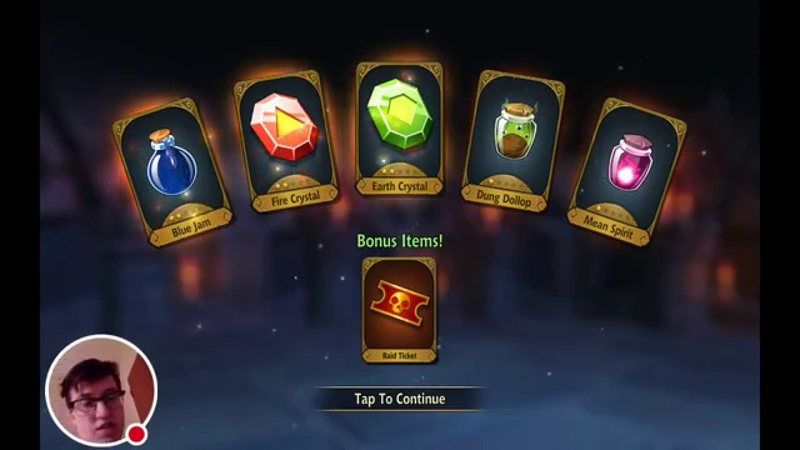
- The game utilizes a multi-currency system comprising keys for energy, gold as soft currency, and gems as hard currency.
- A daily gem subscription service is offered for approximately $13.99, a price point that may hinder its effectiveness as an entry-level conversion tool compared to lower-priced market alternatives.
Winning battles in Star Wars: Galaxy of Heroes
Star Wars: Galaxy of Heroes is a card-based mobile strategy game centered on character collection, squad management, and tactical combat.
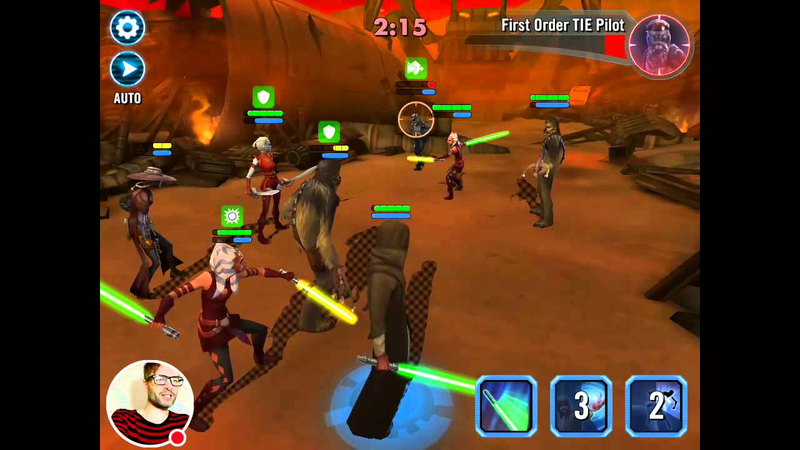
- Success in Star Wars: Galaxy of Heroes is primarily driven by tactical execution and strategic squad management rather than resource expenditure alone.
- Combat effectiveness relies on target prioritization, specifically neutralizing high-value enemy units like healers to prevent them from sustaining the opposing team.
- Squad longevity is maintained by utilizing tanks to absorb damage through taunt mechanics while balancing offensive maneuvers with defensive support skills.