Board Game Design Day: Race for the Galaxy: Digital Design Gems
14 Jan 201930 min video
Transcript
[Music] digital board games are fortunate to ride on the shoulders of giants their Source material often has thousands of fans millions of hours of gameplay robust rule sets well-developed uh art styles all before a digital version has even been conceived um but despite these advantages bringing a beloved board game to the digital realm has its Shar of challenges players are going to demand features like asynchronous gameplay and robust AI opponents these are features that might not have been considered in the original board game design features like tactility and taable talk are difficult if not impossible to reproduce online but digital adaptations can offer some unique features of their own so things like realtime uh bookkeeping embedded rules references and contextual prompt
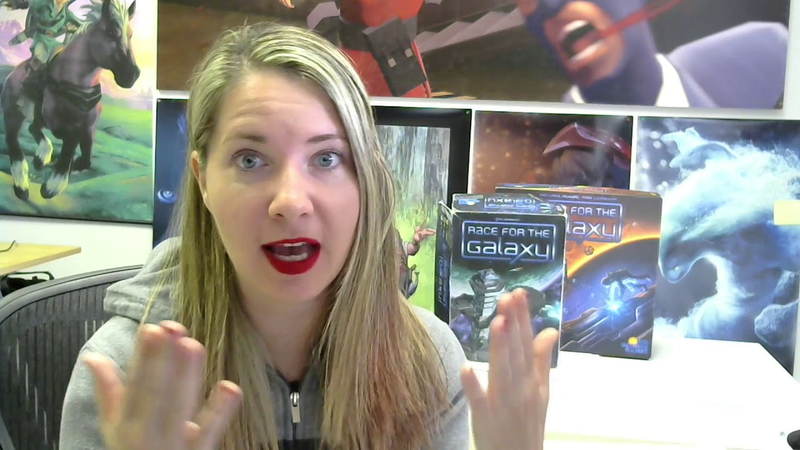
these are some of the tricks from the Temple Gates games toolbox in digitizing some of our favorite board games like race for the Galaxy Ro for the Galaxy and Ascension and hopefully some of these will apply to your games that you're working on just to give a little bit of context this is race for the Galaxy um it's an engine building card game set in space where players are playing cards to uh Place developments uh settle worlds I do with my water and build the most prosperous Empire this game was designed by Tom Layman um who is in the back there he's pretty cool and published by Rio Grand uh and it since sold about a million copies more around the world and my team has been responsible for digitizing this for uh PC tablet and mobile so three things you're going to think about when you're digitizing board games Source quality and delivery your Source what is the game that you're
going to be choosing quality what are the features that are going to go into that game and delivery how are you going to deliver those features so for Source how are you choosing the game um realistically this is going to be based on licensing rights um but that being said what's um fun in a analog board game is going to be really different from what's fun in a digital board game so not all games are going to translate well it's going to be a subset of board games that are out there that are still going to be fun on your phone so things like having one player feel like the expert for 15 minutes as they're explaining the game to their friends um that's not really practical online most of your online players are already going to know how to play the game or they're going to just jump into a tutorial um when they pick up the game on the App Store um also tactility so those gorgeous glassy Gems or Peter tokens that you're rolling around in your fingers between turns uh those are not available ailable
online um and those are really fun um you're not going to be able to be upgrading your components like with things like a broken token uh or painting minis online so you want to choose a game that's not wholly reliant on these physical game features um a game like super fight in which you have players arguing back and forth about who would win an imaginary battle between characters that's really reliant on table talk and ironically TBL talk is a feature that mobile board games are not really great at um which is surprising because phones are used for talking but players don't necessarily want to be chatting with each other on a mobile game um it's expensive to moderate and um players are not expecting the chat or a game like Mancala this is a game where you're going to be reaching into the Cubbies and distributing tokens around a board and that feels really good but if you have no tactility um because you're missing that is there enough still left to make a digital board game out of it and you want to lean into a game that's
going to really rely on the features that are fun in a digital space so things like AI things like asynchronous gameplay so race for the Galaxy is a tableau Builder which means you're playing a bunch of cards in succession as permanent cards those cards have a lot of information on them and that means that the AI can look at that information and make meaningful predictions based on that information um with high degrees of shity and so that's a game that really works well with an AI That's in contrast to something like a deck builder like another game I've worked on ascension um because in the deck bet Builder a lot of that information is going to be hidden away in a player's hand or it's going to be random through the deck so you might have performance issues with your AI trying to make predictions there so choosing a game that takes advantage of these features takes advantage of things like asynchronous um so your players so asynchronous gameplay can be kind of uh controversial some people think that board games are meant to be played
at a table with people in real time and I think there's a lot of value to playing that way but realistically if you're digitizing a board game many of your players are going to want to play asynchronously if they're stacking up games five or 10 games deep uh you want to make sure that those games do not feel repetitive to the player so one way you can avoid that repetition is choosing a game that has really different endgame States so in race for the Galaxy you might have a rush military State at theend of the game and that's how you win or you might build up uh a production engine and there's a lot of different kinds of strategies towards winning if you're going to have a different endgame state it probably means that on your way to getting there was different as well so the path is going to be variant as well so race sometimes feels like a complex game but in actuality you're not making a lot of different decisions at once it's more of a stream of isolated decisions as you play and it doesn't matter if you haven't played the game or if you're not familiar with with it but it's just a
stream of isolated decisions um because the game is broken up into phases so you're making a choice then you're executing it then you make another Choice then you execute then you make another choice and what that looks like in the game is let's say the players choosing an action they can choose explore develop settle consume trade or produce they say they chose develop they choose develop then execute then they choose what card are they going to develop then execute then they choose how are they going to pay for that development what cards are they discarding and then they execute because of that path that stream of decisions you can add a prompt into your game The Prompt is going to tell them during the execution what they're supposed to be doing and this is really good for digital board games for a couple reasons one it reduces analysis paralysis um but two it's really great for those asynchronous players who have stacked up a lot of games at the same time so they can come back and see what they were trying to do it just softens that re-entry for them this isn't contrast to
a game like Command and Conquer now it's not a board game but has a really different sort of uh path to play and command to conquer you can open up the build menu and you might have hundreds of choices of what building you're going to make um and and that's not really necessarily related to the next choice that you make in the game so there isn't this stream of choices and so it might be more difficult for a game like that to offer a prompt that tells the player what to do next um because it's not necessarily clear what they're trying to do next so that's a little bit on how to choose a game um that you're going to digitize uh quality what what are the features that you want to implement in your digital version there's a lot of really neat features that you can get away with digitally that you can't in an analog game um one thing I see players who play board games and one thing I see them do over and over and I do this myself too is um they don't take advantage fully of the abilities that they've accured throughout the game a lot of times this happens to new players because there's a lot of information it's a lot to juggle and you might
forget something um so if you have a card like Interstellar Bank in race for the Galaxy in play in your Tau this means anytime any player has activated the second phase you're going to get to draw a card now players might forget this if they're playing around the kitchen table with their friends but digitally you can just draw the card for them um or you have a choice as a developer if you want to if you um once you can prompt them to draw the card so you're going to make that decision because you're going to want to have a balance between how much you're automating for the players and how much you're letting them do themselves but either way you solve it your players are going to have confidence that they're not going to accidentally screw themselves out of a win because they've accidentally made an illegal um omission of following the rules another thing I see happening over and over with people is that they they just learn the rules of the game wrong so board games are often taught by a player to another player who might teach
their friends who might teach their friends and because of that oral tradition in learning the game little mutations and the rules can sneak in and I can't tell you how many emails I get about bugs in race for the Galaxy where it just turns out that people have been playing the game wrong for years and they didn't realize it but you know those emails are really helpful because they can help you identify pain points um so in race for the Galaxy this one in particular came up a bunch where players were confused on why they couldn't play a particular card now the rules of the game state that if you already have a card in your Tableau you can't play an identical copy of it um but by paying attention to where people were confused I was able to patch in this treatment which is a little bit of a dimming out and that just manages expectations players see it's dimmed out when they try to drag it into play it doesn't work but they can see there's a reason it didn't work it was it was dim and there was kind of a a bonus feature in this in that when players are trying to figure out what are they going to discard
they can just easily discard any dimmed cards they don't even have to read them they know these are not going to be uh legal cards to play in the future so what other features should you be implementing in your digital board games you don't have to be creative your players are going to tell you exactly what they want um so David Newman on Stately playay docomo it details about 20 different features that are seen as Baseline mandatory to include in any multiplayer uh board game these are things like ELO log server status timers notifications Etc so we hadn't planned to implement all of these features when we first um rolled out our race for the Galaxy schedule uh but we posted the beta to boram peek.com and the resounding response for the community was that they wanted more of these multiplayer features so we ended up spending about four more months uh developing these and it was over half of our development time on these features if you're following this Manifesto and you're implementing features like asynchronous gameplay um
you're going to have players who are stacking up those games at once and you want to support players being able to seamlessly Glide from one game to the next so they can uh enter a game take their turn they're waiting for their multiplayer opponent to take a turn just hit a next game button to take the next turn wait next game Etc and a question came up what do you do when a player has no more multiplayer games queued up um there's a couple things you could do as a developer oh shoot I should plug in my battery um there's a a couple things that you should do as a developer um you can um um hopefully it's fine um you can um either prompt them to create a new multiplayer game and uh and that's great because you are going to want to populate your multiplayer lobby with lots of games for lots of players to join into um but there's actually
kind of a like a cap on the capacity of games your players are willing to play at once there's a Sweet Spot somewhere between five and 10 games they don't really want to be juggling more strategies um it's a little MCH so you can pop them into an AI game and you know at first I thought about well do I want to open up a configuration screen where they can choose what expansion to play or um how many players they want to play against but I ended up just implementing um uh very like seamless popping them into a game that uses the the last configuration of a game that they played so it sort of just Glides them into something they don't have to think about it and that will just let them take turns while they're waiting for their next multiplayer opponent and I thought it worked out okay so what are you going to do with the uh all these different stacks of multiplayer games that are occurring are you going to display those to your players are you going to put them in the lobby at first I thought no I I don't think so because that's just going to be spam um it's going to be a lot of information people can't NE necessarily engage with a game
that's already in progress um but I've since changed my mind um because what happens is if you're if you're um matchmaking code is doing a good job at sweeping players quickly into a game then the games fill up really quickly and you don't have a lot of games there so if you had a new player who just steps into the lobby there might not look like there's a lot of games going on um and so you're broadcasting an artificially low level of activity to your player community so since then I've started adding more of the multiplayer games into your player Lobby and I see this kind of stuff everywhere now I see it in Magic matchmaking I see it in server lists I see these games you have absolutely zero functionality you can't join them as a a spectator you can't join them as a player but it broadcasts an activity level that encourages your community it feels more vibrant and I recommend doing it so after implementing all these features from the multiplayer Manifesto at least half of our code has been dedicated to things like um friends list uh storing asynchronous game data ELO um
did it work out was it a good idea at launch only 5% of our players were engaging with multiplayer so we had ended up spending about half of our development time on something that only a very very small minority of people were actually using and that was a pretty big bummer um eventually that number has grown to 25% and it's still growing um I definitely do recommend investing in these features because even though this is a a vocal minority they're going to be these players are going to be the ones who are driving your community forward they're going to be the ones who are posting tournaments they're going to be the ones who are posting YouTube videos and um moderating your forms and posting um a lot of stuff that's going to encourage your community to thrive that being said if 95% of your players are playing in in AI games at launch you're going to need to have a really robust AI to encourage that replayability of the game um this is something we do with temporal difference
learning our AI is driven by a neural network if you're interested in more about that I'm going to chat a little bit more at 440 today um about that but if either way I definitely encourage you to check out k.net rftg this is the um open source uh neural network AI that we used in race for the Galaxy and if you're working on a digital board game it's something that you can look at the code and see if this is something that's right for your game all all right and finally delivery so how best to deliver some of these features I've been talking about um first I'll talk a little bit about animation you have a trade-off between speed and legibility in your games you have to figure out how fast you're going to animate everything if a lot of your players are playing against AI opponents um how FAS are you going to show those AI opponent moves um and what are you going to show if we paused by the onesies and showed every single Victory Point or every single card that was acquired by a player it would be really ous and actually a lot of board game
apps do this and we started this way we had a script that executed and we would just um show every little thing flying across the screen one at a time that then I asked myself to dig a Little Deeper what are we trying to communicate with these animations um if you think about sitting around a kitchen table playing board games with your friends there's animations there right you see um when the the cards are dealt out to each player that's the initialization of the game or you see maybe when the deck is depleted and you have to reshuffle it maybe that's like the halfway point of the game and that that's a signal to your players of a state change in the game so race for the Galaxy has simultaneous turns if you've played um you know that every player is doing their turns at once and as a UI designer it kind of feels like this it's this like sort of crazy intersection where victory points and cards are flying all around and trying to make that clear what's going on to your players has been a challenge um so we we came up with a system of locking attention token and what this really does is it helps us
triage the events in the game to focus on vignettes to focus on the moments that really matter to the player so if you have something that is a really important moment let's say the AI is going to take over one of my worlds that's a really big moment I want the player to pay attention to that that event grabs the main attention token and locks it and no other event that would grab that main attention token can proceed they get queued up behind it until that event has finished animating and then the next things can go forward at the same time there are a system of uh lesser uh attention tokens um things for things like the draw deck and the Victory Point Pool and um and these can can proceed forward without detracting from the main vignette that you're showing so you can see here um as the cards are drawn into the player's Tableau nothing else major is happening at that one moment um but even when you're doing this triage if you do a system of locking atten ition tokens like we've done you have to figure out how fast
you're going to animate things um a lot of people uh working on digital board games have a video game background I worked on Spore Sim City and The Sims and um I think that's probably pretty common um and we know as video game developers how to make pretty animations and 3D characters and clever dialogue um but for board games a lot of that stuff really gets kind of in the way your player ERS that are stacking up their asynchronous games are just going to want to make decisions and and get that rapid decision-making and and build their Mastery of the game um so they're not necessarily going to want to have a cinematic moment or have a like character pop up and chat with them um so as a result you're going to want to offer a slider even still with a triage to make your animations go really fast now with the slider to make your animations go fast you have to determine what animations are affected so traditionally with video games there's
two animation speeds there are things that happen at game speed and there are like the dragon flying across the screen that can be really slow it can be really Monumental um and then you're going to have UI speed and that's really lickety split you want that to feel fast and immediate for the user um but with board games how do you make that distinction everything in a board game is basically UI um and you really want to focus on what is reacting to a player is a player clicking a card you know is a player uh examining something those animations need to be exempt from your spider if your slider is set to slow because the player is going to learn a lot of what's going on um they they want that slow animation teaching them you still want to have some licky split reactive uh animations so visually um board games can be really Laden with symbols and iconography race is no exception um and typically if a player doesn't understand what a particular symbol means they're going to consult the roles um or they're going to ask a friend but
in digital land you can embed the rules right there within the game so this is what it looks like for race for the Galaxy I put the plain text of what is going on with the rules right there and you can expand any card in the game and and figure out what the symbols are trying to tell you if you don't remember now this helper text isn't new if you remember old Max they had the little question mark icon in the corner and um that could be dragged to anything on the desktop to get a little bit more information eventually this evolved into tool tips which are really handy but tool tips cannot necessarily accommodate the volume of text you want to communicate in a board game so we started adding this just on cards and then we added it on goals and eventually we started adding it on the phases as well um we started putting it all over the place um and even though we kept wanting it everywhere we weren't prepared for how much our players wanted it even more to the point where um in the beta one of the biggest uh
requests that they had was hot keys or swipes so they could cycle through this information is as a developer of a game you see the game every day you play it all the time you know how to play the game but new it's easy to forget how much new players are going to really take advantage of this information so thinking about something like magic the Gathering they have keywords right this basilisk has death touch and on the left you can see this card has an explanation of what that key does any amount of damage this does deals to a creature is enough to destroy it right on the right there's a different version of this card and they didn't explain the keyword so they have to make this tradeoff of whether they're going to explain it or not um they want to sprinkle it in enough so that players can remember what the keywords do but they don't want to do it too much because they have to reduce the font size to accommodate it they might not be able to put other abilities on the card because there's not enough room um it just clutters things up a little bit so in digital land you never have to make
that trade-off you never have to decide you can always have the inspection available to your players for board games and then just as the player Masters the board game and doesn't e it they just never go into the inspection mode so pretty soon we started wanting this in all board games all games in general like how cool would it be if you're playing League of Legends and you could just double click Zoe and know that she get does a bunch of burst damage before having to learn the hard way embedding rules references like this really alleviates a lot of the burden on a player doing that big teaching session right up front at the beginning usually you're going to learn a board game for 30 minutes and it can be a little bit of a SLO so with video games uh typically a lot of these rules are embedded in wikis that are external to the game so um if you're going to play Minecraft or kbal space program at the highest levels you're going to be accessing wikis it'd be really cool if some of this information could be accessed right within the game
now we're able to embed rules references with the cards because we draw all of the cards on the fly so for any given card in race for the Galaxy we're programmatically turning on and off about 50 to 100 different pieces of UI at a time and the reason there's a lot of reasons to do this here's four of them um if you have a card like ancient race this is a starting world and it has a starting World condition you have a little bit thinner of a a starting hand um but you might draw this card mid game or late game in which case it's not a starting world we can just programmatically turn off that piece of UI that's related to the start of the game so you can have a little bit of contextual information on whether you're going to show UI or not also it's really great for localization if you're programmatically drawing your cards in your game you can easily translate them on the Fly also um if your players have different configurations enabled if they're turning on and off different expansions of your game or let's say some players really like takeovers in race for the Galaxy some players don't
if you turn off takeovers you can just never show any takeover UI to the players who don't want to play with them and it cleans up the game quite a bit and finally drawing cards on the Fly is going to save you texture memory which is actually a really big deal if you're making a board game in Mobile because uh you have a lot of card art it's going to hog your texture memory any savings you can get with reusing Borders or icons is going to be a big deal in race for the Galaxy we're on our third expansion now we're already having to start to move to a streaming texture solution because we're basically out of space so our UI is a little bit insane um this is the this is the main UI for the game and you want to design your UI so that it can accommodate a very full end game State um and we do this by having recursively nested uis where we populate them into Cards into the tables and that can accommodate different aspect ratios which is the fun of making mobile board games um super fun um and you might say Teresa that's crazy that's
a that's a lot why not just not put everything on the screen um these are a couple of my other favorite mobile board games this is agrica and Lords of water deep in agrica they have a pagination system so you can paginate between your farm and your opponent's farm and the worker placement area um and get your information there in Lords of Water Deep you can scroll around and pan around across the screen and I love these games but my problem with both of these Solutions is that you're task asking your player to memorize a lot of information so that when they're making a decision they have to pull it from memory rather than seeing it right on the screen in race for the Galaxy we try to give you as much information as is relevant to your turn immediately available to you visually and we did that by having this system of abstracts or little summaries of information so here I have my main Tableau in the middle and I have my opponents that I'm playing against and there's a summary of what um is going on and their Tableau at the top that summary you can see in the
animation it expands out and you can always inspect it further so as a designer you have to decide what are you going to communicate in this summary version so for us we are communicating you know the top left card from the AI here costs two and I'm I'm showing it's a two cost Planet I just made a decision I'm not going to show the victory points I'm going to show the cost but players know there's a correlation between victory points and cost so hopefully that's enough information for them to make their choices and this is a this design decision is actually originally from Tom and Kellin um who made the AI and we liked it a lot so we implemented it we we expanded a little bit more if you have a uh different military powers in the game we condense them down into an icon that can always be expanded out for more information another of my favorite games Ascension did a great job of condensing down information by cropping cards you might ask what can you get away with when you're cropping a card you know can you get away with getting rid of keywords icons abilities you can
actually get away with getting rid of all of it um as long as you keep artwork because the artwork is going to be the shorthand that your players are going to memorize that they remember all of those other abilities and keywords and icons from so in race for the Galaxy we're able to deviate a little bit from the baked card art because we're programmatically drawing our cards on the Fly and that lets us get away with something that's really important which is real-time book keeping and this is a big service you can do for your players you want to be judicious on when you're doing it so in race for the Galaxy there are six cost developments and these give a dynamic scoring Victory point value depending on the game State at the end of the game so this is galactic exchange and on the left you see the version that's in the in the card game you're going to play an analog has a question mark that represents that Dynamic score and on the right you see a version that we can do in game we can we can just figure out what the score is we can say okay this card gets uh some points for every different color in play of of
world you have in play if you have a bunch of those worlds you have nine points here for example and we started by adding this just in the Tableau and eventually we started putting it in your hand we found that players really like having this information right up front even before they've played the card and if you're going to ask your player to uh to do the math and figure out these scores it usually takes about 30 seconds and pretty much no one does it they do about a 5-second approximation which is pretty good but um occasionally it's way off so we find by doing but the real-time bookkeeping for the players their their scores are much higher and they like the feature a lot so I recommend it a lot of these features I've been talking about today have been things that are going to help you get your player comfortable and familiar with the game in a teacher environment where they don't have tabl talk um but there is a digital platform where you can have table talk you can have a teacher and that's in VR um that's uh one of the reasons that we've brought uh
we're bringing race for the Galaxy to VR and we brought Ascension to VR um you can get table talk you can get you know you can if someone's new you can come up right behind them look at the cards in their hand help them through what they should be playing um next and and just chat about your week while you're playing a board game with people I I can I can play a board game with my sister in South Carolina um online with her and just hear about her day which is pretty cool and we did this with Ascension too up next we're going to be working on rooll for the Galaxy and maybe I'll be back next year with some ideas about how to make the AI performant for that that's what we're struggling with right now and also how much to automate for your players this is a dice version of race for the Galaxy if you haven't played it so anyway that's my talk come find me if you uh have any questions about board games or like to digitize board games and play more board games that's it
Auto-generated captions from YouTube — names and numbers may be misheard.
Key insights
7 takeaways · ~3 min read- 01Digital board game adaptations should prioritize asynchronous gameplay features, such as contextual prompts and automated rule execution, to reduce analysis paralysis and allow players to manage multiple games simultaneously.
- 02To maintain a vibrant community, developers should display both active and inactive multiplayer games in the lobby to broadcast a high level of activity, even if some games are not joinable.
- 03Developers should implement a system of 'attention tokens' to triage game events, ensuring that critical moments (like a major move) lock the screen while secondary events (like drawing cards) proceed in the background to maintain both speed and legibility.
- 04Embedding rule references directly within the game interface—such as expanding card text or phase descriptions—eliminates the need for external wikis and lowers the barrier to entry for new players.
- 05Programmatically drawing cards on the fly rather than using static, baked-in assets saves significant texture memory, which is critical for mobile performance as expansions increase the total card count.
- 06Real-time bookkeeping, such as calculating dynamic victory point values for complex cards, provides a significant quality-of-life improvement over analog versions by removing the burden of manual calculation from the player.
- 07When selecting a game for digital adaptation, developers should evaluate the game's mechanics; engine builders with visible information are better suited for neural network-based AI than deck builders with hidden or random information.
Ask AI about this video
Cite this video
Citation
Generating citation…













Comments