Board Game reports and market data
Documents
Using AI for Game Design!
The integration of artificial intelligence into game design offers a powerful methodology for balancing mechanics and identifying exploits.
- AI-driven minimax algorithms provide an objective method for balancing game mechanics by simulating superhuman play and mapping potential board states to identify structural flaws.
- Using AI to analyze the board game Hus Bao successfully exposed a significant first-move advantage and identified mechanics that create problematic positive feedback loops.
- Superhuman AI simulations are not representative of human behavior, as rule changes optimized for AI often lead to stalemates or unintended loops when played by humans.
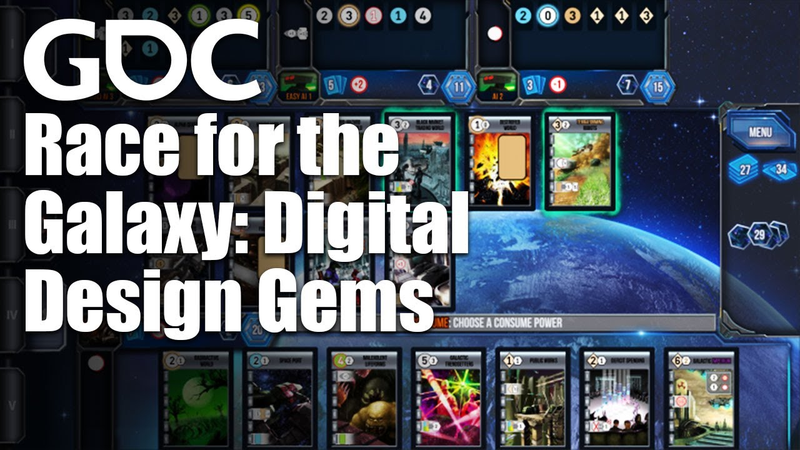
Board Game Design Day: Race for the Galaxy: Digital Design Gems
The successful transition of tabletop experiences into digital environments relies on selecting titles with structured, phase-based mechanics that favor strategic decision-making over physical tactility or social negotiation.
- Digital board game adaptations should prioritize asynchronous gameplay features, such as contextual prompts and automated rule execution, to reduce analysis paralysis and allow players to manage multiple games simultaneously.
- To maintain a vibrant community, developers should display both active and inactive multiplayer games in the lobby to broadcast a high level of activity, even if some games are not joinable.
- Developers should implement a system of 'attention tokens' to triage game events, ensuring that critical moments (like a major move) lock the screen while secondary events (like drawing cards) proceed in the background to maintain both speed and legibility.
Board Game Design Day: Cardboard Interfaces: UX for Board Games
Board game design functions as a form of physical user interface engineering, where the primary objective is to facilitate player interaction with abstract systems.
- Board game usability can be measured using Jakob Nielsen’s five attributes: learnability, memorability, efficiency, accuracy, and satisfaction.
- When designing card layouts, prioritize information placement based on the player's context; for example, Seven Wonders places costs in the top-left for hand-held cards, while Dominion places them in the bottom-left because cards are played on the table.
- To maintain player engagement during scoring phases, designers should avoid slow, manual token-based systems and consider integrated score tracks, provided they align with the game's specific rhythm and frequency of scoring.
Board Game Design Day: White, Brown, and Pink: The Flavors of Tabletop Game Randomness
Game design relies on the strategic application of randomness to balance player agency with unpredictable outcomes.
- Pink noise is the most effective framework for game design because it balances frequent small adjustments with occasional significant events, mirroring natural systems and human perception.
- Input randomness, which presents a randomized state for players to navigate, is superior to output randomness for supporting deep strategic planning.
- Output randomness determines the result of a player’s decision and is best utilized to introduce tactical variance rather than long-term strategy.
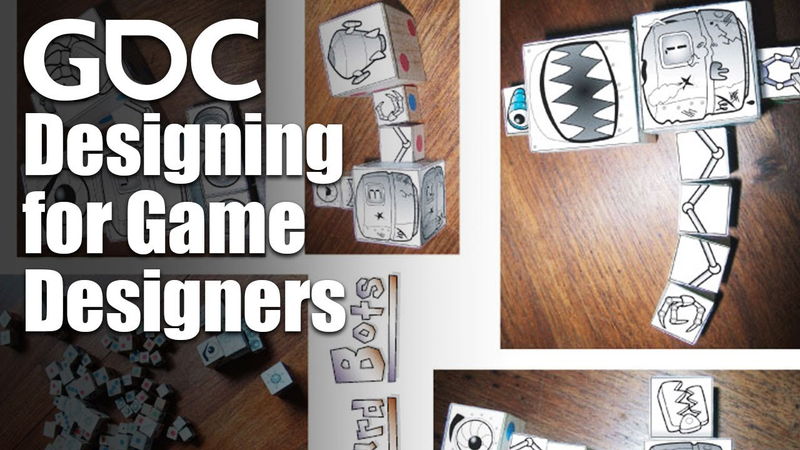
Designing Games for Game Designers
Effective game design requires a rigorous focus on core mechanics, stripping away the complexities of software to reveal the fundamental systems that drive player engagement.
- Game design can be effectively taught through simple, low-tech, analog exercises using dice, cards, and paper that focus on specific mechanics rather than complex software.
- Effective game design exercises should be constrained to prevent overwhelming students with too much creative freedom, allowing them to focus on mastering individual components like goals, obstacles, and rules.
- Game mechanics should be viewed as a series of adjustable slider bars rather than binary states, where the designer's goal is to tune start conditions, goals, and opposition to create a compelling experience.
The State and Future of Board Games: From Apps to "Legacies"
The board game industry is currently undergoing a period of rapid expansion, marked by a market valuation exceeding $1 billion and the release of over 3,500 titles in 2017.
- The board game industry is experiencing rapid, sustained growth, with over 3,500 new titles being released annually.
- App-integrated board games are an emerging category that utilizes digital components to augment physical play, though they face resistance from players who prefer to avoid screens during tabletop sessions.
- Legacy games, which involve permanent physical alterations to components over a series of sessions, are becoming a permanent design tool rather than a passing trend, appealing to players accustomed to long-form video game campaigns.
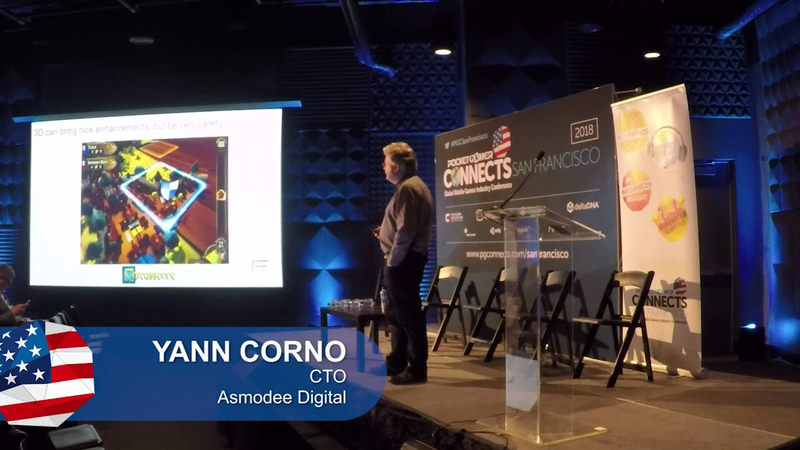
How to successfully adapt board games to digital
The digital adaptation of board games represents a specialized sector within the broader gaming industry, characterized by a symbiotic relationship between physical and digital products.
- Digital board game adaptations act as a growth engine for physical sales, with data showing a 40% increase in physical product revenue following the launch of a corresponding digital title.
- Digital versions should be managed as part of a multi-channel ecosystem rather than as standalone products or competitors to the physical game.
- Successful development requires prioritizing high-fidelity adherence to the original design and technical execution, specifically robust AI and UI optimization, rather than traditional video game content production.
OVUS NOVA Is a Board Game Now! - (Turn Based)
The transition of the game Ovus Nova into a turn-based strategy format serves as a case study for evaluating core gameplay mechanics and accessibility.
- The developer rejected the turn-based pivot for Ovus Nova, concluding that the original real-time design better preserves the game's core identity and tension.
- Transitioning to a turn-based format successfully addressed player confusion and visual readability issues but sacrificed the exponential growth mechanics central to the original experience.
- The turn-based prototype utilized a three-action-per-turn system—move, convert to eggs, or detonate—which improved strategic clarity but risked creating predictable, infinite defensive gameplay loops.
Board Game Design Day: Board Game Design and the Psychology of Loss Aversion
Loss aversion serves as a foundational psychological principle in game design, predicated on the observation that the emotional pain of losing an asset is felt approximately twice as intensely as the joy of acquiring an equivalent gain.
- Loss aversion dictates that the emotional impact of losing an asset is approximately twice as intense as the joy derived from gaining an equivalent one, making it a primary driver of player engagement.
- Mechanics that threaten the removal of progress or force resource sacrifice compel players to act irrationally to avoid deficits, creating high-stakes environments that increase emotional investment.
- Designers utilize the endowment effect and endowed progress—providing players with a head start toward a goal—to foster artificial attachments that make the potential loss of progress feel like a significant personal setback.
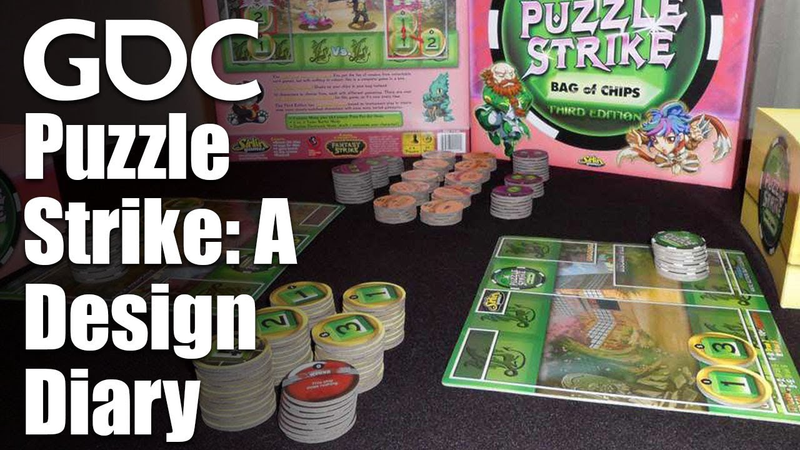
Board Game Design Day: Puzzle Strike: A Design Diary
Puzzle Strike functions as a strategic translation of high-intensity, competitive video game mechanics into a tabletop format.
- Puzzle Strike translates the mechanics of competitive puzzle-fighting games into a tabletop format by prioritizing direct player interaction over the passive, multiplayer solitaire style common in deck-builders.
- The game design utilizes asymmetric character abilities and mechanics inspired by real-time strategy titles like StarCraft to ensure long-term strategic depth and prevent gameplay stagnation.
- Core gameplay revolves around a constant tension between aggressive rushdown tactics and long-term economic development, forcing players to manage risks and resources carefully.
Creating 'Burgle Bros': The Fantasy of the Heist
In this 2017 GDC talk, board game designer Tim Fowers explores the intersection of game mechanics and emotional resonance, using his cooperative heist game, Burgle Bros, as a primary case study.
- Designers should treat board games as software that runs on people, focusing on engineering specific emotional states like tension and altruism rather than just simulating narrative tropes.
- To capture the 'fantasy' of a heist, replace rigid pre-game planning phases with dynamic, real-time exploration systems that force players to adapt to uncertainty.
- Using hidden information, such as face-down tiles, and unpredictable AI movement creates a balance between tactical agency and high-stakes risk that fosters collaborative decision-making.
Mechs vs. Minions: Why Would Riot Make a Board Game?
Riot Games ventured into the tabletop market with Mechs vs. Minions to explore creative expression beyond digital platforms, utilizing the intellectual property of League of Legends to foster a unique, cooperative experience.
- Riot Games developed 'Mechs vs. Minions' not as a strategic market acquisition or user retention play, but as a passion project intended to explore their IP in a new medium and create a high-quality experience for their players.
- The project was driven by a small, internal team rather than a large studio mandate, allowing the developers to prioritize product quality over traditional profit margins by reallocating typical marketing budgets into high-end components and game tray design.
- The game design evolved from a competitive programming prototype called 'Weapons of Zombie Destruction' into a cooperative experience, as the team found that cooperative mechanics better suited the team-oriented nature of League of Legends players.