Board Game reports and market data
Documents
The Pandemic is Killing Board Games - A Tabletop Extinction Level Event - Extra Credits
The tabletop game industry is currently facing an existential crisis, characterized by a convergence of manufacturing, supply chain, and economic challenges that threaten the survival of both independent and large-scale publishers.
- The tabletop industry is facing an existential crisis due to a 'paper apocalypse' caused by manufacturing bottlenecks, raw material shortages, and logistical failures.
- Despite a 20% surge in consumer demand for board games in 2020, the industry could not capitalize on this growth due to production shutdowns and labor shortages in China.
- Global shipping costs have increased by three to four times, while transit times have doubled, severely impacting the profitability and delivery of tabletop products.
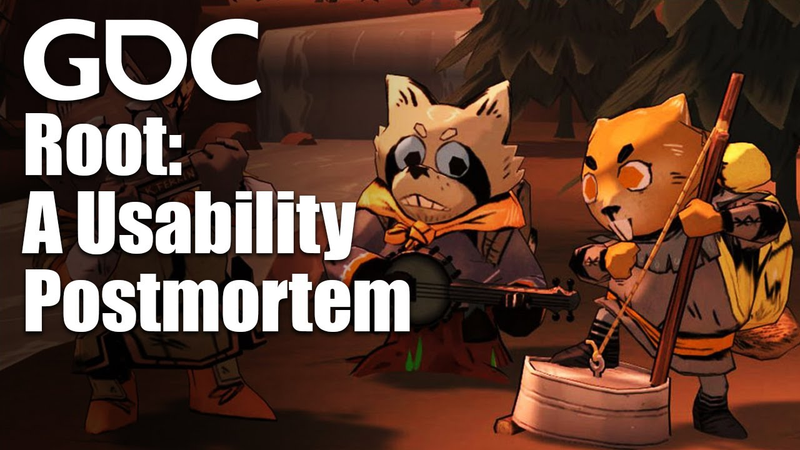
'Root': A Usability Postmortem
The design of Root demonstrates that usability in complex, asymmetric board games hinges on the precise alignment of visual iconography, physical feedback, and instructional architecture.
- Usability testing is critical because players interpret design elements based on context; for example, players misidentified a mouse icon as a teapot or ghost, and assumed a storage box size was a functional limit rather than an aesthetic choice.
- Visual design elements must be distinguishable at all scales; the 'Root' mouse icon failed because its most identifying feature—the whiskers—were too small to be legible when the icon was scaled down on the game board.
- Context-dependent information can be misinterpreted if it mimics other game systems; players confused a victory point reminder for a prompt because all other board elements were active prompts, necessitating a move of that information to a separate overview card.
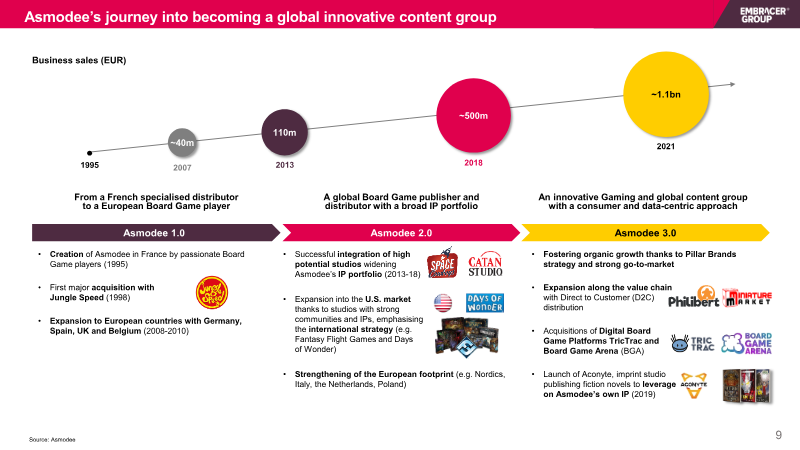
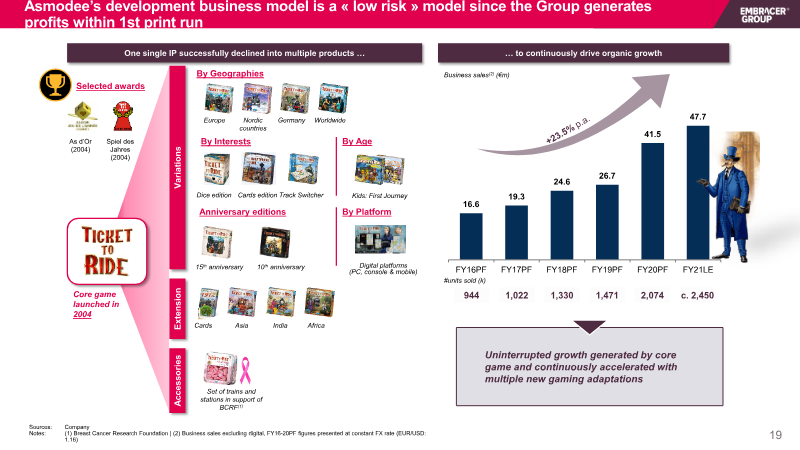
Proposed Acquisition of Asmodee: Management Presentation
Embracer Group’s acquisition of Asmodee for approximately EUR 2.75 billion represents a strategic expansion into the tabletop gaming sector, aiming to create a diversified global entertainment powerhouse.
- Embracer Group is acquiring Asmodee for approximately EUR 2.75 billion, with the transaction expected to close in the first half of 2022.
- The acquisition adds 22 studios and over 300 intellectual properties to Embracer’s portfolio, bringing the combined entity's total to over 560 IPs and 11,300 employees.
- Asmodee reported EUR 1.1 billion in pro forma sales for the 2021 fiscal year, demonstrating a resilient, high-growth business model.
"King Me": A Defense of King-Making in Board Game Design
Modern board game design is currently constrained by an obsession with fairness and the elimination of king-making, a trend rooted in 19th-century Victorian moralism that equates victory with merit.
- Board games are fundamentally storytelling mediums, and designers should prioritize narrative cohesion over the modern industry obsession with artificial fairness or catch-up mechanisms.
- Designers can mitigate player frustration in high-conflict games by providing players with diplomatic flexibility and meaningful agency, even when they are no longer in contention to win.
- The modern design ethos of 'fairness' is a relatively recent development rooted in 19th-century Victorian morality and the rise of mass-market manufacturing, rather than an inherent requirement for engaging gameplay.
The State and Future of Board Games
The board game industry is currently undergoing a period of rapid expansion and transformation, characterized by an annual influx of approximately 4,000 new titles.
- The board game industry is experiencing rapid expansion with approximately 4,000 new titles released annually.
- Consumer behavior is shifting away from long-term lifestyle games toward a model that prioritizes variety and shorter-term engagement.
- Advancements in manufacturing technology have lowered barriers to entry, allowing designers to target increasingly niche audiences.
Legacy Games: From Risk to Pandemic to SeaFall & Beyond
The legacy board game genre represents a fundamental shift in tabletop design by challenging the industry’s traditional covenant that games must offer infinite, reset-based replayability.
- Legacy board games challenge the traditional industry assumption that infinite replayability is the primary value driver for consumers, proving that players are willing to engage with consumable, one-time experiences.
- The 'legacy' mechanic functions by breaking the covenant of board game permanence, allowing players to physically alter components—such as placing stickers or destroying cards—which creates a sense of freedom and narrative weight similar to coloring books or legacy-style digital games.
- Designing for 'legacy' play involves creating a sense of mystery and progression through sealed components, which incentivizes cooperative play as groups work together to unlock content rather than competing solely for victory.
The UX Challenges of Adapting Classic UNO to Mobile
Adapting the classic card game UNO for mobile platforms requires a strategic balance between preserving the core physical experience and innovating for digital constraints.
- To bridge the gap between physical and digital play, developers transitioned from a rigid, tiled card layout to a 3D perspective that mimics the natural arc and posture of a human hand holding cards.
- To solve the problem of complex rule sets across 150 countries, the team abandoned a cluttered list of options in favor of a 'game mode' system that allows players to create and save custom rule configurations, resulting in 488 possible variations.
- The design team applied Hick's Law to address player churn, recognizing that presenting too many rule options on a small mobile screen increased decision time and negatively impacted the user experience.
Developing Artifacts of Play For Your Tabletop Games
Artifacts of play are defined as items created during a game session that outlive the experience itself, serving as tangible or intangible mementos of the players' specific choices and interactions.
- Artifacts of play are items created during a session that serve as tangible or intangible mementos, effectively extending the game's emotional resonance and marketability beyond the initial experience.
- Designers should integrate artifact creation directly into the game's rules, ensuring that the act of playing inherently produces a unique, personalized object.
- Successful implementation requires designers to relinquish some control, allowing players to act as co-authors who shape the game's narrative or physical state.
Board Game Design Day: Why Indirect or Zero Player Interaction Can Be Great
Board game design functions most effectively when designers view player interaction as a flexible spectrum rather than a mandatory requirement for conflict.
- Player interaction should be treated as a flexible spectrum rather than a mandatory requirement for conflict, allowing designers to prioritize strategic planning and personal agency.
- Games with indirect or zero-player interaction offer superior scalability and facilitate simultaneous play compared to traditional direct-conflict mechanics.
- Designers should categorize mechanics into three scales—personal (individual impact), global (shared game state), and adjacent (direct opponent influence)—to maintain ludonarrative harmony.
Board Game Design Day: KeyForge: Creating the World's First Unique Deck Game
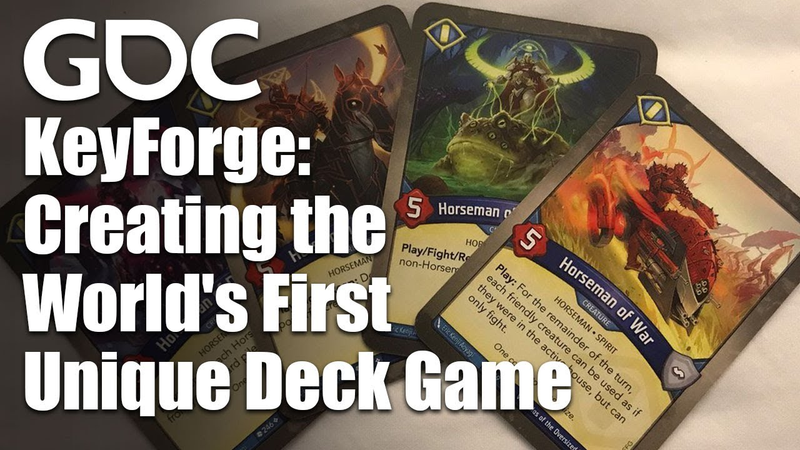
KeyForge represents a paradigm shift in tabletop gaming by introducing the world’s first unique deck game, where procedural generation ensures that every deck is entirely distinct, non-customizable, and possesses a unique identity.
- KeyForge utilizes a complex algorithm to generate unique 37-card decks, ensuring that the probability of encountering a duplicate deck is statistically negligible until approximately 15 trillion decks are produced.
- Each deck is composed of three distinct houses, an Archon card, and a unique name, with a secondary uniqueness check comparing every generated deck code against the existing database to prevent duplicates.
- The game design prioritizes accessibility with a 10-15 minute learning curve, allowing players to start playing immediately after purchasing a single deck without the need for deck-building or extensive rulebook study.
Growth on Messenger – What Moonfrog Labs learnt from the success of Ludo Club
Moonfrog Labs, a Bangalore-based mobile game studio, achieved significant growth for its title Ludo Club on the Facebook Messenger platform, scaling from 64,000 daily active users in March 2018 to approximately 2.8 million by early 2019.
- Moonfrog Labs scaled Ludo Club from 64,000 to 2.8 million daily active users on Facebook Messenger between March 2018 and early 2019 by prioritizing familiar board game mechanics.
- High initial drop-off rates of 10% to 14% were mitigated by focusing on minimizing load times, which proved critical for user retention on the Messenger platform.
- The studio utilized the platform's capacity for real-time client experimentation to iterate rapidly, compensating for the lack of publisher control over game discovery and listings.
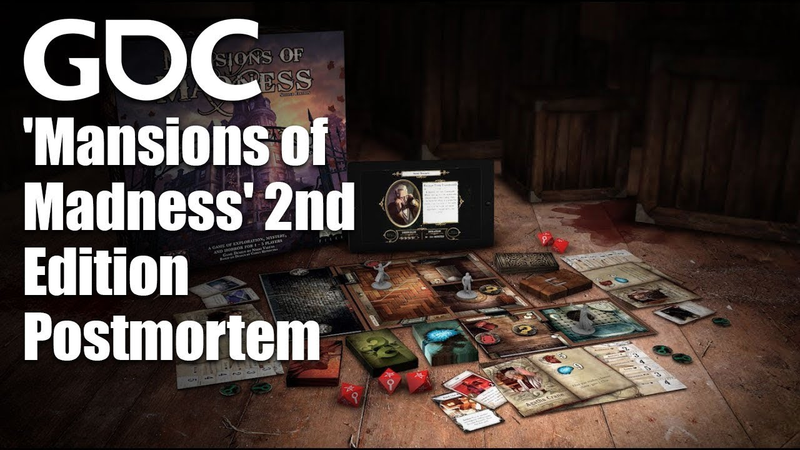
Mansions of Madness 2nd Edition: Postmortem of an App-Integrated Board Game
Mansions of Madness Second Edition serves as a foundational case study for the successful integration of digital applications into tabletop gaming.
- Integrating an app into Mansions of Madness 2nd Edition reduced the game's complexity rating on BoardGameGeek from 3.24 to 2.65, a decrease of over 20%, while simultaneously increasing the content volume by more than 12 times.
- To enable non-programmers on the tabletop design team to build complex game logic, the studio used Playmaker, a visual scripting plugin for Unity that allowed for the creation of encapsulated state machines.
- The development team struggled with significant technical debt and stability issues at launch, with unofficial user polls indicating that certain scenarios crashed on specific platforms up to one-third of the time.