Board Game Design Day: Why Indirect or Zero Player Interaction Can Be Great
2 Mar 202030 min video
Transcript
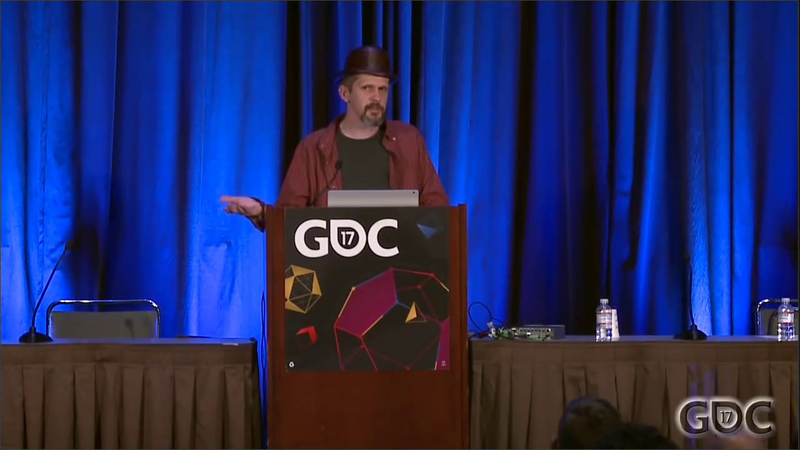
[Music] my name is Gil Hova I am a board game designer and I'm gonna tell you about indirect and zero player interaction so before I start I want to remind you to please fill out the feedback forms that's really important in deciding who gets to speak next year so that would be really really great if you could fill that out also if we have time we're gonna have a Q&A session though it's gonna be pretty tight so we might have to take it to a wrap-up room okay fantastic so let me tell you a little bit bit about myself I've four games three of them on the market one on Kickstarter the network's is one of my games about running a TV network word Z is another one word Z is a game the word game that rewards longer words high rises on Kickstarter right now please back it and bad medicine is a far as a party game about pharmaceutical companies making awful drugs I'm also co-host of the lewd ology podcast with Jeff angle scene which is
yeah whoo and that's a real thrill to beyond but I'm not here to talk about any of that I'm here to tell you that I am a total care-bear when it comes to games I don't like mean games I don't like nasty games except when I do but that gets more complicated in them overall I really do prefer games with a little less direct interaction now when I mention this because I see a lot of prototypes especially for new designers sometimes from people totally new to game design sometimes from people who are from the digital space and this is the first tabletop game and their impression a lot of times of what a tabletop game should be like is more like this and they put in direct interaction not because it's a conscious choice but more because they feel like well this is a board game or a card game so you need to beat up the other players right and that's what this talk is going
to be about we're gonna talk about board and card games that don't have direct interaction what makes them work what makes them not work and how they could be used as a design tool in your games so I want to start with some clarifications because it could be really easy for me to meet Bemis or just misunderstood so let me get a few things out of the way first off at no point am I going to say that direct interaction is a bad thing it's not direct interaction could be the perfect perfect thing for your game it's not always bad and a lot of times it's good and it's the right choice on the flip side indirect Internet interaction is not always the right choice from your game you know sometimes you will need that direct interaction clarification number three is we're gonna focus mainly on competitive multilateral 3 plus player games and because two player games interaction is very special any of you who have ever worked on a two-player
game you'll know that they have a special kind of dynamic and we're gonna focus on competitive games because cooperative games it's a lot more subtle how interaction works in those and lastly we're really here to expand your designer toolbox and to open open up the kinds of games that you can make so that you're not always doing the heavy metal fry vocal scream all the time how many of you attended a coal whirley's talk earlier today about King making that was a fantastic talk this talk is not here to contradict his talk I think it's got a cop go to compliment his talk because I think we're looking at the same thing from different angles it's sort of the difference between a comedy and a drama in a lot of ways so what is interaction interaction is to me the ability to affect another player's game state so when coal talks about King making in his games he's talking about actually being able to affect one player being able
affect a bunch of other game states to the point that one player can decide the winner of the game and that winner would not be them and that allows the politics of the game the politics the real world and the politics of the group to start to seep through into the magic circle and he talked about how that can actually enhance a game and if you didn't see that talk look it up on the vault it's really really good where is I for me my the interaction that we're going to talk about is still affecting another player's game state but we're going to talk about how it works even when it's limited or positive or not even there at all so I think we're gonna start with this graph over here this graph is going to help me visualize help us visualize what I'm talking about here so we've got an x-axis which has less interaction and more interaction and then we've got a y-axis which is positive interaction and negative interaction in games so let's look at some sample games here we're
gonna start with Mille Bornes the classic take that game this is actually the first take that game out there you can play a card on someone because you're all racing cars looks like a distance race so you can play cards to show how far you race but then you can play cards on other people to tell them you can't go faster than this so there's a lot of meanness in the game there's a lot of as we say take that a lot of direct negative interaction and again that's there's no criticism there that's what the game is it's been around for decades it's an incredibly successful game that people adore so direct interaction and negative interaction is absolutely a feature of the game but let's talk about positive interaction even positive direct interaction because you may not visualize that so let's talk about Bonanza Bonanza to me is the prototypical trading game so this is a card game where you're trading and the things you're trading are beans and if you're a little skeptical about that know that it was designed by of a
Rosenberg who also designed games like Agricola and feast for Odin this was a much earlier game of his and it is an absolutely phenomenal game Bonanza is just a gem even though it is about trading beans so it could be hard to get to the table but once you get it to the table man it's fantastic but let's talk about the positive player interaction because you are trading beans you get a hand of cards and the interesting thing about Bonanza is the card is that your hand is actually a cue you are not allowed to rearrange your hand so you must plant the front card of your hand into one of your two bean fields in front of you and if you have two bean field a totally different beam to plant into it you've got to choose one of your bean fields to harvest and bean fields will only give you points if you have X number of cards to harvest and if you don't well too bad you pretty much lose that bean field so there are times when you've got a card in front of the car do you want a planting to God get it gotta get rid of it how do you do that by trading it to another player by offering
it to other players and when it's another player's turn trying to get rid of it before it comes around to your turn so a trade in this game is very positive for you and a lot of times very positive for the other player in fact there are times when you just want to give away your your being not even get anything in return because what you're getting in return is the opportunity to plant your next bean so to me this was a great example of positive player interaction it's direct interaction but you're saying you this other player and me you know we're going to each improve our game States and try to get each of us closer to winning relative to the other players so I think there's a that this is a great example of positive interaction even though it's direct so let's talk a little bit about indirect interaction I'm gonna bring up seven wonders this is another absolutely wonderful game but this is a card drafting game where the players are all simultaneously picking cards putting the card they're chosen in front of them and getting the effect and then passing their entire hand to the left and
obviously getting the hand from the player to the right and then choosing a card from there so everybody is choosing a card one at a time and playing it but you never actually play a card on anyone else your cards pretty much only affect yourself so seven Wonders doesn't really have a great deal of negative interaction there's a tiny tiny tiny bit in that if you know the player to your left or the player to your right if you're passing in that direction if you know they're working for a certain kind of card you can choose it and there's ways to bury cards on the game to make sure they never see them so there's a little bit of interaction but it's not that pronounced and there's quote-unquote military in the game which is pretty much just if you reach a certain number of points and you're higher than your opponents you get a bonus and that's that that's pretty much that it's not really military as we would expect it mechanically so again very much a Care Bear game a very indirect interaction but there's there's all the space to the to the left
and what could be there I mean could there be anything past this is there anything in this little singularity on the side so can we have a game with a zero interaction and we can I'm gonna use take it easy as an example and I love showing this game to students because a lot of these students have not actually seen games with zero interaction and it's kind of surprising to them they kind of assume that you have to have some sort of interaction with another players game state so take it easy you've got a board in front of you with a bunch of hexes and you've got a bunch of hex tiles and one player is going to shuffle their tiles and choose one randomly and announce what numbers are on the tile and everybody else chooses exactly that tile because everybody is exactly exactly the same mix of tiles and then everybody places that tile somewhere on their board and then that first player draws another random pile shouts out the numbers very bingo ask and everybody else grabs that
tile and puts it on their board and it's very quick in the game that everybody has their own set up everybody has placed their tiles in their own pattern and if you arrange the tiles in a certain way you can get a ton of points but at no point are you interacting with the other players you are all playing simultaneously and in your own little world so when I place a tile I cannot affect anybody else and then once everybody fills up their boards the game is over and you score there is zero interaction with anyone and with this is it's very much a feature and not at all a bug like this game works beautifully because of it and because of that there are things that you can do with this kind with this game that you can't do with others like for example there are conventions that tell attendees ok everybody if you have a copy of take it easy bring it because we're gonna have a hundred player game of take it easy we're gonna put as many people in a room as possible and we're all gonna play exactly the same game so one player is gonna read out the numbers and
everybody's gonna play along and you can't do that in a game that has inter that has player interaction and that totally fascinate me I now I showed this as an example of game with zero interaction and there's a bunch of other games that have similar mechanisms if you've heard of the whole role in right movement a lot of these games have zero or very very indirect interaction and again there's things you can do in those styles of games that you can't do in others like for example I just read about a friend of mine who had a birthday party so they got out nine role in right games and they played them all simultaneously off of the same roll of the dice which is a little mind melting but again it's something you can do when you have games with very low player interaction so this shows just the doors you can start to unlock when you have low interaction and I'm going to throw in a couple more examples Catan is a game that has a bunch of interaction levels I mean you've got a
positive interaction because you've got trading you've got some negative interaction with a robber depriving people of goods and you've got that really really mean Monopoly card which he can absolutely hoes another player with so I gave it a pretty big range on this board but it trans mostly positive for this for this game and then we have munchkin a munchkin is a game that gives you the opportunity to trade with players and negotiate with players so there is some positive interaction but at some point the interaction starts getting really negative really fast and again negative not being a downside to the game that's what the game lives and breathes on it really breathes off that backstabbing and betrayal so I have friends and the game designers in North Carolina and they came up with an amazing model that I really really liked and they call it decision scales so they've identified these three decision scales personal global and adjacent and I think they really help when it comes
to understanding exactly what interaction is and how a move can affect another another player so prepare to be wowed by my amazing graphic design skills so let's say you've got a fictional three player game and I want to get five dollars so I I play red so obviously I'm all the way on the side with the red there so here's three ways that the game could let me get three dollars so one way is maybe there is an action where I just take three dollars from the bank now assuming that the bank could never run out of money this is totally personal scale so I take the five bucks I put it in front of me and now I've got five bucks but I haven't affected the other players game states one bit of course there may be implications to my move maybe down the line that $5.00 will let me do something that does affect the other players but for the purposes of this description we're just gonna look at the immediate effects of of the five dollars so that's personal scale now perhaps there's the space in the middle of the board that says I can move my pawn and take five
dollars from the bank that way and if I do that the other players can't take five dollars that's global scale because I've just affected the the game State for everyone so not only have I taken five dollars I've deprived the other players equally of the opportunity to take five dollars and again this may affect different players different ways but overall the effect is a global effect and the third one is adjacent maybe there's a way that I can take five dollars directly from someone else so in this case I have done just that and the poor yellow player is down five bucks I am up five bucks and blue is completely unaffected so again you're gonna see that this is either the trading or the take that model that we've seen in other games so speaking of those other games we can run through them again with this personal personal global and adjacent model that we have with meal born having a mix of personal adjacent scale but
very little global scale either you're improving yourself or your help or you're hurting out either you're helping yourself or you're hurting one specific player Bonanza on the other hand is similar but you're either helping your there helping yourself or helping one particular player seven wonders is almost completely personal with just a hint of adjacent scale take it easy completely personal again because you're working off your boards and then when you get to Catan and munchkin you've got a mix Catan has the global dice rolls with tray adjacent trading with a little bit of personal state but not much you have uh some cards you have in hand and munchkin you have a global opportunity to negotiate which winds up with adjacent trading and again very little in that is personal so I find this model really really useful to work with because I find that there are real implications to these game states like games that have a lot of personal state tend to send to scale really really well
via player accounts so that's why you see games like seven wonders saying they can scale from two to seven players because it has so much personal scale or as you see other games that say this really only works with four players because it's got such a specific balance of scales you know between adjacent and global a lot of times a game with global scale it counts for the specific casts of a certain player account if you don't get that chaos the game does start to suffer so I find the scale really scale model really really helps me so knowing all this now when do we go in direct when's a good time to go to in direct interaction well a lot of it depends on your theme I think your game should do what it says on your ten and I think you set yourself up so for some unintended dissonance if you if you have theme and mechanisms that don't match up like for example if you have a game about say koi
ponds or cake baking or farming and your game is all about blowing the other players up there's a dissonance there and I'm not saying that dissonance is necessarily bad if you're conscious of it you can play off it it can be a feature of the game but if you're not conscious of it if you just sort of arbitrarily mashing the two together you're gonna get players who are going to be very confused over the first couple of rounds I speak for from personal experience here that it can be a really awkward thing on the other hand if your game promises some sort of direct interaction perhaps it's got pirates or zombies or soldiers or what do I have your dragons a lot of those do imply conflict and fighting and if the game winds up being a dry awk in game you wind up with a little bit of dissonance again huge you wind up promising something and giving the players a different experience there's a kinesia game called zombie gedan that's a wreath that reskin of a game that was about hunters and gatherers and it's
it's very strange experience because it's supposedly about zombies but it plays like this very dry can izia game and it's one of its is to me it's one of my hallmark examples of of some unintended of Luna unintended ludonarrative dissonance so I'd say if for in terms of interact interaction look listen for your game be the game Whisperer and look for the kind of game that your theme is calling for also if your game has very indirect or a zero player interaction keep an eye on the clock because a lot of times your game state is going to be very very small especially with a lot of rolling rights you know they work because they're 20 minutes but if you wind up with say a 90 minute or a two hour roll and right you can get players going a little stir-crazy because of that so player interaction is really really good at providing really surprising changes to the game state so if your game is a little long the longer it is the more
likely you're gonna want some form of interaction in there I think this is where we want to bring out some Stefan Feld games because I think he's a fascinating example a lot of his games have very personal game scales and most of the game is extremely personal looking at games like for example no turd no true DOM is a great example of a game that is again almost completely personal scale with very little you can do to affect the opponents but the reason he can extend the game over an hour is because the game is very mean to you and the game can do all sorts of nasty thing towards you and it's a hallmark with a lot of his games is that while the players don't directly interact with one another the game certainly gets up in your face and I think the reason the game gets a his games get away with that is because you don't have that pullet the players interfering with it there are some games that have players interfering with each other and the game interfering with each other but it's very hard to pull that off like only splatter
I've seen can really get away with stuff like that with a game like antiquity for example is a game where the game is very mean to you and the players are very mean to you but that's a game that has a very niche appeal and there's not a lot of it's it's not exactly going to be a mainstream game so it's something you're gonna have to watch out for if your game has a lot of direct interaction and the game is out to get you as well that can wind up being a little bit cruel and how important is planning in your game also that's another consideration if you wind up with a game where the real meaning of the game is that you're planning over the course of several rounds and then somebody just gets in with some adjacent scale and blows up your plans that can wind up being frustrating and not in a good way and it depends if you you if you heard Cole's talk he talked about some examples where you could get away with
it like how high frontier can get away with it for example but a lot of times this can be bungled and it's very very easy to do that to have a game that on one hand incentivizes planning and on the other hand incentivizes players to mess up each other's plans so what's the incentive like what's the game experience what are you trying to get us to do because if the fun is in the planning then let us plan and don't mess with our planning so the more planning is in your game the more likely that in direct interaction may be the way you want to go again this is not an absolute rule there are going to be tons of exceptions but it really all depends so I think another good thing to look at is psychographic profiles because this comes down to what kind of players are out there like what do people actually want in games because players aren't monolithic there's not this one single scale of this is fun this is not fun I'm sure as game designers you have all found games some players that do not
enjoy the games that you find incredibly fun so this is a psychographic profile that the folks at magic especially mark rosewater the lead designer over at magic have put together and there's a ton of psychographic models in addition to this quadric foundry has an amazing model my friendship Beauvais has a very sophisticated model with six personalities but magic has boiled down to these three personalities there's one named Timmy or tani who wants to experience something there's one named Johnny or Jenny who wants to express something there's one named spike who wants to prove something and those are the three basic archetypes that they found and over time they've refined this model they they look at hybrids like a Tammy and Jenny hybrid for example they have some extra models like they have a couple of new ones like four thousand Mel who are more into the mechanisms of how the game works or the socializing
around the magic circle but I think studying why people play games will give you a better understanding of whether in direct action in direct interaction is really good for your game because that way if you understand that playtests or X well you know this play test or X is totally a Tammy over here and they really want to play they really want an experience over here but you want a game that's more about mastery than experience well now you know how to filter their feedback not to say that you should ignore their feedback but you know where it's coming from and a lot of times it's so much easier to plot process play test feedback with that so in terms of interest in direct interaction knowing what why people are playing is so important because ultimately it comes down to this there's a big button that your game offers that just has meaning and for a lot of us that meaning is fun but doesn't always have to be fun the meaning the meaning
button when you hit it could release anger it could release exhilaration it could release frustration it could release a whole dizzying set of emotions from laughter - pure seething rage but no matter what there's some sort of meaning that your game has to deliver in order for your players to find the game valuable and interesting in direct interaction to me is one way that I find can best get meaning out of my games both the games that I enjoy playing and games that I design now if it turns out that the meaning button for you is gonna be something that you're gonna need direct interaction for by all means put that meaning button in and let players hit it by like attacking each other that's totally fine also but knowing how and what you're meaning button delivers I think is very very important ultimately comes down to what kind of game are you making and who are you making it for and that's pretty much everything I'm here to talk about if
there's any questions we have a few minutes for questions please line up to the microphone right over there and tell me your name and where you're from I'm gonna steal that from Cole thanks for your great talk my name is IRA FA I teach it game design at Hampshire College great I appreciated your model or your friends model on personal adjacent and global scale I was curious to hear you say that seven wonders and Neutra Dom which have a drafting mechanic is only personal so I'm wondering if you could speak more about drafting mechanics and how that would I yes yes so the question is Notre Dame and seven wonders which have drafting mechanisms and do they really have a personal scale well the focus of the game I think is the personal scale but there's absolutely an adjacent scale in the drafting but it's not as impactful
in my opinion the drafting mechanism is important but there's only so much you can do to hose the other player like for example in seven wonders if the player to your left is collecting science and you get to science cards in your hand there's not a lot you can do you can't get rid of to science cards you can only get rid of one so it doesn't give you as much freedom to really mess with the other players game states so that's why I really look at it as mainly personal but obviously this is not something that is absolute like it's not like a game can only have personal scale or only adjacent scale etc so it's a mix but to me the dominant feature of the game is the personal scale thanks thank you heyyo you know I was gonna ask a question yeah please do so I listened to your talk there is this weird point of communion between our two talks which is you want to be clear with prospective players about what they're going to get yes and that seems like such a simple
thing but as I was in your talk I was sort of wondering how we actually do that communication because if you think about the critical discourse around games like a game is brilliant or it's not brilliant or it's really good or it's not good it's eight or ten and that doesn't really speak to any of the things that actually really matter when it comes to whether or not a person is going to like a game and so you know as someone who has brought games to market and knows that song and dance like what are the ways that you go about communicating what you're offering to your players and are there things that you try to avoid for that reason so they don't get the wrong idea about the game that you're offering them so Cole's question is what what do I do as a designer and publisher to communicate the possible experience the potential experience for players and how can I I best effort and that this is so important for publishers I think and that there's a bunch of ways you can do this obviously the artistic style is the first thing you know I've I've seen
games that are about they have art that's very kid-friendly and the game turns out to be a to our resource management game and that's to me that's an example of unintended dissonance I certainly fell into the trap myself once my game battle merchants was originally about fighting robots about building and selling fighting robots I see I did it right there because I would go to people and say hey do you want to play my game about building and selling fighting robots and they would say sure I'll play your game about fighting robots and you see there's a difference there it's a little difference in expectation and they would enjoy the game by the second round but that first round was all dissonance like that's not what I expected so art theme just understanding a lot of this is socialized you know it's not like there's it's an absolute thing it's at some point you know we have come to understand that when we see like this very light Divac fantasy-themed we know that there's gonna be like castle building and cubes and pigs and that sort of thing and brick and and and that's and
some weird ingenious german mechanism that will that will somehow convert resources into vp and we're okay with that you know and I think while there's a lot of room to innovate if you innovate too much or if you're unaware of this sort of metal language that's kind of been built up you really do risk this dissonance that can wind up sinking a game it's four nineteen so I can't talk about monkeys on the moon which I'd love to do but uh I think we should I'll go and take it to the wrap-up room at this point I'd love to talk more about the subject I can talk about it all day thank you everybody who came over this was a lot of fun [Applause]
Auto-generated captions from YouTube — names and numbers may be misheard.
Key insights
Distilling the key insights…
Ask AI about this video
Cite this video
Citation
Generating citation…













Comments