1 free read left. Create a free account for unlimited reading + AI research.
Create free account
Panel: Fads or Here to Stay: Cloud Gaming, VR/AR, Crypto Movement, NFTs?
Key insights
6 takeaways- 01Blockchain and NFTs are shifting from speculative hype toward niche utility, specifically focusing on verifiable digital asset ownership and creator incentives.
- 02AR and VR adoption remains stalled by a lack of 'killer applications,' necessitating a potential pivot toward non-gaming sectors like education to justify hardware costs.
- 03The long-term viability of blockchain in gaming depends on achieving cross-platform interoperability, allowing assets to move seamlessly between disparate digital environments.
- 04Cloud gaming growth is currently constrained by persistent latency issues and the need for more refined commercial models, despite ongoing infrastructure investments by major platforms.
- 05Media companies entering the gaming space must treat development as a core competency rather than a secondary cost center to successfully build transmedia ecosystems.
- 06The gaming market is evolving into a fragmented landscape where premium, subscription, and free-to-play models coexist, rewarding both large-scale M&A activity and agile independent innovation.
Ask AI about this video
Transcript
[Music] so um we are the final uh uh panel session now it's a good one uh it's all been good content today can we get my panelist to stage we have sean tag here you go sir in a while it's good to see you i'm sorry a bit late jim and everybody but we are gonna you've got your full time don't worry there's nothing after you you have to stop at some point because there'll be enough news sessions but you've probably got a good hour you can go to 40 minutes so i understand you're gonna you're gonna lead off and we're gonna be talking up here about all of the different stuff we have kevin maybe stuff we haven't covered already what are the uh
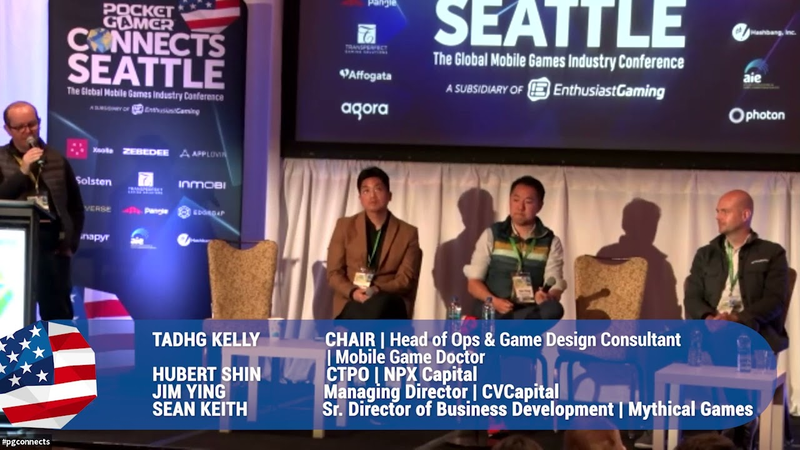
the fads or what other things are here to stay in terms of trends so i'll just hand it over to you you can use that or you can use that i'm more of a baby okay fair enough dvd then off you them hello everybody and thank you for being uh patient obviously we have a lot to get through today and we already have had a lot to get through this morning um i'm ty kelly i'm the head of operations at mobile game doctor which is a game design consultancy which is mostly remote somewhat based in san francisco um and we work an awful lot with developers all through both mobile increasingly and other sort of and more interesting and exotic platforms like some xor work and some work in web3 blockchain sort of stuff and all that kind of thing but i'm not here to talk about me today i'm actually here to quiz these fine gentlemen about their opinions on fad or future which you might say is looking at um kind of key trends in the industry and key things that are upcoming and all that sort of stuff what do they think do they think that they have legs do they think that there's nothing to them um do they think they might you know be the future of the
industry or that they might kind of pop and fade and fade and i think i'm going to try and make the session a little interactive because it's almost lunch time and we're all a bit tired so um when we go through each topic i'm going to ask you all for a show of hands whether you think you're convinced or not what do you think that it's all fatter future time fun i'm making a game of it yes so let me introduce our panelists first um and i'm going to just give a brief intro and then ask them to speak about um their own experiences uh more so huber gin is the uh ctpo chief technology and product officer is that correct um at npx a renowned expert in technology and product development hi my name is eubert i'm a chief technology product officer at mpx mpx group has two different pillars i need to explain this at first because so that i can explain further about what we are trying to achieve mpx has a two different uh pillars one is impacts capital which is a venture studio
are based in four different locations one is usa seoul singapore and southeast asia and uh we support commercialization capability through technology and product development as well as seed funding for pioneering entrepreneurs and also the other pillar is mpx capital which is a alternative investment firm that supports entrepreneurs and companies uh through like all stages of growth from early stages to buy out these two actually can make a good synergy synergy fostered the creation creating an ecosystem that benefits our investment and then acquisition through capital operations technology and product development that that's pretty much about me myself and company and then jim ying
is the managing director and head of cv capital's digital entertainment and mobile practice all right so uh jim yang uh yeah so uh tv capital where investment bank primarily focus on late stage investment in m advisory and games and ad tech basically we help companies are looking to raise or sell their company over the last two years you have seen how active things have been in the gaming ecosystem so we advised house mark on their sales sony playstation we advised appya nation on their sale to mini clip we advise archie on their sale to skills we did raises for behavior and skybound entertainment down in la my personal background i've been games for 15 years mostly on the product management marketing side but then gradually transitioned over to the publishing and investment m a side of things and then sean keith um who i met earlier this morning and as a lovely individual is the senior director of business development mythical which is a next generation game technology studio creating universal economies driven by player ownership of
nf2s and utility okay uh yeah sean keith everyone senior director business development mythical games thank you for that intro kind of in a nutshell what mythical games does is it enables internal and external developers to build games that utilize nft's visa vr sdk so if you're a game developer that is interested in putting nfts and we'll get into what nfts really are and what utility is if you're interested in putting nfcs into your game we have a solution for you that is easy to use so i think that's an excellent kickoff point for my first topic which is of course it's just really unavoidable these days it has been the year of crypto it's been the year of nfts it's an extremely divisive topic in the industry for a variety of pretty well understood reasons um it's increasingly being called web three gaming as well because people are trying to be a bit more i think embracing rather than talking about the specific token technology um nevertheless it's a huge open question as to what will happen with this whole sphere is it going to essentially be the next free to play for example or is it
going to be something that's maybe a little smaller so i would love your takes sean since you're directly working on it i'd love to take your initial bit sure uh well you know is it a fad or is it here to stay i i think it's here to stay so you come a little bit of background first blockchain is not necessarily new recently a lot of people been paying attention to it but bitcoin was created in 2009 ethereum was deployed in 2015. one of the og nft collections crypto punks was actually deployed in 2017. so blockchain nfts have actually been around for a while now in the last two years and especially the last year there's been a lot of attention towards it and not always for the right reasons in my opinion but the fact is that what blockchain and nfts are it's the ability for you to own your digital assets now how many people here are gamers okay good most of you right how many people here have spent thousands of dollars and probably thousands of hours on games okay good good amount so with all that
investment in terms of time and money into your games as long as the game is fun and the content is good would you prefer a game that you own the assets and you could potentially sell them or do what you will with them or a game where all your assets are locked to your account and you you don't really own them you're just licensing those assets and i think you know in a nutshell the very core of what we're doing is we're enabling people nfts are enabling people to own their digital assets and i think that's powerful especially with the younger generation where they spend more time establishing digital identities than they do hanging out with their friends in the real world so let's give them ownership their digital assets they can choose what they want to do with it they just keep it in their accounts like they do anyways now that's fine or if they want to sell it or if they want to use it in some other way that's up to them so i think for that reason alone and many other reasons we can get into later yeah nfts and blockchain are here to stay okay i want to caveat all this by saying sometimes i have a terrible ability to predict stuff so when mobile games first
got big i was so i was a hardcore pc console gamer i was like this is stupid why don't you want to play games on such a tiny little screen and then also when social casino got big i was at six waves and a company called the clerica came to us and tried to publish casino games i was like this is stupid why would anybody want to play casino games or slot machines where you don't get any money so take my everything i'd say with a grain of salt but i will say here clearly there's a ton of money flowing into blockchain and crypto there's a ton of smart people on it so i'm a firm believer that they're going to figure out some use case for it right and the use case uh that sean mentioned like i you know i played world of warcraft i played diablo the idea that at some point if you know the hours and the hundred dollars i sunk into those games that i could transfer that to someone else very compelling right um so certain ideas within blockchain and nft crypto is certainly very compelling um the question is kind of how much of the ecosystem is kind of suck up like there's some people out there who are super gung-ho and they're like
everything's going to be blockchain everything's going to be nft i don't think so like i think maybe a certain percentage 10 20 percentage of games where it's going to be relevant where people do want to sell trade their items all right that's going to be relevant but i'd say if anything gaming has skews you know particularly within conferences like this like the fact that i don't know half this conference or maybe even more than 50 is talking about blockchain and on the investment m a side i see how much money is going into these and it's sucking up all the oxygen and all the capital from other deserving developers that are building fun games and it is very polarizing that's somewhat a little bit more my concern right so like two three years ago there was a whole ico wave and like everyone was flooding into icos and ultimately like how much of that actually came to fruition i think this certainly does have a lot more validity there are certain use cases um it's just a question of kind of you know how much of the ecosystem does that take up relative to kind of what people are trying to yeah
thank you so much for bringing up about the ecosystem thing um i believe web3 is a technology that we can actually share more more benefits to content creators that's what i see in this market um i need to explain a little bit about the concept of webtoon that's digital comics digital comics which was uh created in in korea as a term so our company has a capability of producing 300 high quality webtoon every year which is really cost efficient it's 20 times less expensive than drama production 100 times less expensive than game production this is the biggest reason why we see a significant increase of weapon ips being used to um to transform to a different media and especially um the k drama content uh
featured on ott platform after a huge hit from squid games um so so what i was trying to explain is i mean um so and and also like the universe of universal web turn uh introduce uh in into an interactive game will uh introduce like whole like wave a different wave of um consumers and uh gamers who have invested in existing ips for a long time um so there are like a certain stages uh to become uh to a diff to become like a different format from the lighter format to the heavier format starting from web noble webtoon and also drama and game i think there's a connection in between that's how we call this a transmedia approach but what we see is like there's a huge gap because we see uh unbalance from like a dominant uh platforms and um
individual content creators i think that nft can be like one of the uh platforms can be uh like filling up the gap in between um well in in our in my company um last week we tested out the first uh nft uh marketplace for webtoon and then we sold like about like 100 uh webtoon art piece for webtoon creators that actually wanted to are connecting between uh webtoon creators and uh webton fans that will create on a certain amount of ecosystem that way we can incentivize better to um our creators that's one of the things what we can achieve with the nft and blockchain so quick straw poll fad or future nobody oh okay we got one vote [Laughter] so okay i didn't i did that wrong i did
it wrong fad well one two future yep okay all right thank you very much well done um let's move on to the other big tech topic at the moment which is of course everything metaversy which is a word i think we're all slowly growing to hate to say but um it is kind of become i guess the latest sort of umbrella term for what we mean by a or vr xor mr but um as well as a lot of kind of connected network uh technology as well as the whole thing that facebook is trying to meta is trying to um kind of bring to the world um same question gentlemen what is your read on what you think of the metaverse kind of project over the next couple years do you think that it's going to work out for zuckerberg or do you think maybe not so much all right i'll go first so uh i think this is one where you know platform success generally is driven either by content or the platform use cases right so if you look at i would draw the most parallels to a console platform like the people who are typically playing in vr
they're looking for immersive experience they're looking to set aside time it's not like i'm going to take five minutes and you know play on my phone so until there's compelling enough content on the vr side that competes with console and brings us to the next level people want to make that switch and willing to overcome that barrier of buying the headset and everything um i think it's going to be slow glowing going right the the alternative is something like mobile phones and mobile phone gaming it's not like people were buying the mobile phones in order to play the games it's because mobile phones do calls they do email and oh everyone there's you know billions millions of people happen to have this device that's capable of playing games and it's super easy for me to download this free game or buy this game for three dollars and so that ecosystem blows up so one of those two things has to happen before ar vr gaming you know really catches on either someone creates some vr game that's so phenomenal that it drives people to go out and pay three four five hundred dollars to buy this device or there's some use case like facebook like
i don't know some something else accounting software where people buy enough vr devices where it's easy enough for a developer to say hey pick up this game for ten dollars because you already have the device and then everyone starts playing very cool um oh yeah um so if i think about what kind of metaphors have been successful until now is only like two particles one is entertainment the other is game um so i think the the game changer will happen like when uh we see like one a good success in a different uh different vertical which i see as a like the the biggest possibility one is education um there are three reasons uh for that one uh metabolism like the perfect perfect word to experience something and when you learn something experiencing thing is like the best way to do it and then number two is um i actually had a very good experiment
with my kids last year i have a two daughters a 12 year old and 10 year old a 10 year old i let them play roblox for a full month and then came up with the idea about content creators and then i let them learn about economy that's one and then software development and then what is it the marketing and the hell um like one day they came to me and then said uh uh that i hired two people and then i was like so so surprised how how and then they said um actually i just gave them like a 14 roblox which is a really small amount of money and then they'll do marketing for me now and then that kind of things i could do and then i had to teach what is the concept of a minimum wage you know [Laughter] so so yeah so i uh from the from the experience i learned uh this can be a really uh great game-changing uh educational way and
then number three is uh we have a one of the subsidized company called mpx print avenue which is an international school located in southeast asia and now we can actually do some experiments about the metabolism and we are forming a team to build that and we'd like to explore that we'd like to have some certain amount of achievement out of that so we do these three out uh three reasons i think um yeah as uh like the next step we can come up with the educational whatevers okay all right so my take on the metaverse you know i should kind of define how i view the metaverse first it doesn't have to be vr it doesn't have to be ar i think a lot of people conflate the two because of ready player won the movie right and uh yeah so my take on the metaverse actually you can go back to to muds in the 90s when you were able to interact with other people in a digital environment those days there was no
graphics was just ascii characters but the fact was that you and someone else were connected digitally interacting environment together now that's kind of a game universe you take that one level above which is where the meta comes in and now it's you're able to have multiple universes connected right and usually with some kind of interoperability you'll be able to take a a digital asset either your avatar your items between these digital experiences so that's how i kind of view the metaverse and i also kind of hate the term um especially because it came well it's gotten very popularized because already player one but with blockchain and going back to blockchains that's where i work uh you can actually kind of enable this uh most games you can't have interoperability of digital assets because the inventories are siloed that is to say that they're tied to that game other games can't reference like another game's inventories but if you put inventories or digital assets and you store them on a private permission blockchain or just a blockchain in general then other developers
can also reference these items and so i think that's very critical right you could technically take right now two blockchain game experiences on the ethereum network and as long as they're referencing ethereum they could pull in digital assets to these different experiences which is delivering on the whole concept of the metaverse i think it's still early days a lot of the technological foundations for meta versus are still new um but for example at mythical games uh we have a private permission blockchain that all of our developers are building on top of so we had a wildly successful sale with burberry where we sold burberry avatars base it looks like a shark called sharky b but in the future sold really well but in the future if another developer wanted to say hey all of you owners of sharkey b we can see that you own those assets we're going to allow you for example to have a burberry car or a burberry you know shield or armor that is possible because all those developers are building on a common inventory ledger and so i think those
are the the foundations um of what could be a future metaverse and we're still still early days okay let me add a little bit so the distinction that sean makes in terms of the metaverse and interconnected world versus ar vr is a good one right so everything i've mentioned before more like the vr ir side on the metaverse connecting world side if you look at whether it's muds or second life or roblox now like it's amazed amazing to me how far along roblox has come like when i was first exposed to it years ago like they were building this crappy little like build your own you know world game but the fact that they now have user generated content and brands and companies are jumping on i recently saw that i think sega has uh they're building a sonic world in it and then spotify has a world in it so in terms of interconnected worlds and people interacting with each other in these worlds it's so much further and they've excited much further along than you know i would have predicted because certainly companies like fortnite they've done court epic they've done concerts uh and there's the old second life but
roblox is moving along and i think it flies under the radar for a lot of people who might be in this ecosystem certainly it did for me because you know people view it as a kid's game and because i have three little kids i've seen them play and i've seen some of the experiences and even just i don't know six months ago these were terrible gaming experiences like they were ripping off ip and throwing them in but it's gotten to the point where it is pretty impressive and i'd say you know people should check that out yeah i think you can question their rep shares for developers and how sustainable that is but certainly from a technology and capability and the the share mind space that they have for younger kids and you know as those folks become teenagers and adults that they're already familiar with this world and interacting with each other with all the brands i think that's something to keep an eye on okay cool so um same question um do you think metaverse is more fat nobody one guy there he is versus future yeah yeah yeah i suspect i'm going to get a lot of features on this um but
really good answers really good answers um a lot to think about there so um a third this is a bit random i know but about three or four years ago it feels like we were all talking about cloud gaming right we were talking about stadia we were talking about like that whole kind of world and then it sort of didn't really work out in well for google at least kind of at least that's the perception nevertheless it seems like a lot of the major kind of platforms are actually still investing an awful lot of money time and effort into building their own cloud gaming platforms microsoft has a beta running at the moment based on for xbox um amazon has luna um all of that kind of stuff there's still an awful lot of interest um if you like at a technical level to try and make cloud gaming work do you think it actually will work out though or do you feel like maybe it won't take a quick first stab at this so i think two things are key for cloud gaming one is monetization how do the commercial models actually work for all the party that's something that stadia didn't figure out something that xbox kind of has a solution to but
that's like the first thing if it's going to work whatever provider is doing it has to figure out commercial terms that work for all the parties the second part is that gamers like quick experiences they don't like lag and with cloud gaming you invariably have you know a decent amount of latency which is i think is an issue especially in terms of esports or like competitive gaming so uh you know maybe you could have a bunch of games that are more like first person or like you know not not competitive games or platformers that would be fine but i think those are two big hurdles that cloud gaming needs to overcome commercialization figuring out the latency issue and i don't think there's i don't know of any solutions yet or compelling solutions that have really jumped on my radar i'm a big believer in cloud gaming so i'd say yeah sean isn't always talking about my predictions have been wrong jim i know that's true uh you just gotta establish a firm position and then back it up when you're
good to go so you know the on-demand live gaming platforms to date on live stadium they've been severely inhibited by content right they didn't have the the capital they didn't have the content in order to get people to jump their platforms they didn't have the technology where it addressed the latency issue right uh the companies that are focusing on it now sony microsoft they do have the content right so that's going to be solved the technology is improving in terms of having the back-end services including having improving latency because you know 5g um and the business model from a kind of subscription standpoint or ultimately you can play you know cloud gaming and still have iap the ability to be able to play anywhere you want and not have to sync you know 500 into a console right so i've played some of i've tried some of xbox's cloud gaming experiences either within the house or remotely and the fact that i can play a triple a console game and maybe there's a little bit of lag but a lot of games like rpgs or non-fighting games doesn't really
matter right once all of that is there and it's very rapidly moving in that direction then like why wouldn't i play cloud gaming if they have the content as long as you know there's not a significant lag so i think we're agreeing all right the content the latency okay i think um the the success factor that must be about the performance like you mentioned before i as long as it has there's a certain amount of um expectation made from the users um like console games why people are playing console game right now is because of performance i think that there's a content and then there's a performance just like metaverse metaverse still has has a huge dependency on uh hardware i think it's a matter of time i think it's going to be solved and then people will love it so okay so same quote i keep asking it again again do you think cloud gaming is more of a fad
nobody that's really interesting i thought everybody was going to go and or the future very cool very cool all right so the faith is alive okay um as a kind of a another topic just kind of related somewhat to that but more into um i guess kind of platforms and partnerships and all that kind of stuff one of the more interesting sort of sub topics that's kind of running through the games industry at the moment is companies like netflix getting into gaming and actually quite seriously trying to develop kind of gaming um kind of wings and uh and like make it a kind of a core part of their strategy but at the same time there's a long history in the industry of media companies particularly trying to get into gaming and for not to work out so i kind of wonder what you what your take is on this modern version of that as a phenomenon do you feel like it will go anywhere especially i mean i know netflix is obviously in a bit of trouble at the moment with the doc market stock market but do you think that strategically structurally it's got um it's got some likes to it uh uh yeah you definitely it comes in waves like you look at disney they've gotten in and out of games i don't know how many times they stop some studios
one game comes out that fails and they sell it and they figure they can just license the ip um i think over time more content companies so magic and uh which are the codes they're getting more into games they really recently elevated to ceo chris cox who came over from the game side uh warner's always had a decent sized gaming business that they're moving forward with disney is definitely skewing away from they're one of their on the pendulum they're just going to license all the ip and i can understand why because when you license the ip it's guaranteed money right but then you look at what happened with marvel and marvel they were they started out making movies licensing ip but ultimately by maintaining creative control and capturing all the economics the business is much bigger than it could have been right so and i think gaming is capturing it's getting to a place in in common culture where you know the gaming ip is relevant relevant ip is going into games and it does make sense
as one of the key pillars of entertainment now specific to netflix and google and facebook and even even i don't even bucket amazon into this right when they're coming from another part and there's not a core gaming company you know maybe they hire a couple of gaming people and they make some decisions but unless they're all in and they have gaming people at the top then it's going to be very hard for them to succeed like amazon kudos to them they've sunk billions and billions of dollars but they made some really silly decisions in my mind in terms of the direction that they went with in gaming and my take is because they didn't have enough gaming people at the top making decisions and holding the chains the fact that they haven't just gone out as much money as amazon has that they haven't just gone and acquired a bunch of gaming companies seems kind of crazy to me and netflix is moving at the direction they've acquired some existing partners uh what i hear is that they're going to be potentially acquiring more game studios that makes sense if you're going to build out a platform you want first party content
um yeah so that's on the fence where netflix is definitely moving in the right direction right um so yeah it's kind of two things one to me what jim said core competency these companies need to decide if gaming is going to be one of their core competencies and problem is traditionally a lot of media companies they like the ideas of games but when they get into actually having to put the money and the resources behind the projects they balk so you know for free to play games a lot of free to play games they're not profitable for two three years and only after like year three because of a lot of very high user acquisition costs are they able to start recouping their costs and if you try explaining that to um a media you know ceo or vp because you used to do ip licensing at fox uh they're not excited about spending tens if not hundreds of millions of dollars in user acquisition so it's tough to to align the incentives in media organizations some can do it but
it takes like you said people at the top that really understand games and are willing to go the extra mile in the case of netflix i think it's interesting um their game team is still pretty small like all things said uh one thing i'm really excited about is that what they're doing is creating multiple touch points for digital assets so or ip in this case you watch a movie you watch a tv show then you play the game it creates a much more sticky ecosystem which is great but when things start going south when you have money to invest it's okay to put tens if not like hundreds of millions of dollars into games kind of like what apple arcade did but then when things start becoming tougher or maybe you have to tighten the belts a little bit or your stock price goes down then suddenly your board's like well right what do we ask first and that's where gaming if it's just a cost center and not a revenue generator they're going to look at that as maybe we're going to ask that so i'm also on the fence
but it had especially in los angeles disney did their own first party production got out universal did their own first party production got out so now we're gonna see the same thing kind of with with netflix and okay interesting um more in general what's happening in the world today is uh transmedia approach and um ip acquisition is we see it as a steep development in next 12 months i think the demand for um demand for iep has grown exponentially and also we see it as um like uh invaluable commodity that uh with the right amount of um right investors and then advisors i think we will see like endless opportunities of growth our transmedia
in addition to maximizing opportunities for content creators but still we need a very robust production and development capability without it i don't think we can get to that point yet so probably it will take a little bit longer time than we expected but netflix has been doing uh extremely great job so there we get there soon okay everyone think so here's one reason to be bearish on netflix gaming so uh netflix's gaming model is here you're paying for these tv shows you're playing for these movies and we're going to throw games into it and right now it's going to throw some mobile games into it alright um if you think about the subscription gaming models the one that i can think of that's successful was xbox game pass because they have a ton of content and again this is one of those things where i first heard it i was like why would i pay for a gaming subscription pod this is stupid i'm not it's gonna be a failure but ultimately xbox they had so much content because they have the first party studios and they bought all these other studios along the way especially
someone like me that i love playing games i just don't have that much time i have three little kids also i can just jump around to different games and play some indie games and play like 10 minutes of the next aaa game and say all right i played it you know that's perfect for me right but for netflix what is the content that they're going to be able to create that's going to get people to say all right i'm going to keep subscribing to netflix because of this content and if they start out on the mobile side i don't know of a single mobile subscription game that's big maybe there's some smaller ones but all the subscription games are you know pc mmos or something like game pass so they really need to ramp up a significant amount of content and compelling content before someone's like all right i'm going to either buy netflix just for the games or maybe it'll tip me over the edge because that's what they're saying they want the game's business to do very cool so what do you think about netflix then does the does their adventure into gaming feel like it's a fad okay
interesting not so much the future no well one all right so three futures and one fad so far that's pretty good um actually the um game pass actually leads me into my last kind of major question which is there has been an awful lot of uptick in um subscription services four games apple arcade and xbox game powers for two points um but similarly in kind of game giveaways to try and onboard people into games like for example i don't know about you but i've built a gigantic pc game library because of the epic game store in the last couple of years and it feels like it's putting a huge pressure on premium price gaming in general i wonder do you feel that the future the future of premium essentially is kind of on the table or do you think that we'll end up in a sort of a more balanced ecosystem where it's sort of back catalog is all subscription and premium still exists uber uh yeah maybe i can start from here um i was kind of worried when i microsoft started a game pass approach because i thought like it would be really
harmful to bring individual content creators instead of big gigantic players in the market but i saw recent statistics and then it was quite interesting to me because the individual creators gained like four times more revenue so that was really i mean interesting to see i think uh we need to see like what's going to happen like for early cycle two to three years more uh so that we can understand what will of what kind of uh influence will hit on the market yeah that's yeah i'm thinking i think i think it's a good development for indie developers and premium game developers for subscription services because otherwise without that revenue coming in then the biggest revenue generators are always going to be the free-to-play games right and so for people who do want to you know make a sustainable life building games it kind of skews people towards the free to play larger games
but if there is a large subscription service out there similar to netflix right the fact that they're paying for so much content and paying for producers and building more and more niche games because there's an audience out there for it it supports a larger ecosystem of you know tv and film producers and game developers and it's also nice if you look at some of the asian markets like whether it's china korea japan where yeah you could argue that the gaming markets are either more developed or there's more hardcore gamers if anything there's a growth of uh kind of looking for indie games and premium games because they're kind of tired of playing the free-to-play kind of uh driven content-driven games and so it's nice to have that mix so i i do think that the biggest revenue generators are always going to be the free-to-play games but there is a nice ecosystem that's going to be maintained for developers free to play games or nft based scarcity-based economy games thank you jen
uh i mean there's space i think for all these different kinds of games and the monetization models right when free to play came on onto the scene people like oh premium's gonna die you know it didn't die it's still alive in a well so i see and subscription games have been around since the 90s right like everquest was a subscription game back in the day so uh i think there's going to be space for premium games maybe in some ways it will get more difficult but with the growth of the games market overall you know there's now is a great time to be an indie developer and make games uh free to play games are going to be there nft and scarcity-based economy-based games which will in some ways be spiritual successors to free-to-play games these things will all have have a place because user preferences are different user like motivations to play the games are different and yeah like some people like playing free to play some people like subscription some people like just straight up premium games sure so um last one i promise um do we so do we think that the movement towards subscription will help
to preserve premium games at which i say would be the future or do we think that premium games are under threat because of subscription which i guess would be the fad that doesn't make any sense but a or b nobody knows okay um i wanted to leave a little time does anybody have any questions or any particular tech trend topic that they would like us to quickly run through before we wrap up actually most of my work's in m a so this is actually so over the last two years you've seen an incredible level of consolidation i
think there's multiple factors one is with covid everyone was at home playing games gaming revenue went up a lot of other sectors their revenue went down so that caused the stock market prices of these gaming companies to bump and then there were companies like still front embracer mtg so they're able to go out and just buy up a bunch of companies and then because they're so active buying it pushes everyone else who maybe wasn't on they were on the fence of buying to buy are also going to miss out so sony microsoft nintendo if you look over the last two years they've bought partner studios that they've been working together with for like five ten years right so why buy them all of a sudden now because embracer and sophomore were chasing them now the so i'd say that's more the driver uh unless you're someone like xbox game pass right so for them it's specifically because they want to buy content for game pass and so they picked up bethesda they picked up a couple of other companies that had great content already but you look at every single acquisition that they've done it's already they've had a pool of ip and portfolio they could throw into game pass whereas a lot
of the other acquisitions it was about either finance either financial so they were profitable or what you're seeing now is it's gotten so competitive in terms of the just pure development capacity that people are just developing buying work for higher developers which you know three four years ago never would have happened okay then you also have companies specifically like keywords saber sumo that their core business is work for hire and so they're expanding those services right so one way to think about it is there was already a ton of interest in gaming as a whole and then all of a sudden you have web 3 come in here with people with ridiculous amounts of money and they have to fund all these games and so any capacity that was already tapped is just getting bid up further and further so uh on our side what we're seeing is the challenge isn't that the challenge isn't that there's not enough buyers i mean there's there's not enough relevant targets we have five seconds to go anyone take it
well very quickly um so i mean i'm also like working in a adventure investment plus uh venture studio site um and we i see um so 10 seconds uh that passed right so we're in the red zone yeah um so so with the right combination like ip holders and then platform and then drama or game production if we have like these um entire entertained cycle i think it will become really beneficial for like each individual companies uh as as a like one team that's that's what i see as a possibility in this market you want one last word sure i guess just digital companies in general they want to create platforms they want to create places that people come back to over and over and over again so uh we're seeing not only consolidation but these growth of these gigantic platforms because that's the only way
that gets users in the door and then these companies are able to shop those users around their different products so that's i mean part of part part of what what gym one last thing i will say i think it's good for the ecosystem because all this money is basically flowing out to the founders of those gaming companies many of them for gay vpcs they invest in their companies also when teams consolidate creativity tends to decline right and so it gives you more room than for people who are starting new game companies to come out with innovative content and creative content to push boundaries to then you know grow the market further yeah okay so because i come from it from that angle right because we are on the transaction side but it's perfectly acceptable and i think it's perfectly fine people just want to build lifecycle businesses and you know it turns out a 50 100 k a year that's really cool cool thank you everybody that was and thank you for sticking with us through a bit
of lunch time gentlemen thank you very much that was awesome thanks
Summary
Emerging technologies such as blockchain, NFTs, and the metaverse represent permanent shifts in the gaming landscape, though their current market influence is often overstated by speculative hype. Rather than displacing traditional gaming models, these innovations are poised to occupy specialized niches where they provide tangible utility, such as verifiable digital asset ownership and enhanced creator incentives. The long-term success of these technologies relies on their ability to integrate into the broader gaming ecosystem through interoperability, which blockchain facilitates by enabling the movement of assets across disparate digital environments.
Augmented and virtual reality, alongside cloud gaming, are recognized as foundational future technologies that currently face substantial barriers to mass adoption. For AR and VR, widespread integration depends on the emergence of a definitive killer application or a pivot toward non-gaming sectors like education to justify hardware investments. Similarly, the viability of cloud gaming remains tethered to solving persistent latency challenges and refining commercial models. While major platforms are actively improving infrastructure, these technologies remain in a developmental phase where technical performance must catch up to consumer expectations.
The industry is also undergoing a significant transformation driven by media companies attempting to build transmedia ecosystems and a surge in merger and acquisition activity. Success for external firms entering the gaming space requires treating development as a core competency rather than a secondary cost center. While subscription models offer stability for independent developers, they face intense competition from the dominant free-to-play sector. Ultimately, the gaming market is evolving into a diverse, multi-faceted environment where premium, subscription, and free-to-play models coexist, creating a complex landscape that rewards both large-scale consolidation and agile, independent innovation.












Comments