AI reports and market data
Documents

A House Built on Sand: Engineering Stable and Reliable AI
Achieving stability and reliability in artificial intelligence requires a rigorous architectural approach that strictly separates high-level gameplay logic from low-level mechanical services.
- Strictly decouple high-level gameplay logic from low-level mechanical services to prevent rigid systems and cascading failures.
- Replace functional proxies like animation states with dedicated mapping layers and robust predicates to ensure probabilistic AI data translates into predictable, discrete actions.
- Centralize decision-making processes and establish a unified frame of reference to eliminate floating-point errors and conflicting calculations across the codebase.

Balancing Nightmares: An AI Approach to Balance Games with Overwhelming Amounts of Data
Modern game development faces a significant challenge in maintaining balance within titles featuring billions of potential party combinations and frequent content updates.
- Square Enix utilized genetic algorithms (GA) to automate game balancing for 'Grimms Notes Repage,' a title featuring over 10^182 possible party combinations across 80 heroes, 60 weapons, and various costumes.
- The GA system evaluates party performance by mapping diverse metrics—such as battle time for victories and damage dealt for defeats—onto a single dimension to identify the top 80 parties for each subsequent generation.
- To manage the massive, evolving dataset, the team implemented Apache Spark for scalable, cloud-based processing and Apache Superset for low-cost, customizable data visualization.
AI for Testing: The Development of Bots that Play Battlefield V
The development of autonomous bots, known as AutoPlayers, serves as a critical solution to the scalability challenges inherent in testing large-scale multiplayer games like Battlefield V. As game sessions grow in size and complexity, relying solely on human testers becomes logistically impossible and prohibitively expensive.
- EA utilized autonomous 'AutoPlayers' to conduct over 500,000 hours of automated testing for Battlefield V, equivalent to approximately 300 work years of manual labor.
- The AutoPlayer system is designed to be input-driven and decoupled from game code, allowing bots to interact with the game via abstract inputs like yaw, pitch, and fire rather than hardware-level button emulation.
- Automated testing proved critical for stability, with AutoPlayers identifying 49% of the crashes found during a two-month analysis period, while another 15% were deemed likely to be found with additional runtime.

MetaHuman Creator | Epic's Road to the Metaverse ft. Arvind Neelakanan (Epic Tech Evangelist)
MetaHuman Creator serves as a transformative cloud-based solution designed to accelerate the production of high-fidelity, rigged digital characters.
- MetaHuman Creator is a cloud-based platform that reduces the production time for high-fidelity, rigged digital characters from months to hours by automating facial rigging and skin rendering.
- The platform is designed to augment professional artists rather than replace them, keeping creative oversight central to the final production quality.
- The system features a flexible Level of Detail (LOD) architecture, allowing developers to scale visual fidelity to meet performance requirements across different hardware environments.

Turing Tantrums: AI Devs Rant!! 2019 Edition
The modern game industry faces a critical stagnation in technical proficiency and design innovation, driven by an over-reliance on standardized game engines and superficial AI implementations.
- The game industry is suffering from a technical skills gap where educational pipelines prioritize standardized engine tool mastery over foundational programming, debugging, and optimization.
- Current AI development is stagnating due to an over-reliance on superficial tropes like basic pathfinding and repetitive dialogue barks rather than building systems with genuine depth.
- Systemic progress is hindered by high compute costs, opaque APIs, and a disconnect between academic theory and practical application in the workplace.

Marvel's Spider-Man AI Postmortem
The development of Marvel’s Spider-Man necessitated a fundamental shift in artificial intelligence architecture to manage the complexity of 64 distinct enemy classes within an open-world environment.
- Insomniac Games utilized a data-driven approach for combat AI, where designers configured complex move sets and combos through data files rather than directly editing behavior trees or finite state machines.
- To prevent combat from feeling stagnant, the team implemented an 'intensity meter' that tracks enemy aggression and triggers special attack sequences or simultaneous strikes when the meter fills.
- The AI combat system manages enemy positioning using a 'hill climber' algorithm that iteratively pushes potential bot locations radially outward to maintain optimal spacing and keep enemies on the navigation mesh.

Ethics in Artificial Intelligence
The integration of artificial intelligence into the gaming industry necessitates a fundamental shift from profit-driven engagement metrics toward frameworks rooted in equity, transparency, and user well-being.
- Developers must shift from profit-driven engagement metrics to frameworks rooted in equity, transparency, and user well-being to prevent AI from codifying societal biases and harmful stereotypes.
- Ethical considerations must be integrated into the entire development lifecycle through behavioral psychology and rigorous data auditing rather than being treated as a secondary concern.
- Industry practitioners should adopt multi-dimensional success metrics that prioritize long-term user satisfaction over short-term retention to mitigate the influence of manipulative dark patterns.
The Crossroads Between Edge Computing, Privacy, & Ad Monetisation
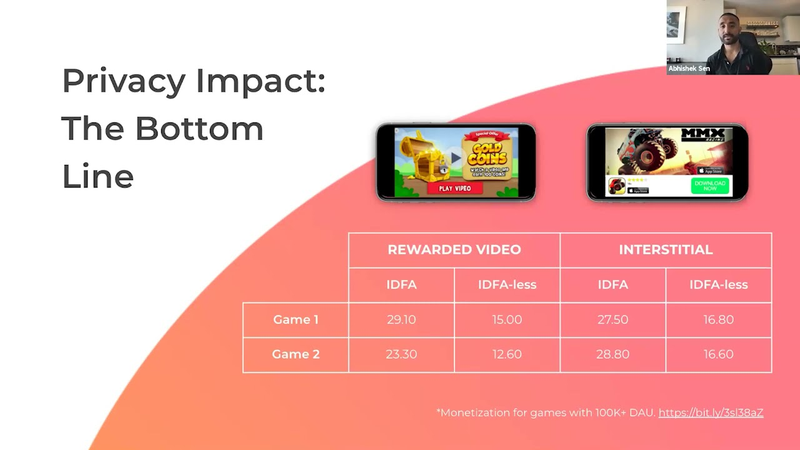
The mobile gaming industry is currently navigating a significant shift in ad monetization driven by heightened consumer privacy concerns and restrictive platform policies, such as Apple’s Identifier for Advertisers (IDFA) changes.
- The mobile gaming industry faces a projected 40% to 50% decline in in-app advertising revenue due to the loss of addressability caused by privacy shifts like Apple’s IDFA changes.
- Edge computing serves as a critical solution by shifting data processing from the cloud to the device, allowing for actionable insights without the need for persistent identifiers or raw data transmission.
- On-device intelligence enables real-time, contextual targeting of user habits and behavioral patterns, which maintains ad effectiveness while ensuring compliance with privacy regulations.
NPCs Have Feelings Too: Verbal Interactions with Emotional Character AI
The integration of advanced artificial intelligence into non-player characters (NPCs) marks a significant shift toward more immersive, language-independent interactions within virtual reality environments.
- NPCs utilize a conceptual mapping system that assigns 'semantic DNA' to objects and actions, enabling language-independent interpretation of player intent.
- Autonomous decision-making is driven by a utility-based scoring hierarchy that allows NPCs to evaluate their surroundings and respond without relying on scripted dialogue.
- Emotional states are generated using an OCC-inspired framework that assesses events based on valence and agency, while long-term mood and animation are maintained via a PAD (Pleasure, Arousal, and Dominance) model.

A.I., Creativity & Gamestorming | PocketGamer.Biz RoundTable
Artificial intelligence is fundamentally reshaping the game development lifecycle, transitioning the industry from manual, rule-based programming toward data-driven, real-time creative processes.
- AI is shifting game development from manual, rule-based programming to data-driven, real-time creative processes, significantly reducing development costs and time-to-market.
- Generative AI tools are democratizing production by allowing smaller teams to create high-quality content previously restricted to large-scale, well-funded studios.
- The industry is transitioning toward viewing AI as a job enhancer that offloads repetitive technical burdens, such as 3D asset generation and NPC behavior simulation, to prioritize high-level innovation.
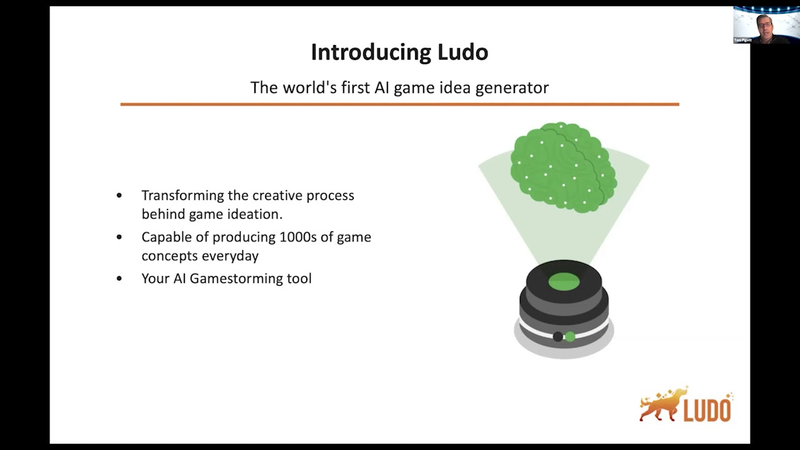
The Next Big Game Idea - Harness the Power of AI to Create Chart Topping Games
The integration of artificial intelligence into game development serves as a transformative tool for ideation, particularly within the hyper-casual mobile sector.
- AI tools are designed to scale creativity in the hyper-casual mobile sector by accelerating the ideation, iteration, and refinement of game concepts beyond the capacity of manual brainstorming.
- These platforms function as creative assistants that streamline pre-production research rather than automating the actual production of game code or playables.
- AI ideation engines leverage large-scale databases containing millions of web pages and hundreds of thousands of existing game titles to generate actionable concepts.

Triage on the Front Line: Improving Mafia III AI in a Live Product
The post-launch improvement of artificial intelligence in the open-world crime drama Mafia III serves as a case study for managing live product updates under strict resource and time constraints.
- Hangar 13 utilized a cross-functional 'strike team' consisting of engineers, animators, designers, and QA to execute a three-month post-launch AI improvement patch for Mafia III.
- Prioritization of AI fixes was determined by a three-factor framework: impact (player experience), complexity (potential for unintended knock-on effects), and cost (time and resource allocation).
- The team addressed AI responsiveness by refining event-based reaction systems, such as increasing the detection range for gunshots beyond the original 40-meter limit to ensure enemies properly escalated to combat.