1 free read left. Create a free account for unlimited reading + AI research.
Create free account
The Next Big Game Idea - Harness the Power of AI to Create Chart Topping Games
Key insights
6 takeaways- 01AI tools are designed to scale creativity in the hyper-casual mobile sector by accelerating the ideation, iteration, and refinement of game concepts beyond the capacity of manual brainstorming.
- 02AI ideation engines leverage large-scale databases containing millions of web pages and hundreds of thousands of existing game titles to generate actionable concepts.
- 03Core AI features include automated concept generators based on user keywords, 'game blenders' that combine mechanics from disparate titles, and visual mood board tools for designers.
- 04These platforms function as creative assistants that streamline pre-production research rather than automating the actual production of game code or playables.
- 05Future industry applications for AI are expected to expand beyond ideation into procedural generation and the creation of personalized player experiences.
- 06To maintain creative diversity, the technology utilizes randomization algorithms that ensure similar user inputs consistently yield varied output results.
Ask AI about this video
Transcript
let's go straight into the next session um i would like to welcome to our virtual stage uh tom pickett from jetplay it's going to talk about the next big game idea harness the power of ai to create chart topping games hello everyone uh my name is tom pickett and i am the founder and ceo of jetplay we are a b2b startup focus on developing ai tools for creators and developers and before we dive into the tool that we have developed i thought it might be helpful to go over a brief history of how artificial intelligence and
gaming have been intertwined truly for the past five decades starting in the 1970s with the breakout arcade game actually ai scripts were introduced to create the impression of an opponent through particular behaviors for for the objects in this case the paddle that was used for pong so you had the perception you were playing against an intelligent opponent and then into the 80s that carried on with games like pac-man and the ability to have uh scripted multiple opponents uh with the ghost for example so it gave the perception that uh there was true ai uh in these types of games in the 90s was really the advent of what was called real-time strategy games uh with uh big hits like command and conquer and warcraft and that was the start of ai pathfinding
which allowed the character to move through the games in an intelligent way in this century in the early 2000s began aspects of procedural generation which really is the focus on having environments created as you're moving through through the terrain and gave you more more options and in the past decade or so there's really been uh focus on more lightweight uh ai uh random interaction with non-player characters and um and that is a good example of for example red dead redemption 2 and also halo earlier on and then on the mobile front ai has been utilized primarily from a performance marketing standpoint um monetization optimization for players when they're stuck at a certain level or looking to leave the game they can
be prompted through the use of ai scripts to stay in the game and get motivated to carry on so but for us our roots as a company is as a hyper casual game studio and we saw that the challenge uh in the space that's been mentioned before is that it is uh extremely competitive um obviously any number of small studios around the world are trying to create hit games at a given time and we thought you know it's it's very hard to develop a breakout hit because effectively it's part art part science it's many many concepts and prototypes and videos that are created the vast majority of which are uh discarded because they they won't make the metrics of the cpi ctr and even d1 super competitive and being a hits driven business the
challenge is to always have to come up with new concepts and new ideas and where do you get those from well everyone really has many of the same sources you know it's social media it's the top charts it's the app annie's the sensor towers um it's it's looking for inspiration and everyday things whether you're at home or you're driving uh the tick tocks and so and that's on a on a weekly basis having to create new concepts particularly in the hyper casual space um so for us we thought what if there was a way that you could maybe harness an intelligent tool an intelligent assistant that would help you analyze most of the world's games that are out there not just the top charts help you understand mechanics in game play uh for why these games have been
successful seeing images of not only the games but even comparable games in your genre or other genres you might be interested in so effectively we thought you know this is a way of trying to scale creativity so to speak and the ability to not just create one good concept but to have many many good concepts that you can work on obviously all of them will still not be the ones that go through there's still a very much of a funnel process to the development but if you could have such a tool we thought it would be a tremendous advantage to really help jump start the whole ada ideation process for individuals or small studios particularly in the hyper casual space so with that we we uh put a small team together and over the past year
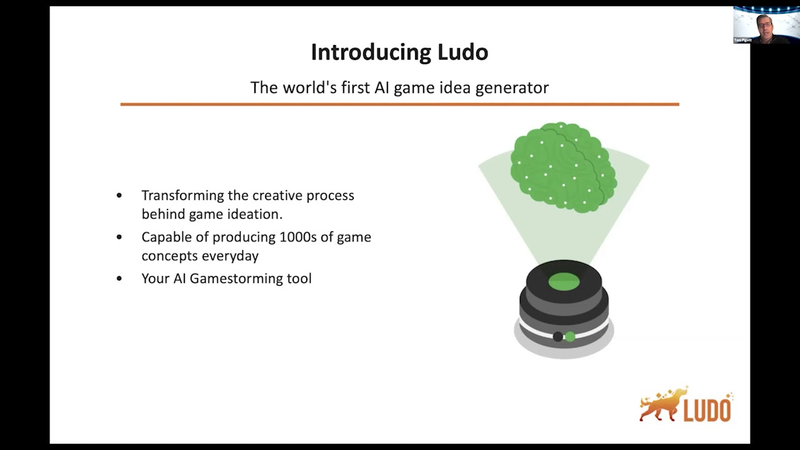
we're actively building and working on this tool and today we'd like to introduce it and we call it ludell and ludo is what we consider to be the world's first ai game idea generator and we believe that given time it will be truly a transformative aspect of the creative process for that daily or weekly brainstorm activity for trying to create new concepts and from a scale standpoint uh because of its machine learning capabilities which i'll explain in a little bit uh it is literally able to uh generate thousands of concepts a day and again you know you have to sort through the concepts to figure out the ones that uh interest you or make the most sense but it is uh effectively helping we believe to turbo charge and boost your
what we call your game storming uh process whether you're alone or with your team it's been it's been a fantastic uh tool to have be able to create it so i thought we can't really do a demo of the uh tool today but i can certainly sort of walk you through and show you aspects of how it works we released ludo uh in about two weeks ago as an open beta so we've been working on it uh continuously over the past year and training and improving it and then uh with the open beta launch a couple weeks ago we've had super feedback and people signing up well over 100 studios and individuals providing their thoughts on things we can do different features that can be worked on and so we're taking all of that into
our our list and we're going to try and implement most of those suggestions before we launch commercially here uh in the near future so but i thought it'd be helpful i can show you effectively um what you what you do when you come to our ludo tool for the first time so it's got a number of different features but the primary one is what we call the game generator and um you may have an idea that you've been working on a concept or um and you want to go and you want to be able to test this out or maybe you don't have anything you just want to be inspired by working with ludo and seeing what it can help generate with but typically you would log on and you come to this page and you have the ability to enter in as little or as much as you need to for uh having it create a game concept so i just
you know use example of say it's thinking about zombies in space you know or some type of racing game to the moon that's all i have that's that's all i'm thinking about i can enter that as a sentence or i can enter in some keywords whether it's the mechanics or just something about zombies and you click generate and what happens is that literally over seconds and a few minutes it will create a number of new concepts you can set it to however many you want most people will generate half a dozen dozen different concepts or variations of uh what you entered to make it manageable you could you could do several hundred and it would take you you know ten minutes to get all those results back so with that uh you have you can select by by genre as well obviously and and then you expand it and you um you see some of the images that come back that are related whether to zombies or racing um the moon uh you can save all of those
there's certain mechanics that'll describe what it what it um the game is about as well as some details in terms of um the playability and if you compete with friends or not and so what you do is you iterate with these you save any aspects of what you like with the with the save function you put it on to what we'll call effectively a game design document or mood board and you can save any images you can explore those images further and you're starting to put together uh concepts of what you like as i said there might be a dozen variations of this so you can go through each one and pick and choose what are the different aspects of this zombie game that you like for example um so it becomes a highly efficient way to game storm your whole process because this ludo ai never gets tired it is always you can just continuously put generate and because of
the randomizing uh algorithms that we have in it it will never repeat the same type of game it'll always have a slight variation to that so it's been a very popular feature that we've had and allows people to explore fully a lot of new concepts and takes a lot of the pressure off the weekly brainstorm game storm need to create you know dozens of different concepts to test out and make playables uh another feature that we have built in is what we call the game blender and so that is um something that's been very well received and it really is uh taking the existing [Music] games that are out there on the top of the charts or elsewhere and being able to combine them so you know my example here i just used was among us which has been wildly popular certainly and then roblox and subway surfers you can do any you can do hyper casual you can do
aaa games you can do any other combinations you want and you blend those games together to create something new maybe it'll be the mechanics of one and the um the images of another it'll be a description of a third and you can keep doing that in a way that ultimately creates something original and that that is the challenge as we all know particularly in hyper casual as it was mentioned before you know games get copied very quickly um or you know maybe people take inspiration from a hit game and do something a slight modification above it but if you're working on something original and maybe you combine it with existing games you can you can uh ultimately develop something even more unique which is great and have many many versions of it so you can test hey is this version going to work or maybe people like the slight twist and gameplay or the mechanics instead of a swerving it might be a stacking or something like that so
and then a third feature that we have of the some of the more popular ones is this image search so the image search we believe is is fairly unique in terms of um it's built on two million game images and graphics so it's uh allows you as a it's been a great uh help and boom for 3d artists 2d artists creative directors who want to maybe just get inspired by looking up different uh images to compare and contrast to maybe across different genres um want to see what all the you know sticking with the zombie example what all this different zombie type of gameplay images and graphics out there so that they have an idea how to how to build something different um it's it's uh people will spend a lot of time in this image search and it's several studios have said you know
it's it's actually it's sort of like a pinterest for game designers game artists um because you can set up mood boards with it and have at the end of the day you know dozens of different images that provide inspiration and allow you to proceed uh with with your game concept so that's been great and we have uh another another uh several features that we're adding before we launch in the near future based on feedback that we've received and suggestions and it's all been very very helpful so um questions have been uh asked me in terms of okay i understand the features and the benefits and i would love to maybe understand uh what's under the hood you know how does this whole thing work you haven't really talked about what are the technical aspects of um ludo itself and so happy to give a high level version of how we built this and
again this is with my cto help put this together so if there's any really specific questions about it which i may or may not be able to answer uh in the breakout session or another time um please contact me directly and i will be able to get you the answer but effectively starting on the left side um uh we built our machine learning platform on openai tools and data sets so they're pre-trained models they the models that we've used are based on 8 million web pages as a foundation and then on top of that we introduced a whole games database um open api uh sources so that effectively you're we're close to 800 000 games that are built on top of this open ai machine learning platform and from there that's really where the hard work begins building the database is honestly not that difficult
it's the training of the data to clean the data to make it more relevant particularly for the games that the type of results that you get um are relevant to what you're expecting and to parse out any uh vocabulary descriptions that don't really have much to do with developing a game and so that's a it's a cleaning and a training and a testing through various platforms neural machine translators that ultimately get you to where you can develop useful search capabilities and generating capabilities and that's where the natural language processing comes in the transformer models come in and it effectively what we built on from that was the ability to generate these games to show images to search
in via keyword or uh sentences or full descriptions and that all is is resting on the cloud of which you access through a standard uh web interface so it'll be a business tool for studios that we're going to be introducing here um some of the insights i guess you could say and the feedback that we've received over the past couple weeks have been has been tremendous and i just thought i would share you know how people are using how studios are using the tools so far and again as we say it's a beta version so we've got quite a number of things we want to do to improve it um even before we launch but so far you know what's been impressive and surprising for us is that there are so many different paths that people are taking to actually uh generate game concepts that it's not just going as i showed you previously straight to the game generator itself but people are
using the image search in the beginning to kind of create this um inspiration this mood for the type of game that they want through the images and then going to a generator or people start blending existing games and getting something that could be unique and fun and then adding on top of that maybe their own concept of what they would like to do certainly from a research tool standpoint it's been heavily utilized people just want to see what's out there what's working you know what are mechanics that are popular trending um and that i could use maybe in my concept uh so it's it's been uh that's been really interesting to see you know how people are using it and then as i mentioned you know the whole image search this is a field within uh ai uh a subfield called computer vision as well as computational creativity that is uh really going to explode here in the
next several years because the amount of breakthroughs and research studies research papers that are coming out every it seems like a few weeks about text image generation image attacks the ability honestly for some of the models to create art you know it's pretty basic at this point but ultimately to be able to generate art of some capacity there is that capability now um and or take uh uh photos of people and generate uh variations of that that is all within the realm of of what is being developed and so it's exciting to see what's going to um happen here over the next months and in a couple of years in terms of how people develop computer vision for the gaming industry in particular but also i think it is important given all the buzz
around ai and you know expectations that it's important to talk about you know realistically from a lay person's perspective what it what it can't do or what it's not um and and so it's not you know to say the least it's not a mind reader if you come to the platform with just a couple of words in your head or a concept and and you push generate and it doesn't come out with the exact idea that you were thinking about uh you know it it needs to be iterated most studios are working on their concepts will iterate three four or five times to get something much more precise in terms of the concept they want it's still more highly efficient than trying to do it on your own without this type of tool because you can do it so quickly and at scale and to be clear it is not a game developer these are this is an ideation tool at this point it is not something that
actually goes and makes a a video for you or a playable all the hard work so to speak in terms of your as your studio you've got to actually create this but what it does it just turbo charges uh your creative process and takes a lot of the what i would call the the drudgery of trying to constantly come up with the new concept in a variety of new concepts on a very regular basis you know pretty much on a weekly basis with the sticky um notes on the whiteboard and voting up and voting down in terms of what you think would work and and researching that and using market intelligence all that can be vastly assisted by a tool like ludo and thirdly which you've seen it's it's certainly not what we would consider or heard you know a job killer in fact i think it's the opposite it's a job enhancer it's the
human plus ai combination that will make the creator's role the designer's role even stronger and more exciting because then they have this resource that they can use to again quickly become more efficient of what they're trying to try to build and and in concept out so i'll wrap up here maybe there's a few questions um not sure but one other thing did you want to touch base on is um you know where do we see this going where where does ai uh continue to go over the next uh in the in the 2020s right we think it's going to be a very very exciting time in fact i i bet it's going to be in a couple years hard to imagine not working with some type of ai tool from a creator and a developer's standpoint whether it's ludo or other tools we just think it's a vast new area that um
once you know people begin working with them it's going to be very very exciting there's going to be you know the ability to generate games or maybe auto complete games if you set out the environment or maybe some of the characters using the ai tool to create um or you know automatically uh generate these types of games certainly there be the ability for the ai to understand you as a player much better in your likes uh in dislikes and create ever sort of evolving uh games of your favorite ones even playing so you're almost like the the novice every time you play and everything the endings are always different and um you never get tired of playing your fight favorite games or mastering your favorite games because um there'll be the ability for the ai to understand you know how it can create a new challenge or new characters or such um and then as i've if i've mentioned um uh generate ai generate generated
graphics excuse me uh via uh gan type of networks is is gonna be incredible um i think uh you know it's not happening now but it will certainly be happening here in the next few years and and ultimately to be able to create videos uh from ai it's gonna be pretty powerful so i mean effectively saying you know i heard this quote uh from somewhere else which i thought was pretty interesting way of expressing it is that you know it's possible in the future that the the game will play the player as much as the player plays the game and that may be the case so uh with that i'm uh all wrapped up i hope that was helpful and i'm happy to take any questions if there are any or join anyone on the discord channel right thank you so much for the talk and uh yes there are indeed a few uh questions so uh let's kick off with the first one there from anonymous attendee um they say wow if this can work it will be incredible especially
for hyper casual would there be any danger that this could lead to identifying optimum game concepts and meaning that multiple studios would end up pinpointing similar ideas or do you think it will genuinely create more diversity great question yeah well i think one aspect of what we have developed into the tool is the randomization ability so even if every studio entered in the same sentence so to speak or the same keywords uh for what they want to generate ludo will return you know different uh results and so now again they'll have some similarities if you just type in zombies and space you're obviously going to get something relevant to that but uh we think the possibility certainly exists for you know more diverse especially because you can take that and blend that with other games on your own or games that you've been working on so effectively you control the ability to input uh your own unique sources for inspiration
great thanks um and then there's there's some people multiple people who really want to know how they can get their hands on this how they can how can we try out ludo that was that was my mistake the last slide i forgot to put which was uh if you do have questions um or would like to we have a wait list for the open beta right now but go to uh can i go on my slide probably not perhaps you can go into the chats also yeah that's actually a link there askluto.ai askluto.ai is the um is where we have the sign up for testing it out and or if you want to email me tom at jetplay.io so i will go into the discord though and and re-enter that so great i'm sure a lot of people appreciate that um and then uh there's uh james gray from black five gaming he's wondering how long did the project take to get to the stage and how many developers do you have on this project
uh i can answer part of it we it took a it took well over a year um and it's still you know as as our as my cto uh said um we so we have a small team and um he said you know we feel like we're just scratching the surface on the potential for what this could be because it really the time is in the training it's not in building a huge you know database that's that's easily done um it's really the experimentation of okay one model works or one model doesn't work i got to try a new model and you have to have the background in machine learning and ai to be able to um understand you know how to test variation so it's um we feel like this is you know even an open beta it's come so far but we're so excited about what this year looks like for all of the new features and benefits we're going to try and provide to um to users great thanks so much um then it is about time to wrap it up
i see there's more people asking actually for your email address um i think you do have access to the chat window in here so if you could type it in there yeah oh actually the pocketgamer staff already did it for you yeah i see it you'll be getting a lot of emails yeah um so then i guess i'll go over to the uh discord channel right uh yes that'd be great if people can find you there then i'm sure they'll flood in with some more questions um thanks again tom thanks for your time thank you martin appreciate it you
Summary
The integration of artificial intelligence into game development serves as a transformative tool for ideation, particularly within the hyper-casual mobile sector. By leveraging machine learning and natural language processing, developers can overcome the challenges of a hits-driven market where the pressure to produce high-performing concepts is constant. The primary objective of this technology is to scale creativity, allowing small studios to generate, iterate, and refine game concepts at a speed and volume that manual brainstorming cannot match.
The core functionality of these AI-driven tools relies on large-scale databases—incorporating millions of web pages and hundreds of thousands of existing game titles—to provide inspiration. Key features include automated game generators that produce concepts based on user-provided keywords, game blenders that combine mechanics from disparate titles to foster originality, and extensive image search capabilities that function as a visual mood board for designers. These tools are built on foundational machine learning models that require rigorous data cleaning and training to ensure that generated results are relevant and actionable for developers.
While these tools significantly enhance efficiency, they are designed as creative assistants rather than replacements for human developers. The technology does not automate the actual production of playables or code; instead, it streamlines the pre-production phase by removing the drudgery of manual research. By fostering a human-plus-AI collaboration, these platforms aim to boost productivity without stifling diversity, as randomization algorithms ensure that even similar inputs yield varied outputs. As the industry evolves, the role of AI is expected to expand further into areas like procedural generation and personalized player experiences, fundamentally changing how games are conceived and played.

















Comments