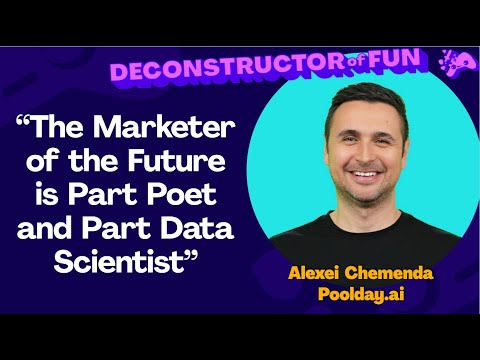
Transcript
[Music] What are the biggest misconceptions marketing leaders have about AI creative production and how should they rethink their approach to stay competitive? There are two misconceptions that I usually see. Uh the first is that people assume AI will turn out creatives and content ready to go without any sort of human input and that they think AI replaces creativity entirely. If you think about AI as a great way to handle repetitive tasks, then all of a sudden you free yourself from a lot of tedious uh creation and then you can focus your energy on strategy, on storytelling and so on. Another misconception is that adopting AI means you will lose brand voice and you will lose your storytelling and how cohesive you are. But in fact the re the best AI solutions out there should enhance uh your brand guidelines not overwrite them. The last thing I've seen is that some marketers
still choose between quantity or quality and they see AI as a quantity um helper but not a quality helper. And again the market I think will reward marketers who are aggressive with testing. So my advice is to use AI as a partner and not as an autopilot solution. Let it handle all of the tedious stuff so your teams can actually invest more time on creativity on building compelling stories and really building memorable brand experiences for users. Misconceptions are that that people think it's just plug and play. You don't have to be really creative, but you will lose all the control. You'll get crazy brand six-finger ads and it's really a quantity play. But that's not the case. So these kind of misconceptions given, how do you see AI revolutionizing uh ad creation and optimization? One thing that I'm really excited about is the level of personalization that we can reach at scale. And this has never been
done in videos before. If you think about it, my dad and I drive the same car, but will we appeal to the same ad for the car? It's very unlikely. So marketers have to stop thinking about what is the perfect ad and start thinking about what set of ads and what set of variations will deliver on brand lift or performance whatever they're after. And this has been done with static images a while back and people optimize their creatives programmatically. But it's now possible to deliver on that same promise in videos which is the biggest consumed media out there. Um, so that's the the topic we're the most excited about, how how you're able to personalize uh videos to appeal to every single user and not have to choose one direction for your entire company. And so this personalization comes from the fact that it's easier and faster to produce ads through AI. And because it's easier,
cheaper, faster, more effective, that allows you to have more creatives. and more creatives allows you to be more personalized for different segments. And not only that, if you think about the UGC market, in the past, if you wanted to AB test content with UGC, you would have to be very meticulous because if you hired an actor to record a video and you wanted 3 weeks later to just change some item of that video, you would need to get the same actor in the same outfit with the same hairstyle, with the same level of energy, and maybe adapt the messaging. uh that's incredibly hard to do and most marketers stopped doing it or never did it in the first place. And so certainly it allows you to have a clear control over what set of variables you want to play with in your video and keep everything else the same. And that that's a big one because it allows you sort of a management of the creatives even after the creatives have been done
by going back to them, modifying, changing things that that you think could be done better without actually increasing your production costs. That's exactly right. And and that's that's one of the things that we see customers realizing more and more. In the past, it was shoot it and forget it. And now it's a continuous cycle where they start producing. There's a baseline and then they add on to that baseline with uh more content, different content, altering existing content and it's a continuous cycle to get a stream of creatives that makes sense for their audience. And let's talk about brands because in a podcast gamecraft podcast that they were talking about AI and they brought this interesting kind of bare and bull case of AI the bull case of AI they were saying that you would be able to make games basically through prompts. Uh and then the the bare case which they consider to be more likely is that the market gets flooded with subpar titles
that are essentially taking away space from mediocre titles. Uh but they're at the same time boosting the big IP games. So everything gets flooded that is mid to low. But the the games with those brands, they're known to be of higher quality and they just get more demand because people know that they're going to be as promised. And so when we take this analogy into brands uh in creatives in marketing, do you think this kind of same thing could happen where the market just gets flooded with similar ads as we've actually been seeing and then the branded ads, somebody who's using Monopoly or Assassin's Creed or Call of Duty kind of stands out from the mass produced with AI? What's your take? I love this question because it actually is something we see even outside of gaming. Even if you think of my LinkedIn posts, um, I'm not a big-time influencer, but I do have an audience.
AI helps me to create that content faster, but really the reason why it's seen by my audience is that I've built somewhat of a brand, and that's going to win in the long term for companies that are strong on IP. Of course, it doesn't mean that small companies won't be able to compete. It kind of levels the playing field on the creative side, but if you're seeing a Monopoly Go ad, of course, you're going to resonate with that ad a lot more if that brings up childhood memories. They have an edge uh that no amount of creatives will be able to outperform. And so we do think it levels the playing field. But ultimately even at those companies there are marketers that resist or either resist change or treat AI like a magic wand rather than a tool. And those teams will be losers of the you know marketing performance game. And if they're not
ready to put in the effort, if not ready to u go out of their comfort zone and kind of build that process over time and iterating over their integration with AI or leveraging AI in different ways. We like to think of it as losers wait for AI to solve everything and winners leverage AI to elevate human creativity and understand that it's a process to get there. This podcast is brought to you by Apps Flyier. In today's digital world, understanding your app's journey from discovery to download is more than just insightful. It's essential. Enter Appslier, the leader in mobile attribution and marketing analytics that allows you to measure the full potential of your marketing efforts, making every ad dollar work smarter. With Apps Flyier, that's your new reality. Dive deep into datadriven insights that reveal exactly where your users come from and how they'll interact with your app. AppSlire, where your app's potential meets performance.
But if you would have to um on a short term make a call, do you think that brands are net gainers of the AI marketing revolution or losers? Winners 100%. only because their their brand power is so strong and if they use AI to amplify that that's an amazing result they're going to see. I liked Brian Chesky Airbnb CEO's take on brand marketing in general. Hayes words were that brand marketing is like the equivalent of lighting up a room with a big chandelier and performance marketing is um having lasers uh pointed at a very specific direction. So if you wanted to light up a room, you wouldn't use a bunch of, you know, lasers. You would probably use a chandelier. That's a very efficient way to light up the room. And brands have that chandelier power that no smalltime
company has. And so the small time company has to go with the laser strategy. And so if the brands use a chandelier to light up the room and then they use lasers whenever they need to, they can use AI to actually light up the room a lot faster and shine in the world of gaming a lot faster. Well, let's talk about volume then. So AI tools enable marketers to, as you said, scale production and scale personalization by just being able to produce more. So what's the right balance between volume and creative quality? I think the balance lies in setting clear creative guard rails. When you build a set of creatives, whether it's brain voice or visual standards or narrative style, AI can handle a lot of the mechanical tasks like editing. uh like I previously mentioned, but humans still need to ensure each piece of content feels authentic, feels on brand, and that's
the sweet spot. Um I like to think of it as if you look at a set of videos that you produce with AI, ask yourself, are we sharing a compelling story uh to the end user? And is that story cohesive? Does it make sense as a whole? If so, it's game on and you can scale. Uh if not, you're probably a little bit too much on the uh performance side and probably a little too focused on the testing rather than the chandelier analogy I shared earlier, which is absolutely fine for companies that do not have a brand. They don't have a choice. So then it's no longer if you don't have a monopoly, go brand, go performance and go very aggressive on testing. And I don't think there should be any limits there. Um, but if you do have a brand you want to leverage and keep and entertain and grow, then uh I think setting up clear creative guardrails for the team ensures that they're able to evaluate the content and
be sure that they thumbs up the content that's actually cohesive with the brand story. So if you're building a brand, of course, have brand guidelines and use those brand guidelines in your creative production. Actually pretty simple to integrate with your AI production tools. If you don't have it, go buck wild. There's no amount of volume that is too much. Is that what you're saying? Correct. And and we see across the board companies spending a little bit of money on marketing, the smaller companies um who spend 20k a month, 50k a month, 100k a month, small media budgets um in in the grand scheme of things. and they actually we see them producing a lot more creatives uh than some of the bigger companies out there because they understand well if I don't have a brand I have to let the market figure out what creative is going to perform for me and what's going to drive my uh user adoption and so we see them producing on average two to three times more in creative content although they're spending you know 10 times less 100
times less a thousand times less than some of these marketers You've talked about volume and you talked about personalization. Those two things together with AB testing kind of don't compute in my head. Do you think that in traditional like we will be moving away from this traditional AB testing more towards AIdriven dynamic optimization where you're finding different segments and showing them different creatives rather than finding that hero creative? We absolutely think the the AB testing where you define a set of two variables and you kind of test you know blue or red for that button uh or messaging on a very simple item that specifically I believe many companies already moved away from um the early adopters at the very least. There's actually a lot less value in an AB testing methodology now versus 5 years ago. Um there there's many different reasons, but essentially one reason is what we
mentioned earlier. There's not a one perfect creative for the entire audience. And so when you think about AB testing, that gives you one path to one specific audience, but really what you want is a stream of creatives that are relevant for a specific audience. The other thing is the richness of data in video content which is now the most consumed media is so much higher than in images that if you wanted to properly AB test you would have to isolate the most important variables. You would have to test many different combinations of those variables and then you do this for every set of variable you have available. This is you potentially tens of thousands of videos to produce every single month. And no matter how excited we are about early adopters and how we are about uh performance marketers testing a lot of content, we do have a few customers who
are at that scale. But we only have a few customers who are producing, you know, at that level. Other than that, it's very hard to do. So instead we think of it as let's let the creative win for a specific uh audience and that creative stream will have a journey that evolves over time through the variables of the video for a given audience. If one day it's a 20-year-old male on the video that performs and then over time maybe they realize that it's not a 20-year-old male but a a 25-year-old female then they will evolve that set of creatives for a particular audience they want to attract. Uh so so it's no longer an AB test, but rather what are the variables you want to play with? And once you define your stream of creatives, what are the variables you want to actually deploy to attract a specific type of user? That's really key here. I've I've
used the analogy, at least when we're talking about AB testing in games. I use the analogy of of ice cream. So I'm I'm a father of two, so that's on the menu all the time. And it's almost like you have the the chocolate, the strawberry, and vanilla, and you're doing the test and you're figuring out which ice cream is the most like. Well, vanilla is preferred by 55% of the kids. So, everybody gets vanilla, but there's 45% who actually would have preferred chocolate. And so, with this personalization approach, essentially, what you're saying is find the ones that like their type of ice cream and serve them that ice cream. And that way you will have a broader audience because everybody is getting what they actually want rather than taking what the majority wants. I absolutely love this analogy. I've never heard this analogy before. I will absolutely reuse it and steal it for myself and quote you when I do. Web stores. You've seen what good looks like, but have you seen great? App charge is the direct to consumer platform backed by the likes of Supercell and built by monization pros
from Moon Active, Platika, Huge Games, and others. People who know the difference. App charge powers over half a billion dollars in transaction a year for top studios, optimizing every detail. deeply personalized web store offers custommade design, industry-leading monetization features, in-game payments SDK, and more. 70% of top grossing games already have a web store, but the one scaling fastest, they're doing it with Appcharge. Learn more at appcharge.com. Well, you're you're welcome. Uh well the the other part about this is is of course the the predictive analytics. How do you think marketing leaders can ensure that they're using the right insights in the most effective way rather than just accumulating insane amount of data? You can only optimize what you measure or what you use. And what I encourage uh companies to do
is implementing predictive analytics with the understanding that you're going to pay a lot of money. You're going to spend a lot of time and it's not going to work. And the reason I say it's not going to work is there's really a missing word here. It's in the beginning. And that's okay. It's an iterative cycle. It's not a plugandplay solution that kind of works out of the box. Companies implementing predictive analytics and expecting a great result. It's the equivalent of um Picasso drawing their first painting and assuming that's going to be a big masterpiece. any sort of famous artist has gone through a process of iteration to get to where they are now. And people look at obviously the the final result that we all know, but they don't see the struggle and they don't see the iterations, the many different cycles it took to get there. And so for predictive analytics, it's the exact same thing. When you have a ton of data, you're just sitting on it. If your mindset is let me try to see if I can, you know, help predict the next
event or help predict what I should do or how we should paint a certain uh picture in the video. You have to iterate. You optimize. You improve your models. You give it more data or you structure the data differently which usually helps a lot more than just more data. You course correct and you repeat. And marketers that start doing that are on a path to getting there. Some of them are getting very fast to their end result. Some of them need a little bit more time. But I'll tell you one thing, I can guarantee you will never find success with predictive modeling if you never went past the initial failure. So accumulate a lot of data and don't be afraid of it and iterate with the data. Um and teach your models to handle it. Should you continue al always with uh getting as much data as possible or can you kind of tone it down and focus on the type of data you need? Well, that's
the thing. Once you start that course correction, once you start the iterative process, you know what data matters more and you know how to structure your data. So all of a sudden you go from a garbage of data to a very structured database where you know exactly why you're collecting that data point and you know which items are not useful and then you can remove that. If I tell any data science team that we're going to remove any data they're going to go crazy but at a high level that's what you would want to do. In reality you should really keep all the data you have because one day it may be useful and you don't know it yet. Uh but if you want a more pragmatic approach and a kind of faster results, that's that's one way to go about it. One thing that's important is for execs to actually set a correct timeline. And if you're thinking about short-term, if you're thinking about the next quarter or the next month, then no amount of data will help you get there. And so it's up to the leaders of the company to set up a timeline where they actually share with the team, hey, we have the next three years where we're
going to get we want to get this right. It's all eyes on the exec team to set that expectation correctly because then that gives the breathing room for the teams to actually implement the correct strategy and to leverage predictive analytics the right way. So there seems to be somewhat of a change of what is expected from a marketing leadership. Data fluency is becoming one of the competences that is required from from the uh marketing leaders. So looking ahead just a couple of years um what are the new skills or roles a marketing leader should prioritize to stay competitive in this very very AIdriven environment certainly the role is evolving and it's not just about hiring data scientists uh we need a new breed of marketers who combine two skill set really the creative component and the analytical side of the business and I think we'll see more creative strategists who can brief AI models uh very effectively plus marketing technologists who really excel
at integrating tools third party tools into actionable workflows. um it doesn't negate you know the typical skills you would expect in a marketer things like empathy storytelling those remain irreplaceable but I feel like there will be more and more AI ethicist or an AI governance lead role emerging to make sure that there is uh ethical usage of the data to make sure that um they're using the right tools my main takeaway is to keep a foot in both worlds uh the creative world and the data world u because ultimately those two are converging very very fast and we already see it at companies. Do you have any recommendations of what kind of a content should marketing leaders be reading if they want to understand more AI in marketing concept in in or AI and data? Let me think about
this. It's funny because I think of I I love reading and it's hard to read about AI because by the time you write the book the topic is outdated. So I was going to say there there are you know like Stanford has great classes. Um, in the end, you're trying to understand the general application of LLMs. And if you understand how the sausage is made, you probably understand how to make different types of sausages. And you have, you don't have to kind of, you know, uh, get proficient in the tools as long as you understand the technology behind the tools. I would actually recommend boot camps where they teach about AI, they teach about tools and they teach about they give you a glimpse of how the technology works. They give you a glimpse of uh how to actually use the tools and really it's about getting a hands-on attitude. So whether it's Stanford classes online or Harvard classes online or um boot camps who actually make you go through that, I feel like those are good ways to
learn quickly and kind of get a head start. So no barriers boot camp. All right. Anyway, dad joke. Uh so it's not it's not a mutually exclusive. It's not mutually exclusive. Do you see AI as a way to replace human creativity or does it enhance it? I know you're going to say it is going to enhance it, but tell me how it's going to enhance it. Yeah, it's all about the time you have to do the things you'd love doing and where you have value. So certainly I'm a big believer that AI is enhancing human creativity, not replacing it. Um doing a few things. First, it acts as a as a really a partner in your thought process. I use it all the time to kind of piggy back ideas and think about, you know, breaking down my ideas and why is it a good idea, why is it a bad idea, analyze it, um, can you help me tweak it? Those are the things that I'm very excited about on the day-to-day. So, one is using AI as a as a partner. I want to make sure that essentially AI helps me get rid of the tasks that drain me and
allows me to spend more time in what we call a genius zone. to where you are in a flow state, you truly understand what you're doing, you see a clear vision for ahead and you execute on that. So if you buy yourself time to do that, that's the most important and that's the most valuable asset you can gain back. Jeff Bezos famously said his job is essentially making six good decisions per year. And the reason he spent his time the way he did when he was CEO at Amazon was he needs to make sure he has all the context and he has the right level of energy to make those six decisions. Six decisions is all it takes per year for him to to consider his job successful. And so we're all Jeff Bezos in a way. And I want to make sure that AI helps us get there faster uh by having more context about us about what we do about how we do things. So, um, so those are the two ways that we really see AI enhancing human creativity
and I'm 100% convinced that it's a tool that we should use and it's a partner. Alexi Chimed, thank you for the insights. I 100% agree. Remove the um, repetitive tasks, leave more time for genius zone, and that will improve your creativity. Thank you for sharing. And before you go, what's going on in your life? How can people reach out to you? Well, I'm very passionate about content creation and AI for marketing. Uh they can reach out to me on LinkedIn uh in the link below uh at Alexpoolday.ai, like a day at the pool. Poolday.ai. We help marketers all over the place, midsize and largesize businesses um essentially enter their genius zone. We help them scaling their video content creation with AI and many other things. So if they want to reach out and see how we can do that for them, Alexpool.ai.
All right. Thank you so much, Alex. Into the genius zone, everybody. Thank you everybody for listening. Hope you enjoyed the episode. Links below. You did it. You made it to the end of the episode. As a fan of the show, it would help us out if you'd subscribe and leave us a review on the podcast service of your choice. Those stars and likes while a small action on your part mean a lot to us and help to grow the show. More importantly, are you a member of the Deconstructor of Fun Slack group? If you have 5 years or more of games industry experience, go to deconstructorofund.com/slack and apply to join. Join the games industry best professional community filled with peers always willing to lend a hand. or subscribe to our newsletter to get all the latest insights from the Deconstructor of Fun content creators. Thanks for listening. You did it. You made it to the end of the episode. As a fan of the show, it would help us out if you'd subscribe and leave us a review on the
podcast service of your choice. Those stars and likes, while a small action on your part, mean a lot to us and help to grow the show. More importantly, are you a member of the Deconstructor of Fun Slack group? If you have 5 years or more of games industry experience, go to deconstructorof fun.com/lad and apply to join. Join the games industry best professional community filled with peers always willing to lend a hand or subscribe to our newsletter to get all the latest insights from the deconstructor of fun content creators. Thanks for listening. [Music]
Auto-generated captions from YouTube — names and numbers may be misheard.



















Comments