Adventure reports and market data
Documents

Let's Review Your Games — Ep. 036
Indie game development requires a rigorous focus on the intersection of technical polish and player experience.
- Game UI should balance aesthetic and functionality, with the host recommending blurred backgrounds and darker, cleaner designs over heavy chromatic aberration effects to improve professional presentation.
- Developers often struggle with lighting consistency due to high-brightness gaming monitors, leading to games that appear too dark or have flat, cheap-looking specular highlights on standard displays.
- Effective player feedback requires clear, immediate sensory cues, such as audible impact sounds for combat and on-screen prompts for key mechanics like flashlights to prevent player confusion.

Their 0 Combat Game Made Them Millions
The development of non-violent, exploration-focused adventure games relies on a synthesis of immersive world-building, clear mechanical communication, and disciplined production management.
- Environment art efficiency is achieved by prioritizing unique, hand-crafted assets over modular sets to maintain a distinct visual identity and optimize performance through reduced draw calls.
- Developing for a fixed camera allows developers to treat every frame as a 'hero shot,' significantly reducing production costs by only requiring high-fidelity art where the player can actually see.
- Successful indie games on Steam are often found in the 'middle class' of sales, typically ranging between $100,000 and $1,000,000 in revenue, rather than just the extreme outliers or mega-hits.
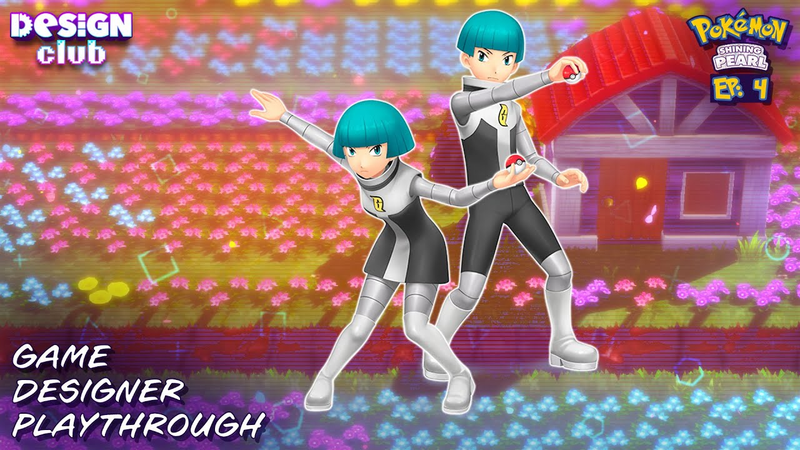
Pokemon BDSP: Play Like A Designer Episode 4, Forward to Floaroma!
Pokémon Brilliant Diamond and Shining Pearl serve as a case study for the enduring tension between casual accessibility and the rigorous demands of competitive play.
- Pokémon Brilliant Diamond and Shining Pearl features a quality-of-life mechanic where players can use Hidden Moves like Rock Smash via the Pokétch app, allowing wild Pokémon to perform the action without requiring the player to teach the move to a party member.
- Double battles in Pokémon expand the game's possibility space by allowing players to manage two active combatants, though the number of Pokémon each trainer can deploy is limited by the specific encounter's constraints.
- Time-bound mechanics in games, such as specific Pokémon spawn windows or MMO events tied to real-world clocks, create significant challenges for content creators and streamers who cannot maintain consistent availability for these events.
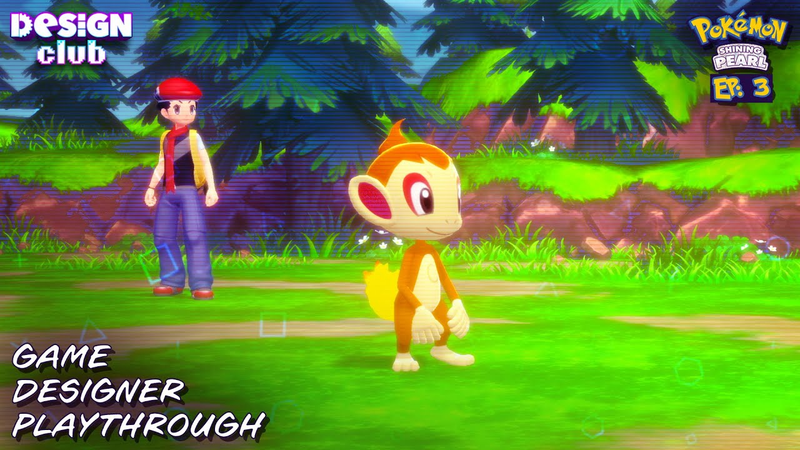
Pokemon BDSP: Play Like A Designer Episode 3, Onward to Oreburgh!
Pokémon Brilliant Diamond and Shining Pearl exemplify a dual-layered design philosophy that balances broad accessibility with significant mechanical depth.
- Pokémon stats are not universal; different species level at different rates, meaning a single level-up provides inconsistent stat growth across the roster.
- Combat buffs, such as those from 'Power-Up Punch,' persist across sequential battles until the Pokémon is swapped out, allowing players to stack advantages against multiple opponents.
- Move categories are distinct from elemental types; physical attacks (red burst icon) and special attacks (blue circle icon) are determined by the move's classification rather than its type.

Let's Review Your Games — Ep. 028
Indie game development often succeeds in crafting cohesive atmospheres and distinct visual identities, yet many titles struggle to retain players during the critical first five minutes of gameplay.
- Game developers should prioritize early player engagement by providing immediate control, such as walking out of an apartment, rather than relying on static screens that risk player drop-off within the first five minutes.
- Establishing clear character motivation and stakes early in a game is essential; without a defined incentive or sympathetic goal, players are less likely to remain invested in the experience.
- Visual clarity regarding time of day is a critical design element that helps ground the player in the game world, as ambiguous lighting can make it difficult to determine the setting's temporal context.

The Indiana Jones game developer has a fight club in its basement
MachineGames, the Swedish developer behind the Wolfenstein series and Indiana Jones and the Great Circle, operates with a distinct studio culture defined by a commitment to immersive, first-person storytelling and a collaborative, hobbyist-driven environment.
- MachineGames is developing 'Indiana Jones and the Great Circle' using a hybrid perspective model that blends first-person immersion with third-person transitions to maintain character visibility.
- The studio’s strategic development for the 'Indiana Jones' title is shaped by the Game Pass ecosystem, prioritizing strong onboarding and accessibility to serve a broad, diverse player base.
- MachineGames utilizes DLC as a core operational tool to manage production workflows, allowing teams to maintain momentum and refine mechanics after the primary project concludes.

How He Sold 2,000,000 Copies Of His Games (Dave Gilbert) — Full Time Game Dev Podcast Ep. 039
Achieving long-term success in the independent game development industry requires a disciplined, incremental approach that prioritizes sustainable growth over high-risk, large-scale projects.
- Building a sustainable game development career is best achieved by starting with small, manageable projects that allow for rapid iteration and learning rather than risking all resources on a single long-term title.
- Developing a consistent brand and universe across multiple titles helps cultivate a loyal audience of returning players, which provides a financial safety net for future, more ambitious projects.
- Managing the psychological toll of public feedback requires a 'thick skin' that prioritizes mental health by choosing not to engage with negative criticism, even when it feels like a personal attack.
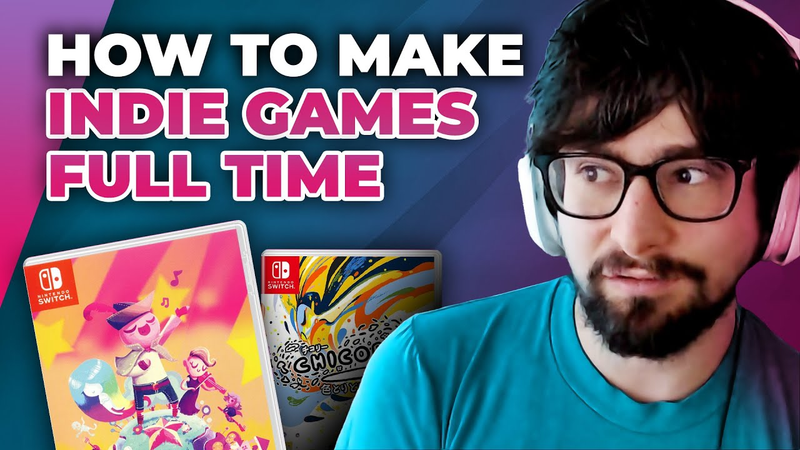
How To Make Indie Games Full Time (Greg Lobanov) — Full Time Game Dev Podcast Ep. 037
Achieving a sustainable, full-time career in independent game development relies on building a consistent portfolio of commercial projects rather than chasing singular viral successes.
- Indie developers do not need viral hits to sustain a full-time career; consistent income can be generated through a portfolio of smaller, non-explosive titles like Coin Crypt, Wandersong, Chicory, and Beastieball.
- When working with limited resources, developers should refine their core game loop and gimmick as a solo developer before hiring a team to scale production.
- Working with publishers can be a strategic choice for experienced developers to offload non-creative tasks, but creators should avoid large, high-stakes deals and prioritize clear, concise milestones to mitigate risk.
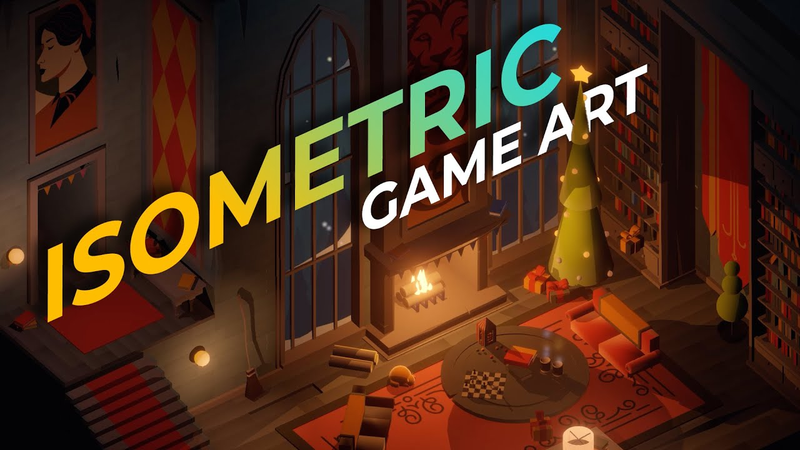
How To Create A Gorgeous Isometric Game (In 7 Minutes)
Creating high-quality isometric game art relies on a streamlined, iterative workflow that prioritizes simplistic geometry and stylized aesthetics over complex rendering techniques.
- To achieve an isometric look, set the Unity camera to orthographic mode rather than perspective to create a precious, delicate aesthetic.
- Streamline the development workflow by importing native .blend and .psd files directly into Unity instead of exporting assets as FBX or PNG files, allowing for real-time updates via simple file saves.
- Simplify complex 3D modeling by breaking objects down into basic geometric primitives like cubes, cylinders, and cones, then using the knife tool to add intentional, handmade-style cuts.
How To Make Millions From An Indie Game
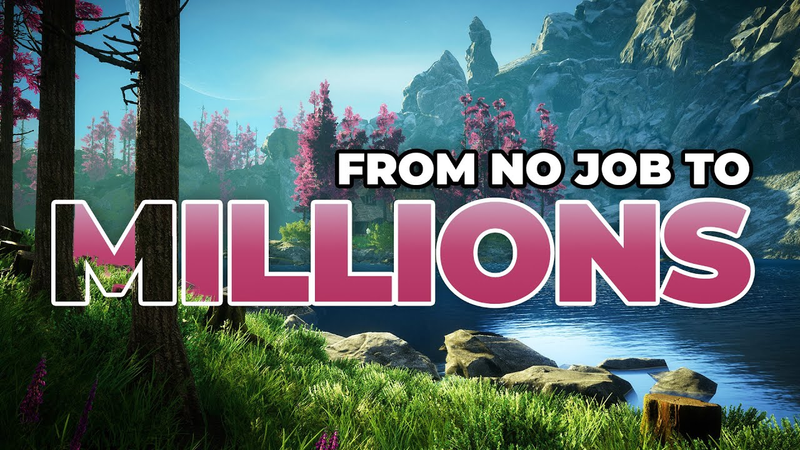
The journey of developing the indie game Eastshade serves as a case study for transitioning from a stable career in AAA game development to independent production.
- Eastshade, an indie game developed by Danny Weinbaum, has generated over $3.5 million in revenue across all platforms since its 2019 release.
- To fund full-time development, the creator saved approximately $130,000 while working in the AAA industry at Sucker Punch, allowing for a multi-year runway.
- The development process spanned four years, during which the creator and his partner lived frugally and eventually moved in with family to extend their financial stability.
The Music of 'Tchia': Channeling the Soul of New Caledonia
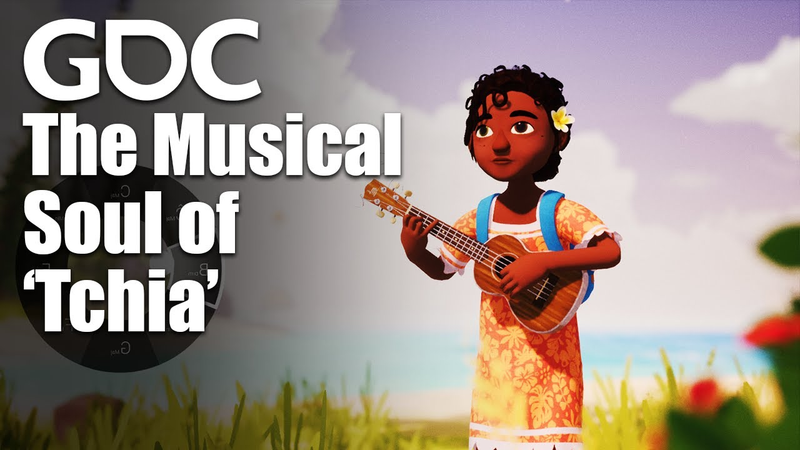
The development of the musical score for the game Tchia represents a dedicated effort to authentically represent the cultural identity of New Caledonia.
- The Tchia soundtrack prioritizes cultural authenticity by integrating indigenous New Caledonian elements, specifically the kaneka genre and the peu rhythm, rather than relying on generic cinematic tropes.
- Production utilized native instruments such as bonep bark beaters and dried fern leaves, blended with modern production techniques to create a culturally grounded soundscape.
- The development team implemented a sophisticated ukulele mechanic that maps controller inputs to accurate fingerings, chords, and pitch-bending for visual and musical realism.
Artist vs. Manager
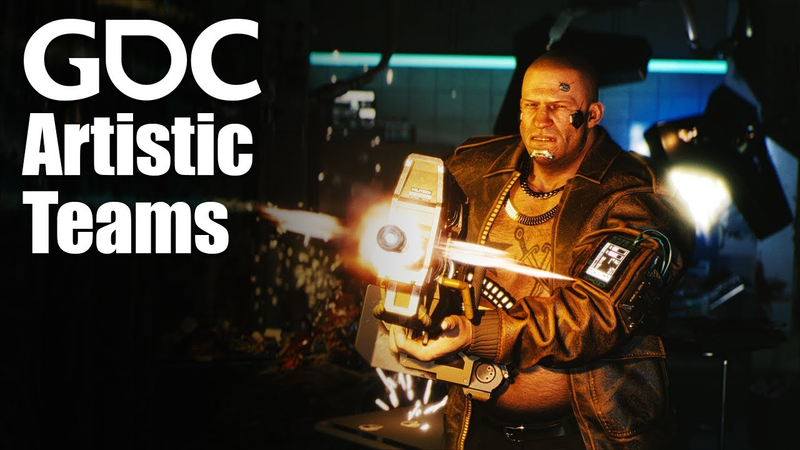
Transitioning from an individual contributor to a leadership role in AAA game development necessitates a fundamental shift in professional identity.
- Transitioning to leadership requires shifting focus from personal creative output to team cohesion, as success is now measured by the collective ability to balance creative ambition with business constraints.
- Effective management is critical for mitigating industry burnout, which currently affects approximately 60 percent of the game development workforce.
- Leaders must act as a bridge between project requirements and team health by prioritizing empathy, transparency, and strategic planning over technical mastery.