Report25 pages
Mobile Game Genre Report: Comparing & Contrasting Eastern and Western Markets 2021
This report examines the mobile gaming landscape in 2021, focusing on the strategic differences between Eastern and Western markets regarding genre popularity, monetization, and user acquisition. While mobile is the leading gaming platform globally by revenue and player count, market dynamics vary significantly between regions. The United States remains the largest market for puzzle games, followed by Japan and China, though Western markets generally favor casual genres like puzzle and arcade, whereas Eastern markets demonstrate a higher preference for competitive, immersive titles such as Battle Royale and role-playing games.
Key findings indicate that while puzzle games are popular globally, their implementation differs by region. Western titles often emphasize narrative and decoration, while Eastern titles frequently integrate deeper economies, character collection, and gacha mechanics. Monetization strategies also diverge; Western players show a higher tolerance for in-game advertising, leading to an IAA-focused revenue model. Conversely, Japanese players exhibit a greater willingness to engage in in-app purchases, resulting in a more balanced or IAP-heavy approach. Live-ops, including limited-time events and social engagement features, are identified as critical tools for retention in both regions, though the specific content—such as collaborations with anime or manga in Japan—is tailored to local cultural interests.
The analysis relies on industry data and expert insights, including case studies from developers like Translimit. Methodology involves comparing consumer behaviors, demographic profiles, and revenue streams across key markets. The report concludes that successful global expansion requires rigorous localization of marketing creatives and user acquisition strategies. Developers are encouraged to utilize A/B testing and performance-based ad optimization to navigate the distinct preferences of Western and Eastern audiences, ensuring that both gameplay mechanics and monetization models align with regional expectations.
- Western markets prioritize casual genres like puzzle and arcade, while Eastern markets demonstrate a stronger preference for competitive, immersive titles such as Battle Royale and RPGs.
- Monetization strategies differ by region, with Western titles leaning toward in-game advertising (IAA) models, while Japanese players show a higher propensity for in-app purchases (IAP).
- Puzzle games are a global staple, but Western implementations focus on narrative and decoration, whereas Eastern versions prioritize character collection, deep economies, and gacha mechanics.
- Live-ops and social engagement features are essential for player retention globally, though content must be culturally localized, such as using anime or manga collaborations in Japan.
- Successful global expansion requires rigorous localization of marketing creatives and user acquisition strategies, supported by A/B testing and performance-based ad optimization.
+1
NewzooJan 2021

Report29 pages
State of the Game Industry 2021
The global game industry entered 2021 characterized by a shift toward next-generation hardware and a complex transition to remote work environments. While the PC remains the foundational platform for development and revenue, the PlayStation 5 has established itself as the primary console of interest, capturing 44% of developer attention. Conversely, interest in immersive technologies has cooled, with VR and AR engagement dropping to 38% as the market consolidates around the Oculus Quest. Despite these platform shifts, a significant tension persists regarding digital storefront economics; only 3% of developers believe the traditional 30% revenue cut is justified, signaling a growing demand for more equitable distribution models.
The operational landscape has been profoundly shaped by the COVID-19 pandemic, leading to a notable increase in project delays, which rose from 33% to 44% year-over-year. However, the shift to remote work has proven surprisingly effective, with 66% of professionals reporting stable or increased productivity. This transition has not eliminated long-standing labor issues, as 30% of the workforce still reports "crunch" weeks exceeding 60 hours. Consequently, support for unionization remains high at 51%, driven by a desire for better work-life balance and fair compensation within a workforce where 57% of developers have a decade or less of experience.
Industry growth remains steady, evidenced by 47% of studios expanding their staff, yet demographic and social challenges persist. Although 60% of studios have initiated diversity and inclusion programs, the workforce remains 73% male, and only 31% of developers have implemented specific accessibility measures in their projects. As developers prioritize digital storefront promotion and word-of-mouth for discoverability, the industry continues to balance rapid technological adoption with the need for systemic improvements in labor practices and representation.
- The PlayStation 5 is the primary console of interest for 44% of developers, while interest in VR and AR has cooled to 38% as the market consolidates around the Oculus Quest.
- Remote work has proven effective, with 66% of professionals reporting stable or increased productivity, despite project delays rising from 33% to 44% year-over-year.
- Labor tensions remain high, as 30% of the workforce reports 'crunch' weeks exceeding 60 hours, leading to 51% of developers supporting unionization.
- Only 3% of developers believe the traditional 30% revenue cut taken by digital storefronts is justified, indicating a strong industry push for more equitable distribution models.
- While 60% of studios have launched diversity and inclusion programs, the workforce remains 73% male, and only 31% of developers have implemented specific accessibility measures.
Game Developers ConferenceJan 2021
Whitepaper61 pages
The 2021 Global Mobile Gamers Whitepaper
Mobile gaming has emerged as the primary driver of the global games market, generating $93.2 billion in 2021 and accounting for over half of total industry revenue. This segment is projected to reach $116.1 billion by 2024, fueled by expansion in emerging markets and the integration of social metaverse experiences. Within this landscape, short-video platforms have become essential hubs for player engagement, with nearly half of mobile gamers across thirteen key global markets utilizing these platforms to discover and share content.
Users on these platforms represent a high-value demographic that outperforms the average gamer in nearly every engagement metric. These players install 50% more games, spend 36% more time playing weekly, and engage with a significantly broader variety of genres. Their behavior is characterized by a high propensity for spending, particularly on progression-based purchases and in-game add-ons. This audience acts as a community of evangelists, twice as likely as non-users to discover new titles through social video content and subscription services, making them a critical target for strategy and MOBA developers.
Geographic analysis reveals distinct regional preferences in art styles and mechanics. While realistic aesthetics maintain global dominance, Asian markets show a unique affinity for anime and "cute" art styles, alongside a higher tolerance for randomized reward systems like gacha. Conversely, Western markets in the United States and United Kingdom lean toward puzzle and casual titles with cartoonish aesthetics. Despite these regional differences, fantasy remains the most popular setting worldwide. Across all territories, the consistent introduction of new content and technical stability are the most effective levers for re-engaging lapsed players and maintaining long-term retention.
- Mobile gaming generated $93.2 billion in 2021, accounting for over half of total industry revenue, with projections to reach $116.1 billion by 2024.
- Users who engage with short-video platforms represent a high-value demographic that installs 50% more games and spends 36% more time playing weekly than the average gamer.
- Short-video platform users are twice as likely as non-users to discover new titles through social content and subscription services, making them a primary target for strategy and MOBA developers.
- Regional art style preferences vary significantly, with Asian markets favoring anime and 'cute' aesthetics alongside gacha mechanics, while U.S. and U.K. markets prefer puzzle and casual titles with cartoonish aesthetics.
- Fantasy remains the most popular global game setting, while consistent content updates and technical stability are the primary drivers for re-engaging lapsed players and ensuring long-term retention.
+1
TikTokJan 2021

Report19 pages
Video Games – a Force for Good (2021)
The 2021 Key Facts report, a joint publication by ISFE and EGDF, provides a comprehensive analysis of the European video game industry’s market performance, player demographics, and social impact. Covering the 2021 calendar year with comparative data from 2020, the report focuses on the European Union and broader European markets, including the United Kingdom. Data is derived from Ipsos, GameTrack, and Games Sales Data (GSD), utilizing surveys and retail tracking across more than 20 European nations.
The findings indicate a stable market valued at €23.3 billion, maintaining the significant revenue gains achieved during the 2020 pandemic lockdowns. While the total number of players grew by 6% to reach 52% of the European population, average weekly playtime decreased to 9 hours, returning to pre-pandemic levels. The digital ecosystem dominates the sector, accounting for 81% of total revenue, driven largely by app-based gaming and in-game extras. Demographically, the average player age is 31.3 years, and women represent nearly 48% of the total player base.
Beyond economic metrics, the report emphasizes the industry’s commitment to social responsibility and sustainability. It highlights the widespread adoption of the PEGI age rating system and the effectiveness of parental control tools, noting a significant decrease in unauthorized in-game spending by minors. The document also outlines industry-wide initiatives to improve workforce diversity, where women currently make up 22% of employees, and details environmental efforts such as the Green Game Jam and the Games Consoles Voluntary Agreement to reduce energy consumption. Finally, the report identifies esports as a high-growth segment, with global revenues surpassing $1 billion in 2021.
- The European video game market maintained a stable valuation of €23.3 billion in 2021, successfully sustaining the revenue gains achieved during the 2020 pandemic.
- Digital sales dominate the industry, accounting for 81% of total revenue, with growth primarily driven by app-based gaming and in-game purchases.
- The European player base grew by 6% in 2021 to encompass 52% of the total population, with an average player age of 31.3 years and a gender split of 48% women.
- Average weekly playtime dropped to 9 hours in 2021, signaling a return to pre-pandemic engagement levels despite the increase in total player count.
- Esports emerged as a high-growth sector, with global revenues exceeding $1 billion during the 2021 calendar year.
+1
European Games Developer FederationJan 2021
Report1 pages
Survey on Games and Daily Life: Japan
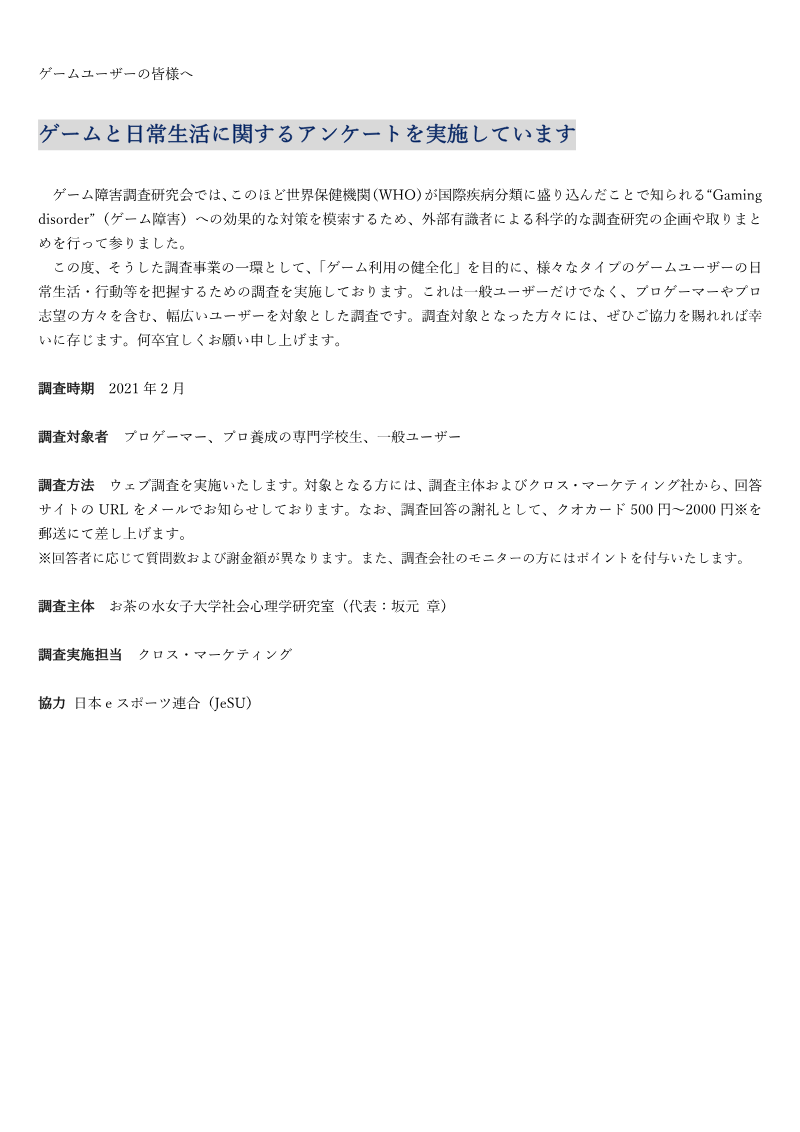
The survey was launched to deepen understanding of how gaming activities intersect with everyday life in Japan and to inform strategies for mitigating “gaming disorder,” a condition recently classified by the World Health Organization. Its overarching aim is to promote healthier gaming habits across a broad spectrum of participants, ranging from casual players to professional gamers and students enrolled in specialized esports training programs.
Fieldwork took place in February 2021 and targeted three distinct groups: active professional gamers, individuals attending dedicated esports academies, and the general gaming public. Data were collected through an online questionnaire distributed via email by the research team and Cross‑Marketing, with respondents directed to a secure response site. To encourage participation, incentives varied from ¥500 to ¥2,000 Quo‑card vouchers, supplemented by point awards for panel members of the survey firm.
The investigation was coordinated by the Social Psychology Laboratory at Ochanomizu University, under the leadership of Professor Akira Sakamoto, with operational support from Cross‑Marketing and endorsement from the Japan eSports Union (JeSU). Although specific results are not disclosed in the excerpt, the study’s design reflects a comprehensive, mixed‑audience approach intended to generate actionable insights for policy makers, health professionals, and the esports industry regarding responsible gaming practices in Japan.
- The study, conducted in February 2021, aimed to analyze the intersection of gaming and daily life to inform strategies for mitigating gaming disorder.
- Research was led by Professor Akira Sakamoto of the Social Psychology Laboratory at Ochanomizu University with endorsement from the Japan eSports Union (JeSU).
- The survey targeted three distinct demographics: active professional gamers, students in specialized esports academies, and the general gaming public.
- Data collection was facilitated through an online questionnaire managed in partnership with the research firm Cross-Marketing.
- Participation was incentivized through a combination of point awards and Quo-card vouchers ranging in value from ¥500 to ¥2,000.
+1
CESA – Computer Entertainment Supplier's AssociationJan 2021

Report41 pages
La Guía de los Esports
Resumen ejecutivo de “La Guía de los Esports” (Basado en los ocho apartados que aparecen en el material proporcionado)
1. Contexto macro‑económico del sector Tamaño del mercado: US $947.1 M en 2020; proyectado a superar el billón de dólares en los próximos años. Audiencia global: > 215 millones de “entusiastas” (personas que ven competiciones al menos una vez al mes). Motor de crecimiento: Broadband rápido y fiable. Las regiones con mejor conectividad (Este de Asia, Norte de Europa y Norteamérica) concentran la mayor parte del potencial de mercado.
2. Evolución de géneros y penetración regional Nuevos géneros híbridos: Battle‑royale (desde 2017) – p.ej. Fortnite, PUBG. Auto‑battlers (desde 2019) – p.ej. Teamfight Tactics, Dota Auto‑Chess. Penetración de audiencia (por población): | Región | % de población | Fans estimados | |--------|----------------|----------------| | China | 6.09 % | 88 M | | Norteamérica | 4.93 % | 18.2 M | | Europa | 3.90 % | 29.2 M | | Latinoamérica | (dato incompleto) | — | La distribución es muy desigual; los mercados emergentes aún presentan gran margen de expansión.
3. Arquitectura del ecosistema Propiedad intelectual: Los publishers (editores) son dueños del IP, financian el desarrollo y establecen las reglas competitivas. Actores interdependientes: Desarrolladores → crean el juego. Plataformas (Steam, Epic, consolas) → distribución y hosting. Organizadores de torneos → eventos y ligas. Equipos profesionales → gestión de jugadores y marcas. Jugadores (pro y amateur) → contenido y rendimiento. Creadores de contenido (streamers, youtubers) → comunidad y monetización. Profesionalización: Programas de becas multimillonarios, ligas estructuradas (ej. LCS, LEC, Overwatch League) y contratos con cláusulas de exclusividad y derechos de imagen.
4. Crecimiento de audiencia y de ingresos Audiencia total: 435.9 M (2021) → 577.2 M (estimado 2024) – CAGR +7.7 %. Ingresos: < $1.1 B (2021) → proyección > $1.5 B para 2024 (
- The esports market is projected to grow from under $1.1 billion in 2021 to over $1.5 billion by 2024, maintaining a compound annual growth rate (CAGR) of 7.7%.
- Global esports viewership is expected to reach 577.2 million people by 2024, up from 435.9 million in 2021.
- Market potential is heavily concentrated in regions with high-speed broadband infrastructure, specifically East Asia, Northern Europe, and North America.
- China leads global market penetration with 88 million fans, representing 6.09% of its population, significantly outpacing North America (4.93%) and Europe (3.90%).
- The ecosystem is defined by publisher-controlled intellectual property, where developers dictate competitive rules and league structures like the LCS, LEC, and Overwatch League.
+2
AEVIJan 2021
Report14 pages
Rapport Annuel 2021
The 2021 annual review underscores the emergence of video‑games as a pivotal social and economic force within Canada, where roughly 61 % of the population—about 23 million people—engage in regular play. Pandemic‑era surveys reveal that 58 % of adult gamers and 80 % of adolescents increased their gaming time, while disposable income previously allocated to cinema and travel was redirected toward interactive entertainment, positioning gaming as the dominant medium in the national leisure landscape.
Advocacy and industry support intensified throughout the year. The association shifted to virtual engagement with parliamentarians, deployed a paid Globe and Mail advertisement, and produced a targeted video message to maintain policy visibility during COVID‑19. A new content‑manager bolstered digital capacity, and coordinated outreach—including bi‑weekly provincial briefings, a monthly liaison call with provincial bodies, and a legally vetted return‑to‑work guide—facilitated the successful exclusion of video‑game developers and console manufacturers from the revised Canadian Broadcasting Act, averting potential royalties amounting to tens of millions of dollars and avoiding additional regulatory burdens.
Operational resilience was demonstrated as approximately 30 000 industry employees transitioned to remote work without disrupting the majority of scheduled releases. Financial stewardship met all set objectives, remaining within budget while expanding strategic initiatives. The sixth‑year student competition attracted 20 entries, awarding a $6,000 prize, reflecting ongoing investment in talent development and community engagement across the Canadian gaming sector.
- The Canadian video game industry successfully lobbied to be excluded from the revised Canadian Broadcasting Act, avoiding tens of millions of dollars in potential royalties and regulatory burdens.
- Approximately 23 million Canadians—61% of the population—are regular gamers, with 58% of adults and 80% of adolescents increasing their playtime during the pandemic.
- The industry maintained operational continuity during 2021 as 30,000 employees transitioned to remote work without disrupting the majority of scheduled game releases.
- Consumer spending shifted during the pandemic, with disposable income previously allocated to cinema and travel redirected toward interactive entertainment.
- Industry advocacy efforts in 2021 included virtual parliamentary engagement, targeted media campaigns in The Globe and Mail, and the implementation of a legally vetted return-to-work guide.
Association canadienne du logiciel de divertissementJan 2021

Report35 pages
Guida agli Esports: Italia
The analysis positions esports as a rapidly expanding digital sport that, in 2021, generated $947.1 million in revenue and attracted more than 215 million fans worldwide, with total direct earnings approaching $1.1 billion. Growth is concentrated in regions with advanced broadband infrastructure—East Asia, Northern Europe and North America—where titles that balance accessibility, competitive depth and spectator‑friendly design dominate the market. The ecosystem is defined by five interdependent actors: game publishers, tournament organizers, professional and amateur teams, players, and fan communities, each relying on robust licensing agreements and strong intellectual‑property protection to sustain competitive formats and monetisation pathways.
Publishers invest heavily, often exceeding $100 million per title, and retain exclusive control over game updates, balance changes and the creation of official competitive modes, making their cooperation essential for event staging and broadcast rights. Organisers must secure these rights before launching tournaments, while fan‑generated content such as streaming, casting and influencer activity drives viewership and ancillary revenue streams. The sector’s economic impact extends beyond digital earnings; flagship events have delivered measurable short‑term gains—Rotterdam recorded €2.36 million in visitor revenue and Katowice generated $12.8 million—while also enhancing city branding, attracting young talent and prompting infrastructure investment.
Education and social inclusion are emerging pillars, with universities offering scholarships and curricula that leverage esports to develop digital, problem‑solving and teamwork skills. Initiatives targeting gender balance, including Women in Games and dedicated incubators, aim to broaden participation and address persistent representation gaps. The overarching conclusion stresses that sustained, coordinated action among industry bodies, policymakers and diversity‑focused programs is vital to cement esports’ legitimacy, protect minors, and unlock its full economic and societal potential.
- The global esports market reached $947.1 million in revenue in 2021, with total direct earnings approaching $1.1 billion and a fan base exceeding 215 million.
- Market growth is primarily concentrated in regions with advanced broadband infrastructure, specifically East Asia, Northern Europe, and North America.
- Game publishers hold exclusive control over competitive ecosystems, often investing over $100 million per title to manage updates, balance changes, and essential broadcast rights.
- Flagship esports events provide significant local economic impact, evidenced by $12.8 million generated in Katowice and €2.36 million in visitor revenue in Rotterdam.
- The esports value chain relies on five interdependent actors—publishers, organizers, teams, players, and fan communities—underpinned by strict intellectual property protection and licensing agreements.
+1
IIDEA – Italian Interactive Digital Entertainment AssociationJan 2021
Report222 pages
Turkey Game Market 2021 Report
The Turkish gaming market experienced a transformative period of growth and institutionalization in 2021, reaching a total market volume of $1.2 billion. Despite global challenges such as hardware shortages and pandemic-related delays in AAA titles, the local ecosystem expanded to include over 42 million active players. This growth was primarily catalyzed by the mobile segment, which generated $620 million in revenue and solidified Turkey’s position as a global leader in the hyper-casual genre. The year was further defined by record-breaking financial activity, with $266 million invested across 54 startups and the emergence of Dream Games as a new industry "unicorn."
Strategically, the market is shifting toward a "gaming-focused entertainment" model, characterized by the rapid adoption of Web3 technologies, including blockchain, NFTs, and Play-to-Earn (P2E) frameworks. While mobile gaming remains the dominant force, there is a burgeoning esports ecosystem supported by approximately 6 million followers and a national federation overseeing 165 licensed clubs. Turkey’s selection as the host for the Global Esports Games 2022 underscores its rising international profile. However, industry experts note a strategic need to diversify beyond mobile platforms into PC and console development to ensure long-term sustainability.
The regional landscape reveals Turkey as the primary gaming powerhouse in the Middle East, outperforming neighboring markets in both revenue and player engagement. Success for international entrants remains contingent on high-quality localization and cultural adaptation, given the country's low English proficiency and unique consumer preferences for competitive genres and specific musical influences. As the sector transitions into 2022, the focus remains on bridging the talent gap through specialized academic programs and leveraging the return of large-scale physical exhibitions to maintain momentum in the evolving Metaverse and digital advertising spaces.
- The Turkish gaming market reached a total volume of $1.2 billion in 2021, supported by a player base of 42 million active users.
- Mobile gaming generated $620 million in revenue, cementing Turkey's status as a global leader in the hyper-casual genre.
- Financial activity hit record levels in 2021 with $266 million invested across 54 startups, highlighted by the emergence of Dream Games as a unicorn.
- The esports ecosystem is growing rapidly, featuring 6 million followers and 165 licensed clubs overseen by a national federation.
- Turkey is the primary gaming powerhouse in the Middle East, though experts advise diversifying into PC and console development for long-term sustainability.
+2
Gaming in TurkeyJan 2021
Report19 pages
The Modern Mobile Gamer: 2021 Gen Z Edition
This analysis examines the mobile behaviors, gaming habits, and advertising preferences of Generation Z, defined as individuals born in 1997 or later. Based on a February 2021 survey of 7,103 U.S. consumers aged 18–24 on the Tapjoy network, the findings characterize this demographic as "digital natives" who view the smartphone as their primary device for entertainment, social connection, and commerce. The study utilizes opt-in participation and rewarded survey methodology to gather data on a generation that currently represents $140 billion in buying power.
Key findings indicate that Gen Z is heavily invested in the mobile ecosystem, with 86% using mobile as a gaming platform—significantly higher than the 42% who use consoles. The COVID-19 pandemic accelerated these trends, as 71% of respondents reported playing more mobile games in 2020. Beyond gaming, the demographic is highly active in mobile commerce; 68% shop via mobile one to four times per week, frequently purchasing to-go food, retail items, and subscription services. Socially, Gen Z favors Instagram and TikTok over Facebook and increasingly rejects traditional gender stereotypes in marketing.
The research concludes that Gen Z has a unique, high-standard relationship with advertising. They largely reject intrusive, non-skippable, or inauthentic content, preferring ads that offer a value exchange. Consequently, 54% of respondents prefer rewarded ads over other formats, and 53% engage with rewarded mobile game ads—outperforming engagement rates on Instagram (38%) and TikTok (23%). To successfully reach this audience, brands must prioritize humor, social and environmental awareness, and opt-in experiences that respect the user's digital autonomy.
- Mobile is the dominant gaming platform for Gen Z, with 86% of the demographic using smartphones for gaming compared to only 42% who use consoles.
- Rewarded advertising is the most effective engagement strategy for this group, with 54% preferring rewarded ads and 53% engaging with them, significantly outperforming Instagram (38%) and TikTok (23%).
- The COVID-19 pandemic significantly accelerated mobile gaming adoption, with 71% of Gen Z respondents reporting increased mobile gameplay during 2020.
- Gen Z is highly active in mobile commerce, with 68% of the demographic shopping via mobile devices one to four times per week for food, retail, and subscriptions.
- This demographic, representing $140 billion in buying power, rejects intrusive or inauthentic advertising in favor of content that respects digital autonomy and incorporates humor or social awareness.
+2
TapjoyJan 2021
Report21 pages
Gamer Generations Report: How Different Generations Engage with Games 2021
Gaming has evolved into a primary form of entertainment that transcends age groups, though engagement patterns vary significantly by generation. Younger cohorts, specifically Gen Z and Millennials, now prioritize gaming over traditional media like television or social media, spending approximately 25% of their leisure time on the medium. While 81% of Gen Z identifies as gamers, the hobby maintains a strong foothold among older populations, with 42% of Baby Boomers participating. This data suggests that gaming has become a focal point for global leisure, offering brands extensive opportunities to reach diverse audiences across 33 surveyed markets.
The depth of engagement is highly correlated with age. Younger generations exhibit multi-dimensional behaviors, including viewing game-related content, participating in online communities, and utilizing games as social hubs. For Gen Z and Millennials, streamers and content creators serve as major cultural influences, with over two-thirds of these groups both playing and watching gaming video content. In contrast, older generations like Gen X and Baby Boomers engage more casually, primarily using mobile platforms to fill time or unwind. Their motivations are largely practical, often seeking out reviews or "tips and tricks" rather than social or competitive experiences.
The industry is currently shifting toward the metaverse, characterized by virtual spaces that host non-gaming activities such as concerts and social gatherings. Approximately 70% of Gen Z gamers expect to spend time in game worlds without actively playing the main game, signaling a move toward digital persistence and self-expression. While younger players favor sandbox and battle royale genres that empower creativity, all generations express interest in metaverse features like free advertiser-sponsored content and avatar customization. This research, based on a sample of over 72,000 respondents, concludes that gaming is no longer just a pastime but a foundational component of modern social identity and digital interaction.
- Gaming has become a primary entertainment medium, with Gen Z and Millennials dedicating approximately 25% of their total leisure time to it.
- Engagement depth is age-dependent: 81% of Gen Z identify as gamers, compared to 42% of Baby Boomers, with younger cohorts treating games as social hubs rather than just casual pastimes.
- The metaverse is gaining traction, as 70% of Gen Z gamers report an intent to use game worlds for non-gaming activities like socializing and attending events.
- Over two-thirds of Gen Z and Millennials both play games and consume gaming video content, positioning streamers and creators as primary cultural influencers for these demographics.
- While younger players prioritize creative sandbox and battle royale genres, older generations primarily utilize mobile platforms for casual, functional engagement like seeking tips or unwinding.
NewzooJan 2021
Report17 pages
Diversity and Inclusion in Gaming: Insights and Opportunities 2021
This analysis examines the state of representation and accessibility within the United States gaming market, challenging the misconception that the gaming audience is primarily composed of young, white males. Based on a 2020 study of 1,824 gamers aged 10–65, the research argues that the industry’s future growth depends on its ability to cater to a diverse global population of 2.7 billion players. The thesis posits that strengthening diversity and inclusion (D&I) requires a dual approach: improving the representation of marginalized groups in software and increasing the affordability of hardware.
Key findings indicate that 47% of U.S. gamers avoid titles they feel are not made for them, while over half believe it is important for games to feature diverse characters. This sentiment is particularly strong among LGBTQIA+ players and people with disabilities. Data shows that players of color are often more "serious" gamers than their white counterparts; for instance, Black and Asian PC players skew younger and more female. Furthermore, the popularity of the fighting game genre among Black players is linked to historical arcade accessibility, suggesting that low barriers to entry foster long-term community engagement.
The research highlights a significant correlation between socioeconomic status and gaming habits. Black and Hispanic/Latinx players are more likely to use standard laptops or consoles rather than expensive high-end desktops and are more inclined to use subscription services like Xbox Game Pass to manage costs. Ultimately, the analysis concludes that brands taking active stances on social issues and prioritizing inclusive character design can drive higher engagement and revenue, as gamers increasingly prefer companies that reflect their values and identities.
- 47% of U.S. gamers avoid titles they perceive as not designed for them, indicating that inclusive character representation is a critical factor for market reach.
- Over half of the gaming audience considers the presence of diverse characters important, with particularly high demand for representation from LGBTQIA+ players and people with disabilities.
- Socioeconomic barriers significantly influence platform choice, as Black and Hispanic/Latinx players are more likely to utilize standard consoles or laptops and subscription services like Xbox Game Pass rather than high-end desktops.
- The gaming audience is highly diverse, with Black and Asian PC players skewing younger and more female than their white counterparts.
- Historical accessibility, such as the low barrier to entry provided by arcades, directly correlates with long-term genre engagement, as seen in the popularity of fighting games among Black players.
+1
NewzooJan 2021

Report39 pages
The Gaming Playbook: Everything You Need to Know About the Gaming Audience
Gaming has evolved into a near-universal activity, with 86% of internet users across 15 global markets engaging in play as of 2020. While mobile gaming serves as the primary driver for accessibility and broad demographic expansion—particularly among women, families, and older adults aged 55 to 64—consoles and PCs continue to anchor the more committed segments of the audience. This expansion is characterized by a shift toward a digital-first ecosystem where subscription services and digital sales dominate the market. Revenue models have transitioned accordingly, with in-game microtransactions and downloadable content emerging as the primary financial engines, especially among high-spending male millennials and Gen Z players who prioritize social status and character customization.
The landscape is increasingly defined by the convergence of gaming, social media, and live entertainment. Esports followers represent a particularly lucrative and tech-oriented demographic that displays a higher-than-average receptivity to advertising and brand sponsorships. Nearly half of these fans view sponsorships as a natural fit for the medium, and 40% actively support brands that invest in their favorite teams. Engagement is primarily driven through mobile and PC streaming, though traditional television remains a relevant secondary channel for older cohorts. India has emerged as a critical growth frontier within this space, fueled by its massive mobile-first population.
To successfully navigate this environment, brands must move beyond traditional advertising and focus on community integration and exclusivity. Vocal sub-groups, such as streamers and critics, act as essential information hubs and brand ambassadors who influence the broader community. Effective engagement requires a nuanced understanding of these diverse personas, ensuring that marketing efforts provide genuine value to the gaming experience. By fostering community involvement and offering exclusive rewards, brands can convert high-engagement players into long-term advocates within the burgeoning metaverse and competitive gaming sectors.
- As of 2020, 86% of internet users across 15 global markets engage in gaming, with mobile platforms driving significant demographic expansion among women, families, and adults aged 55 to 64.
- Revenue models have shifted toward digital-first ecosystems, where in-game microtransactions and downloadable content serve as the primary financial engines, particularly among high-spending Gen Z and millennial male players.
- Esports followers represent a highly receptive audience for advertising, with nearly 50% viewing brand sponsorships as a natural fit and 40% actively supporting brands that invest in their favorite teams.
- India has emerged as a critical growth frontier for the gaming industry, driven by a massive, mobile-first population.
- While mobile gaming facilitates broad accessibility, consoles and PCs remain the primary platforms for the most committed and high-spending segments of the gaming audience.
+1
GWIJan 2021

Presentation1 pages
Play Like a Girl: Key Ways to Engage Asia's Growing Female Gaming Audience
The female gaming demographic in Asia represents a primary catalyst for regional market growth, expanding at a significantly faster rate than the male audience. In 2019, Asia accounted for 48% of global gaming revenue, totaling $69 billion. Within this landscape, female players grew to comprise 38% of the 1.33 billion total gamers in the region, up from 32% in 2017. This shift is particularly pronounced in China, where 45% of the gaming population is female, followed by South Korea, Japan, and Southeast Asia at 40% each.
Mobile technology serves as the dominant platform for this demographic, with 95% of Asia’s female gamers playing on mobile devices compared to much smaller shares for PC and consoles. While female players typically engage in shorter sessions than males—with 60% playing up to seven hours per week—their spending power is substantial. Female gamers contributed 35% of mobile gaming revenue in 2019, a figure projected to reach 39% in 2020. Contrary to casual stereotypes, these players show a strong preference for complex genres including MMORPGs, MOBAs, and shooters, particularly those featuring deep strategy, diverse character options, and immersive storylines.
The rise of female-specific esports leagues and professional teams further signals a maturing market with expanding sponsorship opportunities. This upward trajectory was accelerated by the COVID-19 pandemic; data from 2020 indicates that over 96% of female gamers in China increased their playtime during lockdowns, with a majority also increasing their in-game spending. To effectively engage this audience, developers and marketers must prioritize mobile-first strategies and integrate sophisticated gameplay elements that reflect the diverse interests of the modern female gamer.
- Female gamers in Asia grew to 38% of the 1.33 billion total regional gaming population by 2019, up from 32% in 2017.
- Mobile is the primary platform for this demographic, with 95% of female gamers in Asia playing on mobile devices.
- Female gamers contributed 35% of mobile gaming revenue in 2019, with projections estimating an increase to 39% in 2020.
- Contrary to casual gaming stereotypes, female players in Asia show a strong preference for complex genres including MMORPGs, MOBAs, and shooters.
- China leads the region with 45% of its gaming population being female, while South Korea, Japan, and Southeast Asia each report 40%.
+1
Niko PartnersJun 2020

Report14 pages
Europe and Esports: High Engagement and Even Higher Potential
The study demonstrates that European esports audiences are expanding rapidly, with a projected 92 million viewers by the end of 2020 and a year‑over‑year growth of 7.4 %. Enthusiasts—those watching professional content more than once a month—total 33 million, while occasional viewers comprise the remaining 59 million. Revenue forecasts show a global market of nearly €974 million in 2020, rising to €1.6 billion by 2023, with Europe mirroring this trajectory.
Survey data from 10,175 respondents aged 18‑45 across ten Western and Northern European countries reveal that esports engagement is not confined to the youngest cohort; only 33 % of 18‑20 year olds are regular enthusiasts, whereas the 21‑25 age group leads in engagement. Geographic variation is pronounced: Finland shows a 52 % enthusiast rate among 18‑20 year olds, compared to 21 % in the UK. COVID‑19 lockdowns increased viewership in markets with stricter restrictions, and 62 % of respondents in Spain and the UK expect continued higher viewership post‑lockdown.
Gender analysis indicates that 32 % of the audience are women, primarily occasional viewers. Nonetheless, female participation in competitive play is rising, with 60 % of respondents acknowledging growth in women’s involvement. Women spend money on esports products at a comparable rate to men (46 % vs 38 %) and favor physical merchandise, whereas men lean toward digital items such as skins and premium passes.
The research underscores strong cross‑sport interest, with 64 % of viewers also supporting a favorite sports team, and highlights the strategic opportunity for brands to engage this growing, diverse, and monetarily active audience.
- The European esports market is projected to reach 92 million viewers by the end of 2020, with a 7.4% year-over-year growth rate.
- Global esports revenue is forecasted to climb from €974 million in 2020 to €1.6 billion by 2023, with Europe following a similar growth trajectory.
- Esports engagement is not limited to the youngest demographic, as the 21–25 age group currently leads in enthusiast participation compared to the 18–20 cohort.
- Geographic engagement varies significantly, with Finland reporting a 52% enthusiast rate among 18–20 year olds compared to only 21% in the UK.
- Women comprise 32% of the esports audience and demonstrate high purchasing power, with 46% spending on esports products compared to 38% of men.
+1
PayPalJan 2020

Report16 pages
Spillrapporten 2019/2020
Norsk spillbransje En global bransje Utfordringer og i dag i vekst muligheter «For å få oversikt over potensialet og utviklingen i dataspillbransjen er det viktig med et godt kunnskapsgrunnlag om spillbransjen og markedet, herunder tall og statistikk som er sammenliknbare med andre næringer og andre Sitatet over er hentet fra regjeringens ferske dataspill Vår ambisjon er at denne statistikken skal oppdateres og strategi, «Spillerom», for perioden 2...
- The Norwegian gaming industry's gross turnover from games was 550 million NOK in 2018, with 388 million NOK directly by companies and 162 million NOK through other distribution channels.
- Export revenue from Norwegian games is significant, estimated at 377 million NOK in 2018, substantially higher than the 87.3 million NOK from Norwegian film exports in 2015.
- Funcom is the largest company in the Norwegian gaming industry, a pattern seen in Finland (Supercell accounted for 88% of turnover in 2015) and Sweden, where dominant players drive overall industry growth.
- Access to private capital is a major barrier for growth in the Norwegian gaming industry, as many small companies with low equity struggle to secure funding for long development cycles.
- The Norwegian Film Institute (NFI) provided 23.7 million NOK in grants to data games in 2018, with 13.7 million NOK (58%) going to professional companies, indicating a focus on smaller-scale game development rather than growth-phase companies.
+1
Norsk Spill- og MultimedieforeningJan 2020
Report64 pages
2020 Mobile Gaming Apps Report
The global mobile gaming market is projected to surpass $100 billion in revenue in 2020, fueled by a 2.6 billion-person player base and a 24% surge in daily in-app payments. While the average cost per install has reached a record low of $1.47, the industry faces a tightening conversion landscape where install-to-purchase costs have risen by 24% and conversion rates have dropped to 3.3%. Midcore and strategy games have emerged as the most efficient segments, offering the highest 30-day return on ad spend at 39.5% while maintaining low acquisition costs, particularly on the Android platform.
Geographic performance varies significantly, with Japan and North America established as the premier markets for user retention and monetization. Japan consistently outperforms global benchmarks, doubling the retention rates of its regional peers and exceeding return on ad spend targets by over 10 percentage points. While the Asia-Pacific region as a whole delivers high returns, it is characterized by the highest acquisition costs. In contrast, the EMEA region, specifically the United Kingdom, provides a high-value alternative by balancing affordable install costs with strong returns. Emerging markets like Brazil offer the lowest entry costs globally but present high risks due to poor long-term retention and low conversion.
The hyper-casual sector is expected to reach $3 billion in 2020, though market saturation is driving a shift toward hybrid monetization models to combat declining long-term engagement. Across all genres, platform choice remains a critical strategic factor; iOS provides a slight advantage in return on investment but requires four times the acquisition spend of Android. Furthermore, while paid user acquisition drives initial engagement in midcore and social casino categories, organic users continue to demonstrate superior long-term loyalty, highlighting the ongoing importance of organic growth strategies in a competitive global landscape.
- The global mobile gaming market is projected to exceed $100 billion in 2020, supported by 2.6 billion players and a 24% increase in daily in-app payments.
- Midcore and strategy games are the most efficient segments, achieving a 39.5% 30-day return on ad spend with low acquisition costs, particularly on Android.
- While the average cost per install has hit a record low of $1.47, the industry faces a 24% rise in install-to-purchase costs and a decline in conversion rates to 3.3%.
- Japan remains the premier market for monetization and retention, doubling regional peer retention rates and exceeding return on ad spend targets by over 10 percentage points.
- iOS offers a higher return on investment than Android but requires four times the acquisition spend, while organic users continue to outperform paid users in long-term loyalty.
+2
LiftoffJan 2020
Report62 pages
Level Up: A Guide to Succeed in Asia’s Gaming Market
Asia has established itself as the epicenter of the global gaming industry, driven by a mobile-first population exceeding 1.5 billion players. The region’s market is characterized by the dominance of free-to-play models, which account for nearly 99% of mobile revenue and all top-grossing titles. While China and Japan lead in total revenue, Japan maintains the highest value per user with an average revenue per download of $12.84. Growth is increasingly fueled by the female demographic, which expanded to 500 million players by 2019 and contributes nearly 40% of total mobile gaming revenue. This shift necessitates more inclusive storylines and diverse development teams to capture a demographic that is currently outgrowing its male counterpart.
The competitive landscape is defined by the rapid ascent of mobile esports, with Asia generating 68% of the sector's global revenue. Southeast Asia, in particular, has seen a 244% increase in tournament prize pools, signaling a transition from casual play toward complex, competitive genres like MOBAs and Battle Royales. Despite high interest, a significant gap remains between esports viewership and active participation, representing a massive untapped opportunity for developers. Success in these markets requires sophisticated monetization strategies, such as hybrid models combining gacha mechanics, battle passes, and rewarded video ads to accommodate varying income levels across the territory.
Navigating the Asian market demands deep localization that extends beyond language to include cultural customs, religious sensitivities, and technical optimization for diverse hardware. While Japan and South Korea remain dominated by local developers and legacy RPG franchises, India and Southeast Asia offer high-growth potential for international titles that provide "lite" versions for accessible play. To achieve long-term engagement, developers must leverage local influencers and community-driven gameplay, ensuring that titles resonate with the specific pop culture trends and infrastructure capabilities of each unique sub-region.
- Asia’s gaming market is driven by over 1.5 billion mobile-first players, with free-to-play models generating 99% of mobile revenue.
- The female demographic has grown to 500 million players and now contributes nearly 40% of total mobile gaming revenue, necessitating more inclusive content.
- Asia accounts for 68% of global mobile esports revenue, with Southeast Asia experiencing a 244% increase in tournament prize pools.
- Japan leads the region in monetization efficiency, maintaining the highest average revenue per download at $12.84.
- Developers should implement hybrid monetization strategies—combining gacha, battle passes, and rewarded video ads—to address varying income levels across the region.
+1
NewzooJan 2020
Report22 pages
For the Win: Breaking Down the Preferences of Asia's Mobile Gamers
Asia represents the world’s most significant mobile gaming hub, housing over half of the global player base and generating the majority of the industry's mobile revenue. The primary objective of this analysis is to examine the distinct player preferences, cultural influences, and market regulations across five key regions: China, Japan, South Korea, India, and Southeast Asia. By evaluating top-grossing titles and genre shifts through the first half of 2020, the findings illustrate a broader regional transition from casual play toward complex, competitive, and socially-driven experiences.
China remains the largest market, characterized by the successful migration of PC intellectual properties to mobile and a regulatory environment that necessitates domestic partnerships. In contrast, Japan’s market is defined by a deep-rooted console history and the pervasive influence of anime and manga aesthetics, with RPGs accounting for nearly half of its mobile revenue. South Korea leverages its robust 5G infrastructure and "PC bang" culture to sustain a market dominated by high-fidelity MMORPGs. Meanwhile, India and Southeast Asia emerge as high-growth regions where young populations and increasing smartphone accessibility are fueling a massive surge in mobile esports and battle royale titles.
The data reveals that localization involves more than translation; it requires integrating local folklore, respecting religious customs, and optimizing for hardware constraints. For instance, "lite" versions of games are essential for market penetration in India, while community-centric features are vital for success in Southeast Asia. Across all regions, the rise of mobile esports is a dominant trend, with competitive titles increasingly displacing traditional genres in the top-grossing charts.
The methodology utilizes data from Niko Partners, incorporating market models, five-year forecasts, and qualitative surveys from a panel of millions of consumers across Asia. The analysis covers the period from 2016 through June 2020, drawing on data from retailers, app markets, and interviews with industry executives to provide a comprehensive view of the mobile landscape.
- Asia accounts for over 50% of the global mobile gaming player base and generates the majority of the industry's total mobile revenue.
- Mobile esports and competitive, socially-driven titles are displacing traditional genres across all Asian markets, marking a major shift in consumer preference through the first half of 2020.
- China remains the largest market, where success is driven by migrating PC intellectual properties to mobile and navigating a regulatory environment that requires domestic partnerships.
- Japan’s mobile market is heavily influenced by console history and anime aesthetics, with RPGs consistently accounting for nearly 50% of total mobile revenue.
- South Korea’s market is defined by high-fidelity MMORPGs, supported by the country's advanced 5G infrastructure and a culture rooted in PC bang gaming.
+1
Niko PartnersJan 2020

Report14 pages
Las Mujeres Juegan, Consumen, Participan: Contribución a la Industria de Videojuegos en 2020
The analysis highlights how women have become a decisive force in the European video‑game market in 2020, both as players and as consumers. By the end of the year 118 million people aged 6‑64 were active gamers across Spain, France, Germany, Italy and the United Kingdom, with women accounting for 47 % of that base—up from 45 % in 2019. During the second‑quarter lockdown a record 60 million women played, and their average weekly playtime rose to 8.8 hours, with console sessions increasing by roughly one hour compared with the previous year. Mobile gaming proved especially important, as smartphone and tablet usage among women grew 3 % between Q1 2019 and Q4 2020.
Financially, women generated 38 % of total video‑game spending in the five markets, translating into approximately €6.8 billion of the €17.8 billion industry revenue—a 31 % year‑on‑year increase. Their purchases were split evenly between console titles and mobile apps, each contributing about €3 billion. The sector’s overall revenue rose by €3.2 billion in 2020, underscoring the economic impact of the expanding female audience.
Work
- Women accounted for 47% of the 118 million active gamers across Spain, France, Germany, Italy, and the UK in 2020, up from 45% in 2019.
- Female gamers generated €6.8 billion in spending in 2020, representing 38% of total industry revenue and a 31% year-on-year increase.
- During the 2020 Q2 lockdown, 60 million women played video games, with average weekly playtime rising to 8.8 hours and console sessions increasing by approximately one hour.
- Spending by women was split evenly between console titles and mobile apps, with each category contributing approximately €3 billion to the total.
- Smartphone and tablet usage among female gamers grew by 3% between Q1 2019 and Q4 2020, highlighting the rising importance of mobile platforms.
+1
AEVIJan 2020