Report
Mobile Gamer 2021: Gen Z Edition
The report examines Generation Z (born 1997 and later) as the newest cohort of mobile gamers, highlighting their purchasing power, digital habits, and advertising preferences. Surveying 7,103 U.S. respondents aged 18‑24 on the Tapjoy network in February 2021, it finds that 86 % of Gen Z use mobile devices for gaming, far exceeding console (42 %) and PC (38 %) usage. Nearly one‑quarter first owned a smartphone before age 10, and 49 % replace devices every two to three years. Mobile shopping dominates their retail behavior: 68 % shop on phones one to four times per week, with 60 % ordering food delivery and 57 % making retail purchases. Preferred purchase channels include branded apps, e‑commerce storefronts, rewarded offers in games, and Instagram ads. Advertising engagement shows a strong preference for rewarded mobile game ads (61 % enjoy offerwalls) and short, creative content such as memes (50.4 %) and humor‑driven brand posts (57 % value humor). Traditional formats—banner ads, non‑skippable videos, and celebrity endorsements—are largely ineffective. Gen Z follows brands that align with their values; 52 % discover new products via social media, and 67 % follow brands for product interest. The methodology involved opt‑in participation with age verification, automatic reward distribution, and a geographically targeted U.S. sample. Overall, the findings portray Gen Z as highly engaged mobile gamers with significant discretionary spending, a preference for value‑based advertising, and a strong inclination toward brands that reflect their social and environmental values.
TapjoyJan 2025
Report
Reclaiming the Game Distribution Landscape
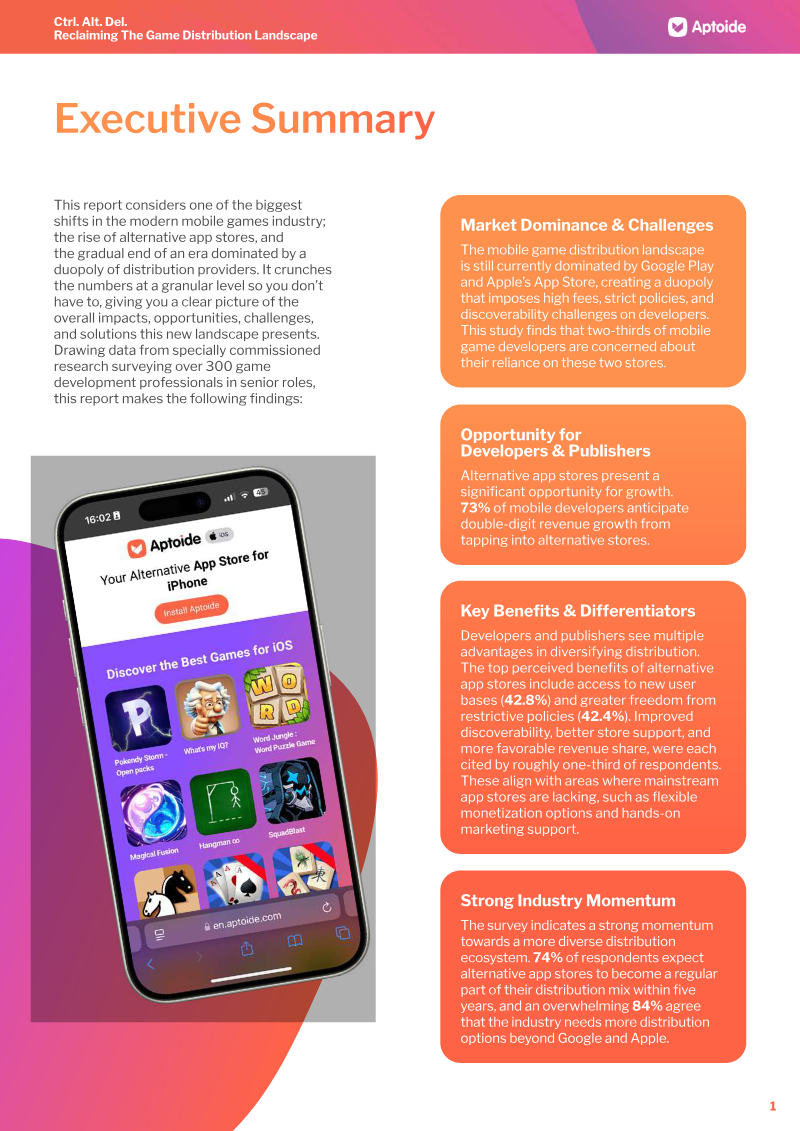
This analysis examines the shifting dynamics of the mobile game distribution market as of Summer 2025, focusing on the transition from a duopoly dominated by Apple and Google toward a more diverse ecosystem of alternative app stores. The central thesis posits that the industry is at a critical "reset" point where developers are increasingly seeking to reclaim control over their revenue, discoverability, and platform policies. By diversifying distribution strategies, game makers aim to bypass high fees and restrictive environments that have historically stifled commercial and creative potential. The findings are based on a survey of 304 senior-level mobile game development professionals from the United States and United Kingdom, all of whom work at companies with 250 or more employees. The research was conducted in April 2025 by Atomik Research on behalf of Aptoide. The data reveals significant industry dissatisfaction: 67% of developers are concerned about over-reliance on the two major stores, 51% cite high fees as a primary pain point, and 50% believe the dominant platforms unfairly prioritize their own services. Despite the current dominance of the major stores—which still account for roughly 87% of revenue for the majority of respondents—there is a clear trend toward adoption of alternative platforms. Approximately 74% of developers expect alternative stores to be a standard part of their distribution mix within five years. Furthermore, 73% of respondents anticipate double-digit revenue growth from these alternative channels. Key perceived benefits include access to new user bases (42.8%), greater policy freedom (42.4%), and improved discoverability through curated content and better marketing support. The scope of the analysis covers the global mobile gaming industry with specific emphasis on the US and UK markets. It concludes that while the Apple and Google stores remain essential for reach, the rise of alternative stores and direct-to-consumer webshops offers a necessary path for growth, risk reduction, and improved profit margins in an increasingly competitive landscape.
AptoideJan 2025