Report
MTG Corporate Responsibility Report 2010
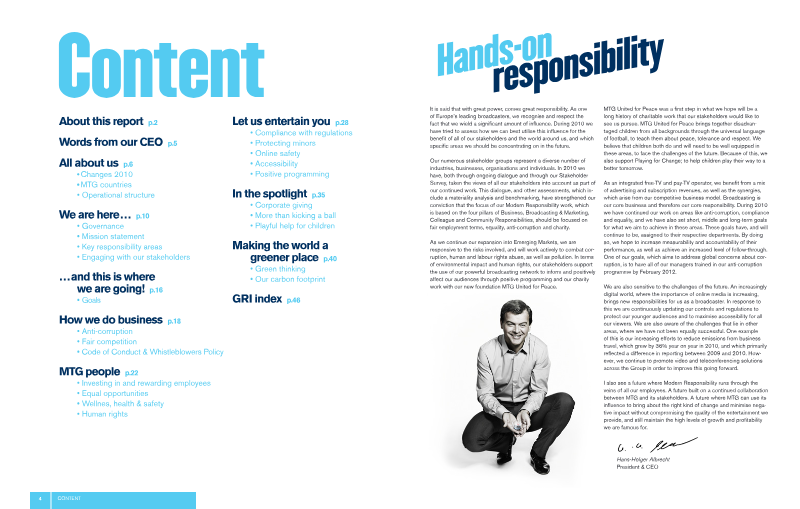
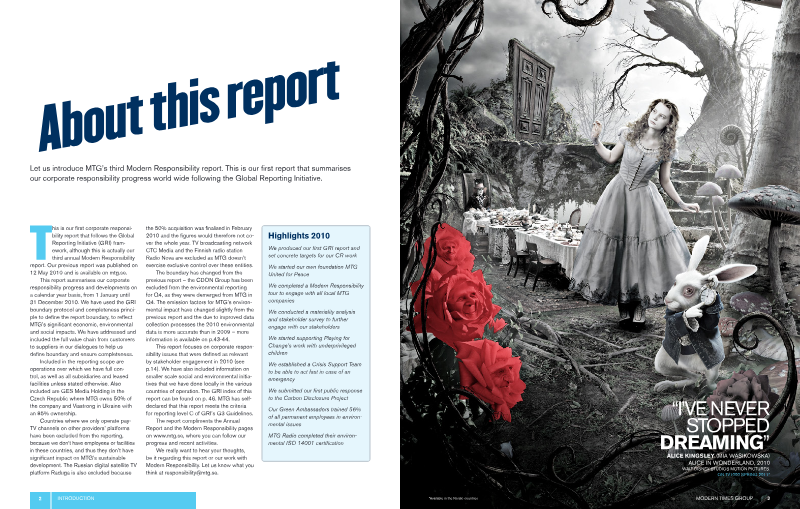
The 2010 Modern Responsibility report presents Modern Times Group’s first GRI‑aligned disclosure, expanding the reporting perimeter to encompass all subsidiaries and leased assets that employ staff. It establishes a comprehensive materiality analysis, stakeholder survey, and a crisis‑support team, framing corporate responsibility as a strategic pillar that underpins responsible broadcasting across MTG’s television, radio and digital platforms. The document’s thesis is that transparent governance, measurable sustainability targets, and inclusive social initiatives can drive long‑term value for both the business and its broader stakeholder community. Governance is overseen by a seven‑member board—six independent non‑executives, five men and two women—supported by audit, remuneration and Modern Responsibility committees. The report sets concrete performance goals, including training 50 % of relevant staff on compliance by the end of 2010 and achieving full coverage by 2012, reducing per‑employee CO₂ emissions by 5 % versus the 2009 baseline by February 2012, and extending a supplier self‑check system to half of MTG’s partners. Parallel gender‑equity objectives launch a women‑in‑leadership network in Sweden and benchmark gender‑pay gaps in Scandinavia by June 2011 and globally by February 2012. Operational outcomes for 2010 demonstrate strong social and environmental stewardship. MTG achieved 100 % subtitling/closed‑captioning for Swedish output, delivered 110 hours of compliance training, recorded only 21 internal complaints and incurred no fines. Philanthropic activity leveraged media assets to donate roughly 111 million SEK of airtime and raise over €58 million for health, disaster relief and child‑health campaigns across more than 20 countries. The United for Peace football tournament engaged 130 youths from 12 nations, with 88 % reporting new friendships and a near‑universal endorsement of sport as a conflict‑resolution tool, while the Playing for Change initiative secured a Social Capitalist award and raised 160 k SEK. Environmental performance shows a 7 % rise in total greenhouse‑gas emissions to 15,032 t CO₂e, driven mainly by facility energy (5,496 t) and business travel (8,727 t), raising per‑employee emissions to 5.6 t CO₂e. In response, MTG plans greener travel options, country‑specific green‑action lists, 80 % employee training in “green thinking,” and supplier CO₂ assessments to meet the 5 % per‑employee reduction target. The report thus captures a global, multi‑segment (broadcasting, digital, philanthropy, sports) snapshot of MTG’s 2010 responsibility performance and its forward‑looking commitments through
Modern Times GroupJan 2010
Report
Estudio aDeSe 2009: Usos y Hábitos de los Videojugadores Españoles
The November 2009 aDeSe study set out to map the usage patterns and habits of video‑game players across Spain, providing a statistically robust portrait of the market for stakeholders seeking to understand consumer behavior. A nationally representative sample of 4,254 residents aged fifteen and older was surveyed, delivering results with a ±1.5 % margin of error at the 95 % confidence level. The research encompassed all Spanish households, capturing data on technology ownership, demographic characteristics, and geographic distribution of gamers. Findings reveal that personal computers remain the dominant platform, with 58 % of households reporting PC ownership, while 35 % possess a dedicated video‑gaming console. This indicates a strong convergence between general computing and interactive entertainment within Spanish homes. The demographic profile shows that the majority of active gamers reside in municipalities ranging from ten thousand to fifty thousand inhabitants, a segment that accounts for 26 % of the gaming population, underscoring the importance of medium‑sized towns as key hubs of gaming activity. Overall, the study highlights a mature gaming ecosystem in Spain, characterized by widespread access to PC hardware and a substantial, though smaller, console base. The concentration of players in mid‑size municipalities suggests that market strategies should consider regional nuances, while the high penetration of computing devices points to opportunities for cross‑platform content and services.
AEVINov 2009

Report
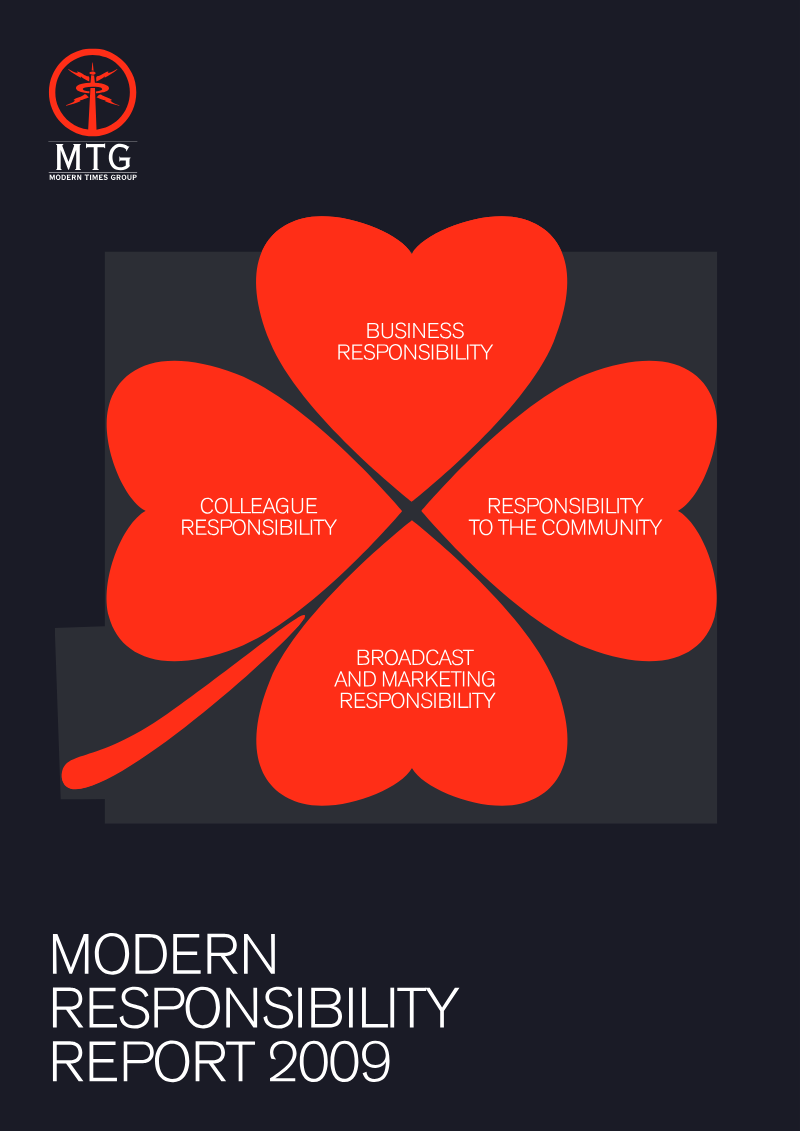
MTG Corporate Responsibility Report 2009
The 2009 Modern Responsibility Report presents Modern Times Group’s (MTG) effort to embed corporate responsibility across its broadcasting and media operations while navigating the aftermath of the 2008‑09 financial crisis. The report’s thesis is that a structured, multi‑pillar responsibility programme can coexist with commercial growth, even as the group expands its channel portfolio and geographic reach. In 2009 MTG recorded net sales of SEK 14.2 billion and launched three new channels—TV3 Puls, Prima COOL and Viasat Hockey—while completing a major restructuring of its Bulgarian assets. Despite revenue growth, operating income fell to a loss of SEK 1.4 billion and basic earnings per share turned negative at ‑30.86 SEK. The responsibility framework, introduced in 2004, is now governed by the CEO, board directors, a central committee and local “Green Ambassadors,” with KPIs, internal audits and external consultancy guiding progress. Targets for 2010 include broader KPI coverage, reduced carbon emissions and enhanced stakeholder communication across business, broadcast‑marketing, colleague and community dimensions. Employee engagement proved strong: 86 % of the 2,906 staff across 38 national markets completed the annual survey, 88 % expressed enthusiasm for their work and 90 % embraced the company’s three lead words. Gender balance approached parity overall (52 % male, 48 % female) though managerial levels remained skewed (63 % male, 37 % female). Internal recruitment accounted for 40 % of hires. The carbon footprint for 2009 amounted to roughly 13 000 t CO₂e across 19 countries, split evenly between facilities and office‑supply material use, with an intensity of 4.2 t CO₂e per employee (0.9 t per MSEK turnover). ISO 14001 certification for the Swedish radio division and energy‑efficient headquarters illustrate concrete mitigation steps. Partnerships with WWF and Sweden’s BLICC, together with expanded carbon‑footprint audits, underscore MTG’s commitment to environmental stewardship within the
Modern Times GroupJan 2009

Report
Hábitos e Iniciación a los Videojuegos en Mayores de 35 Años: Diciembre de 2008
I’m ready to synthesize the material, but I need the remaining section summaries to produce a complete, accurate overview. Could you please provide the rest of the section-by-section information?
AEVIDec 2008
Report
MTG Corporate Responsibility Report 2008
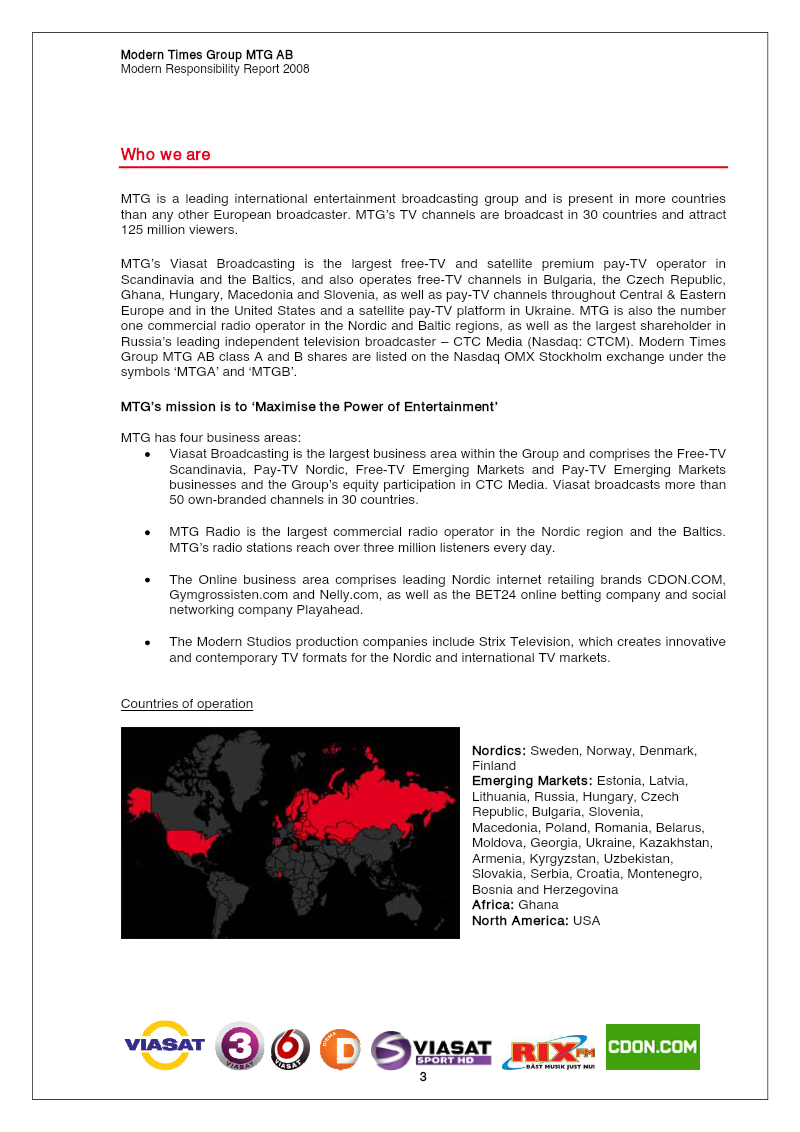
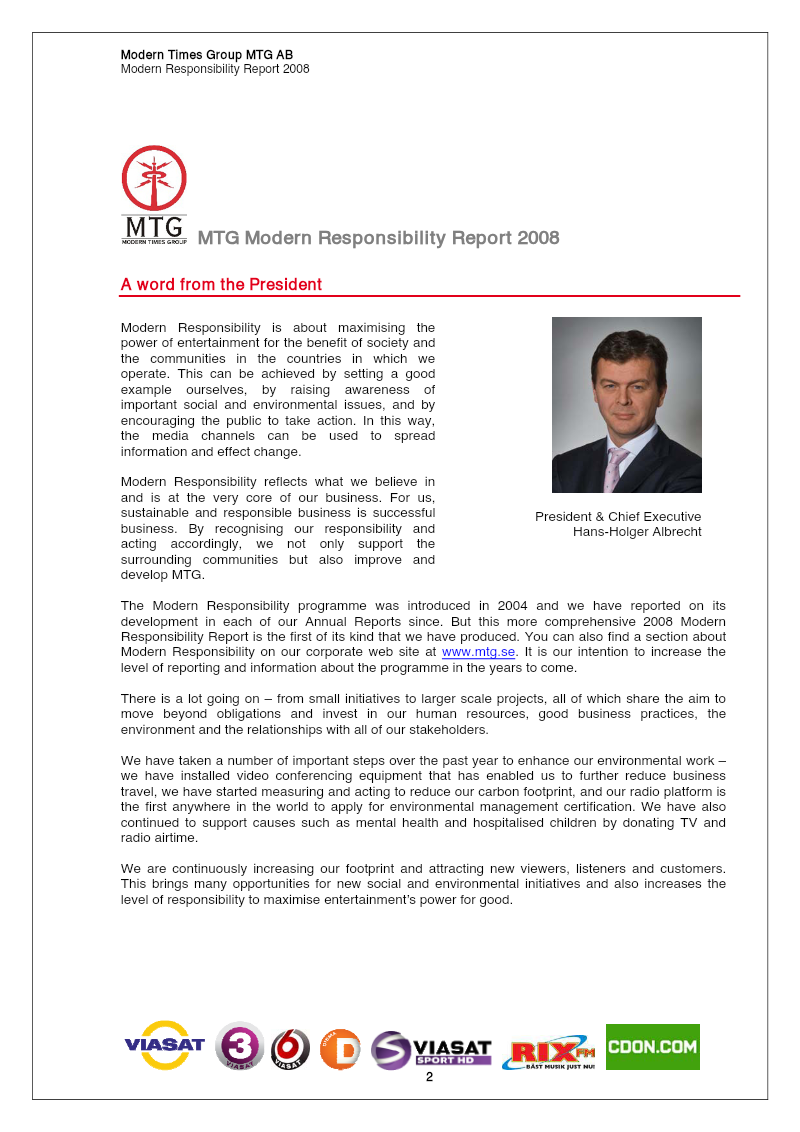
Modern Times Group’s Modern Responsibility programme, launched in 2004, is presented as a strategic framework for leveraging entertainment to create social and environmental value across the company’s global operations. The initiative is positioned as core to MTG’s mission to “maximise the power of entertainment,” with responsibility articulated through five measurable pillars: community, environment, colleagues, broadcasting standards, and marketing. In 2008 the group reached 125 million viewers in 30 countries, operating 70 brands across television, radio, online retail and production. Financial performance showed net sales rising to SEK 13.2 billion and operating income to SEK 2.6 billion, while basic earnings per share more than doubled to SEK 43.25. Employee data indicate an average workforce of 2 810, with 35 % female representation, a 22 % turnover rate and 461 training days delivered to 46 % of staff. Community engagement generated 78 million SEK of donated airtime and raised 56 million SEK for charities, while environmental actions reduced office energy use by 28 % relative to national standards and produced a total carbon footprint of 4 223 tonnes CO₂ (3.0 t per employee), calculated under the Greenhouse Gas Protocol with external verification. Stakeholder governance is overseen by senior management, a dedicated coordinator and a Modern Responsibility Committee, supported by local ambassadors in each market. Reporting draws on internal data, carbon accounting from Tricorona Climate Partner, and regular stakeholder feedback through surveys and focus groups. The 2008 snapshot underscores MTG’s expanding footprint, its commitment to ethical broadcasting, and its ambition to deepen responsibility reporting in subsequent years.
Modern Times GroupJan 2008



Report
Contract Walk-through: Effects on Quality of Life
Employment contracts within the video game industry frequently contain clauses that significantly undermine the quality of life for developers, often prioritizing corporate flexibility over individual well-being. Analysis of standard industry agreements reveals that provisions regarding working hours, intellectual property, and non-compete restrictions create a landscape where unpaid overtime is normalized and creative autonomy is restricted. These contractual frameworks often leverage the passion of developers to justify grueling schedules, particularly during "crunch" periods, without providing commensurate financial compensation or recuperative time off. The scope of these findings encompasses the global game development community as of 2006, focusing on the legal and cultural norms that define the relationship between studios and their employees. Data suggests that a substantial majority of developers work more than forty hours per week, with a significant portion exceeding sixty or eighty hours during peak production cycles. Furthermore, intellectual property clauses are often so broad that they claim ownership over a developer’s personal projects created outside of work hours, effectively stifling innovation and secondary income streams within the workforce. Non-compete and non-solicitation agreements further complicate the professional landscape by limiting mobility and bargaining power. These clauses often prevent developers from seeking better working conditions at rival firms or starting independent ventures, even after their employment has ended. By examining the intersection of legal language and daily operational reality, it becomes clear that systemic reform in contract negotiation is necessary to ensure the long-term sustainability of the industry. Improving transparency and establishing fair labor standards are essential steps toward mitigating burnout and retaining talent in an increasingly competitive global market.
International Game Developers’ AssociationJan 2006



Whitepaper
Best Practices in Quality Assurance and Testing
The 2003 analysis of quality assurance and testing within the interactive entertainment industry identifies a critical shift toward integrating testing processes earlier in the development lifecycle to mitigate escalating production costs and technical complexity. The primary thesis posits that quality assurance must evolve from a final-stage "bug hunting" exercise into a strategic discipline that informs design and engineering from the pre-production phase. By establishing standardized metrics and formalizing communication channels between developers and testers, studios can significantly reduce the volume of critical defects discovered during the high-pressure submission windows for console and PC platforms. Key findings emphasize that the most effective testing environments utilize a tiered approach, combining functional testing with specialized focus groups and automated regression suites. Data suggests that identifying a software defect during the design phase is exponentially less expensive than correcting the same issue during the gold master stage. The scope of these findings covers the global game development landscape during the transition to the sixth generation of consoles, focusing specifically on large-scale commercial projects where team sizes and asset counts began to demand more rigorous project management methodologies. Methodological recommendations center on the implementation of comprehensive test plans that align with specific milestone deliveries. Effective quality assurance requires a dedicated lead who possesses both technical proficiency and a deep understanding of game design principles to bridge the gap between creative vision and technical stability. The conclusions advocate for a cultural shift within the industry, where testing is viewed as a value-add service rather than a bottleneck. By adopting these best practices, organizations can ensure higher product quality, improved player retention, and more predictable release schedules in an increasingly competitive market.
International Game Developers’ AssociationJan 2003



Whitepaper
Best Practices in Human Resources 2003
The 2003 analysis of human resources within the global video game industry identifies a critical need for formalized management structures to combat high turnover rates and systemic burnout. As the industry transitioned from small, hobbyist-led teams to large-scale commercial enterprises at the turn of the millennium, the lack of standardized HR practices emerged as a primary threat to long-term sustainability. The core thesis posits that professionalizing recruitment, compensation, and workplace culture is not merely an administrative necessity but a strategic imperative for maintaining a competitive creative workforce. Key findings highlight that the industry suffers from a "crunch culture" characterized by excessive unpaid overtime, which leads to significant talent attrition after an average of only five to seven years. Data suggests that studios implementing structured performance reviews and transparent salary bands see higher employee retention and morale. Furthermore, the analysis emphasizes the importance of diversity and inclusion, noting that the workforce remains overwhelmingly male and young, which limits the creative breadth of the products being developed. Effective HR departments must move beyond basic payroll functions to become advocates for employee well-being and professional development. The scope of this assessment covers major development hubs in North America and Europe during the early 2000s, focusing on full-time developers at both independent studios and large publishers. Methodology relies on qualitative interviews with industry veterans and quantitative survey data regarding workplace satisfaction and compensation. Ultimately, the findings conclude that the maturation of the game industry depends on treating human capital with the same rigor as technological innovation, suggesting that studios which prioritize healthy work-life balances and clear career paths will outperform those relying on outdated, high-pressure management models.
International Game Developers’ AssociationJan 2003



Whitepaper
Best Practices in Promotion and Marketing
Effective game marketing requires a strategic alignment between developers and publishers that begins during the earliest stages of production rather than at the conclusion of development. Successful promotion relies on the creation of a comprehensive marketing plan that identifies a clear target audience, establishes a unique selling proposition, and coordinates messaging across various channels including public relations, advertising, and retail partnerships. By integrating marketing considerations into the design process, teams can ensure that the final product possesses the "hook" necessary to stand out in an increasingly crowded global marketplace. The scope of these industry standards covers the entire lifecycle of a game’s promotion, from pre-production through post-launch support. Key findings emphasize that the most successful titles utilize a multi-tiered approach to community management, leveraging early adopters to build organic momentum. Data suggests that consistent brand identity and high-quality visual assets are critical for securing favorable media coverage and retail placement. Furthermore, the analysis highlights the importance of budget allocation, noting that marketing expenditures often equal or exceed development costs for major commercial releases. Methodological insights derived from industry case studies and expert consensus indicate that timing is a decisive factor in campaign efficacy. Strategic "beats" must be scheduled to maintain consumer interest without exhausting the promotional budget too early. The conclusions stress that while traditional media remains influential, the rise of digital communities and direct-to-consumer communication represents a fundamental shift in how games are discovered and purchased. Ultimately, the synergy between a game’s core mechanics and its external messaging determines its commercial viability and long-term brand equity.
International Game Developers’ AssociationJan 2003