
Wolfenstein
GameBy Raven Software · Released Aug 18, 2009
Documents about Wolfenstein
Gaming is not Doomed (we just have to learn from it) | Games For Breakfast
The legacy of the 1993 title Doom serves as a critical blueprint for the modern gaming industry, illustrating the enduring value of accessible distribution, community-driven modding, and high-quality, transparent product design.
- A Brazilian court ruling allows individuals to sue corporations for lost account access, resulting in a precedent where Microsoft was ordered to restore access within 50 days and pay $400 in damages.
- The gaming industry should prioritize the 'Doom' model of confidence, which involved providing a high-quality, substantial portion of the game for free to build a household name and earn consumer trust.
- Relying solely on cloud storage for data is a significant risk, and users should maintain physical, redundant backups of important files on hard disk drives to avoid total data loss.

Xbox To Cut 3,200 Jobs, Get Rid Of Five Studios
Microsoft has initiated a major restructuring of its Xbox division, characterized by the elimination of 3,200 positions and the divestiture of five studios.
- Microsoft is cutting 3,200 jobs at Xbox, representing approximately 20% of its 16,000-person workforce, with 1,600 layoffs occurring immediately and the remainder scheduled over the next several months.
- Xbox is divesting from five studios: Ninja Theory and Undead Labs are being sold, while Double Fine and Compulsion Games will spin off into independent, management-owned entities with rights to their own IP.
- Arkane is entering a consultation process regarding its future due to French labor laws, as part of a broader strategy to move away from the 'limited integration' model of studio management.
How To Make A Horror Game (Fast, No Modeling)
The process of developing a 3D horror game without traditional 3D modeling skills relies on leveraging modular design, grid-based layout tools, and royalty-free assets.
- Use Unity’s ProBuilder package to construct environments through modular block-outs, ensuring consistent scale by adhering to a strict one-meter grid system.
- Maintain visual consistency across disparate royalty-free assets by applying a unified color palette and standardized lighting throughout the environment.
- Generate professional-grade material maps—including normal, height, and roughness—from flat photographic references using tools like Materialize.
Mind-Blowing Recognition from Wolfenstein Art Director!
The development of a new game project often begins with a period of creative chaos, characterized by an influx of ambitious ideas and a lack of structural focus.
- The project transitioned from a chaotic, unfocused state to productive development after the two-month mark by implementing structured milestone planning and clear definitions of success.
- Defining a Minimum Viable Product (MVP) and establishing specific 'definition of done' criteria for short-term, two-week iterations were the primary drivers of consistent progress.
- Initial development phases suffered from 'feature creep' and lack of coordination, where team members prioritized individual tasks like destruction systems over core system requirements.
Living the Teenage Dream: Bringing Wolfenstein Back!
The development of a modern project inspired by the classic Wolfenstein franchise serves as a case study in collaborative game design, emphasizing the synergy between artistic vision and technical execution.
- The project originated from a collaborative partnership between an artist and a technical artist who met at a co-development studio around 2019-2020 while working on VR projects.
- The collaboration was solidified by a shared focus on performance optimization, a critical requirement for the high-demand rendering environments of VR development.
- The project's rapid initiation was characterized by a 3.5-hour brainstorming session that immediately resulted in the creation of a Git repository and a formal project setup.

The Indiana Jones game developer has a fight club in its basement
MachineGames, the Swedish developer behind the Wolfenstein series and Indiana Jones and the Great Circle, operates with a distinct studio culture defined by a commitment to immersive, first-person storytelling and a collaborative, hobbyist-driven environment.
- MachineGames is developing 'Indiana Jones and the Great Circle' using a hybrid perspective model that blends first-person immersion with third-person transitions to maintain character visibility.
- The studio’s strategic development for the 'Indiana Jones' title is shaped by the Game Pass ecosystem, prioritizing strong onboarding and accessibility to serve a broad, diverse player base.
- MachineGames utilizes DLC as a core operational tool to manage production workflows, allowing teams to maintain momentum and refine mechanics after the primary project concludes.

Games That Made Us
The recent induction of four titles into the World Video Game Hall of Fame—Williams Electronics’ Defender, Rare’s GoldenEye 007, id Software’s Quake, and Bandai’s Tamagotchi—highlights the industry’s ongoing effort to codify historical significance through metrics of icon status, longevity, geographical reach, and influence.
- Triple Dot has acquired AppLovin’s mobile gaming portfolio for $800 million, a deal encompassing 10 global studios and 2,500 employees across 23 cities.
- The acquisition is valued at a low multiple of 0.6 times revenue and 3.5 times EBITDA, reflecting a high-risk strategy for the buyer.
- AppLovin is divesting these assets to prioritize its high-growth advertising business, while Triple Dot faces the operational challenge of managing live-service games and in-app purchases without prior experience in those areas.

This Is Why Your Indie Game Will Fail
The primary driver of commercial success in the video game industry is the presence of a unique, distinctive hook that differentiates a title from existing market offerings.
- Commercial success in the modern game industry is primarily driven by a unique, distinctive hook that differentiates a title from existing market offerings.
- Games lacking a clear, defining hook are considered derivative and face a significantly higher risk of failing to achieve viral success or financial viability.
- A game's defining hook does not need to be present at the start of development; for example, the iconic bullet-time mechanic in Max Payne was only introduced halfway through production.

Wolfenstein vs Call of Duty - The Need for “B” Games - Extra Credits
The gaming industry faces a significant disparity in how mainstream titles address sensitive historical and political themes.
- High-budget AAA franchises like Call of Duty often sanitize sensitive historical events, such as the Holocaust, to maintain broad appeal and avoid controversy.
- The 'B-game' model, exemplified by titles like Wolfenstein II: The New Colossus, uses lower budgets and reduced corporate oversight to explore transgressive themes like fascism and racism.
- B-games function similarly to historical B-movies by operating on the industry fringes to push boundaries in political discourse and violence that mainstream productions currently avoid.

The Early Days of id Software
The founding of id Software marked a pivotal shift in PC gaming, driven by a breakthrough in smooth, pixel-by-pixel scrolling that enabled the creation of the Commander Keen trilogy.
- Between the early 1990s and mid-1990s, id Software produced 28 games in five and a half years, including industry-defining titles like Wolfenstein 3D, Doom, and Quake.
- The studio pioneered the modern game engine licensing model, which was catalyzed by a technical breakthrough in smooth, pixel-by-pixel scrolling used in the Commander Keen trilogy.
- Development efficiency was maintained by a strict policy of not reusing code between major projects, ensuring every title was built on a fresh, optimized foundation.
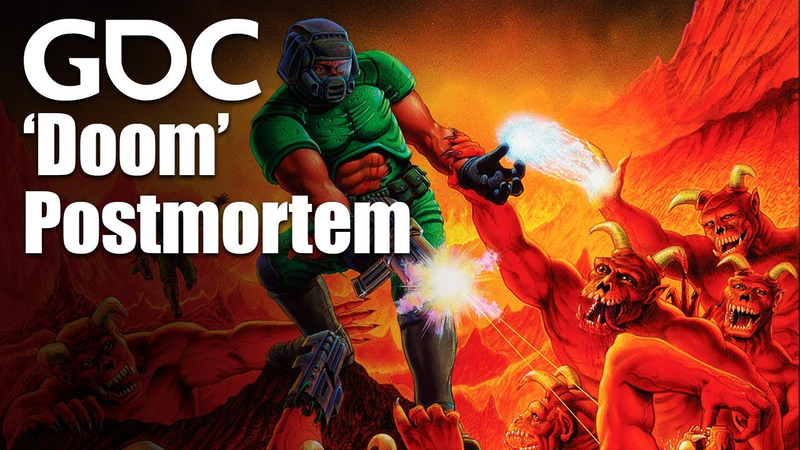
'Doom:' A Classic Game Postmortem
The development of Doom, initiated in late 1992, represents a pivotal evolution in first-person shooter design, transitioning from the rigid, military-themed architecture of its predecessor, Wolfenstein 3D, toward a more abstract and atmospheric aesthetic.
- Released on December 10, 1993, 'Doom' revolutionized the first-person shooter genre by shifting from the rigid architecture of 'Wolfenstein 3D' to complex, non-orthogonal environments enabled by Binary Space Partitioning trees.
- The development team prioritized high-speed, skill-based gameplay over complex narrative or inventory systems, utilizing NeXT workstations to achieve technical performance that exceeded contemporary hardware limitations.
- The project was defined by a lack of formal pre-production and significant internal creative friction, which led to key personnel changes and the abandonment of external collaborations like a proposed 'Aliens' project.