Transcript
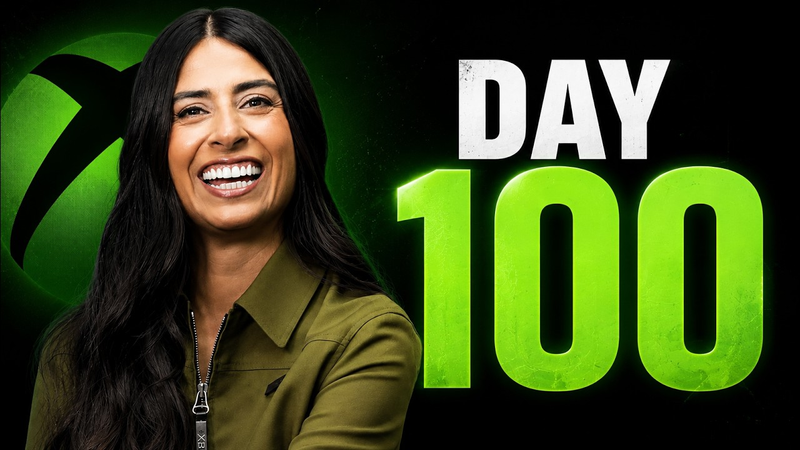
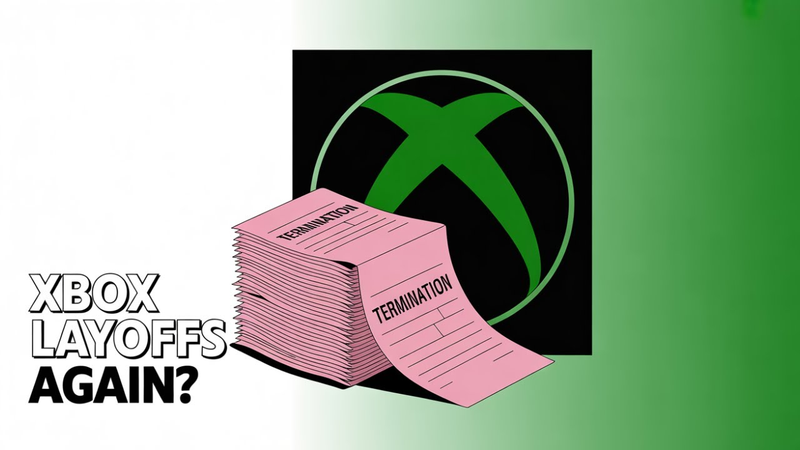
Hello. Today, after several weeks of rumors, we are finally seeing what is actually going to happen at Xbox today and over the next few months. Asha Sharma wrote an email, Asha Sharma, CEO of Xbox, wrote an email to staff this morning saying that she is planning to cut 3,200 jobs, 1,600 cut today, Monday, July 6th, and another 1,600 over the next few months. She is also divesting from four studios and planning to divest from a fifth. She, uh, under Xbox, Xbox is going to sell Ninja Theory, the makers of Hellblade and the upcoming game Senua, and Undead Labs, the makers of State of Decay and the upcoming State of Decay 3. Both of those games were just showed off at their summer showcase a few weeks ago. And, um, two other studios are going to spin out and become independent. Double Fine, makers of Psychonauts and Keeper
and Killn and the phenomenal documentary PsychOdyssey, and Compulsion Games, makers of, uh, We Happy Few and South of Midnight. Those two are going to spin off and become privately owned independent studios that are now owned by their management. Xbox, as a result of this, is going to give those two studios back the rights to their IP, as well as some runway to, um, help them go on get going as they go independent. Um, Xbox is also saying that they plan to keep working on and finish Senua and State of Decay 3. As for the fifth, the fifth is Arkane, as had been rumored. Um, Xbox is planning to do something with Arkane, uh, but because of stringent French labor laws, that could not happen right away. And so, Xbox is entering the process that's called consultation, where essentially they have a conversation with the council, the work council at Arkane, saying, "Hey, let's review our strategic options. Are you going to sell Are we going to sell you? Are we you going to
spin out? What is the future going to look like?" Um that future will likely continue involve the studio continuing and continuing to work on their game, Blade, but it will not be part of Xbox anymore. Um you might have seen a lot of rumors over the last couple of weeks about various studios being on the chopping block. Um this is what is actually happening. Um and if you have read Bloomberg, I mean, we have reported on a lot of this. Uh we reported a few weeks ago that um Compulsion and Double Fine and Ninja Theory were were um in negotiations with Xbox. And there's an important distinction here. There has been a lot of stories out there, a lot of reports, a lot of videos, whatever, um that these studios had been closed. That was not true, and I tried to make it clear on YouTube, on Reddit, on ResetEra, on Bloomberg that those studios were not closed. Um nothing had actually happened yet. They were in negotiations to avoid closure, ideally by either spinning out or selling, which is what happened. There are also going to be major job cuts across the entire organization. Um Xbox Game Studios is going to see big cuts. ZeniMax is going
to see big cuts. Activision Blizzard is going to see some cuts, although fewer than ZeniMax and XGS. Um so, let's go through it. I'm going to I'm going to read a couple of lines from Asha Sharma to try to understand why this is happening and how this is all happening. Um some some pretty candid language in Asha's email to staff this morning, in Sharma's email to staff this morning, quote, "Our business today is not healthy. We are operating at margins that are three to 10 times lower than comparable platform and publishing businesses." Um going to skip over a little bit. "We must reset Xbox." Um she talks a little bit about the previous strategy under former regime, under Phil Spencer, um who since 2018 has been buying up all these studios. And she writes that, "We have learned that we are not the best home for every type of studio. In a typical year, we lost 64 cents for every dollar we invested." She talks about how um Xbox is not the best place for all of these independent game studios to be homes. It's not the best home for them.
And instead, they are going to quote, help independent help independent creators succeed by providing open development tools and audiences to realize their vision. There's also some other various restructuring that she mentions. Mojang and King are going to report directly to Asha Sharma. She talks a lot about the platform teams being too big and bloated with management layers and they're going to be doing a lot of cuts there. ZeniMax, as I mentioned, is going to be impacted pretty significantly. They're going to be restructured to a franchise-first model. They're basically going to be focusing on their biggest franchises, which you might have seen rumors about it just being Fallout and Elder Scrolls. That also is not true. A lot of the rumors have not been true. They are going to focus on Fallout, Elder Scrolls, Quake, Wolfenstein, and Doom. So, all five of those franchises are going to be a big focus for ZeniMax moving forward. There's other kind of operational changes, people changes. I won't get into all the specific details. And she writes, I'm going to quote again, "These changes are about a bigger for future for Xbox, not a smaller one."
Skipping over a couple lines, "This year we'll invest as much in Xbox as we ever have, but we'll invest with greater focus, greater discipline, and greater clarity, all in service of making Xbox where the world plays and creates." Yada yada yada, more corporate stuff. She wants Xbox to reach 1 billion players per day. So, what does all this mean? How do we get here? So, how do we get here? I answered that in a previous video. I'll throw that in the show notes. And by the way, all of the all of my coverage on this is also going to be on Bloomberg, so make sure you check that. I'll provide the links in the show notes as well. Make sure you click on that story and read the story that I published on Bloomberg this morning about what is going on at Xbox. Um short version of how we got here is that Phil Spencer doubled down on Game Pass, which is Xbox's version of Netflix for video games, their catalog service where you pay a monthly fee and you get access to a bunch of video games as part of that. In order to bolster that lineup and see continued growth, he went on a shopping spree and bought a bunch of
these studios including the four that are getting divested and also ZeniMax, the publisher behind Arkane. And he was wanted to add all of those games to Game Pass and then went on to buy Activision and add Call of Duty to Game Pass. That strategy did not pay off and Game Pass did not grow to the expected at the expected rate. Game Pass plateaued, did not see the growth that he wanted. He wanted it to reach 100 million users, instead it capped out around 30-35 million users according to estimates. They stopped revealing exactly how many people were subscribed to Game Pass, which as I mentioned before, usually when a company doesn't reveal numbers anymore, that is a bad sign. And of course, this is all coming amidst the landscape where the Xbox hardware has been in decline, has been struggling a lot over the last decade, and that is before this current chip crisis that has led to just complete devastation, a cataclysmic chip crisis thanks to AI where hardware prices are skyrocketing,
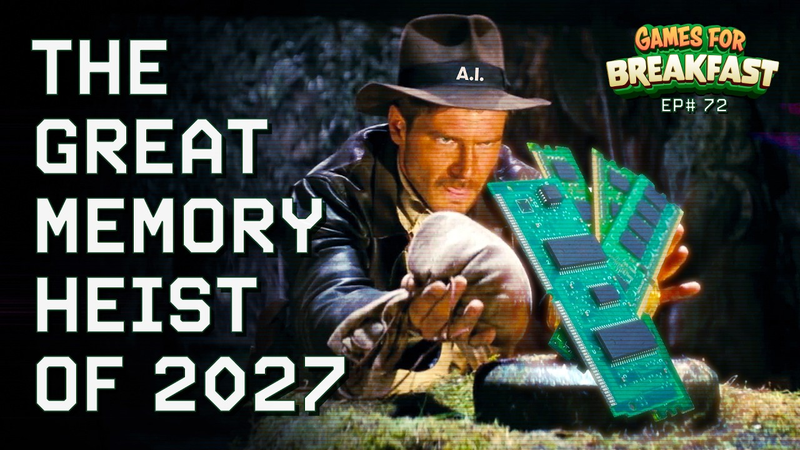
availability is becoming a serious problem, and as Asha Sharma said in a previous note, not today but a few weeks ago, they are expecting to pay in 2027 five times as much for memory and storage as they did in 2024. Five times as much for memory and storage, that is pretty bonkers. So, this is a pretty crazy time. There the one thing that is worth noting about this announcement that I think is is particularly interesting, an interesting decision, I'll say that much, is that there are 32 jobs being cut in Xbox, but only 1,600 of them are being cut today. The other 1,600 include the studios that being are being divested from and also jobs that are going to be eliminated over the next 12 months, over the rest of the fiscal year. Um in other news, in other words, if you are still at Xbox or if you are still in one of these orgs, um and you are not laid off today, you don't know what's going to happen. You don't know
if you are going to be part of that next wave of layoffs that is going to happen over the next few months, which is a really difficult position to be in. It is really tough to be working on um any part of any organization, let alone creative endeavors. It's really hard to make great art, to make great games when you are constantly worried about losing your job. It's really hard to put your all in and be willing to put in maybe extra hours or put in all of your energy into something without knowing if you're still going to have a job next month or next week. Um so that is is going to be hanging over a lot of people in the coming weeks and months. And then of course we have 1,600 jobs being lost today all across the organization. So that 3,200 comprises about 20% of Xbox. Xbox was about 16,000 employees. They are now going down to about, let's call it 12 12,800, something like that. Um still a big organization, but getting significantly smaller. And this is an organization that had gotten huge um largely due to this spending spree that
um the previous regime went on. Activision Blizzard alone was, I believe, close to 9,000 people that were added to this organization back when that deal closed a few years ago. So what does this mean for the future? Well, clearly Xbox is not going to be in the business of making independent style games anymore, games like what Double Fine makes, what Compulsion makes. Um and clearly they are not that interested in single-A, triple-A, double-A, whatever you want to call it, the kind of that kind of middle tier of games that has not really led to big results for them and it has not led to growth, even though it had has has led to some some critical acclaim. Um last year's Keeper from Double Fine uh was nominated for some awards, won some awards. Um wasn't didn't didn't get them the most like top rave reviews from critics. I thought it was pretty cool as as kind of an interactive piece of art, but um but but was uh generally liked and acclaimed, I would say. Um South of Midnight, same thing. Again, not universally acclaimed by every single
critic. Um you look at that Metacritic score, it's not in the 90-plus range or anything like that, but it won some awards and was uh well received. I think it was one of those games where like if you like people who loved it really loved it. It really spoke to them, which I think is is an interesting like I think that's that's a good thing for art to be a little bit polarizing and maybe not appeal to everybody, but but to appeal very much to uh uh the people who it really speaks to. Um so, that stuff is not going to happen anymore. Um we are going to see a pivot to focus on some of the biggest franchises. Now, that doesn't mean they're not going to be making new things, and they are incubating some new IPs. Um most notably, one that comes to mind that I think they have been pretty public about is that Activision um has a uh uh game uh in development that is under a studio called Elsewhere in Poland. Um I believe a lot of it is XCD Projekt Red people, and they've said that it is an unannounced new IP RPG that they are working on. So, Xbox still is investing in some new IP. It's just they are not
going to invest in that kind of independent double-A model anymore. They're focusing on big franchises, and that's what we're seeing, especially at ZeniMax, where we're going to see a really big overhaul. Um and I wouldn't be surprised if they start focusing more on trying to get more Fallout games out on a more regular cadence, trying to get more Elder Scroll games out on a more regular cadence, because those are two franchises that are humongous, but have not really been what executives like to call quote exploited in the way that I don't know, an Activision or another studio might uh might use them, might exploit them. And I mean I think any any kind of objective observer might look at something like Fallout and say, wait a minute, there hasn't been a new single-player Fallout game since 2015, there hasn't been any new Fallout game since 2018 despite this hit show on Amazon that has been going for the last couple of years. What is going on here? Obviously there's this reported remaster that's going to hit at some point in the
near future, but aside from that, the lack of new Fallout games I think is pretty striking and it makes sense that they would want to invest in more of that stuff, focus more on these big franchises. Worth noting once again that despite rumors you might have seen on the internet, Xbox still is investing in Doom and Wolfenstein and Quake, so it is not just Fallout and Elder Scrolls. Elder Scrolls of course, that is Elder Scrolls 6 is the next big game from Bethesda Game Studios. Don't expect to see that for a little while still. I think they've been very clear about that, but that is another one that they are seeing as a big bet moving forward. The other big part of this is Minecraft. So what's happening with Minecraft is interesting. So Minecraft, as I mentioned, the studio behind Minecraft, Mojang, is going to be reporting directly to Asha Sharma and it seems like Xbox wants to invest more in the Minecraft ecosystem. Minecraft has been extremely successful, by far the most successful of the acquisitions that the Xbox regime has made over the last 15 years. Minecraft
and Mojang was actually the first one. They bought Minecraft in 2014. It was one of the first moves done under the Phil Spencer regime after he took over. I believe they bought it for around two and a half billion dollars, which was a steal in retrospect because that game has continued to perform extremely well and make a lot of money for the company over the last few years. Plus it's got its own movie tie-in, which also made a billion dollars at the at the box office, and there's a sequel coming, so huge franchise. Um I wouldn't be shocked if we see Xbox start looking at Minecraft as its own version of Roblox and invest in that to try to create its own sort of platform, its own sort of ecosystem to take on something like Roblox. I don't know how feasible it is to start adding game creation tools in something like Minecraft, which is essentially if you're not familiar, I imagine most people are, but Minecraft is digital Legos. Um
it definitely it has some interesting kind of mechanisms that you can play around with. It has computers that you can build. People have done all sorts of crazy stuff using the computer system built-in computer system within Minecraft over the years. Um I don't know how feasible it would be to turn that into a game-making system, but that could be what they are trying to do. I don't know if that's specifically what they're going to try to do, but what they are definitely doing is investing more in it as a platform, which is why Mojang is going to report directly to Asha Sharma rather than having that layer of middle management. Um previously, I believe they had reported to Matt Booty, who then reported to Asha Sharma. Now, um they're cutting cutting cutting other people out of that equation, cutting the studio's chief out of that equation. Um worth noting, by the way, Matt Booty is not mentioned in Asha Sharma's email today, although there are a couple other people mentioned. She mentions that um a woman named Helen Chiang, who was actually who actually ran Mojang for a while, um is being promoted to the chief operating officer at Xbox um and given a
bunch of new responsibilities overseeing P&Ls, etc. Um another thing that they're mentioning Oh, yeah, I mentioned, by the way, King is also going to report directly to Asha Sharma. Candy Crush, I think they also view as a platform that has its own kind of like potentials for uh what the what for for the future and and future investment and whatnot. Again, I think that a lot of this is about investing more in the biggest platforms and the biggest franchises. One other thing I think is worth noting as part of this, and trust me there will be more to say in the future as we see how this all unfolds, as more information comes out, as more reporting comes out, um is that uh I'm going to read something. Uh Asha Sharma writes in this memo, quote, "As Xbox grew our headcount, we became more fragmented. Team studios and functions off- often operate independently, and it became harder to work towards a shared goal, make the right tradeoffs, and get things done." Um essentially, what happened under Phil Spencer uh is that the studios that were purchased, a lot of them became what what what was known as limited integration studios. In other words, they were given a lot of autonomy
to make their own decisions, um decide what projects they wanted to make. They still had to go through a green-lighting process with the rest of Xbox, but they got a lot of power to just kind of run their businesses in the way they saw fit. They didn't want to change their cultures. You buy a company like Double Fine, you buy it because you want what Double Fine does, not because you want to integrate Double Fine into some Xbox borg and and change its culture and whatnot. Um it looks like that is going to change, and part of what Asha Sharma is aiming for here is more centralization, less independent, less autonomy among studios, more um kind of central businesses, more quote-unquote accountability, um more decisions that do have to go through uh the the overall chain, and ultimately lead up to Asha Sharma and her leadership team, and I suspect that that will lead to some uh a very different sort of Xbox. Um it remains to be seen, and we'll see in the coming months and years what that ultimately means for that uh their ability to release the games and um make an organization that
people want to work for, but um but that's that's what the new strategy is. Um One final thought, it's clear that something needed to change needed to change at Xbox. Xbox was not headed in the right direction. Xbox was a struggling business. It was not uh attaining the growth that it needs in order to succeed under a company like Microsoft. Um this is the big swing, the first of the big swings, the big reset as Ashish Sharma calls it. And um I think no matter what you might see on the internet, whether it's people celebrating or doom and gloom, I think the the actual reality here is we do not know how this is going to play out in the medium to long-term future. We do not know what this is going to look like for Xbox's ability to make games and sell hardware and reach people and make players happy. Um I think that's uh it would certainly uh they certainly could could use some more hit games, and if it leads to that, um I think players will eventually get to celebrate, but right now we do not know. The only thing
we do know is that a lot of people are losing their jobs. Um they're going heading into a market that is extremely tumultuous and extremely difficult to find work in, and it is going to be a really difficult time for 1,600 people today and another another 1,600 over the coming months as we enter Microsoft's next fiscal year. So, do I I I guess I I will ask one thing, which is that out there, just do have a little bit of empathy for the people who are losing their jobs and are entering a market where it has been very difficult to continue to find work in gaming even as much as you might want to. All right, there will be more more to come. Make sure you check out my work on Bloomberg and check out the previous video I did. I'll link that in the show notes if you want to see how we if you want to know more about how we got here and how Xbox got to this point. Um I will see you next time.
Auto-generated captions from YouTube — names and numbers may be misheard.
Key insights
7 takeaways · ~3 min read- 01Microsoft is cutting 3,200 jobs at Xbox, representing approximately 20% of its 16,000-person workforce, with 1,600 layoffs occurring immediately and the remainder scheduled over the next several months.
- 02Xbox is divesting from five studios: Ninja Theory and Undead Labs are being sold, while Double Fine and Compulsion Games will spin off into independent, management-owned entities with rights to their own IP.
- 03Arkane is entering a consultation process regarding its future due to French labor laws, as part of a broader strategy to move away from the 'limited integration' model of studio management.
- 04CEO Asha Sharma stated the business is currently unhealthy, with operating margins three to 10 times lower than comparable businesses and a historical loss of 64 cents for every dollar invested.
- 05The company is pivoting to a 'franchise-first' model for ZeniMax, focusing resources on core properties including Fallout, The Elder Scrolls, Quake, Wolfenstein, and Doom.
- 06Game Pass growth has plateaued at an estimated 30–35 million users, failing to reach the 100 million user target that drove the previous strategy of aggressive studio acquisitions.
- 07Mojang and King will now report directly to CEO Asha Sharma, bypassing previous layers of middle management to focus on scaling their respective platforms.
Ask AI about this video
Cite this video
Citation
Generating citation…




















Comments