Vector
Game
Documents about Vector

Unity's $81 BILLION Opportunity: The Mobile Gaming War Nobody's Talking About 🎮
Unity is currently undergoing a strategic pivot to stabilize its financial position by prioritizing operational efficiency and scaling its advertising monetization segment.
- Unity is pivoting its business model to prioritize the 'Grow' division, aiming to transform its core engine business into a strategic loss leader that fuels a high-margin advertising platform.
- Unity is directly challenging AppLovin’s near-monopolistic dominance in mobile ad-tech by leveraging its massive market share and proprietary engine-level data to improve user acquisition and in-app purchase targeting.
- The company is integrating first-party engine data with advanced tools like its Vector technology to provide developers with more effective, data-driven monetization solutions.

"Unity's AI AD Platform Vector is Total Vaporware"
Unity’s recent announcement of its new artificial intelligence advertising platform, Vector, is characterized as a strategic misdirection intended to distract investors from poor quarterly guidance.
- Unity’s 'Vector' AI advertising platform is characterized as a strategic misdirection intended to stabilize stock prices following poor quarterly guidance rather than a functional technological breakthrough.
- Unity significantly trails industry leader AppLovin, which successfully captured market share by leveraging fingerprinting techniques after the deprecation of IDFA.
- The platform faces a 'garbage in, garbage out' data deficit because major third-party developers are unlikely to grant Unity access to the proprietary user data required to train competitive AI models.

TWIG #320 Unity’s Fate, Fake Ads, Loot Boxes & GTA’s UGC Revolution
Hasbro’s digital gaming division has achieved notable success through a licensing-heavy strategy, exemplified by the $112 million contribution from Monopoly Go, which fueled a 22% year-over-year growth.
- Hasbro’s digital gaming division grew 22% year-over-year, driven largely by a $112 million contribution from the licensed title Monopoly Go.
- The Epic Games Store generates $1.1 billion in annual revenue, though this figure is primarily sustained by Fortnite integration rather than third-party game sales.
- Unity is struggling to pivot to its Vector ad-tech platform due to the sunsetting of IronSource, loss of key architectural talent, and persistent data quality issues.
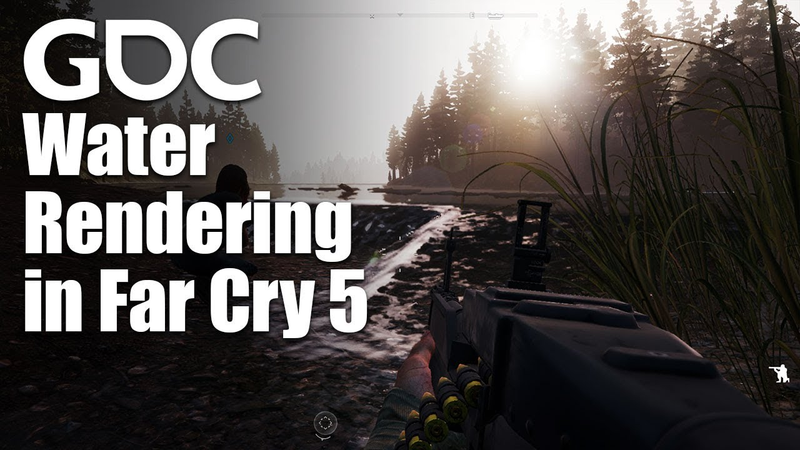
Water Rendering in Far Cry 5
The modernization of water rendering in Far Cry 5 centers on transitioning from manual, sector-based placement to a procedural, spline-based architecture.
- Far Cry 5 utilizes a unified water system that replaces previous fragmented methods with a single engine function, handling water quadtrees, streaming height maps, and dynamic water levels for rivers, lakes, and waterfalls.
- The rendering pipeline employs screen-space tessellation using a 16x16 tile grid, where constant density is achieved by mapping instance IDs to draw calls via an indirect arguments buffer.
- To optimize performance, the team implemented a distance-based Level of Detail (LOD) approach for surface shape calculations, reducing texture fetches from nine per pixel for nearby water to three per pixel for distant water.
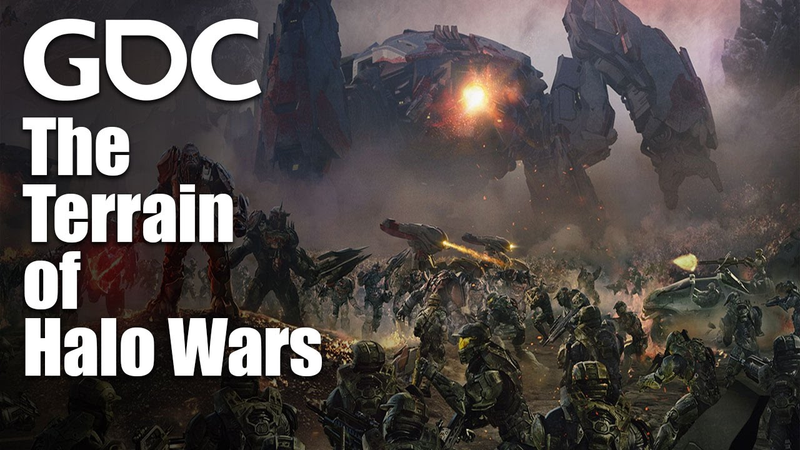
The Terrain of Halo Wars
The development of Halo Wars marked a significant technical evolution in real-time strategy design, driven by the need to transition from legacy engine architectures to a custom environment capable of running on Xbox 360 hardware.
- The development team utilized Vector Field Terrain to enable per-vertex displacement across three axes, allowing for complex organic structures like overhangs and bridges that traditional height-field systems could not support.
- To maintain performance on Xbox 360 hardware, the engine decoupled high-fidelity visual terrain from a low-resolution, CPU-optimized height field to ensure efficient physics calculations and ray casting.
- Memory usage was restricted to a 14MB footprint by leveraging DXT compression and a custom GPU-based virtual texturing cache.
Companies behind it

As the documents state it.