Super Mario
Game
Documents about Super Mario

Six Months Financial Results Briefing: Fiscal Year Ending March 2018
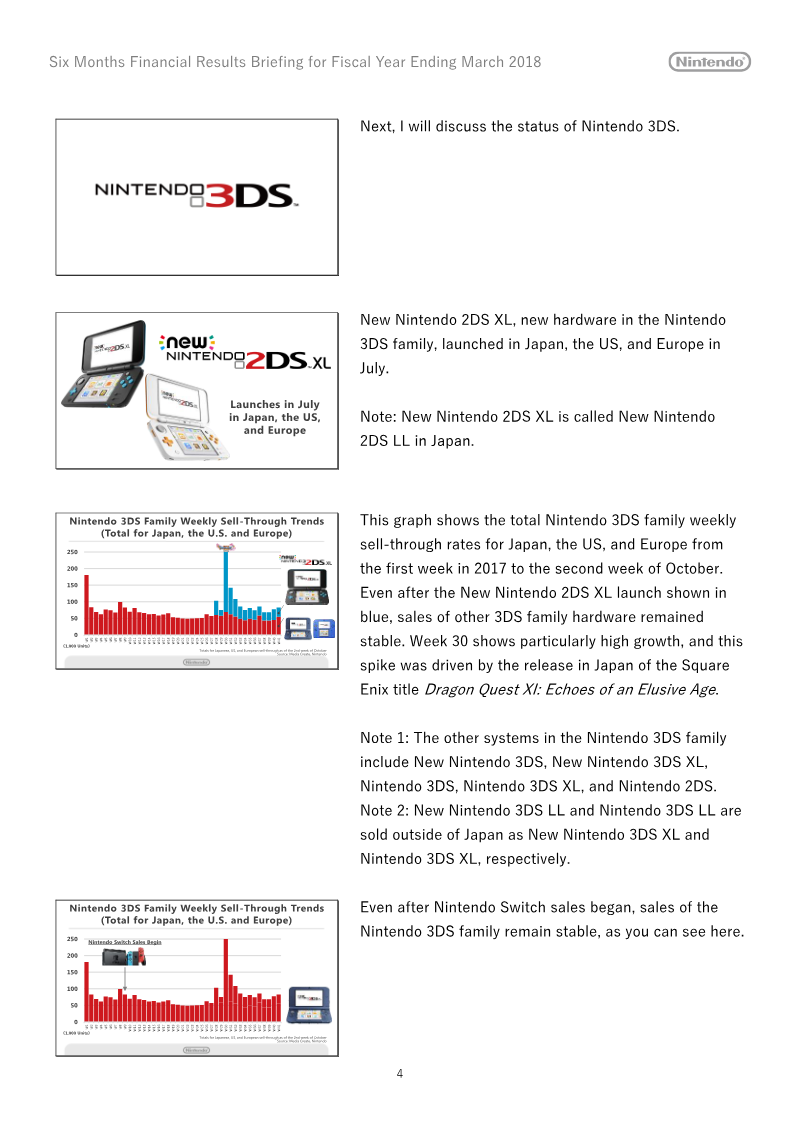
The financial results briefing for the six-month period ending September 2017 outlines Nintendo’s strategic progress across three core pillars: the expansion of its smart-device business, the maintenance of the Nintendo 3DS platform, and the growth of the Nintendo Switch installed base.
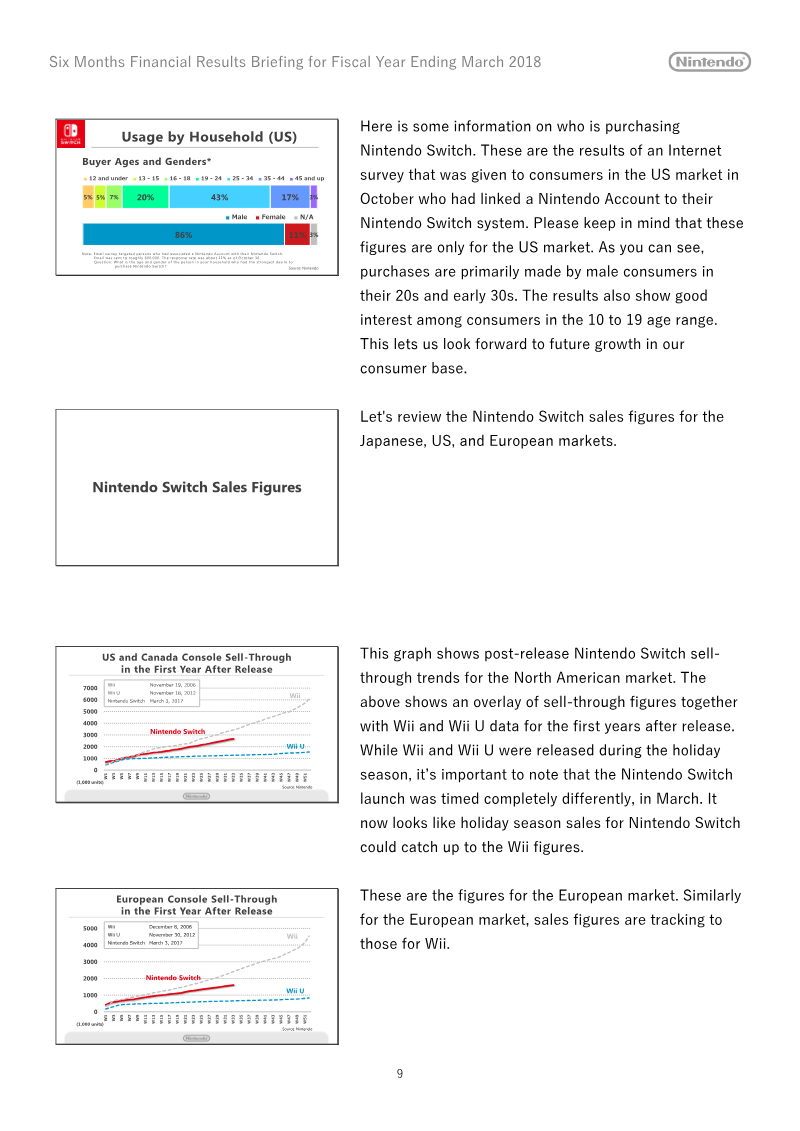
- Nintendo revised its fiscal year 2018 hardware sales projection for the Nintendo Switch to 14 million units, targeting a cumulative sell-in of over 16 million units within the console's first year.
- Super Mario Odyssey achieved rapid commercial success, recording over 2 million units in global sell-through within three days of its October 2017 release.
- The smart-device business saw significant engagement, with Super Mario Run reaching 200 million downloads and Fire Emblem Heroes showing increased overseas sales.
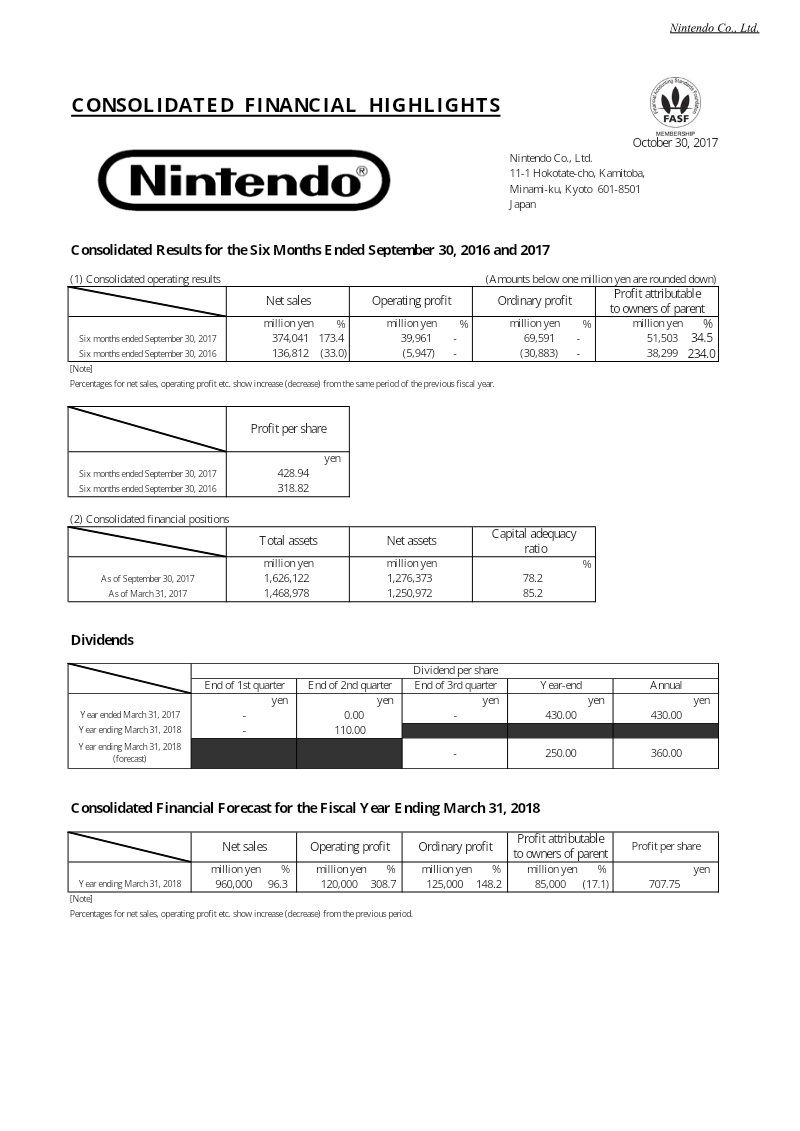
Nintendo Consolidated Results for the Six Months Ended September 30, 2017
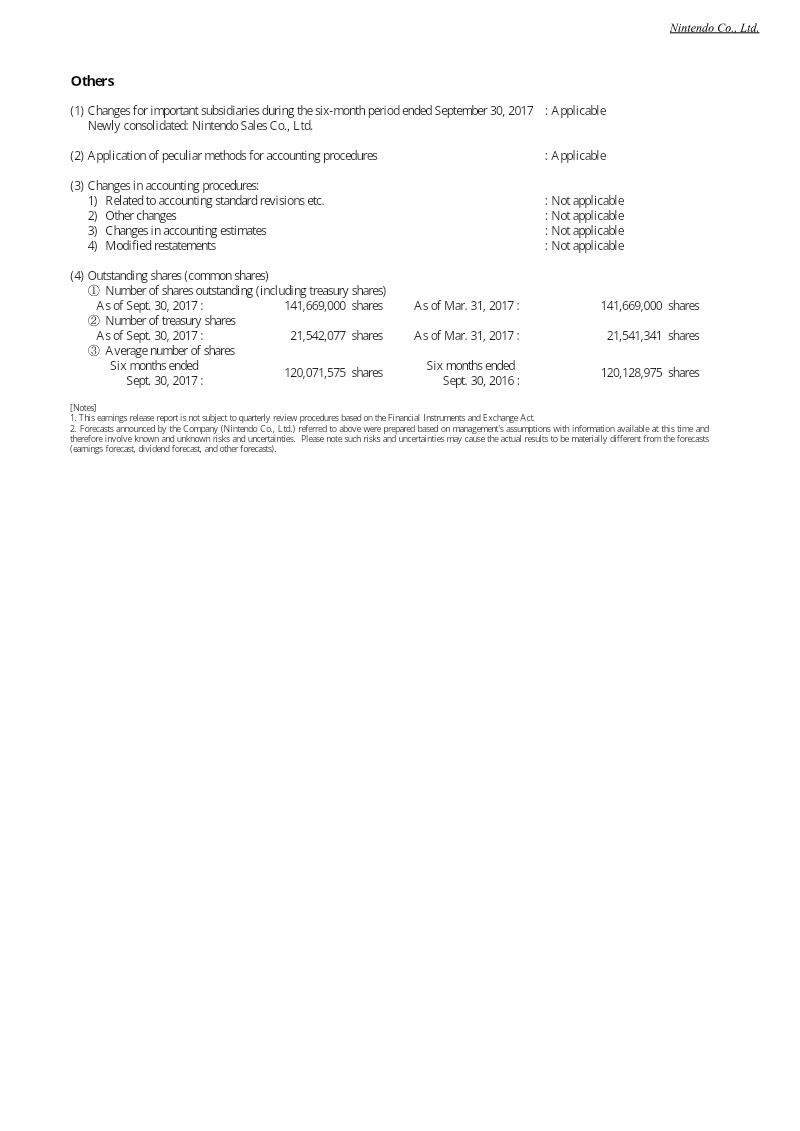
Nintendo’s consolidated financial results for the six months ending September 30, 2017, demonstrate a significant recovery and growth trajectory driven primarily by the successful market adoption of the Nintendo Switch platform.
- Nintendo achieved a significant financial turnaround for the six months ending September 30, 2017, with net sales rising 173.4% to 374.0 billion yen and an operating profit of 39.9 billion yen, compared to a 5.9 billion yen loss in the prior year.
- The Nintendo Switch drove this performance with 4.89 million hardware units and 22.02 million software units sold, supported by key titles including Splatoon 2, Mario Kart 8 Deluxe, and ARMS.
- Nintendo revised its full-year forecast for the period ending March 31, 2018, to project 960 billion yen in net sales and 120 billion yen in operating profit.
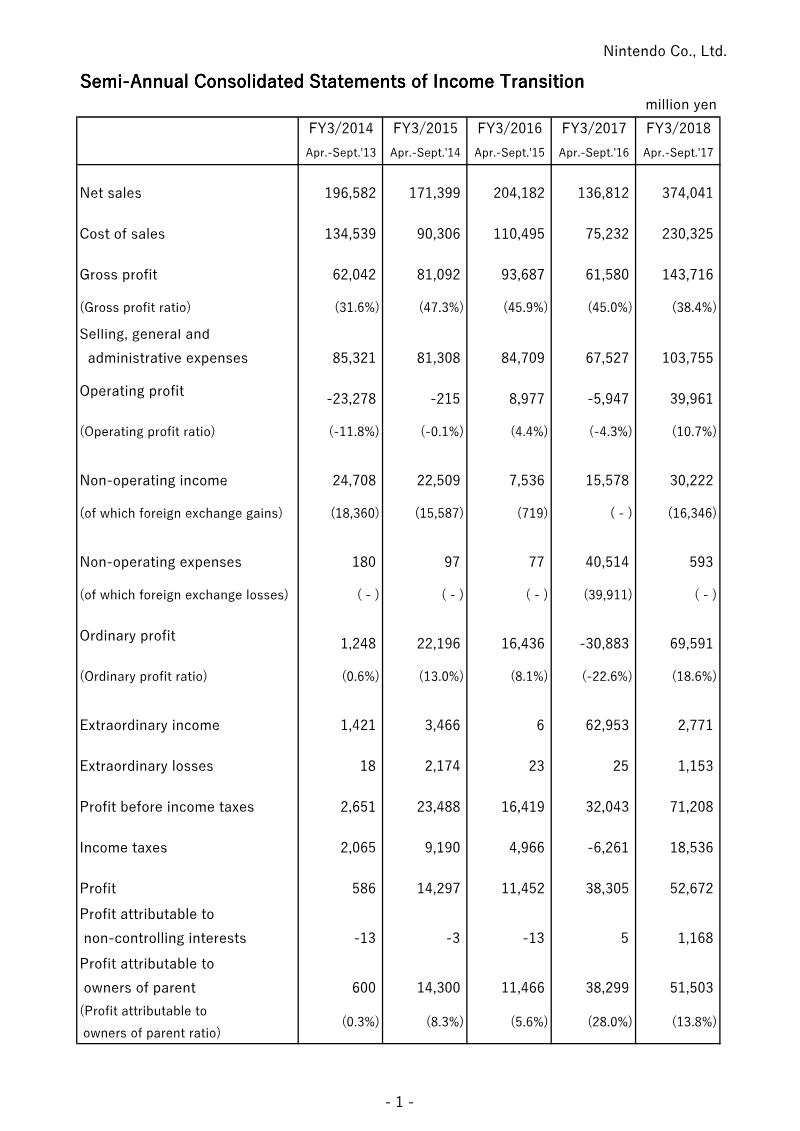
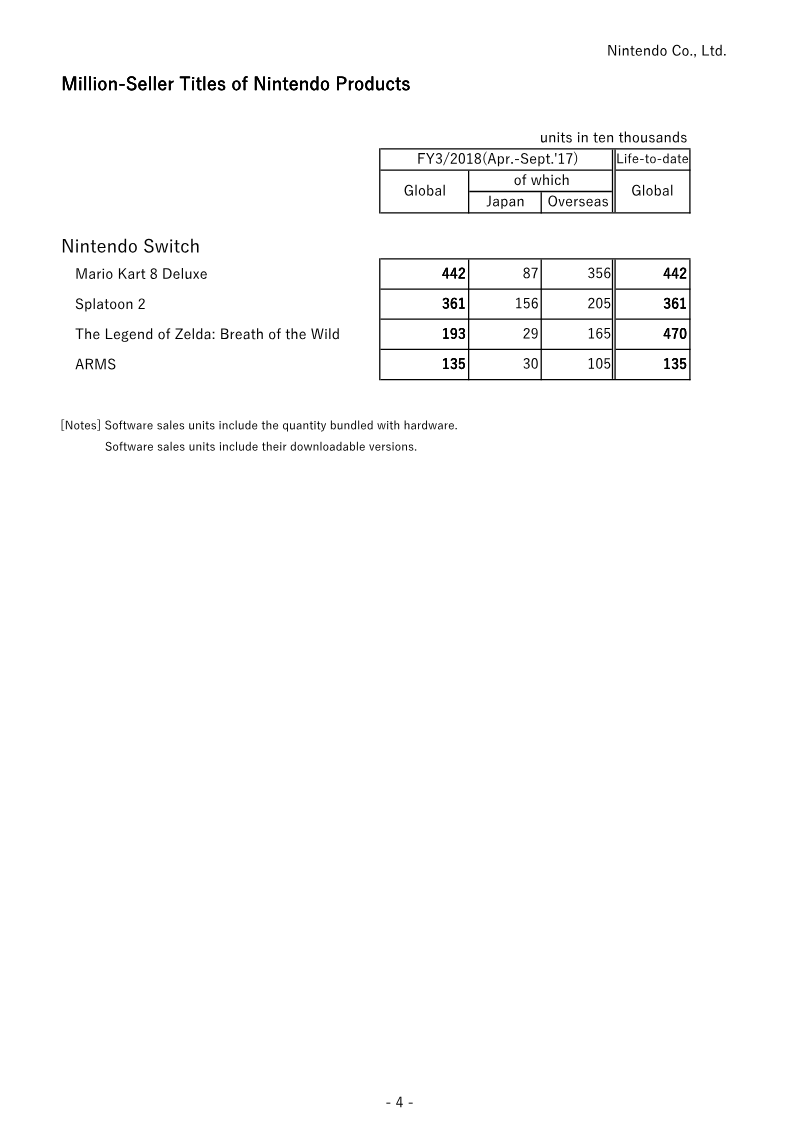

Nintendo Earnings Release: Supplementary Information (September 2017)
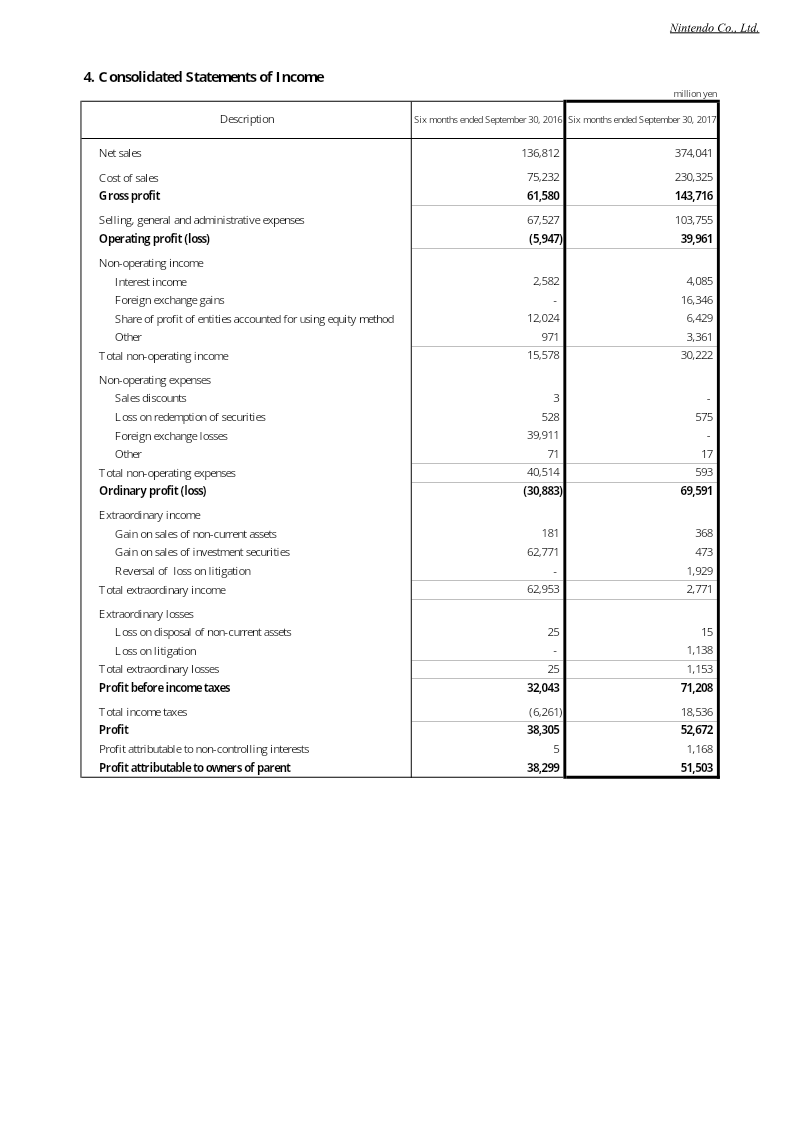
This supplementary earnings information for the six-month period ending September 2017 details a significant financial turnaround for Nintendo, driven primarily by the successful market adoption of the Nintendo Switch hardware and software ecosystem.
- Nintendo achieved a significant financial turnaround for the six-month period ending September 2017, reporting net sales of 374,041 million yen compared to 136,812 million yen in the previous year.
- The company returned to profitability with an operating profit of 39,961 million yen, reversing the 5,947 million yen operating loss recorded during the same period in 2016.
- Profit attributable to owners of the parent reached 51,503 million yen, supported by an ordinary profit of 69,591 million yen.

Game AI - Funtelligence - Extra Credits
Effective game artificial intelligence is defined not by technical complexity, but by its ability to foster player engagement through predictable or intuitive NPC behaviors.
- Effective game AI is defined by its ability to foster player engagement through predictable and intuitive behaviors rather than technical complexity.
- Developers should prioritize three core vectors: ensuring behaviors are learnable or intuitable, creating meaningful decision-making opportunities for the player, and maintaining resource efficiency.
- Simple, consistent scripts—such as those used in Super Mario Brothers—are superior to complex simulations because they allow players to master mechanics and refine strategies over time.

Owlboy: The Motivational Power of Inspiration
The nine-year development cycle of the indie title Owlboy serves as a case study for the critical role of sustained creative inspiration in long-term game production.
- Maintaining long-term motivation over a 9-year development cycle requires a team-wide commitment to a core vision, even when faced with significant financial hurdles and the need for secondary employment.
- Design inspiration can be sourced by internalizing experiences from other media, such as architectural elements observed during travel, and by allowing the mind to wander during periods of boredom.
- Iterative design is more effective when moving from small, rough sketches to pixel art sprites, which helps developers focus on essential shapes and silhouettes rather than getting stuck on minute details.
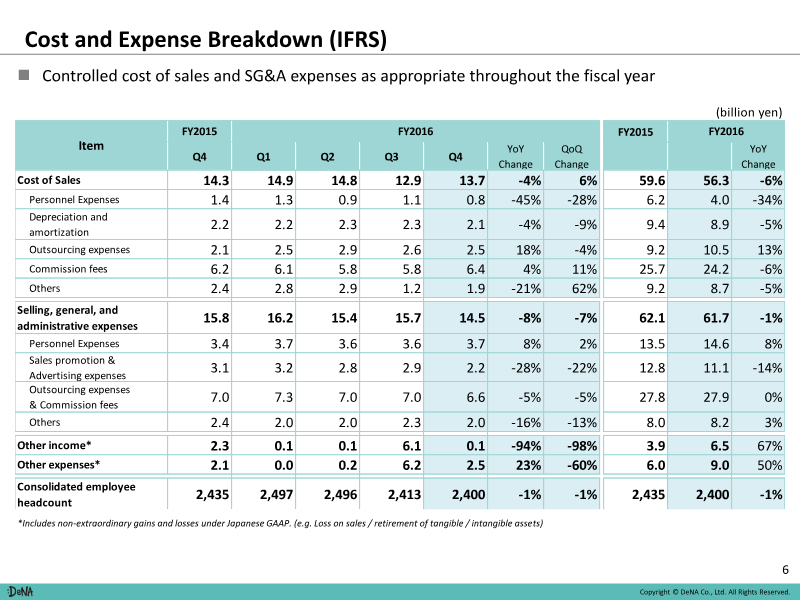

DeNA Q4 FY2016 Operating Results
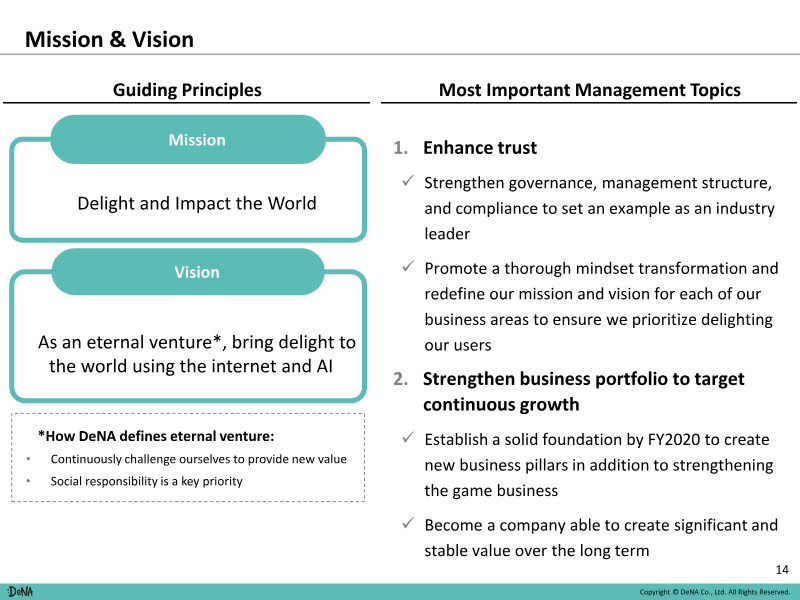
DeNA’s operating results for the fiscal year 2016 demonstrate a period of financial growth and strategic transition.
- DeNA reported an annual operating profit of 23.2 billion yen for FY2016, a 17% year-over-year increase, alongside total revenue of 143.8 billion yen.
- Profit attributable to owners of the parent surged to 30.8 billion yen from 11.3 billion yen in FY2015, largely due to tax benefits and refunds related to international operations.
- The core game business achieved a 9% increase in segment profit to 28.3 billion yen despite a 7% decline in total revenue, driven by efficiencies and collaborations with Nintendo on titles like Fire Emblem Heroes and Super Mario Run.

Financial Results Briefing: Fiscal Year Ending March 2017
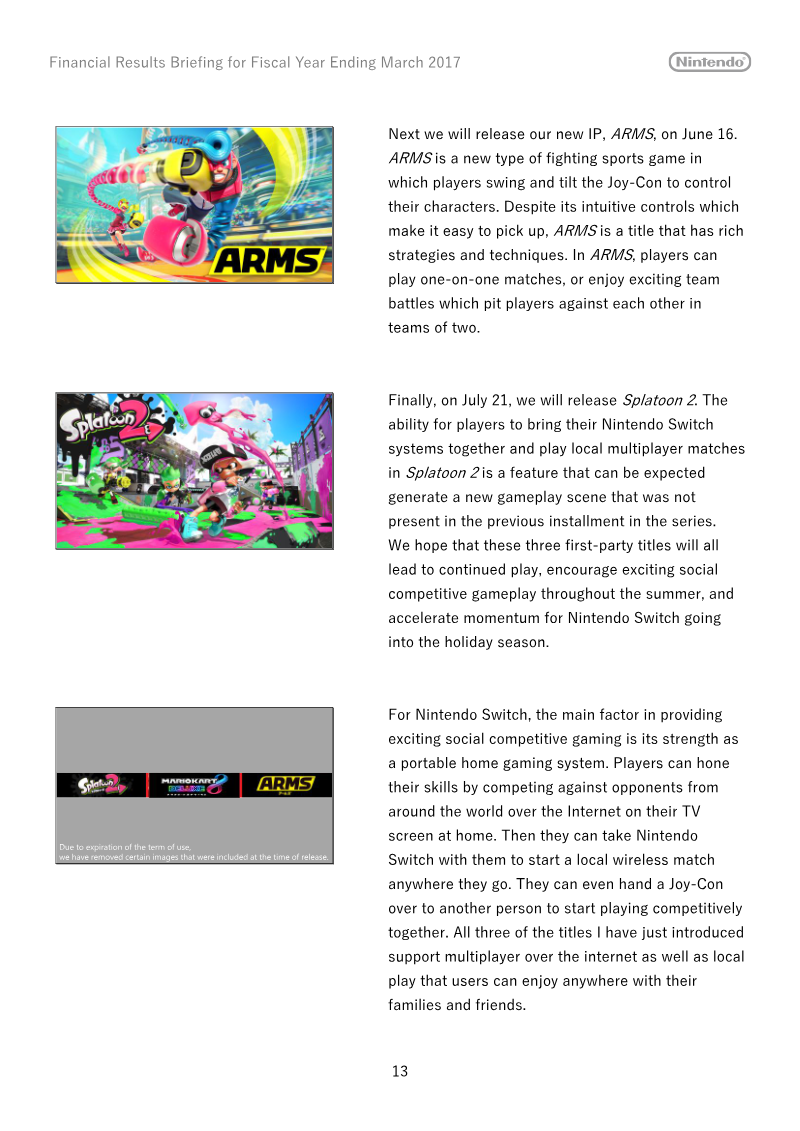
The fiscal year ending March 2017 served as a pivotal transition period for Nintendo, defined by the successful market introduction of the Nintendo Switch.
- Nintendo shipped 2.74 million Nintendo Switch units during its initial launch period, exceeding internal performance expectations.
- The company set a target to ship 10 million Nintendo Switch units in the fiscal year following March 2017, supported by a pipeline of first- and third-party software.
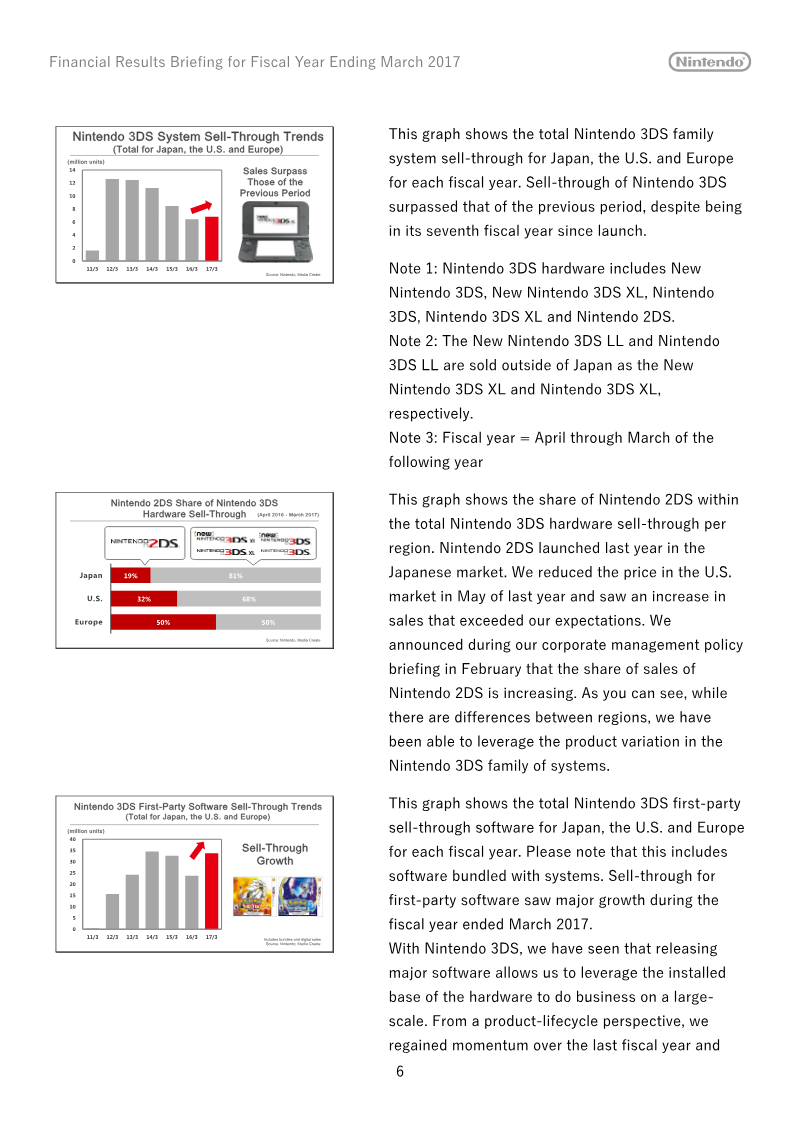
- The Nintendo 3DS family maintained strong performance in its seventh year, driven by the success of Pokémon Sun and Pokémon Moon.
Top Mobile Games of Q1 2017: Revenue Grew 53% YoY as Asian Titles Expanded Their Dominance
The mobile gaming industry experienced significant growth in the first quarter of 2017, characterized by a 53 percent year-over-year increase in worldwide gross revenue, which reached approximately $11.9 billion.
- Worldwide mobile game revenue reached $11.9 billion in Q1 2017, marking a 53% year-over-year increase from $7.8 billion in Q1 2016.
- Google Play games revenue grew by 83% year-over-year to approximately $5.3 billion, while App Store games revenue grew 35% to $6.6 billion.
- Mobile games remain the primary monetization driver, accounting for nearly 80% of App Store gross revenue and over 91% of Google Play gross revenue.
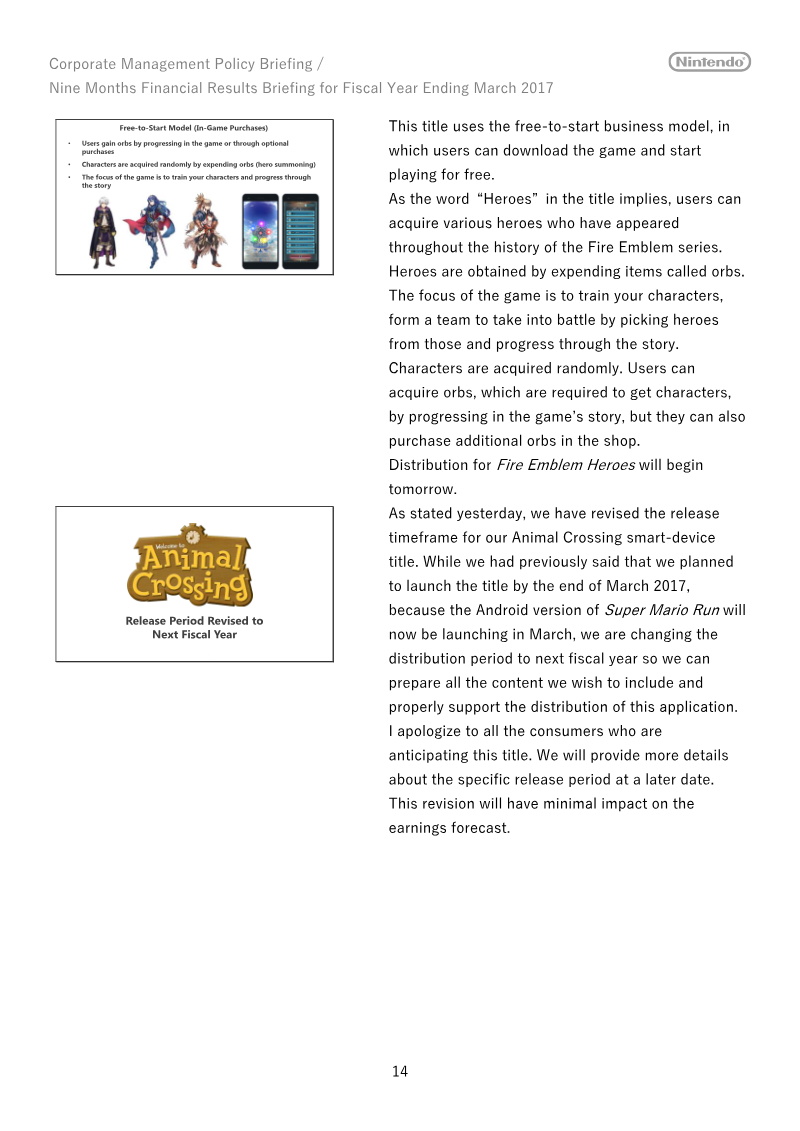
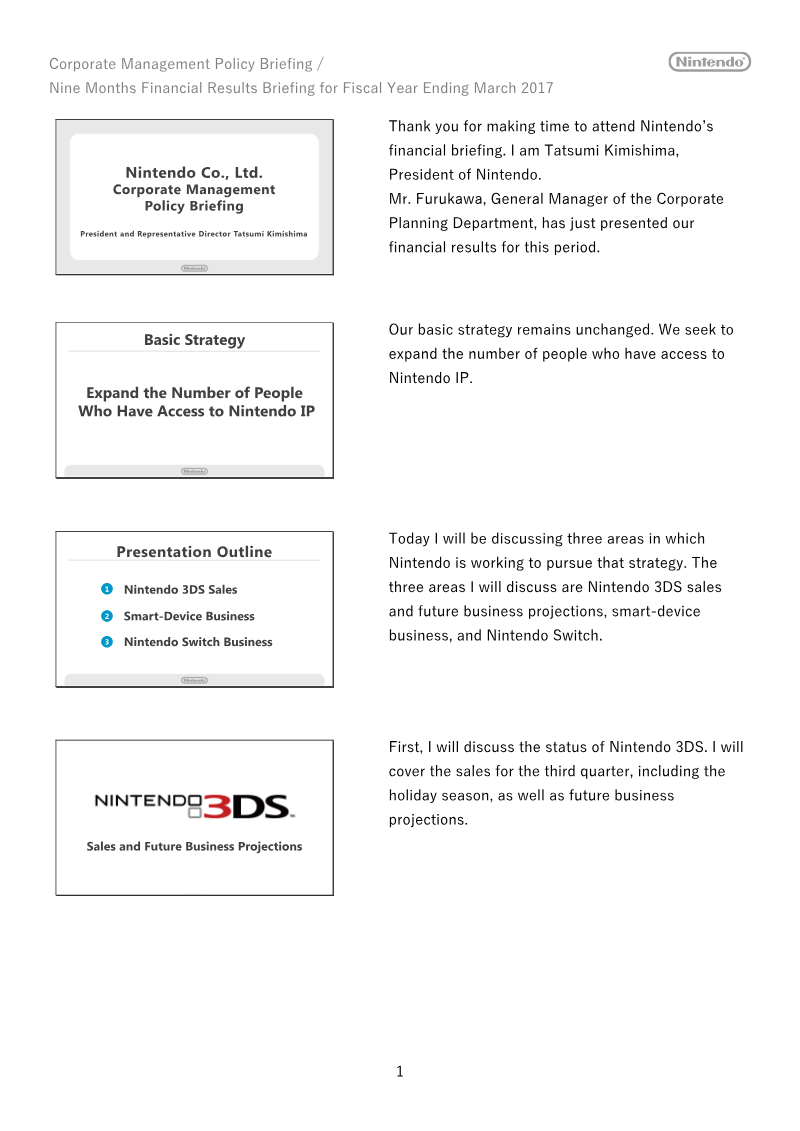
Corporate Management Policy Briefing: Nine Months Financial Results for Fiscal Year Ending March 2017
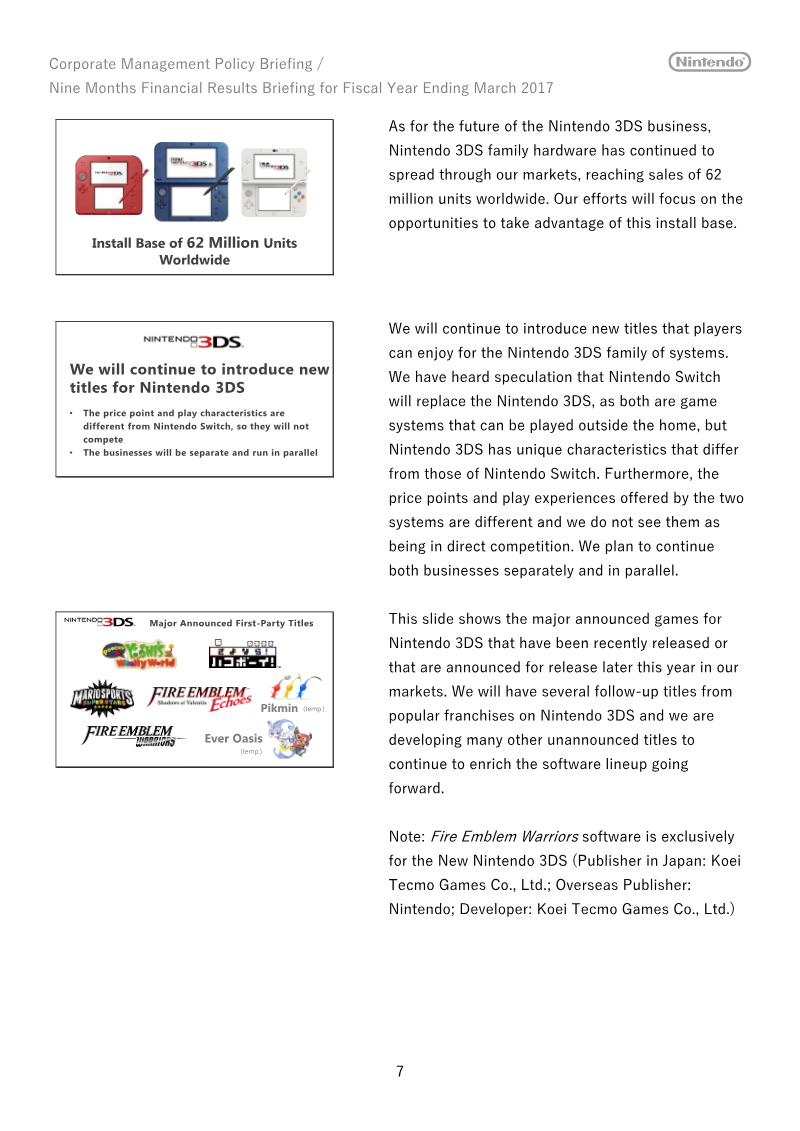
Nintendo’s fiscal strategy for the nine months ending March 2017 centers on a dual-platform approach, leveraging the established success of the 3DS while aggressively transitioning into the Nintendo Switch era.
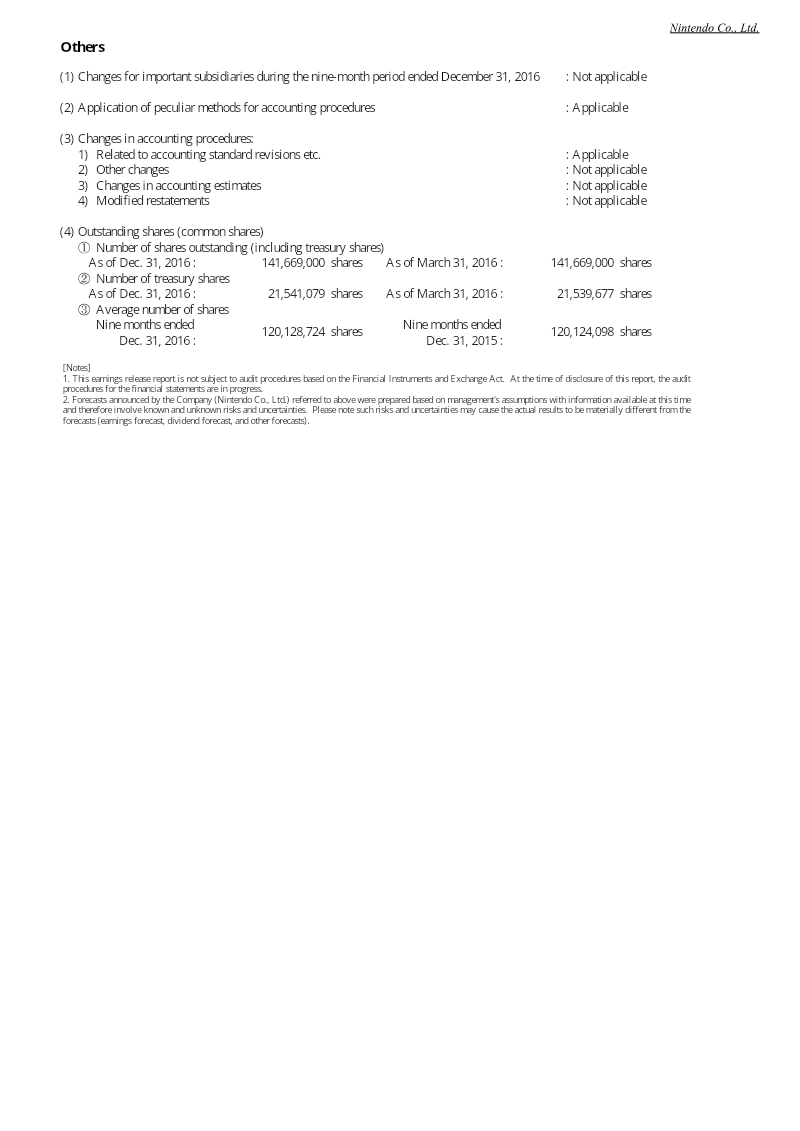
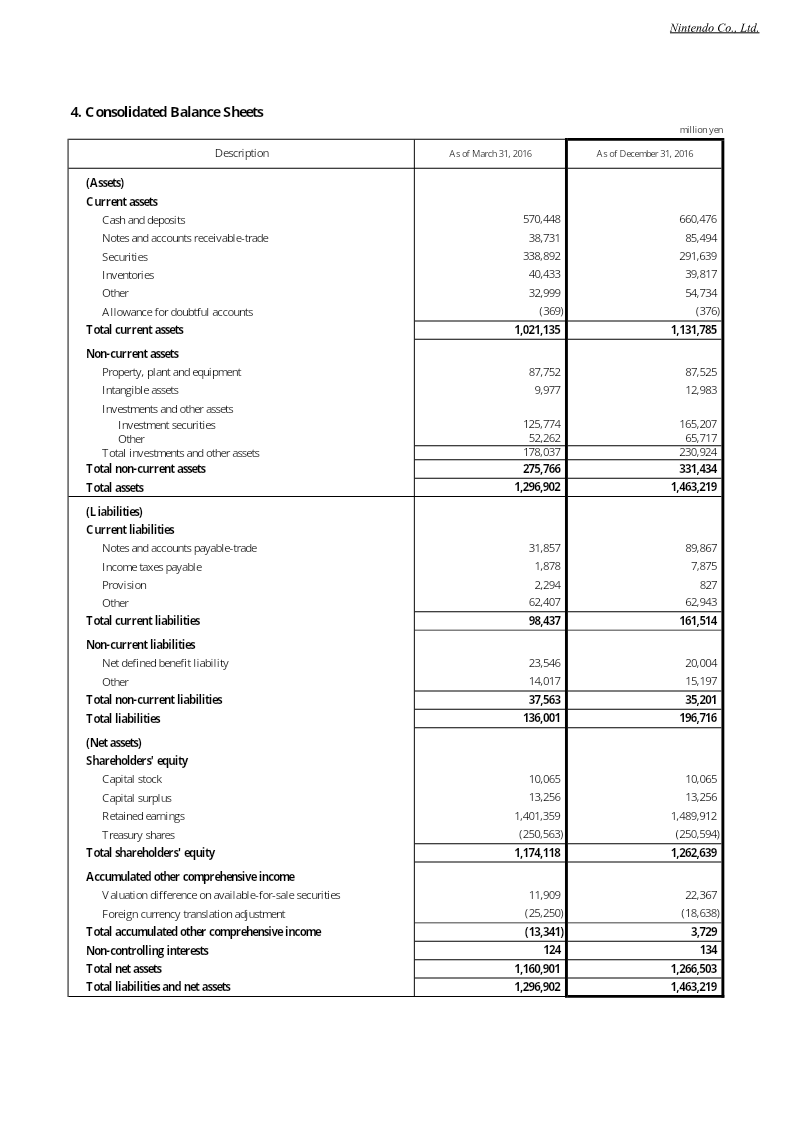
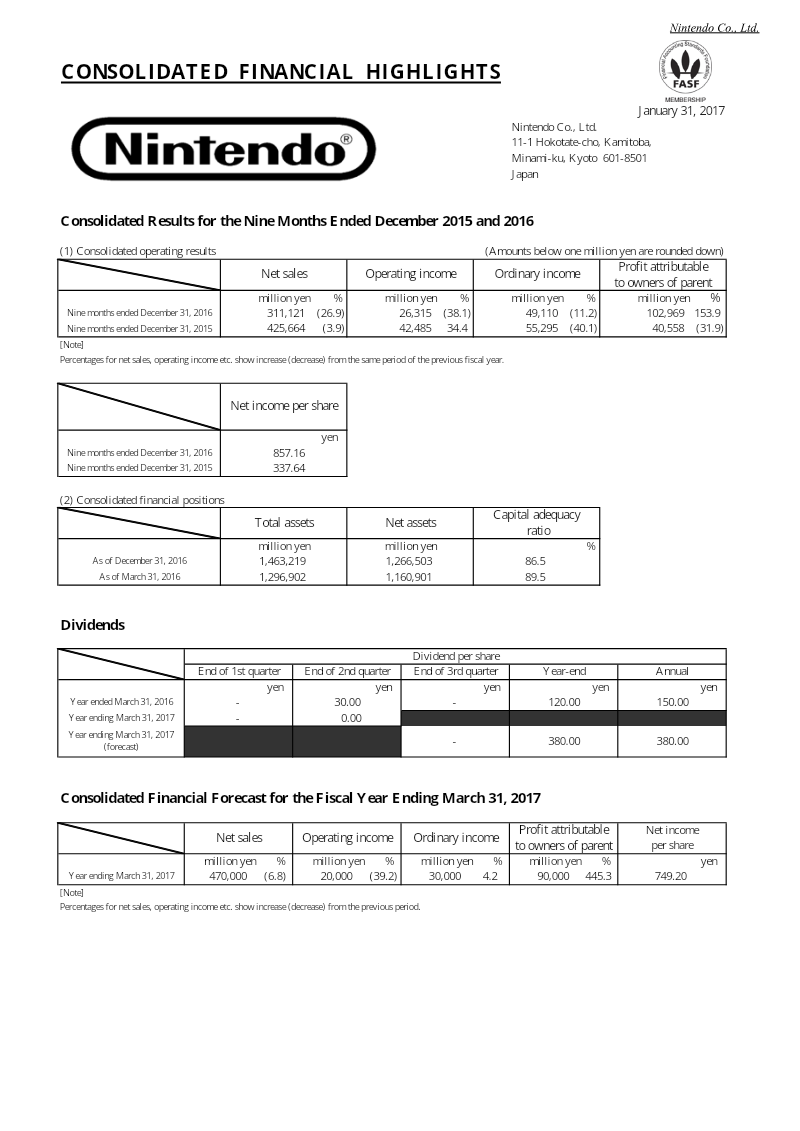
Consolidated Financial Highlights: Nine Months Ended December 2016
This financial report details the consolidated operating results for Nintendo Co., Ltd. for the nine-month period ending December 31, 2016.
- Nintendo reported net sales of 311.1 billion yen for the nine months ending December 2016, a 26.9% decrease year-over-year, alongside a 38.1% decline in operating income to 26.3 billion yen.
- Profit attributable to owners of the parent surged 153.9% to 102.9 billion yen, primarily due to a 63.5 billion yen extraordinary gain from the sale of equity in the Seattle Mariners ownership group.
- Wii U hardware sales plummeted 75% to 0.76 million units as the company executed a managed phase-out of the console ahead of the March 2017 Nintendo Switch launch.
Top Mobile Games of 2016: Pokémon GO Conquered Clash Royale
The mobile gaming industry experienced significant growth throughout 2016, characterized by a 70 percent year-over-year revenue increase in the fourth quarter, which generated approximately $7.5 billion globally.
- Worldwide mobile game revenue reached approximately $7.5 billion in Q4 2016, representing a 70% year-over-year growth compared to $4.4 billion in Q4 2015.
- Mobile games accounted for over 80% of all revenue on the Apple App Store and 90% of revenue on Google Play throughout 2016.
- Pokémon GO became the highest-earning new launch of 2016 and the year's most-downloaded game, setting records for the biggest launch in mobile history.
Paid or Freemium: The Case of Super Mario Run
The mobile gaming landscape is undergoing a significant structural transition, characterized by a cooling of venture capital investment and a strategic pivot toward consumer-facing applications.
- The Istanbul mobile gaming ecosystem, while a global powerhouse, faces structural challenges where intense local rivalry hinders knowledge sharing, drains talent, and causes successful founders to exit the region.
- Grand Games achieved rapid scaling by growing from $0 to $500 million in revenue within a two-year period.
- The puzzle game market is undergoing significant shifts, characterized by the rise of Merge-2 mechanics, which have in some cases outperformed traditional Match-3 titles in monetization.