Space Invaders
Game
6 documents in the library are about Space Invaders, from writers such as DiGRA, Game Maker's Toolkit and Nordicity. Each has a summary and key insights with the page they come from.
Connections
Each row is a game or company named alongside Space Invaders, each column a document, oldest first. A mark means that document names it. Select a row to see those documents.
Documents about Space Invaders

Count Down!
Mark Brown of Game Maker's Toolkit recaps GMTK Game Jam 2026, themed "Count Down," and presents his 20 favourite entries.
- The GMTK Game Jam 2026 featured a diverse range of high-quality submissions, with the author highlighting 20 standout titles that successfully interpreted the jam's theme through innovative mechanics.
- Many top-performing entries, such as 'A bug’s (short) life' and 'Drill Dracula: The Count Goes Down,' utilized addictive 'counting up' progression loops—where players earn resources to upgrade abilities—to balance the pressure of short-duration countdown mechanics.
- Perspective-shifting mechanics were a notable trend, exemplified by '1 2 3 D,' which challenged players to navigate between 1D, 2D, and 3D dimensions to solve puzzles.



The Value of Esports in the UK
The study demonstrates that the United Kingdom’s esports industry has experienced robust growth, expanding at an average annual rate of 8.5% between 2016 and 2019.
- In 2019, the UK esports industry generated £60 million in revenue and contributed £111.5 million to the national Gross Value Added (GVA), supporting over 1,200 full-time equivalent (FTE) jobs.
- The sector experienced robust growth between 2016 and 2019, expanding at an average annual rate of 8.5%.
- Hosting a single major global esports event is projected to add £12 million in GVA and 238 FTE jobs to the UK economy.
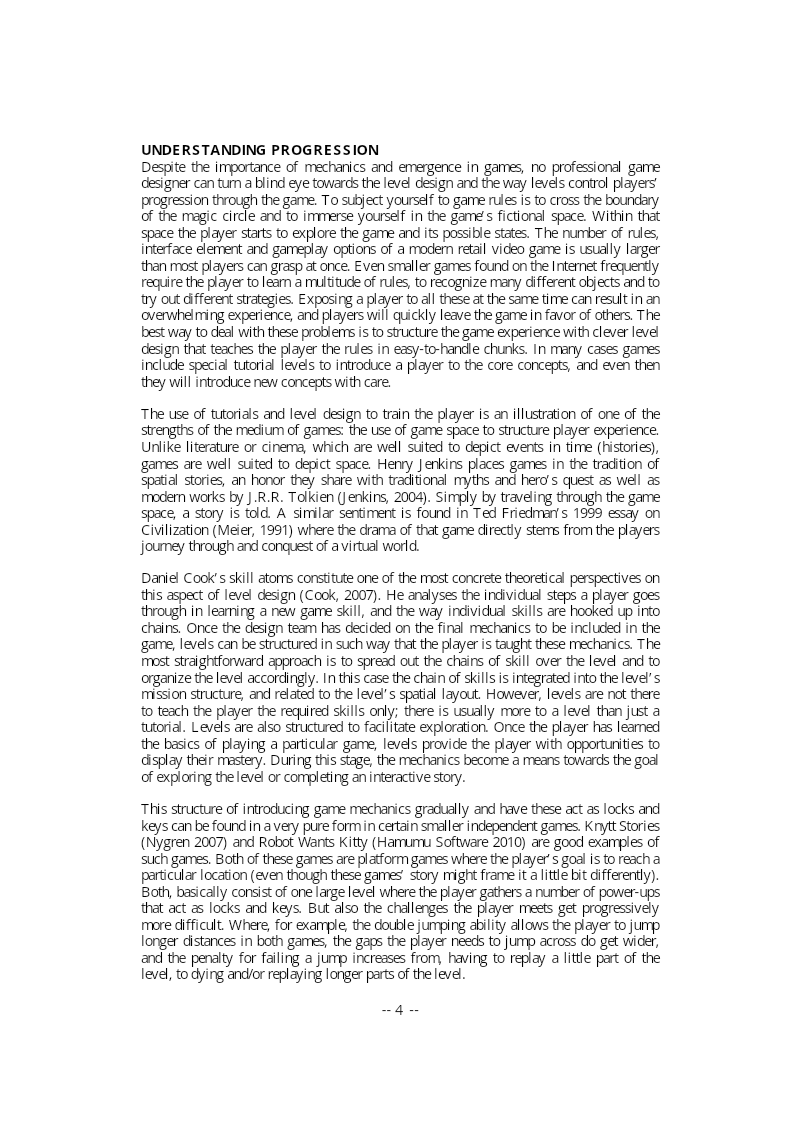
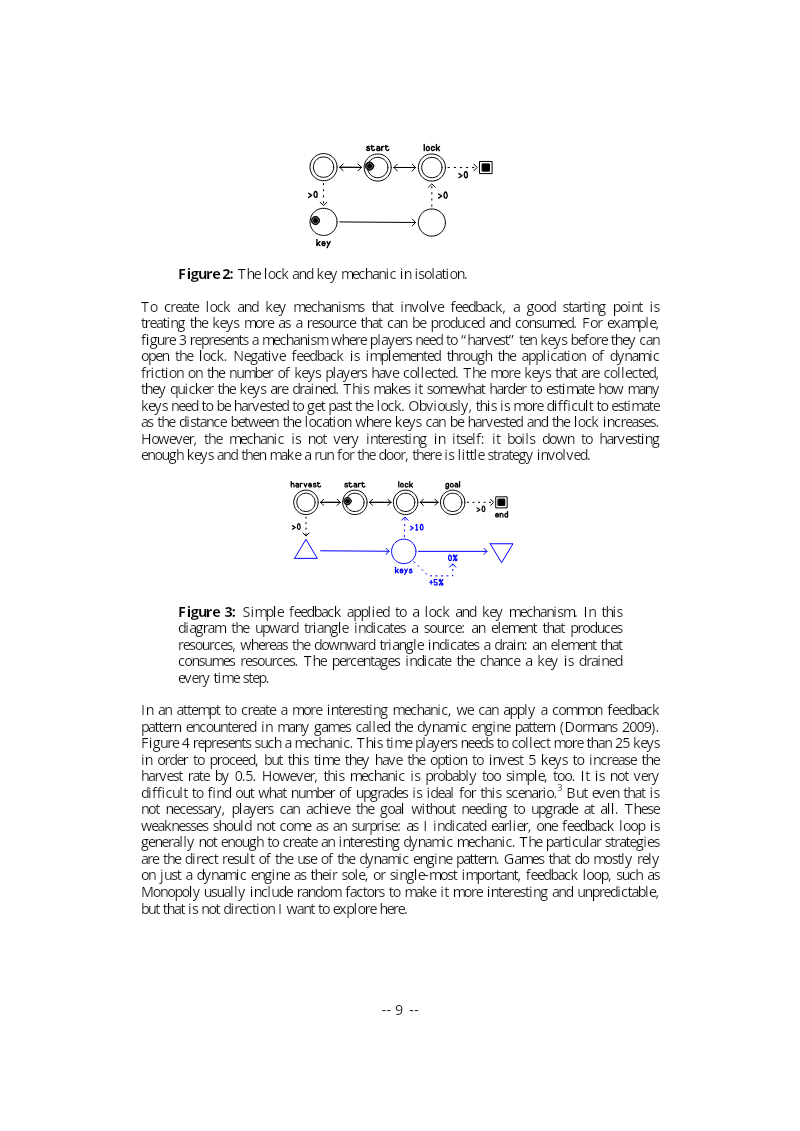
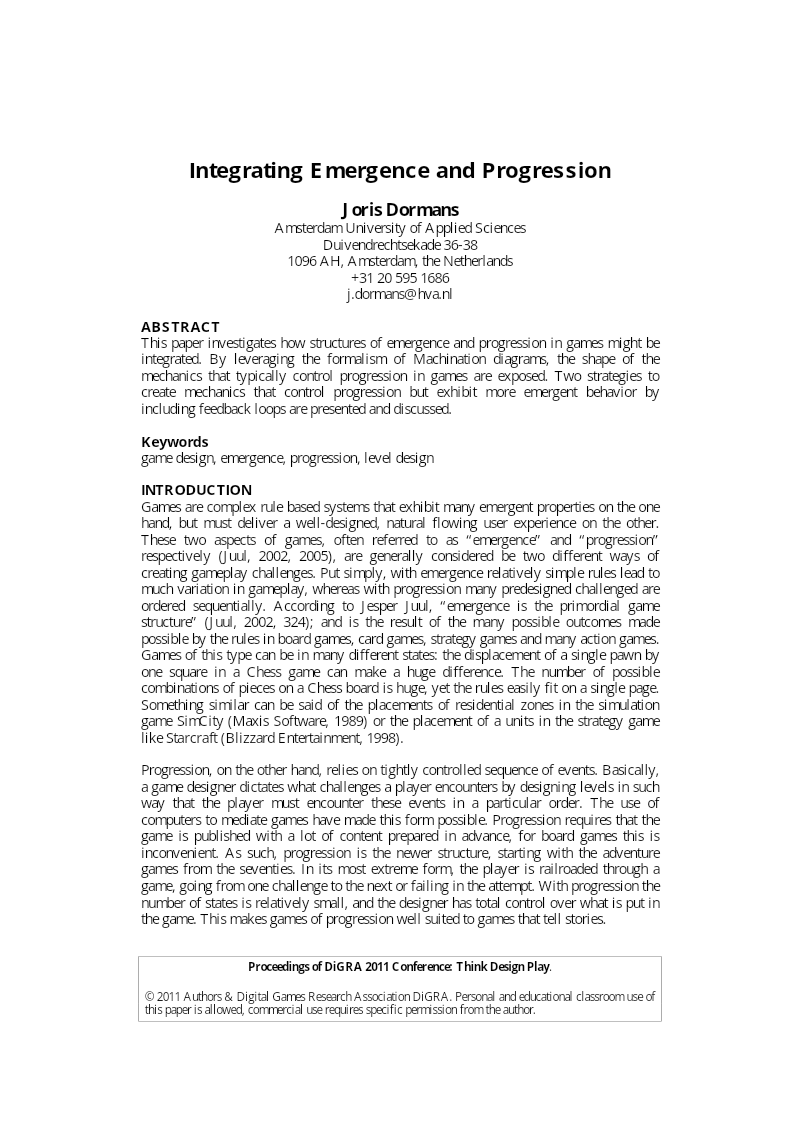
Integrating Emergence and Progression
Dormans argues that emergence and progression, often treated as opposing design modes, can be integrated by understanding the feedback loops that generate emergent behavior within a game's internal economy.
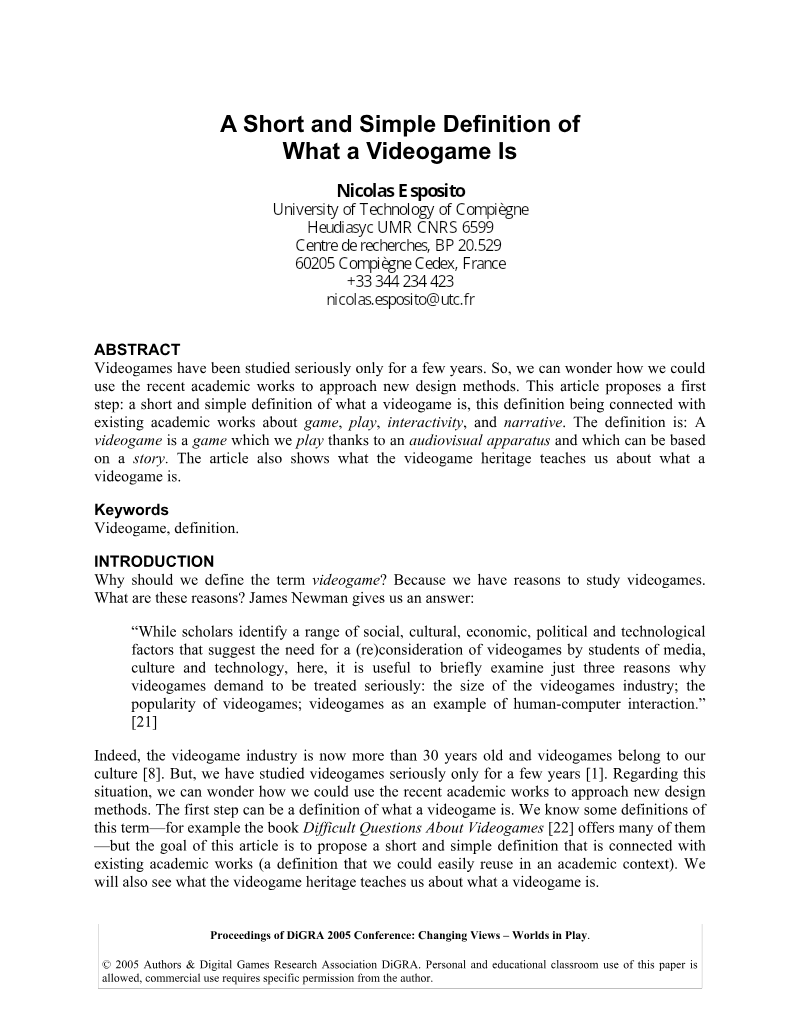
A Short and Simple Definition of What a Videogame Is
This paper, presented at the DiGRA 2005 conference, proposes a short and simple definition of the videogame: a game played through an audiovisual apparatus that can be based on a story.
- The paper proposes a short, reusable academic definition of the videogame as a game played through an audiovisual apparatus that can be based on a story, intended as a foundation for future videogame design methods.
- The author argues that serious videogame studies only began in recent years, even though the videogame industry was already more than thirty years old at the time of writing (2005).
- The definition is grounded in established game theory, drawing on Caillois, Huizinga, Zimmerman, Crawford, Kramer, and Juul's account of automation and rule enforcement.
Frame and Metaphor in Political Games
Ian Bogost's paper "Frame and Metaphor in Political Games," presented at the 2005 DiGRA conference, argues that videogames can carry ideological bias by operating through procedural rather than verbal rhetoric.
- Ian Bogost's 2005 DiGRA paper argues that videogames can carry ideological bias through procedural rhetoric, operating via rules and systems rather than verbal argument, drawing on George Lakoff's cognitive linguistics and Frank Luntz's message-development work for conservatives.
- Bogost classifies games' relation to ideological frames into three modes: reinforcing them, contesting them, or exposing them.
- The paper's reinforcement example is the Republican National Committee's Tax Invaders, a Space Invaders variant in which a Bush head fires at tax increases framed as invaders, turning the metaphor of taxation as theft into a playable form.
Gran Stylissimo: The Audiovisual Elements and Styles in Computer and Video Games
Aki Järvinen's "Gran Stylissimo" offers a framework for analyzing the audiovisual appearance of computer and video games, proposing that their styles can be classified into three categories: photorealism, caricaturism, and abstractionism.
- Järvinen's framework classifies game audiovisual style into three categories (photorealism, caricaturism, and abstractionism) and defines its elements as dimensionality, point of perception, visual outlook, and soundscape, arguing these matter more for understanding games than conventional genre labels alone.
- Games differ from film because players manipulate and simulate environments, which gives sound a functional role: diegetic sound grounds the player in the space and gives feedback on actions, while nondiegetic sound can be anchored to locations to build mood.
- Game aesthetics circulate constantly with film, as shown by Max Payne borrowing the 'bullet time' effect from The Matrix, so game styles cannot be analysed in isolation.