Rec Room
GameBy Rec Room
7 documents in the library are about Rec Room, from writers such as Deconstructor of Fun, GameDiscoverCo and Mobilegamer.biz. Each has a summary and key insights with the page they come from.
Connections
The documents about Rec Room on the inner ring, the other games and companies they name on the outer one. Select a cover to see it up close and open it in a new tab; drag to move, pinch or Ctrl + scroll to zoom.
Key figures from the reports
The gaming industry is undergoing a strategic shift away from over-scoped, high-budget projects, evidenced by Rec Room cutting its workforce by 50% due to poor capital deployment.
Deconstructor of Fun, 2025 · TWIG #347 Call of Duty Movie, Google's New Court Case, De-Monetization of Real-Money Gaming, p. 32
Social gaming platform Rec Room has reached a $3.5 billion valuation, reflecting the rising market significance of digital social spaces.
SuperJoost, 2021 · A Bit of Culture: Assembling by the Tree
On Steam
Steam estimates as of 9 Oct 2026. Revenue is premium revenue on Steam only: game sales, without DLC, and without in-game spending in a free game.
- Revenue to date
- $0
- Units sold
- 2.5M
- Price
- Free
- Positive reviews
- 90%
- of 84K reviews
- Peak players
- 6,946
- at the same time
- Followers
- 41K
- Average playtime
- 12 h
| Year | Share of the best year | Revenue | Units |
|---|---|---|---|
| 2019 | $0 | 46K | |
| 2020 | $0 | 155K | |
| 2021 | $0 | 475K | |
| 2022 | $0 | 621K | |
| 2023 | $0 | 377K | |
| 2024 | $0 | 279K | |
| 2025 | $0 | 167K | |
| 2026 so far | $0 | 294K |
On Steam since Jun 28, 2016 · Developer Rec RoomSteam store page
Documents about Rec Room
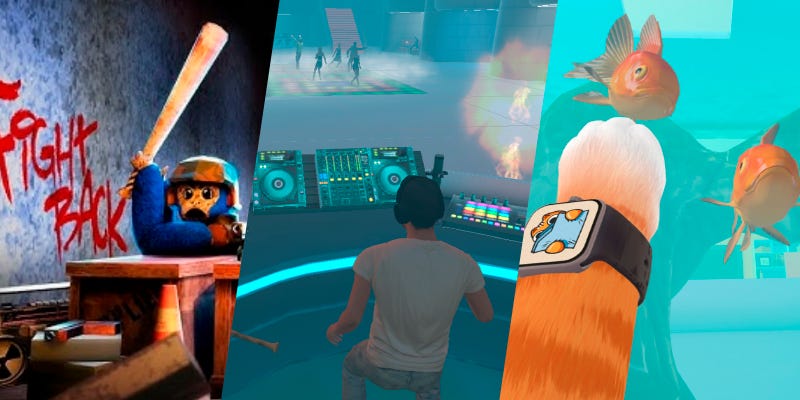
Scary Baboons, Sim Hits: The State of Quest Discovery in 2026
The newsletter examines the Meta Quest VR market in 2026, arguing that the platform remains vibrant but has shifted from early-stage experimentation to a mature ecosystem dominated by free-to-play (F2P) titles and social-centric experiences.
- The 2026 Meta Quest market is dominated by free-to-play (F2P) titles, which account for seven of the top ten grossing games.
- Revenue generation is primarily driven by high-volume downloads and in-app purchases, specifically focusing on cosmetic and functional items.
- Social-centric experiences and co-op world spaces like VRChat, Rec Room, and Job Simulator lead the market in total hours played.

🚨📢 Breaking News: New Ubisoft Mobile Shooter + Layoffs, Layoffs and Closures
The gaming industry is currently undergoing a significant period of contraction and strategic realignment, characterized by widespread layoffs, studio closures, and the cancellation of long-term, high-budget projects.
- The gaming industry is undergoing a major contraction characterized by widespread layoffs and the cancellation of high-budget projects due to unsustainable North American development costs.
- Eidos Montreal cut 124 jobs and canceled a project that had been in development for over seven years at a cost of hundreds of millions of dollars.
- Unity is divesting from its game-publishing arm, Supersonic, to pivot toward an ad-tech model focused on AI-driven user acquisition tools.

Weekly Industry Round-up: PlayStation Cuts, The Division, and New Trends
This industry update provides a comprehensive overview of significant developments within the mobile gaming sector as of early April 2026.
- PlayStation's mobile division experienced layoffs affecting approximately 50 staff within its Studio Business Group, though work continues on soft-launch titles like MLB The Show Mobile and Ratchet & Clank: Ranger Rumble.
- Bethesda has discontinued its mobile RPG, The Elder Scrolls: Blades, delisting it from app stores with servers closing on June 30; the game generated around $13.5 million since its March 2019 launch.
- Coffee Stain, the developer of Goat Simulator and owned by Embracer, is closing its mobile studio in Malmö, impacting about 17 employees.

TWIG #377: Epic for Sale, Unity Cuts Deep, and Merge Keeps Printing
The video game industry currently faces a period of intense structural realignment, characterized by a shift away from speculative hardware and niche genres toward proven, high-margin monetization models.
- The gaming industry is shifting from speculative hardware and niche genres toward high-margin, data-driven monetization models as companies prioritize risk mitigation.
- Mobile gaming success is increasingly dominated by the 'merge-two' genre, with titles like Gossip Harbor leveraging slot-style economics and card-collection mechanics to monetize player impatience.
- Unity is undergoing a strategic retrenchment, divesting from underperforming ad networks to focus on its core engine business, though analysts remain skeptical of its ability to compete with market leaders.

TWIG #347 Call of Duty Movie, Google's New Court Case, De-Monetization of Real-Money Gaming
The gaming industry currently faces a period of significant strategic recalibration, marked by the failure of high-profile projects and the volatility of emerging markets.
- The gaming industry is undergoing a strategic shift away from over-scoped, high-budget projects, evidenced by Rec Room cutting its workforce by 50% due to poor capital deployment.
- Regulatory crackdowns on real-money gaming in India have created significant market instability, leading analysts to advise firms to prioritize the more predictable U.S. and European markets.
- A growing divide exists between Eastern and Western markets, where Chinese players show strong demand for mobile shooters like Delta Force, while Western titles like Destiny Rising struggle with poor cultural fit and aggressive monetization.
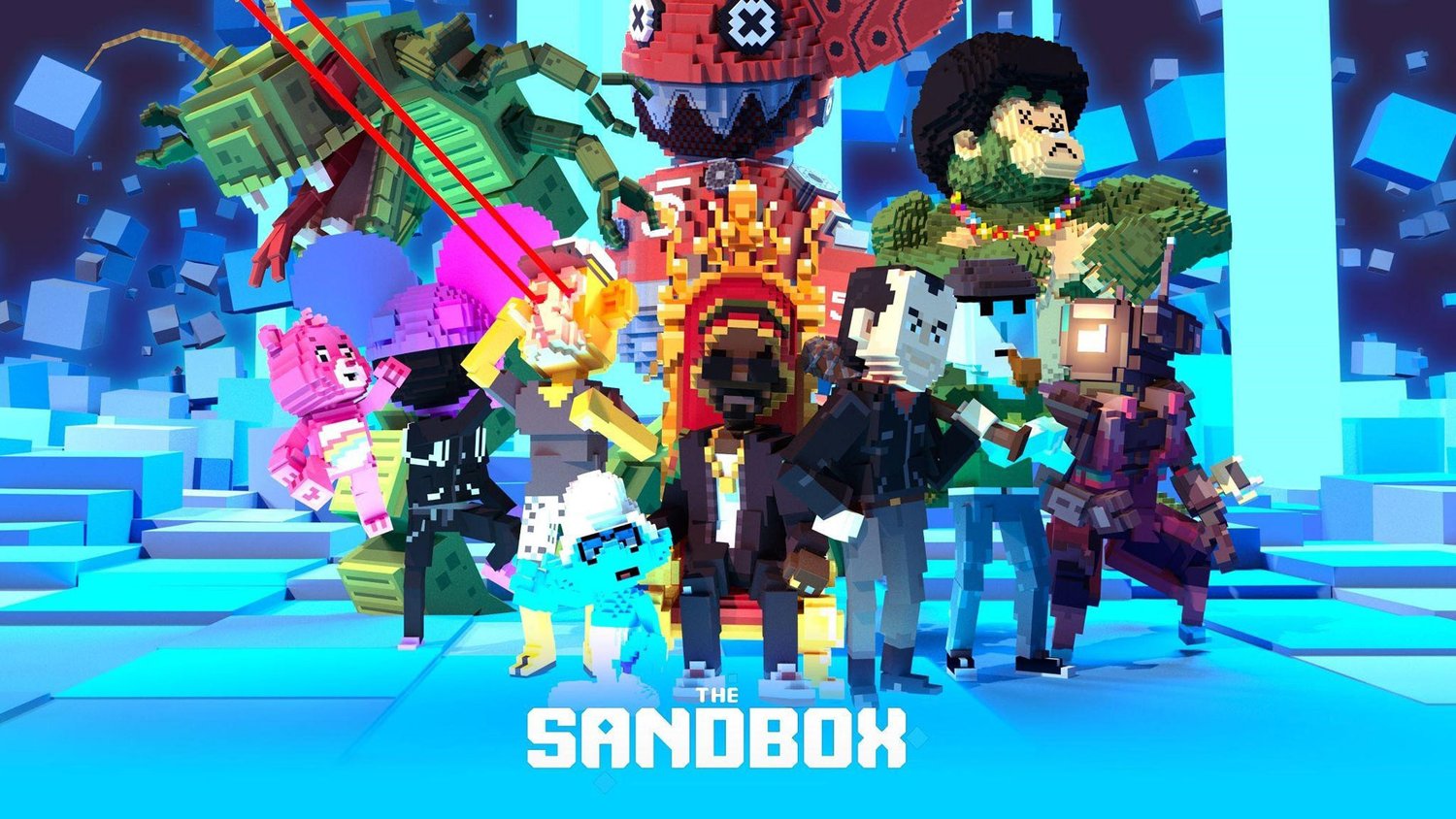
The Sandbox: Where Digital Land and UGC Collide
The Sandbox functions as a voxel-based, user-generated content (UGC) platform that integrates blockchain technology to facilitate the ownership and trade of virtual land and digital assets.
- The Sandbox is currently valued at a fully diluted market cap of $13.8 billion, despite having only 30,000 monthly active users (MAUs) and approximately 15,000 users playing more than one hour per day.
- The platform's valuation-to-MAU ratio is significantly higher than industry peers, sitting nearly 20 times higher than Decentraland and over 400 times higher than Rec Room.
- The Sandbox lags behind competitors in content density, with a capital-to-experience ratio of $24,017 per user-generated experience, compared to $36 per experience for Roblox.
A Bit of Culture: Assembling by the Tree
This analysis explores the intersection of physical collectibles and digital entertainment, using the LEGO brand as a primary case study for understanding modern consumer behavior and investment trends.
- LEGO sets have emerged as a high-yield asset class, delivering an average annual return of 11% based on a study of 2,322 unopened products.
- LEGO has achieved a seven-fold increase in sales since 2003, driven by the modular nature of its system and thematic scarcity in the secondary market.
- The video game and toy industries are converging around the concept of 'fractionalization,' where consumer value is derived from assembling modular systems and personalized digital or physical experiences.