Prince of Persia
Game
Documents about Prince of Persia

Ubisoft turmoil and what happened to Big Fish Games? | Week in Mobile Games podcast
Aristocrat Leisure has effectively dismantled Big Fish Games, opting to divest its assets through multiple transactions after failing to secure a buyer for the company as a whole.
- Ubisoft is facing significant internal instability, including a 40% drop in share price following restructuring announcements and a proposed 200-role voluntary termination plan at its Paris headquarters, which has triggered a three-day strike by labor unions.
- Aristocrat Leisure has effectively dismantled Big Fish Games, a company it acquired for $990 million in 2018, by divesting assets into a new entity called BFG Entertainment and ceasing the development of new titles.
- Netflix is shifting its gaming strategy to prioritize cloud-first experiences centered on TV play rather than mobile downloads, a move industry analysts suggest is primarily intended to reduce subscriber churn.

Is this make or break for GDC?
The global game development industry is currently navigating a period of significant instability, marked by widespread workforce reductions and shifting technological priorities.
- Over 25% of global game industry professionals have faced layoffs in the last two years, with that figure rising to 33% within the United States.
- Unreal Engine has surpassed Unity as the primary engine for developers, while the Steam Deck has become a higher priority for development focus than the Nintendo Switch 2.
- Despite rapid adoption for brainstorming and research, a majority of developers now view generative AI as a detrimental force within the industry.

🚨📢 BREAKING NEWS: Ubisoft Restructures, IAP Hits $167B, Turkey Keeps Raising, Pokémon Goes IRL
The gaming industry is currently undergoing a structural shift characterized by a transition toward a monetization-first era.
- Global mobile in-app purchase revenue reached $167 billion in 2025, confirming a strategic industry shift toward maximizing lifetime value over user acquisition scale despite declining download volumes.
- Ubisoft is reorganizing into five specialized creative houses to achieve $200 million in cost savings, a process that includes canceling projects like the Prince of Persia Sands of Time remake and mandating a full-time return to the office.
- Major publishers are prioritizing stability by leveraging legacy intellectual property and diversifying platforms, such as Outfit7 expanding into PC development and Rovio relaunching the Angry Birds franchise in China.
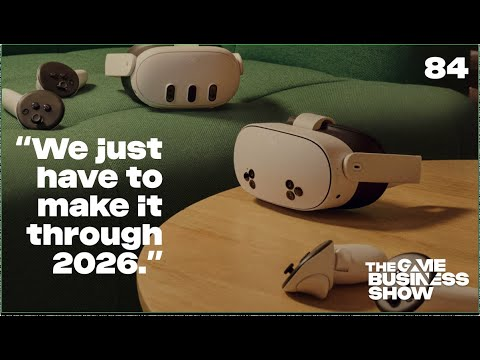
Has Meta just killed virtual reality?
The gaming industry is currently navigating a period of significant structural realignment, marked by a shift away from high-budget, blockbuster development toward more sustainable, long-term operational models.
- Meta is pivoting its strategic focus toward artificial intelligence, resulting in studio closures and a reduction in premium AAA investment for virtual reality.
- The VR market is transitioning from an experimental phase into a specialized, niche ecosystem where smaller, agile teams are finding success.
- Meta Quest continues to command the vast majority of revenue in the VR sector, serving as the primary anchor for the current market.

Ubisoft's big reorg, critics and mobile's reputation problem, PGC London thoughts, more
The mobile games industry is currently navigating a period of significant structural change and reputational scrutiny.
- Ubisoft is undergoing a major reorganization into five creative houses, with its mobile division—managing titles like Hungry Shark and Ketchup—tasked with achieving €200 million in cost reductions over the next two years.
- The mobile gaming sector continues to generate massive scale, with Monopoly Go reaching $6 billion in revenue and global user acquisition spending totaling $25 billion annually.
- Ubisoft’s restructuring strategy includes the potential for further layoffs and the divestiture of mobile assets that do not align with its new creative focus.
360 Approach for Open World Mission Design in Far Cry and Assassin's Creed
Modern open-world mission design requires a fundamental shift from the linear, scripted progression characteristic of earlier titles like Prince of Persia toward a systemic, radial framework.
- The '360 approach' replaces linear, scripted mission paths with concentric zones of engagement, allowing developers to accommodate unpredictable player exploration in open-world environments.
- Designers should utilize rigorous 2D top-down planning to map out thematic zones and gameplay pillars before beginning engine-based development.
- Gameplay ingredients—such as enemies, environmental cues, and interactive objects—must be distributed spatially to guide players toward objectives while maintaining their sense of agency.
Companies behind it

As the documents state it.