Transcript
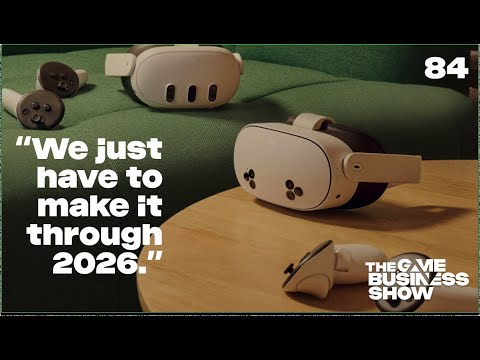
This week, Ubisoft reveals a major reorganization, complete with six game cancellations. Non-game apps made more money on mobile than game apps for the first time ever. Steam has slightly shifted its stance of AI. And our big topic of the week, is it game over for VR? Hello and welcome to the game business show. This week I'm going to be joined by uh two people including investor, board member, business leader, and founder of the Curren Agency, Cassia Curran. She's an absolute expert in the worlds of VR and XR and we're going to be discussing the situation in the VR market following Meta's decision to sort of pull away from it. Uh last week I've also got a small interview with you on the subject with Andrew Ike. He runs Alchemy Labs. He's also going to be talking to us about this subject. Uh they had two hit VR games. Job Simulator, it's almost 10 years old and sold 6 million copies. And Dimensional Double Shift, which launched last year, it's a free-to-play game that's had a million installs. And I'm going to hear his views on things. Now, Alchemy are not an independent studio. They're actually owned by Google, which is
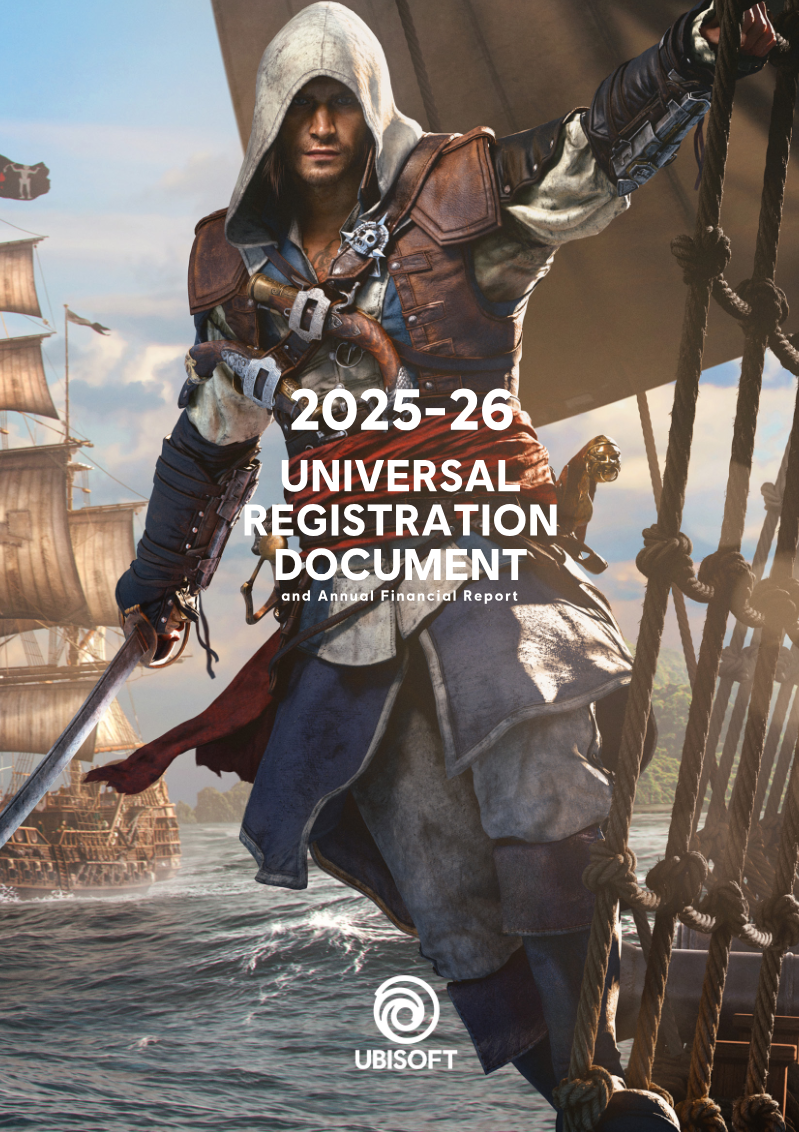
interesting in itself. But before we get to those VR folks, we have a couple of stories for you. And the big one, the one that broke yesterday was all around Ubisoft. Uh Ubisoft has canceled six games currently in development. It's including the remake of the Prince of Persia Sands of Time, which was very much looking forward to. They also delayed seven other games. It's all part of this major reorganizational, operational, and portfolio reset. They've conducted a thorough review of its content pipeline and made all sorts of changes. It also is accelerating its cost reduction initiatives. It said that it's now aiming to reduce its fixed cost by an additional €200 million euros over the next two years. That's going to be a lot of job losses there. Um they're also mandating a return to the office 5 days a week. That's part of the part of the many many changes that going on this there's loads in in in this report. Um they've also um laid out uh uh they've obviously they closed two studios recently including Halifax and Stockholm. They've also laid out how it's creative houses are going to work. You may remember they've got creative houses. Vantage Studios is one of the
creative houses. It has uh games like Assassin's Creed and Far Cry in there. Their Creative House 2, these are unnamed at the moment, is going to have The Division, Ghost Recon, and Splinter Cell in it. So, it's going to focus on competitive and cooperative shooters. Creative House 3 will operate a roster of select Sharp live experiences. So, that's for Honor, that's The Crew, that's Ride of Republic, that's Skull and Bones, that's Braha. um, Creative House 4, which will focus on fantasy worlds and narrative driven universes, including Beyond Good and Evil, which we're still waiting for, Ano, Might and Magic, Rayman, um, and and Prince of Persia, which they they say they're still committed to Prince of Persia despite canceling that remake. A creative house free will see Ubisoft try and reclaim its position in the casual and family games market with brands such as Just Dance and Uno. Supporting those creative houses is the creative network team which will share studio expertise and provide co-development support as well as a core services group which will focus on technology, QA, localization, business planning and more. Specific studios will fit into those various creative houses while some of them will be assigned to the creative network team. So they'll support multiple
houses. Yeah, it is a quite a significant series of changes here. Uh look, they want to reclaim its creative leadership and drive a sharp rebound following a turbulent few years of disappointing game launches and plummeting stock value. Uh that obviously led to the minority stake of one of these creative houses to 10 cent. Um uh obviously the company yet to fully comment on layoffs. You wouldn't expect them to. They are a European organization. After all uh these things take a little bit of time. Uh Eve Gillimo, he made some interesting comments about AAA. On the one hand, the AAA industry has become persistently more selective and competitive with rising development costs and greater challenges in creative brands. On the other hand, exceptional AAA games when successful have more financial potential than ever. We sly saw that a little bit last year in the games industry. Um, a lot of the more established IP did well, but uh there was some new IP breakouts as well, including Arc Raiders. Ubisoft actually insists they are still committed to new IP now. They have many of the games they closed. for the titles they have they have um sorry three of the titles that have been cancelled are
new IP but uh the company said that yes it is more difficult to market and create new IPs than before or to give additional time for projects that we think have great potential but we need to make sure they will come with exceptional quality so that's really the approach and the minds that we've been following this is what they said on the financial call they did we still have four new IPs in development including March of Giants which they acquired from Amazon um uh a few little while ago and they believe they have four innovative new IPs that we can bring to market to a great level of success. This is very much Ubisoft have been making cuts and trimming things constantly, closing a studio here, making a few cuts there, canceling a title, all that sort of stuff a little while for a while. Um, for quite a few reasons. One, it's a very boated organization. It makes a lot of stuff and not all of it was working. In fact, most of it wasn't working, including some of their big AAA games. This is them sort of trying to address that in a more significant way. They're talking about making a billion dollar loss now on this in the next financial year. That's a result of one of the delayed games. One of the delayed games which analysts believe might have been the Assassin's Creed Black Flag remake has
been delayed after the financial year. It was due uh it was due before the financial year. We haven't hasn't been announced yet. Um that's been delayed. So there is sort of an expectation that there's going to be um a big loss of Ubisoft in the next financial results. All of it is designed to set up the company correctly for the future. This is obviously a depressing story. It's a miserable story, but uh it kind of felt like it was needed with Ubisoft. It become quite a bloated organization. It was doing lots and lots and lots of different things and a lot of the stuff wasn't working. We always felt something like this was going to happen. Um Ubisoft sort of painting this as being the last major uh thing that it was going doing. It will stay till take place over 2 years. It will be a long process. Um but obviously be a very stressful time for the people at Ubisoft. Um I feel I hope to talk to them soon. Um we do have a a piece coming out with Ubisoft shortly around AI. They're using AI not to necessity speed up game development. I guess they are a little bit, but mainly to um uh add new features into some of their games. I imagine that's part of the creative services group. It's a big
story. There's a lot going on at Ubisoft. It's been going on for a while. A lot of the stuff I was just talking about here has been in the works for well over a year. The creative houses uh repositioning has been part of that. But the cuts uh to those games, those studios, it's interesting they mention so many of their games in that creative houses list just shows how many titles they have going on. Um, you know, you forget sometimes some of these these titles like Uno and and and Ano, which was a big hit for them last year. Um, but, uh, yes, lots going on at Ubisoft. Um, and not a lot of it. Very happy. Um, we will, uh, continue to cover this story throughout the year. Um, moving on, Sensor Tower, the data firm that specializes in mobile, they released their state of mobile games report yesterday and revealed that for the first time ever, consumers spent more money on non-game apps they did on games games on mobile. Now, there's a big reason for this is AI. Um, so all those AI apps like uh chat GBT, they saw a $3.5 billion increase in revenue during 2025. But it's not just AI. Movies and TV app revenue went up.
Social media revenue, utility app revenue, multimedia design software, all of that did very very well. And that together drove a 21% growth in non-mobile game markets, uh, $85.6 billion that generated. Games alone, still massive, delivered $81.8 billion. And in fact, that's an increase on 2025. Um, but non-game apps are now nearly three times as big as they were 5 years ago. Technically, we don't care about non-game apps. It's just a bit of a showing off really. Um, but how well did games do? Well, according to Center Tower, it's a bit of a mixed bag. Um, so mobile game revenue grew by 1% to the 81.7 billion, but downloads dropped. It's down 7% to 50.4 billion downloads. It's the second consecutive year of a drop for game downloads. Um the number of hours spent on games is basically flat. I mean it's barely up 1% to 445 billion hours spent um gaming on on mobile. Now since Tower's analysis says that as installs are falling, game growth is going to depend less on adding users and expanding your users and more
and expanding lifetime value from existing players. So basically making more money out of the existing audiences. That's going to involve all sorts of things like live ops and and ads and certain things. In terms of the games that did very well, strategy games was the biggest genre driven by popular 4X games like Last War Survival and White Out Survival. Puzzle games are up, especially in Europe. Uh, Royal Match was the big one in Europe. And in Asia, the shooter market grew quite a bit, helped by the launch of the game Delta Force. Now, in terms of downloads, the number one game in the US was Blockb Blast, followed by Roblox. In terms of revenue, Monopoly Go was number one, followed by Raw Match, then Laugh Survival. It just shows how different mobile markets are in different markets. In Asia, it's so varied. Um, Honor of Kings was top in China. That's mainland China ahead of Game for Peace. In South Korea, it was Lineage M that was number one ahead of White Out Survival. In Japan, Last War Survival chops the chart ahead of Pokémon Trading Car Game Pocket. In India, Garina Freef Fire uh uh was number one ahead of PUBG Mobile. Indonesia, it was Roblox ahead of Mobile Legends um uh Mobile Legends Bang Bang,
sorry. So, it's really eclectic. It's completely different in every single market. In Europe, uh number one in terms of revenue was Coin Master. That's number one in UK, France, Germany, Italy, and Spain. So that's a little bit more consistent. Monopoly Go was number two in the UK and France, while Raw Match was number two in Germany and Italy, while Candy Cross was number three in Spain. So a little different there, but somewhat similar across Europe. Um, it look it's interesting with mobile. It's clearly a mega market. Clearly, the majority of video games are going through mobile, but we are starting to see that maturity really hitting at the moment. Growth is going to come from that stronger, deeper monetization, live ops development. We're very much at that stage. if you have been for a little while now. Um, I actually think back to our episode last week where we suggested there was no such thing as a game industry cuz whenever I do something like this, I read a sensor tower report or read a mobile gamer.biz article, I cannot escape how different mobile is to PC and console. I know that's not a new observation. Uh, but but it really is stark. I think it is. And there's a lot of data in this report from Center Tower. I've got it in front of me um around ad trends, live op strategy,
casual versus hyper casual versus hybrid casual versus midcore. But there's going to be an even fuller sensor tower gamer report coming next month. So I'm looking forward to that. Um it's certainly a market that's showing some maturity, but there's some interesting shifts and trends in different things in different markets. There's a lot to learn. I think I'm going to move from the Senser report to something that's going on in PC and specifically to Steam and around what it's doing around AI. So developers publishing on Steam don't need to disclose whether AI powered tools such as code helpers were used in the development of its games. The firm said that tools designed to make development more efficient is not the focus of its efforts. Developers do need to disclose whether AI was used to generate content for the game. They also need to disclose whether there is AI content generated during gameplay. That's images, words, and audio. Arc raiders for instance has this sort of audio thing where the where the voice actors bits merge together and depending on the situation. So that would that would be part of that. Valve has required developers to disclose whether AI was used in the creation of the game since 2024 in a section on on
on the Steam page called AI generated content disclosure. It also needs to developers also need to describe how that AI is being used. Um now the requirement was criticized by the incred continually outspoken Epic store epic boss uh Tim Sweeney. He wrote on X last year the AI tag is relevant to exhibits for authorship disclosure and to digital content licensing marketplaces where buyers need to understand the right situation. It makes no sense for game stores where I AI will be involved in nearly all future production. Um, I'm not saying Valve listened to this, but I think, you know, Valve does its own thing. Um, but it does represent, I think, the journey we're all on on AI as an industry, as a society, as a world. Um, and there's obviously lots of legal and legis legislative things going on with this technology, but we're also finding our way collectively over what we are and are comfortable with, what we think is fine, what we don't think is fine. AI tools that allow us to automate and speed up certain processes. I think people are are sort of broadly okay that you know playing with AI to help develop
ideas. Um people seem to be okay with that. I I really I feel like I should be doing it more the way more everyone keeps talking about it. Um AI doing stuff that you wouldn't necessarily have been able to do before as well because there's certain things you know like some of the stuff that Ubisoft's showing off with AI tech in their games that's stuff you couldn't really do uh without AI. sort of people are seem to be getting okay with that certain people anyway but AI is a means to create artwork you know the generative a stuff music game generative AI stuff music gameplay all that kind of thing people are not so much okay with that and I think in that context themes changes make sense um what do fans really want disclosed about this topic do they want to know if someone used an automated system to help them with some coding or did they do they want to know if the artwork in the game is actually made by human being I think it's the latter rather the former But look, it's an ever evolving space. AI, we're going to be talking about a lot. Actually, I went to this epic event last week, and it was such a dominant conversation amongst just not not during the the event, but
actually in the in the bars and the conversations around it. Um, and we're going to be learning as we go with this, and we'll be talking about it as we learn those things. Uh, my final news story before we get into our main topic, uh, it's actually a little bit of a fun, it's bit of a nice one. There's a new podcast launch. I'd like to recommend it. Jude, who is an industry veteran, she's worked at Play Mob. She founded Play Mob. Play Mob. In fact, they all she's all been about using video games to create a better world. She's heling a new tensedback podcast called Good Game Club, which is launched at the Davos conference. Very fancy. As with OA's previous work, the Good Game Club will discuss how video games can be a positive for society as a whole. It's hosted by OA and industry commentator Matus Gredal Novik. I hope it's pronounced your name right, Matus. Uh those two have worked together before on the 2024 book um Gaming for Good. The club's first episode features Bastian Bergman. He's the founder of technology startup Solston. I had never heard of them before. I actually met them last week. That was quite cool. Future episodes will feature Gamemy's David Barry, US 2's Maria Sans, a special effects chief Dr. Mick Donigan, uh, and
Future Lab CEO Kirsty Rigdon. Um, I think that covers most of the big stories. Um, now to dive into the VR sector. And to help me do that, I'm delighted to welcome investor, consultant, XR specialist, business leader, and all round industry veteran. It is Cassia Curran. Hello Cassia. Welcome to the show.
Hello. Hi.
Uh, it's been ages since I've spoken to you. I think you're probably with wings at the time.
Oh, yes.
So much to catch up on, but you were just telling me just before I pressed record that you are working on a machine. This sounds like exactly the sort of thing I'd be obsessed with. A machine learning tool to predict game sales.
Yes, that's great.
Go on, tell me about it. I was really early stages so I'm mostly putting this out into the world so that if anyone else is working has tried something similar uh and failed or is successful or anything along those lines would love to hear if like swap notes all that sort of thing. I'm very early stages, so I'm really much in like the research and planning side and like struggling with
the data, but I'll see where I get. It's it's just a a kind of a fun project and see where it leaves
because I I find the industry is incredibly hard to predict generally like a game genre that you think is niche suddenly becomes the biggest thing in the world and and and and I know it depends on the sector of the industry we're talking about really I guess because you know mobile it's perhaps a little bit everything's different. Um
yeah completely so so yeah I've been giving u talks on market analysis um for years
and I will say that if this model does work it will be bad at uh predicting outliers like Among Us or blueprints it'll be good at predicting uh strong contenders in established genres because everything is based upon past performance
and that's genally true of just any kind of market analysis. Well, it is true. I I often say when I'm after to give a prediction, I said I can
is that with this industry because everything changes and moves and shifts constantly.
Absolutely.
I find it's a fool's game because um I base my predictions on what I'll give you an example. When Elder Ring came out, somebody asked me on Twitter what would sell better. It came out the same time as Horizon Forbidden West.
So, what's going to do better, Elder Ring or Horizon Forbidden West? So, I used my data hat and I went looked at Dark Souls 3I. I looked at Horizon Zero Dawn and I just went, "Oh, I think they both very very well and I should expect Elder Ring, you know, with the G George R. Martin thing will have a slightly bigger launch than normal, but based on the previous data, Horizon Forbidden West, and I was incredibly wrong.
Of course, of course. Of course. My my I'm just trying to aim to make something that is as good as me or better at forecasting.
Oh, I see. Trying to replace yourself with AI.
Yeah, why not?
Why not? Why not
make my own machine overlord?
Yeah. How has it been? Because I say I don't I think it's probably been the industry downturn and everything's happened probably since I last spoke to you and
you've got the uh uh the current I keep calling the Casia games agencies. The current games agency
current games agency
and you've been advising people. I know it's XR and VR is the big thing which we'll come on to but how how has it been for you? Have you found the market in the last five years or so?
Yeah, so I've been doing fractional bisdev for lots of independent game studios. Um, and I sort of started focusing on XR because that's where I saw a lot of funding or money for independent game studios coming in. And that gravy train now seems like it's ended.
Oh, wow.
Which which is sad, but there's a lot of nuances to what's happening, I would say.
Okay.
Well, there's a lot of people going like VR is dead or like, oh, nothing's really changed. like it's it's somewhere in the middle and also a lot of uncertainty. So,
well, let's dive into that topic then, but first let's recap. Meta a couple of weeks ago, uh I've completely lost track of the time. It could have been yesterday for all I know, but Meta's closed three VR studios. Twisted Pixel
who make Deadpool VR, Senzara Games, which made Asgard's Rap and Armature Studio that worked on the Resident Evil 4 VR. Um in total, the firm is cutting a thousand staff from its Reality Labs division and focusing its energies on AI and wearables, including augmented reality glasses. Now since 2020 uh I mean Meta's Reality Labs division has lost a lot of money at about $70 billion cumulatively. In the last quarterly earnings alone uh this division lost $4.4 billion. It was expected that there may be some changes. There's always been changes going on there but it's obviously been a major supporter of VR ever since they acquired Oculus and uh uh for 2 billion back in 2014. It's Quest line. The headsets are probably the biggest products in the VR space. Um there are other big players in the market but even some of them have sort of backed out. PlayStation being a big one. um um they they were a big support of VR for a long time and then sort of scaled back a little bit. Valve continue to support it. They've got Steam Frame coming up and there are a few others. But from a naive outsiders perspective, Cassia, this meta's the news around with Meta feels existential. You just suggest the gravy train is ending, but there's nuances to it. So
yeah, that's right. I mean, um VR is not dead. VR games are too cool to die, right?
In my opinion. Um, so there honestly there is like a a reasonably sized core of VR gamers who are really passionate. There's also interestingly in like the last year and a half um a new audience segment kind of the Roblox generation have really sort of jumped in with the Quest 3S headset was very affordable. There's uh data suggests that 33% of US teens headset. So it's actually has quite deep market parentration amongst say a certain age group as well. And you see that and how certain games do well, certain games haven't done well.
Yeah. Okay. Because I know this cuz Jamie Septton who runs Game Republic and is a good friend of mine. He swears by VR. He's my example of someone who's really into it. So there is that audience. But I read an upload VR piece last year which was saying that um um it
seems like less and less money's been made. Premium games aren't doing quite as well as they used to. I've got some VGI data that says premium prices are going up. We've gone up quite a bit in the last um few years as well from the premium side of things. I know that we're talking about shift to free to play and younger generations as well. Um so I'm going to focus on the older sort of the um more established VR fans. are they as engaged as they were do you think or is I don't know where you base it on but
so I would say definitely that there has been a rise in freeto play that has been pushed by this younger generation but the core VR gamers are still around they're still engaged but it's been harder for them to find the content that they enjoy because a lot of store space has been crowded out by Meta Horizon Worlds there's also I think uh premium game developers have also been are impacted negatively by quite a lot of piracy issues. So, Quest piracy subreddit has like 75,000 subscribers and a lot of the premium developers are complaining about this issue. But then
we see in the future Steam Frame uh likely to be releasing this year that is really targeted directly at core VR gamers. Uh, I think it'll be too expensive for the younger Roblox generation alpha.
And I do expect that to have like some uplift. I would say I'm going to guess it's going to sell about 2 million headsets, but then the people who buy it will have a lot of money and be wanting to spend a lot of money on content.
Yeah. Um I think that what you'll see in the premium side of things is that um budgets are just going to right size themselves to the potential uh revenues. So I would say that the top so there's there are like several top games that uh that are premium titles that would make about between 20 to$50 million a year. Um and some of these titles have been relatively cheap to make. The cheapest ones I would say actually are more
targeting the younger generation, but there are still some premium titles coming through. That having said, it's been a lot harder for premium titles to find success in the last year and a half.
It's interesting because I was looking so VGI asked video game um insights into some for some information they've got and they gave me um the number of games released on Steam that are VR games and 2020 that was 713. I guess they're tagged VR tagged and that's dropped right down to friction 368 in in 2025
and it's just been a steady steadyish drop really since since that point. So we're not not quite half but is that more right sizing because of the market opportunity. I worry when we see fewer games because games and competition is what drives innovation which drives new users and all that kind of stuff but it feels we feel it feels like we're in consolidation. I feel like that drop on the Steam game size is more a reflection of the dominance of Meta Quest.
Mhm.
Which I would say has like between 70 to 80% of the total market revenues. Uh and so a lot of the top titles uh that are free to play are actually only available in Quest. for example, um I would say that there's about 1,500 non- shovelware VR titles on um the Quest and the the amount of good decent games on the Quest has been continued to rise. I also uh think that there's quite a lot of games that have been funded by Meta that are likely to be releasing this year. I think we should be thinking about 2027. Like that's when you probably will look and be like, "Okay, will the number of the titles decrease?" I think they will decrease potentially.
Okay.
Okay.
Horizon World. Let's talk about this then because this is fascinating to me. This is their Roblox thing attempt basically in VR. How's that? Is that working?
Um, no, I don't think it is working.
So, we've been monitoring like um the the user activity on that and the indications are is not uh that successful. We think that um like more native applications like uh VR chat are are more successful uh than Horizon Worlds despite the amount of um uh funding that telemet. Uh I think that uh uh the rumors are that um Meta World um Horizon World be focusing on mobile only going forward and not having any VR support. Um, and that and potentially this is good news for VR developers as the store will then be cleaned up of Horizon World.
Yeah, you I read that it's like it's just flooded with Horizon um worlds games and stuff on the Meta Quest store. Yeah.
Yes. It's it's been very challenging. Yeah. Discovery should get better, which is would be really useful.
I was I read the upload VR piece from a year ago and it it there's been concerns around Meta's VR strategy for a while and this isn't a recent thing. there's been sort of shifts and changes and and the focuses that have been causing problems for for developers. Um, but you think it's more linked to the stores than it is to consumer appetite for the um uh for the content.
I don't think that there has been a decrease in people's spending. That's what I I don't think that's the case. M
um I will say that the spending has grown in the freeto play side significantly and then the premium side of things has stay steadied or dropped. Actually I would say that the top premium titles have continued to improve
and then like anything all the premium titles below like the top ones have seen a massive decrease. That suggests to me it's like a real discovery issue. Uh it's partially the stores is but it's also partially the fact that discovery is an issue for everybody.
Yeah.
Uh and free-to-play multiplayer games kind of are better for discovery. A lot of the free-to-play games as well, they're they're very very good at um uh making sharable moments for social media or designing their games for social media uh as a core part of their kind of marketing discovery. Is that what you're recommending to developers Germany then sort of because that's what's going to ask is what's your best way of getting the VR games noticed in 2026 if the store if the stores aren't delivering for you. How do how do you how do you go out there and is that sharable stuff?
Yeah, for sure. And it go that goes for not just free to play games but also for premium titles. I think a really interesting example is Cooking Clash U VR. I don't think it's one of the most highly rated titles for in terms of cooking simulators, but it's been one of the most successful. And in that particular cooking simulator, you can do things like chop up your fingers. You can take out a shotgun and shoot your cow customer and then it turns into a steak and you can serve the steak to it cow customer friend. like there's a lot
of things that are obviously make for fantastic Tik Toks or YouTube shorts uh and can grab the eyes of eyeballs of and go viral. Yeah. And I think that's not just VR. I would say for games generally I'm seeing more of a trend towards uh deliberately making parts of your game attractive on social media
and for content creators generally just to make funny things. you wrote in your um report last year about you did a report in October which was around freeto play and the shift towards freeto play but you said something that was interesting to me in that where you said that the window uh for that for that opportunity in VR is beginning to close why is it beginning to close just is it because it's coming becoming really competitive what's causing that
just because freeto play by its nature um is the successful games are really really good at retention
and it means that pretty quickly the the these freetoplay game sort of suck up
all those kind of players, suck up all these players and they keep them there and they those players don't move to a new free-to-play game. U even if the new freeto play game is ostensibly better due to like network effects essentially, right? Cuz you've got your mates who've done investing a lot of time into it. Uh and I saw this pattern happen in China with mobile freeto play and PC m free to play when it's really early stages. seen in the west happen with um uh PC console um freeto-play games and yeah so there's a reason why Fortnite continues to be on top freeto play games and like League of Legends contin freeto-play games just happens this way that freeto play games uh once they get established get really hard to dislodge
I find that interesting I always thought VR was not the best platform for long sort of black hole style uh gameplay sessions I always Maybe again, this is this is showing my age a little bit. For me, VR games always like put it on for an hour and get on a canoe down a river
or Yeah, that kind of thing. So what we find with actually with VR is that it's really good at social stuff because you really feel like you're present and then if there's if it's done well the a multiplayer game you you'll really feel like you're in a room with other people and you're having like you know social interactions like you're in a party with like lots of strangers and you get to know each other and there's like activities that you can do together. You can make friends by doing these activities together. Um, so that kind of like strong social system has the strong social system has always been really important for success of Brut games and VR provides some of the strongest social glue that in any kind of games I've seen. Yeah.
Overall though, I'm worried about this Cassie. If you talk about grabby train which I'm assuming was referring to investment in VR is drying up and if the big tech companies that are driving VR had been driving VR are sort of pulling away from it and there are fewer games being made or potentially fewer games
being made in the future. What stops this decline? What stops this sort of it feels like circling the drain to me? That's my that's my worry.
I don't think it's stuck in drain. I think it's just more of a correction. I think that actually there's been quite a lot of waste to be honest in terms of um funding for example right big blockbuster AAA VR titles they take several years to develop but the VR game design is like constantly moving forward faster than the the development periods of uh like these AAA titles can really cope with. So I give you an example like gorilla tag style loation has really taken over for good reason because it is really like it's hard to start off with I would say but like once you get used to it it feels really intuitive and satisfying. Uh and every single one of the new freetoplay titles that have been
successful on using this kind of tech version. Um, but Deadpool VR when the sort of game design for that was laid down was probably very early stages of popularity. So yeah, um that's that's why like it's there's there's like a there's not enough maturation in terms of what works and what doesn't uh in terms of game. It's a really different medium from flat games.
It's interesting. I got the again Steam and you're quite right point out Steam data is not the best data to judge VR from but according to that same V VGI report about the number of games released they said only one AAA VR game came out on Steam and it was the F1 game um uh last year Tad VR and to be said there's never been that many on Steam it was only two the year before but it maybe that's just becoming the home for indies I guess.
Yeah. Um, I think you'll see actually more space for indies or I guess even like I It's funny because uh I believe
Meta has funded a lot of exclusive like big uh IP related VR titles. Um, and they've closed down a lot of these first party studios because I guess they're not as successful as you know a game like uh so uh which is like the top uh number one selling game right now earning game right now um freeto play music tag motion uh that was developed by I think it was like five core developers over the space at 10 months.
Oh wow. And it's like easily beating like Deadpool in the charts.
Yeah.
So, you know, and like Deadpool was released after Arc Force and
Gorilla Attack seems to be the thing, right? Cuz they used to be the uh the top of the game.
Yeah. Well, I mean, this is the thing like there's um uh we're still learning what works really well and what doesn't. Um so yeah that's why almost like
there's been a lot of like money from meta into lots of experiments and a lot of experiments have failed. Um and yeah I think that uh a lot of I think the development will go back to people who teams are really passionate about VR game development like super passionate about um what they can do um but but with smaller budgets. Um, but you don't need actually very large bunches to try something new in VR and to potentially get traction.
Are you worried that Meta's pivot around some of the news that it might impact their investment in the the hardware itself because that's that's a core component of this, right?
Yeah, that is um concern to me. Um, it's nice that Steam frame is coming out. So there is that we have uh there's also uh various other um major companies Google and Apple that continue along
these lines but I don't believe that uh Apple visual pro has done uh has under I think that's underperformed uh contrary to expectations I think um their sense and galaxy view has also underperformed compared to Google's expectations um so from but Yeah. So for there is it's it's kind of annoying because there is space for like a game console like VR headset to do well. Um I worry that though that um Meta will no longer be subsidizing uh headsets like they do. So the the $299 Equestri was really great for bringing in this huge cohort of younger uh audience. um if they don't subsize, what does that mean? Maybe it's a case where as that audience grows older and they still love VR and they have more disposal income, they're happy to upgrade to the next level of device.
That would be the hope, but we can't Saturn.
Yeah. Well, Nintendo obviously back with the Virtual Boy.
Yeah, that's right.
So, maybe that's going to be the uh
Yeah. I mean, it's it's like virtual reality games are awesome. Like I mean if you're into them and you're really into them, right, people do stick around as VR gamers for a long time. Like some people drop off, but like quite a lot of people really really will continue to search for content.
I've talked about this, talked about consoles on the show quite a bit cuz it just I'm into that space. And um I've always said that we talk about video game consoles finding its place in the living room and what's its role with PC becoming simpler and more easy to use and mobile getting more powerful. Well, what's the role of the console? Is it fading away? And I thought, well, the thing is consoles are supposed to be different. They're supposed to be um offering experiences maybe in the living room that are different to what you can get from other devices. And I kind of think that when PlayStation back backed away from VR, I thought it's a bit of a
shame cuz that was a USP that was different. That what made your machine slightly different to all the other machines. And I get it. You know, it's a lot of money and it probably wasn't growing to the extent they wanted it to. It's it's I think VR is one of those experiences that can be unique to anyone that sort of tries to invest in it. It's just, you know, the audience is a smaller dedicated niche. But we're in the age of dedicated niches, right? This is what the whole industry's moved towards. It's moving towards um as the industry's got so broad and there so everyone games. So we use the word gamer and really we just mean people. And um and everyone has different you know you can make a game about farming and it can be massive. You can make a game about driving buses, it can be massive because there's people there's loads of people like driving buses. And so yeah, sorry rant about the wider industry there than VR.
Further to your point, I've felt for a while that like VR games feels like the early stages of like console gaming. It's kind of like this s of somewhat niche thing that certain a certain group does and uh outsiders don't necessarily understand. It's like, oh, you're like
like a console gamer. Okay. You like got like a Sega or something like that.
Yeah. Almost want smaller players involved. And yeah, so and it's also seen as like a kids toy as well, which like I would say some people also see VR headsets to be. Um, so I feel there's some parallels.
Yeah.
With early consoles.
I think part of the problem then is that the probably the players that were making these get these VR devices perhaps a bit too big. They want a certain they want a certain return and whereas someone smaller scale probably be okay with what they're getting. That is fundamentally the the issue that you have to grapple with is that uh with Meta is that Meta is not interested in like a game console business. They're interested in like the equivalent of the smartphone business, right? The iPhone. They want to have like they don't want the Nintendo Switch size business. They want an iPhone size business. That's what they're going for. Yeah.
So, um, yeah, games is just a sort of stepping stone to get to that. It's not
the the existence, the reason for their existence. I would say that Valve on the hand like they're so gaming focused and it's all about bringing the best games to players. Um, that the Steam frame is kind of we can trust that to be a games console and really target towards games.
Interesting. All right. Well, yeah. Um, well, I'll ask one more question actually, unless there's other bits that I've missed because I almost certainly have, but what would you say to developers? You you consult and you support studios and what would you say to them in the VR who are in the VR space today? What's your message to them?
So, I would say that you have to be really passionate about making VR games to be successful. Um, and also to just to take the risk. Um but to be honest, uh for this is uh almost a message to to wider game developers. I think um it's a really tough industry to be in because there's so much content, so much
competition. In a weird way, I feel like there's going to be less competition in the VR space going forward. So you you can actually the for the the real like hardcore VR game developers, they're going to be all right. Um but uh yeah, dilotants maybe will struggle.
Well, cool. We shall follow it closely and I hope that um um that the meta news doesn't uh uh uh doesn't derail anyone too much. I've actually got a chat cer in a moment with um Alchemy um Andrew Ike Alchemy's coming on to
uh talk about they've just hit they've hit a milestone. They had a million um people play that um uh I've got the name in front of me, the game they released last year. dimensional double shift and obviously job simulator has also just passed 6 million which is
job simulator is amazing how well that continues to to sell
it's 10 years old Cassia
it's wild and it's like like regularly in the top selling
10 years old
I think it's quite a nice mix actually if you look at the top selling charts like of old games and new games
I'm more concerned about how old I feel with the fact that game is 10 years old um for for years whenever we had to write about the jobs market the picture of job simulator was the picture that we would ever use there was a um well thank you so much Cassia for your time um I appreciate it and I it is it is a tough industry and um I think VR perhaps sometimes can feel over reliant on those big tech giants and um um and
yeah I mean like people took the money and went for it whilst the going was good and and I think that's probably the right way to do it um But yeah, you have to think about like why you're making games, right?
Yeah.
Like if you're passionate about making games, then by all means, but otherwise there are so many easier ways to make money.
Very. Right. Thank you so much, Cassia. And uh yeah, I I look forward to have you back on the show at some point on the hopefully a more optimistic subject.
Yes, I hope so. Thank you. Thank you.
I am now joined by Andrew Ike, the CEO of Alchemy Labs. I like what you did there. one of the world's top VR game developers. Uh, hello Andrew. Welcome to the show.
Hi. Thanks, Christopher, for having me.
Uh, you've shared some numbers with me. Job Simulator, six million installs in that's nearly 10 years on the market, which makes me feel old. Uh, still a regular in the charts, I see. And Dimensional Double Jump has hit a million as well.
Yeah, Dimensional Double Shift. Yeah, we have a million.
Yes, that's it's all right.
It's written right in front of me. I have no excuse.
Uh, dimensional double shift. Yes, we've we've crossed um a million players uh as far as our a million downloads on that. And yeah, we have 6 million downloads on on Job Simulator. And yeah, it makes me makes me feel old, right? I feel like uh we're coming up on the 10-year mark. So So a decade ago, we were, you know, in a house in in Austin, Texas, in North Austin, building this game, like 10 of
us, right? And yeah, if that feels like yesterday to me, but yeah,
you know, we're we're a decade out and yeah, our new game uh very excited and very happy with with how it's doing and how it's performed thus far.
I used to work at Games and Shop this for a long time and I want to thank you for creating Job Simulator because every time we had to write anything about jobs, which we did a lot, it was the perfect image for the for the uh the article.
I mean, I have to thank you for using Job Simulator because every time you wrote something about jobs, it helped us, right? We uh we got a little free publicity. So the only problem is when you when you worked on it, it was extremely difficult to talk about work because we would have to be like, "No, we're talking about the work the the job that you do. This is, you know, versus the game, right?" And so there was a lot of like, "Are we are we talking about the game right now or are we talking about Job Simulator the work?" Wow. Yeah. Yeah. Some people look at the I guess people put pitch on games and shop
business as well and think that we're talking about jobs and actually we're talking about um Alchemy. Yeah. So anyway, what's the secret then? How have you you've Yeah. And these aren't the only two successes you've had. You've launched um a number of games between these two titles, but uh what's the secret to success in in this space?
So in in VR specifically, right? Um we we had a theory going in into this game. Uh, and that's kind of two two things, right? Embodiment and social. So, um, our our secret is really embodiment. We're talking about you are the player, right? You are the character, not you're playing as someone else. And and you frequently see this, the games that last a long time on the charts in XR, right? Or the games that come up uh and have been dominating the top of the charts. These are games that you you are yourself, right? You are an embodied version of that and then you get to express yourself and VR being such an
immersive experience that is really important. And then on top of that, we are realizing more and more that the social aspect of VR, I mean, we kind of knew it, but like it's really strong. uh for a device that gets a lot of accusations of selfisolation and those kind of things, it's really the social um the social format that that drives it. And when you look at our game, right, when you look at other games in our game in the market, so when you look at like the Gorilla Tags or Uggs, who are these extremely popular games, Animal Company, um in our game, you know, we we have these similarities, right? And so it's it's the the locomotion that helps the kind of ways that these games do that that has a specific way to cut it out. But at their core, these are games about like social style play, right? Large games of tag. And in our game, it's about like kind of being in uh uh you know those mini cities if you have kids, right? They
always have these like indoor play parks that look like a little city and you pretend to be a fireman or you pretend to be a a cook or you pretend, you know, to work at a grocery store or a TV anchor. And so a lot of that kind of play is what works really well. And that's that embodied play. It's kind of the original role playing, right? And and what attracts people to role playing games isn't always the like throwing out fistfuls of dice getting stats back. It's the I'm going to pretend to be something that either I'm not or I'm going to pretend to be like a characterized version of myself. And so when we when we we had this theory and we built it and we put it out there and it uh when we did the beta, we were like, okay, really really healthy beta for us will be if uh we could get 20,000 downloads in 6 months. And we got 200,000 downloads in 2 months. So, uh, so we were like, okay, clearly clearly we've hit something. And then I think the other thing, too, is, um, there's
there's a space for that kind of like tight cooperative play. And you see this in regular games, right? The the the friend slop genre, so to speak, is is people want collaborative cooperative play where they're given broad sense of freedom. And in VR, it's even more so. Hm. Creating something that people want is one thing, but even getting discovered on VR, I understand, is is getting particularly challenging. Um, and and obviously I think the it's interesting the freeto play, you know, movement and the sort of younger people, that generation coming in, how that shifted things, which we can talk about in a second. But how have you cracked that or is it is it was it is it a bit of luck?
I mean, there's there's always a lot of luck in these things, right? It's it's um the the the secret is right. if we knew what was popular, we could manufacture entertainment in a way that we don't. So there is there is a bit of luck involved. There's a bit of we're, you know, writing in the wake of our prior success, we get to put in the front of every trailer from the makers of Job Simulator, and that definitely
helps. And then there's a there's a bit of like there's a lot of understanding. And I don't know how far down the rabbit hole you want to go, but I could easily like talk breathlessly for an hour about customizing the front this product description page. And like the the long story short there is there are so many elements in the way that platforms allow you to present yourself and so many little spaces and using those correctly is extremely important. So for you know those folks that are listening make games right a lot if not the majority of your players are going to encounter the moment of buying the game when they're actually in the store especially on XR right you're not you know we get a lot of people who buy from their phones but a lot of times they're in the headset and they see the store and they buy the
game and so you do a lot of upfront communication with a very boring and seemingly throwaway thing, the product description page, but like every element on that matters. And then on top of that, it's just being creative and creating games that show well. And you got to think about, you know, how they screenshot. We have this very unique and very fun bright art style that stands out. So yeah, it's it's like we do the best to set ourselves up for success, you know, get ourselves as close as we can without using luck. And then we threw it out and our timing couldn't have been more perfect. The meta store switched to a model that better supported free-to-play at the time that we launched a free-to-play game. And so that also helped us
because it's free to play. And I we've seen this trend around um we had someone on the show, Cassie was on the show early, Cassia Cameron was on the show earlier talking about younger people coming in the sort of that Roblox generation. Have you seen that with your game? Is it is it a different audience on Dimensional Double Shift? He said it
again. uh compared to uh Job Simulator
uh our audience always trends young is what it turns out. Um
how do I put this? So like yeah so in in you know we have a broad audience right we have a pretty like if you watch if you look at like our YouTube statistics and stuff right it's like a flat bar of ages which is really interesting and very odd but if you look at who plays our games repeatedly right so adults will play our game they'll play our game once or twice they'll really love it right but younger right on the younger side of things the kids will play our games obsessively and the way I describe it is like imagine if you had a fisher kitchen that worked right in FisherPrice Kitchen. You have to imagine the stuff lights on fire. In Job Simulator, it lights on fire. You could pour liquid. You could do all the little bits. And so, this game actually trends a little bit older because of the multiplayer aspect. Um, our other game we had to like approve it for like the 10 year
olds, which is the lowest uh youngest category that Meta allows just because, you know, I take so many pictures at conventions with people who are like, "My kids are going to go nuts, right?" And and my parents and so and even we saw a version of like there was like House Hunters International and they're like, "I don't know what my kid's doing. He's playing this job game in the background, right?" And so it's just something where like the adults, they play it, they get it, they really enjoy it. Much like adults consume media, right? You kind of watch your show and then you're done. And then they it's the kids that come back time and time and time again. And so a lot of our community, you know, is like between 7 or between about 13 25 is what we're finding for dimensional double shift.
Andrew, I've got to ask you about what's going what's happened at Meta over the last couple of weeks with their their cuts. Of course. Of course.
What's your take on that? Is that concerning to you from a from a from somebody in the VR business?
In the short term, it's concerning to
me. Um, on the long term, less so. There's a bunch of like interesting devices and form factors coming down the pipeline. But the problem is we have to survive the short term to get to the long term. Um the cut the cuts are concerning because you know there's a there's an argument to be made that like oh you know we had to compete against first party studios right and there is some truth to that and there is some truth to saying like getting rid of the first party studios removes some of the compet competitive barrier where meta was incentivized right they'd be incentivized to promote Deadpool or Batman or Asgard's Wrath more than Job Simulator or Dimensional Double Shift. Um, but then like counter to that, right, is you you you have, you know, they never even gave these studios a chance to like spin out. I don't know the internals, but they didn't give a chance for them to spin out or survive. So, you're taking a large set of knowledge that existed across, you know,
XR and then we're potentially losing it, right? because like we don't have I wish I could hire outright, you know, Twisted Pixel just be like, "Oh yeah, you still exist, but I don't have the ability to wave a magic wand and do that." And a lot of those people are probably going to leave and not come back. Um, so the space that it worries me is like is are we ending up reset? And I think the thing that like frustrates me the most, right, is like I understood Meta strategy with these studios at the start, right? Like, okay, use these studios to secure very large IPs like Deadpool or Batman and then use that as like a kind of loss leader to be like, "Hey, you like Batman. The next Batman Arkham game that you really love is on this headset, so you need to buy this headset, right? That's a coherent strategy. But when you when you stop launching headsets, which they haven't
launched a new headset with like a real revision, right? They launched the Quest 3S, but they have not launched a Quest 4 that has a new chip. So, they've been on the same chip, same general hardware specs since 2023 and it's 2026 now, right? It's like what's the what's the strategy here? And then they're pushing these studios to continue the same type of work when they themselves have all the data that says that like the industry is swinging towards this kind of freetoplay or these very specific more live games that constantly update are what you know their player base likes. And so I think I think the thing that's concern the the kind of things that are concerning to me is like we we followed a we s we had a company subsidize and follow a path that they likely knew was a dead end that we likely knew was a debt that we at Alchemy we realized it was a dead end and that's why we switched. Right. Cosmonious High did okay, but it didn't do well enough that we won that we could believe that we could sustainably
continue making that game. and they they just kind of plowed forward. And so it's like it like makes you question. It's like what are you what are you doing overall with this, right? And then how much money is like you could say that we're not competing with um you know the Batman's or whatever but hope but we're still competing with Meta Horizon and if you've been in that that space the Meta Horizon content is shown at an equivalent level to the game content. So, you can have a creator, you know, that's that's dropping millions of dollars to make a video game. Uh, and and when somebody searches their video game, if you search Job Simulator, you'll see Job Simulator at the top and then you'll see a bunch of Meta Horizon Worlds, which are free, right? And make it very difficult for me to say you should spend $19.99 to buy our game when there's like five that you hit free. and by the time you hit free, you forget you were going to buy a game. That like moment to think of
the purchase is fleeting, right? And so it just it's just not it I I'm I'm struggling to understand the strategy here overall with Meta. Um, and so it's great to see that we're starting to get competition, our parent company doing Android XR, the Steam Frame, uh, coming down the line and those because we've kind of been all our chips in one basket as an industry. And if that company decides that they're done, then we're in a bad spot. And kind of the last point because I've now been just rambling for a while. No, it's great
is like Meta's goals are not like Meta, the large company, not the XR company. Their goals are not aligned with the XR industry. I don't I don't mean that negatively or positively. It's just like kind of a fact, right? It's like Meta wants to build social platforms and they want to build and so like there's there's a parallel there, but their goal is not to make XR as great as
it could possibly be. Their goal is not to make the best industry. Their goal is to make social platforms. And their goal is to do this in whatever way they can. And so if suddenly the investment in shifts to AI, XR hurts. And if they are the only game in town that's making any real money, you know, they kind of control the fate of all these developers. So hoping that's why the long term is is brighter because there is like legitimate competition coming into the industry. But we we all kind of have to make it through 2026 first.
Yeah. So I think Cassie was saying that um you know Meta was you know subsidizing some of those headsets you know releasing them in a more affordable way. And will they continue to do that going forward if this isn't a focus for them anymore is uh was one of her concerns.
All the tech CEOs have to answer the same exact question every day from their investors. Right. Why should I send a dollar to your gaming division
when that dollar could go to your AI division? And if AI does what you've all promised it says it should do, I should get $1,000 for the $1 I give you, you know? So, that's that's the thing is like they're they're staring down that kind of decision-m process. So when it comes to like, hey, we're subsidizing the headsets, the investor, the investors in the board are going to be asking, you know, Mark, like, why are you spending all this money on this thing when you could be reinvesting it in artificial intelligence?
You're part of technically part of one of those organizations as well, right?
I am.
Yeah, we are a wholly owned subsidiary of Google. So
which for quite a while now um what nine years nearly. Is it nine years? Um,
uh, 8 years. Yeah. 8 years.
Eight years. Wow. I know people that really love VR games and it's like I know that there's it's it's maybe not be the biggest segment of the video game space, but it is a there is a active audience here and where you can build a
sustainable business. I mean, you've proven that with with the success of your games, but um, when you see people when you see something like this happen for Meta, that's going to affect investment. That's going to affect studios that might be interested in getting in the space. You talk about those first party studios making it less competitive, but actually competition is a good thing when you're trying to grow a segment, right?
Of course. Yeah.
Uh I don't really have a point to that.
Well, I actually I actually was just making metas for me. I actually don't feel like the first parties were truly competitive against us. I never felt like
Batman was taking away from Job Simulator sales. I do start to get worried that Horizon is taking attention away. So, I'm not sure I buy their argument. That's just the argument that they're kind of making in the background is like, "Oh, you don't have to compete against Asgard's Wrath." And I was like, I was never really worried about competing against Asgard's Wrath, but I am worried about competing against like Jorb Simulator, the virtual world in
Horizon.
Yeah. Yeah, it doesn't sound like Horizon's doing particularly great either um in terms of what they where they want to take it and what they're hoping to do with it. We don't obviously have any accurate numbers. It seems to be in the charts, but uh um yeah. Um I'll ask one more question, Andrew, because I'm conscious of time. Um and I know that uh we're here really to talk about the success of your of your of your games, but
I mean I mean I I I expected to talk about the whole industry, right? Because it's
We can talk about the whole industry. What is
it's it's pretty it's like Yeah. I mean, how much could you say? Yeah, we sold a lot of we sold a lot of job sim. We sold a lot which is great and we're super happy about it.
Yeah, but those numbers aren't small numbers, right? You're not talking about people often think VR as being and it is a smaller industry the rest of but you can sell 6 million okay over 10 years but it's 6 million and you're able to then pivot and you're seeing the freetoplay model you're able to move to that and you're seeing success in in in that space. It suggests that there is an industry here. It's just whether or not Meta's move is going to impact the growth of that in the short term rather than the popularity of it.
And if you talk to Cassia, she probably
knows the industry will too, but they, you know, the industry right now is primarily young and old in terms of who's buying, right? There's a lot of people in the who who, you know, you'll see the statistics. They'll say 30-year-olds are buying headsets and 40 year olds, right? But like
they could be parents, right? Or they could be buying for someone else. But what we see in terms of like who's actually playing is like Gen Alpha is a VR native generation. They don't think it'll go away. They don't care that it'll go away. They VR is to them what tablets were to Gen Z and what laptops were to millennials, right? And cell phones. It's a part of their daily lives. Uh and they fully expect it. So when you talk about like is it a small industry? Yeah, it's small like it was, you know, in the in the early 80s for gaming, right? You had the people who had the games, the people who kind of go to their friends house and play it. And you see a lot of similarities uh a lot of similarities between kind of the industry in parallel there. So,
you know, as these as these kids grow older,
it's going to expand.
Yeah. Cassia was talking about it comparing it to consoles in the sense that you know it's like the early stage of the console market where um there was there was people that were doing it but it wasn't and it sort of um uh grew from there. It's interesting. Um what when anyone sort of looking anyone in the industry looking to sort of the VR market right now you know do should they be considering it? Is it is it what advice would you give to them? My advice to is is look at the top titles and look at what they're doing and how they're doing development, right? So, I think that there is still a lot of success to be had. Um, however you define that success, right? Whether it's financial or it's in players or or as I think there's a lot of success to be had. But what you can't do is say, "I want to make this very specific type of game and
I want it to exist in VR." We don't have the luxury in VR right now of player base, which is exactly what we've been talking about, where you can target a niche, right? I hope someday we could target a niche. I think that's wonderful. But right now, you have to kind of target the broad strokes of what VR players like. And what they like right now is embodied social games that update very frequently. Um, some of the games update way more like we we make sure that we put out an update once a month and we're we're on the slow side. There are games that are updating weekly and the way they get away with it is they do the jank thing, right? Like Gorilla Tag and Animal Company are famously janky. So that way when they put out these updates, if it kind of breaks, the community is like, it's not like, you know, I get it. Like the art style isn't communicating to me that this is like AAA quality stuff, but it's it's what the current industry likes. So So that's what you really have to look
at. And then I think there's innovation to be had on top of that, right? If you want to make a quick buck, you make a arm swinger gorilla tag clone and see how far you can get. And a lot of young people are doing that in small studios. I think you could look at our success as a hey take a step back take a broader look at what people like not just at a pure like nitty-gritty mechanics level but more philosophical level and then see if there's an untapped group and go from there. We get a lot of families. We're one of the few games that families can play together, right? And so we get a lot of parents bought a Quest three, give the kids the Quest two, and then when they want to game together, they play our game. Andrew, I could talk to you for absolutely ages, I think, about about the sector. Um, and you know, something that clearly you after more than a decade working in it, you clearly um have a an understanding of it. And I and I do hope that the stuff that's going on with um um uh what's happened at Meta
and obviously before that PlayStation obviously they sort of scaled back as well um doesn't hold it back cuz I always think it's one of those industries that's everyone begin with everyone thought it was going to change the world and then it's just but it's existed it did emerge as a as a viable thing um and I hope it can continue to to grow even in spite of you know you're right you don't want to be reliant on these big tech companies you never you don't you want it he's able to stand on its own two feet as an industry. It's getting there. I guess
I think the thing is had it followed the path that you kind of laid out of, oh, it it showed up on the scene, it wrecking bald and it changed the world, which cell phones didn't even do, and I think we use cell phones as the example, but like we're back in Palm Pilot era right now of VR headsets. We're figuring it out. We still have clunky devices that are a little bit embarrassing to wear, that are hot and heavy, and we're moving in a better direction. And so, I'm actually
like quite pleased that the industry is taking its time. I know that that doesn't please tech investors who want the the hockey stick. They always talk about the hockey stick growth, but at the same time, right, building this and understanding it and growing it is going to make a healthier, more sustainable industry in the long run as long as we can all uh agree that it's worth existing at a at a kind of core human level and I think that um we've found some agreement on that.
Brilliant. Well, thank Andrew, that's a good note to uh lead on. Thank you for your time.
Yeah, thanks for thanks for having me. You know where to find me. Happy to talk anytime. Well, of course, good to know. Right, that's it for today's episode of the Game Business Show. We'll be back with more news, insight, analysis, and interviews in the days to come. If you want to make sure you don't miss a thing, do sign up at thegameus.com. Until next time, thank you for tuning in.
Auto-generated captions from YouTube — names and numbers may be misheard.




















Comments