Minecraft
Documents about Minecraft

Game Developer Index: Sweden 2012
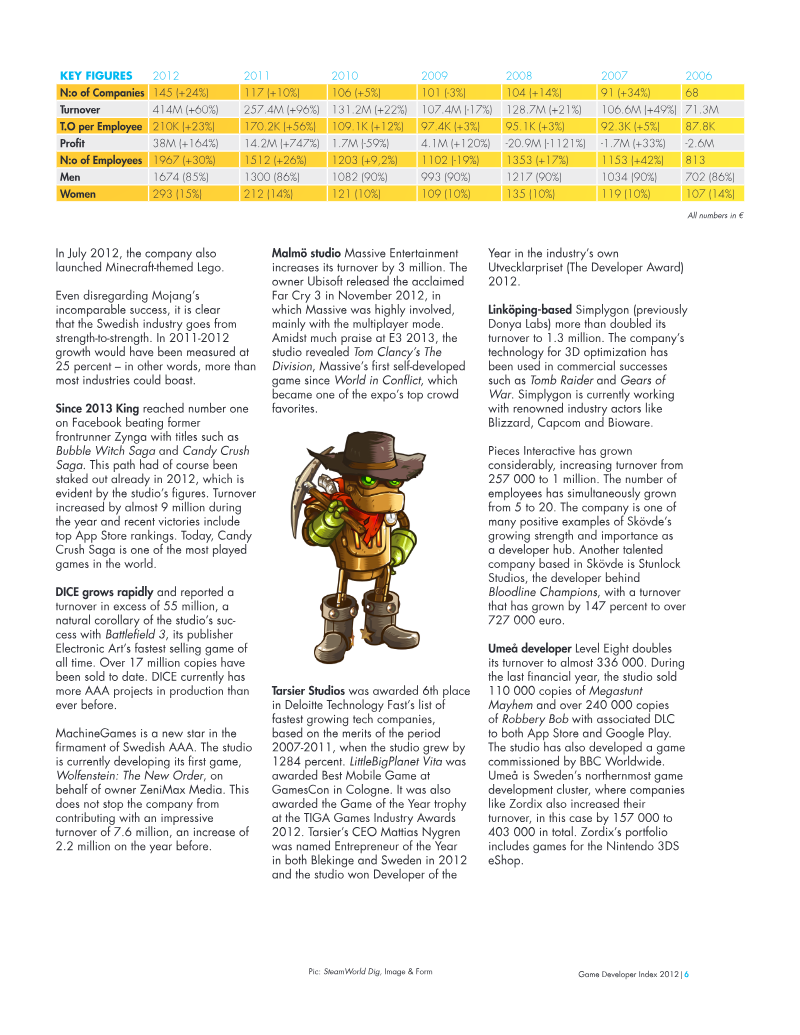
The Swedish video game industry underwent a period of unprecedented expansion in 2012, characterized by a 60 percent increase in total turnover to 414 million euros and a 163 percent surge in profits to 38 million euros.
- In 2012, the Swedish video game industry experienced rapid growth, with total turnover rising 60% to 414 million euros and profits surging 163% to 38 million euros.
- The industry workforce expanded by 30% to 1,967 full-time professionals, supported by the launch of 37 new companies.
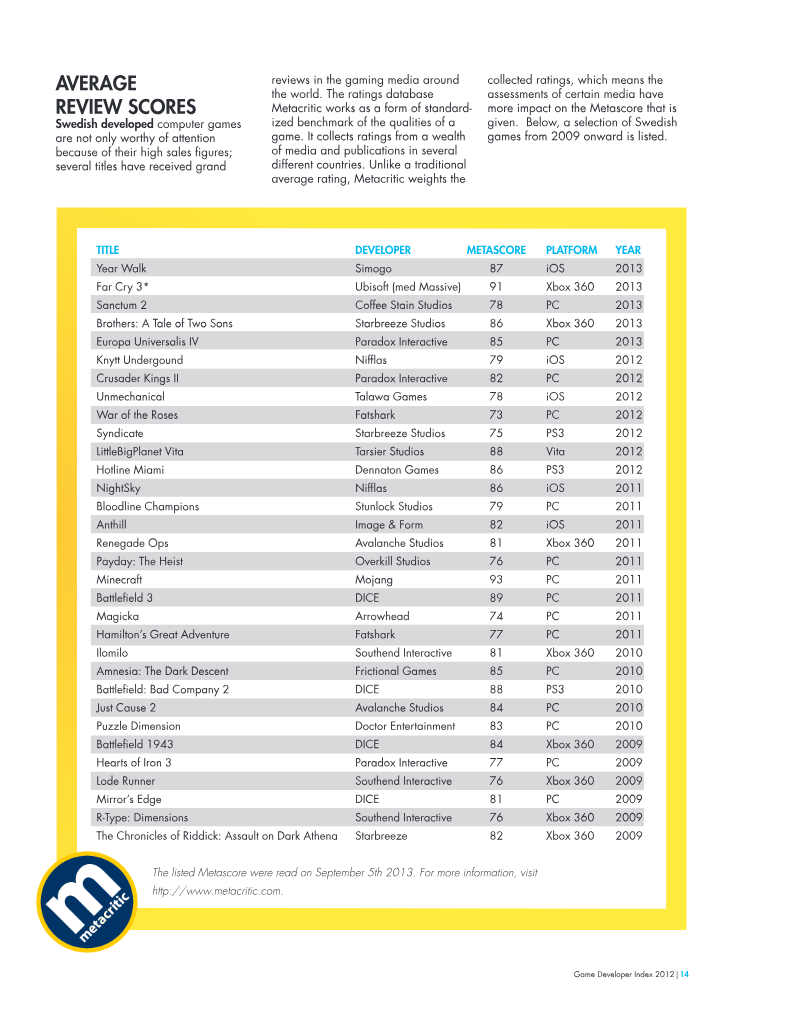
- Market success was driven by global hits like Minecraft and Candy Crush Saga, alongside established AAA output from studios such as DICE and Starbreeze.
Game Developer Index 2010: Sweden
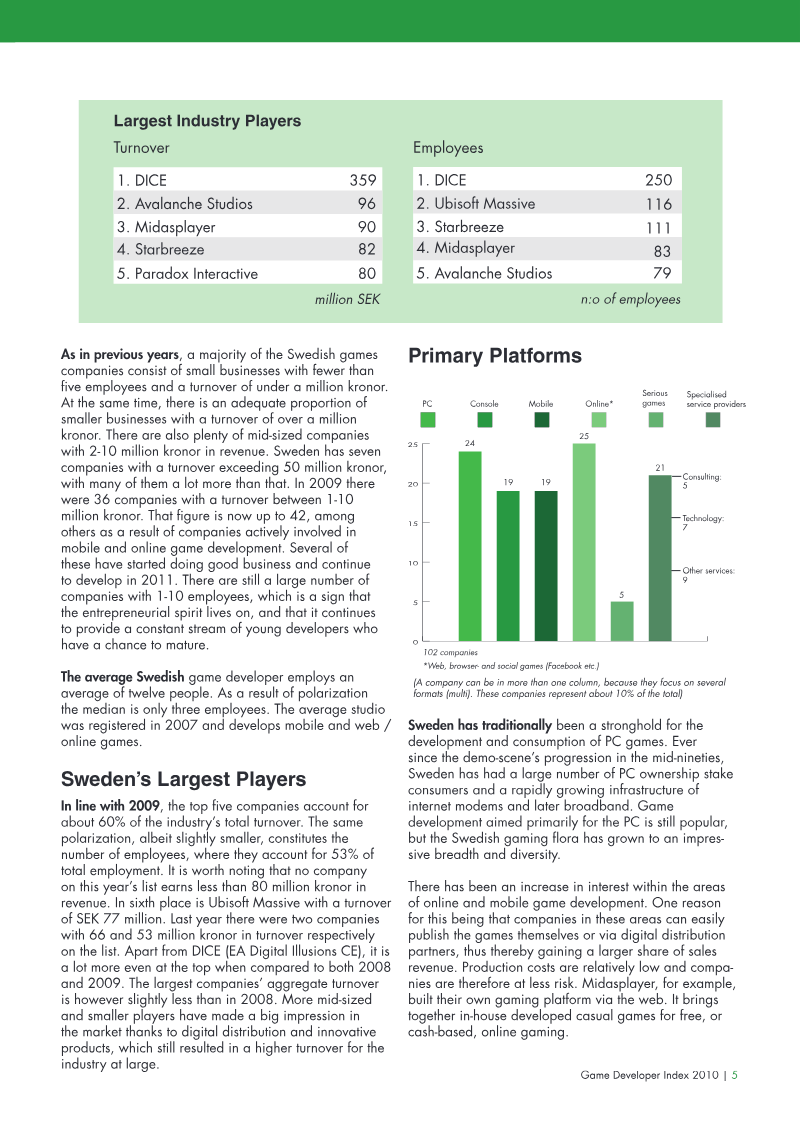
The Swedish game industry entered a period of significant expansion in 2010, characterized by a record turnover of 1.181 billion SEK and a 9.2 percent increase in total employment.
- The Swedish game industry reached a record turnover of 1.181 billion SEK in 2010, supported by a 9.2 percent increase in total employment.
- Market concentration remains high, with the five largest companies accounting for 60 percent of the industry's total revenue.
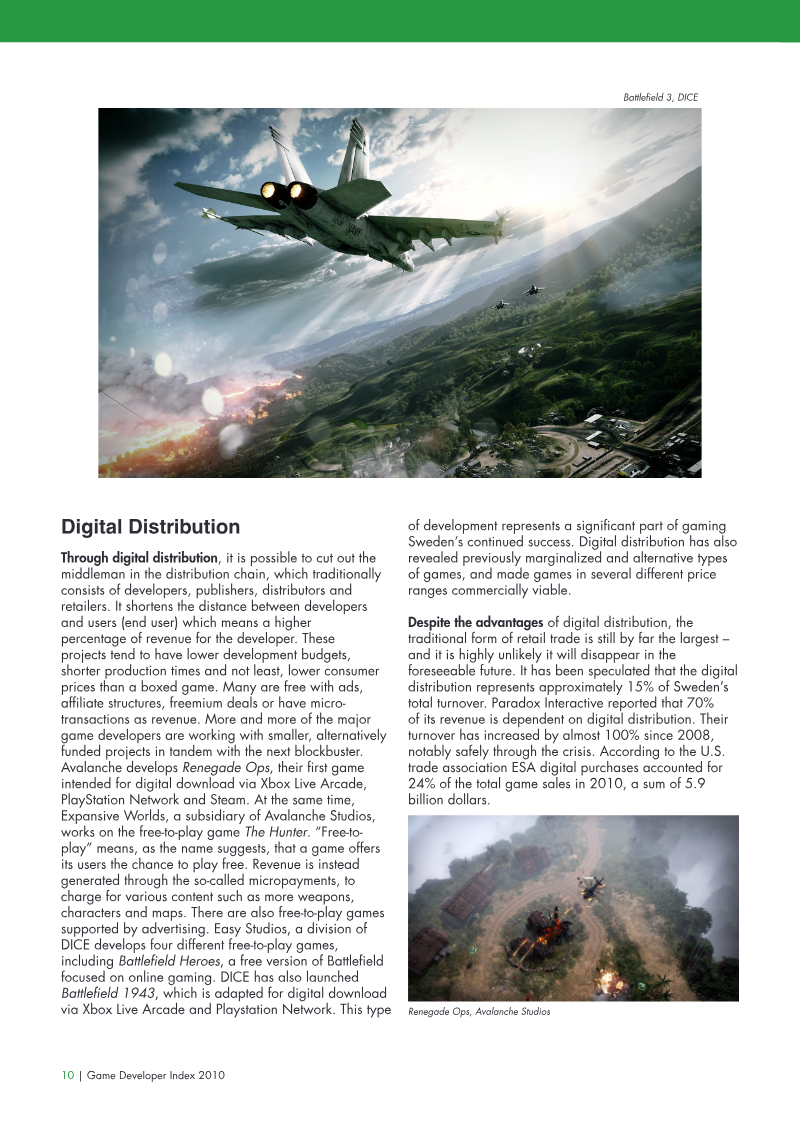
- The sector is successfully pivoting toward digital distribution and mobile platforms, utilizing diverse monetization strategies like free-to-play, freemium, and ad-funded models.
PC/Console Gaming Insights
The 2025 PC/Console Gaming Index provides a comprehensive analysis of the current state of the gaming industry, focusing on market performance, consumer behavior, and advertising strategies.
- Steam remains the dominant PC/console platform with 409 million downloads and a 15% year-to-date increase in premium game revenue.
- Action-oriented genres lead the market in volume, with Action (262 million), Shooter (189 million), and RPG (131 million) titles recording the highest download counts.
- Electronic Arts leads in total downloads with 82.8 million, while Microsoft follows with 75.4 million, driven by major franchises like Call of Duty and Minecraft.
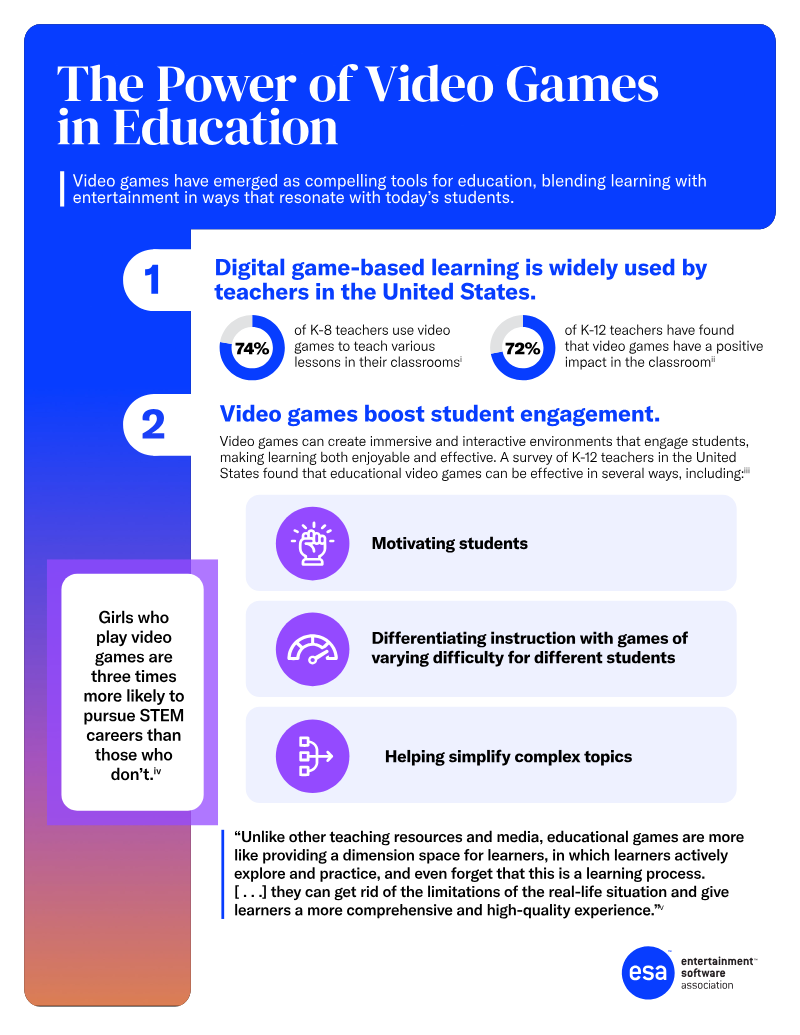
The Power of Video Games in Education
Digital game-based learning has become a significant pedagogical tool within the United States K-12 education system, driven by the ability of interactive environments to foster student engagement and academic success.
- Approximately 74% of K-8 teachers in the United States currently integrate video games into their curricula, with 72% of K-12 educators reporting a positive impact on classroom outcomes.
- Gaming experiences correlate with increased interest in STEM careers, as girls who play video games are three times more likely to pursue these fields.
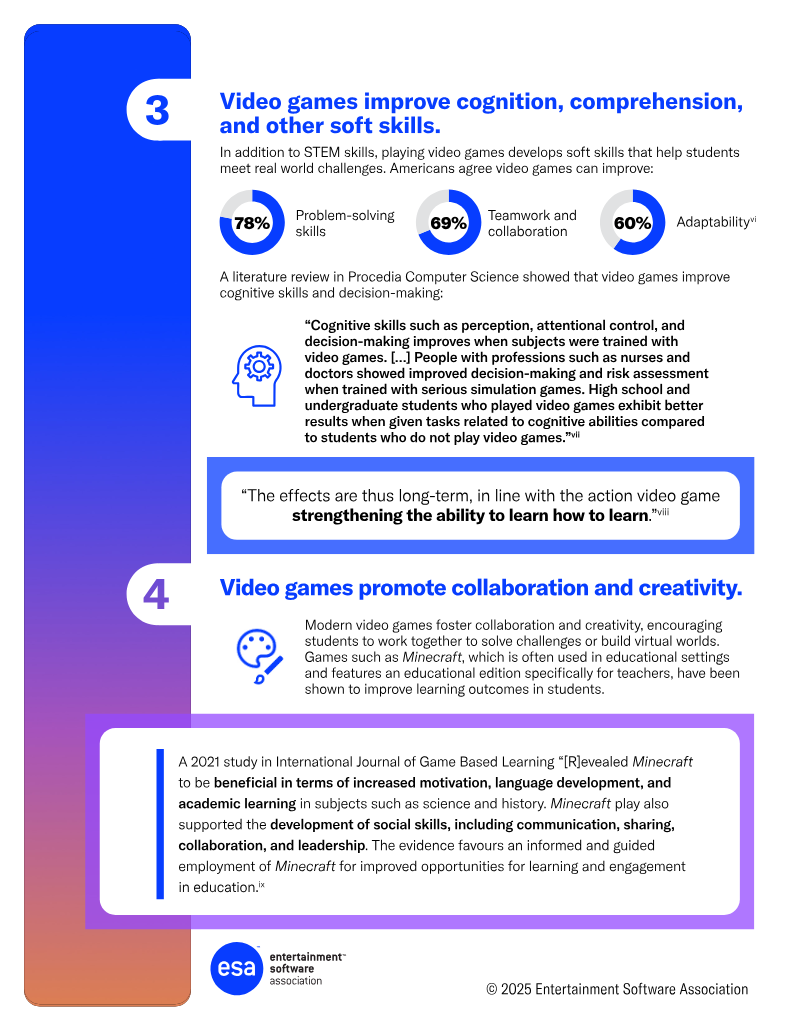
- Public perception strongly supports the cognitive benefits of gaming, with 78% of Americans citing improved problem-solving skills, 69% noting better teamwork, and 60% recognizing increased adaptability.