Just Cause
Game
Documents about Just Cause
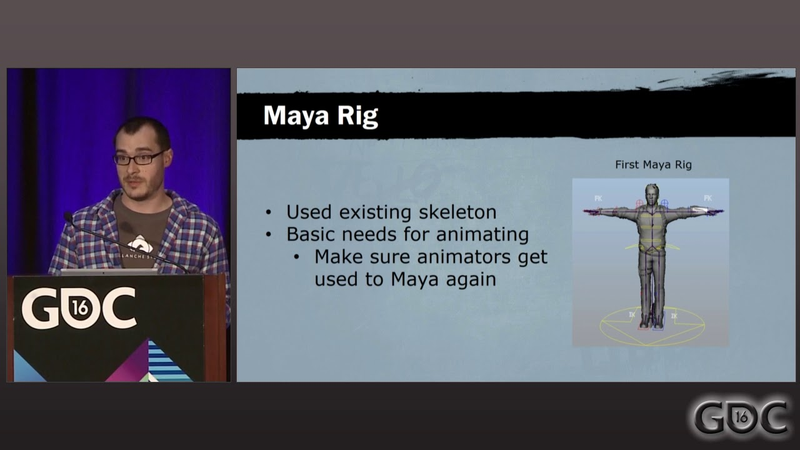
Honey, Where is My Wingsuit? - Building the Just Cause 3 Animation and Rigging Pipeline
The development of the Just Cause 3 animation and rigging pipeline centered on transitioning from a MotionBuilder-centric workflow to a Maya-based environment to better accommodate the game’s unique hand-keyed mechanics, such as the wingsuit.
- Avalanche Studios implemented a dual-software pipeline for Just Cause 3, transitioning animation workflows between Maya for rigging and MotionBuilder for animation editing using a shared HumanIK (HIK) skeleton system.
- The team utilized a modular rigging architecture where all character types—including humans, animals like cows, and specialized gear like wingsuits—shared a standardized initialization and finalization process to ensure consistency.
- To manage 13,000 lines of English dialogue, the studio used MotionBuilder’s built-in voice device to automate lip-syncing, driving face poses via float data (0 to 1) that the game engine blended at runtime.
Realizing Responsive High Fidelity Character Movement in Just Cause 3
Achieving high-fidelity character movement in Just Cause 3 requires a sophisticated hybrid architecture that prioritizes player responsiveness without sacrificing the visual integrity of authored animations.
- Avalanche Studios achieved responsive character movement in Just Cause 3 by decoupling animation-driven motion from player input, allowing for real-time adjustments to rotation and speed without relying solely on pre-authored animation data.
- To maintain responsiveness during start animations, the team extracted rotation data from the animation and applied a fixed adjustment to the character's facing direction to match the player's target input in real-time.
- The developers used authored angular acceleration curves to smooth character orientation changes, ensuring consistent movement responsiveness across different gameplay scenarios like transitioning from a parachute landing to a run.

De-Gamification - Flexibility to Play Your Way - Extra Credits
De-gamification serves as a critical design methodology that involves the intentional removal or relaxation of extrinsic motivators—such as scores, timers, leaderboards, and resource limitations—to evaluate the core, intrinsic appeal of a game.
- De-gamification is a design methodology that removes extrinsic motivators like scores, timers, and leaderboards to isolate and evaluate the core intrinsic appeal of a game's mechanics.
- Developers use de-gamification as a testing tool to determine if movement, exploration, and interaction are inherently engaging without relying on external validation or performance pressure.
- Removing systemic constraints during development often reveals new creative possibilities, as testers frequently invent their own challenges when freed from rigid objectives.

Comedic Games - Can We Make More Funny Games? - Extra Credits
The primary challenge in creating comedic video games lies in the fundamental conflict between the rigid timing required for humor and the unpredictable nature of interactive player agency.
- The core challenge in game comedy is the conflict between the rigid timing required for humor and the unpredictable nature of player agency.
- Traditional scripted comedy, as seen in titles like Portal, fails to leverage the medium's potential because it relies on removing player control to preserve comedic pacing.
- Effective game comedy should shift toward 'comedy by choice,' where players generate humorous outcomes through their own actions rather than consuming passive, scripted content.

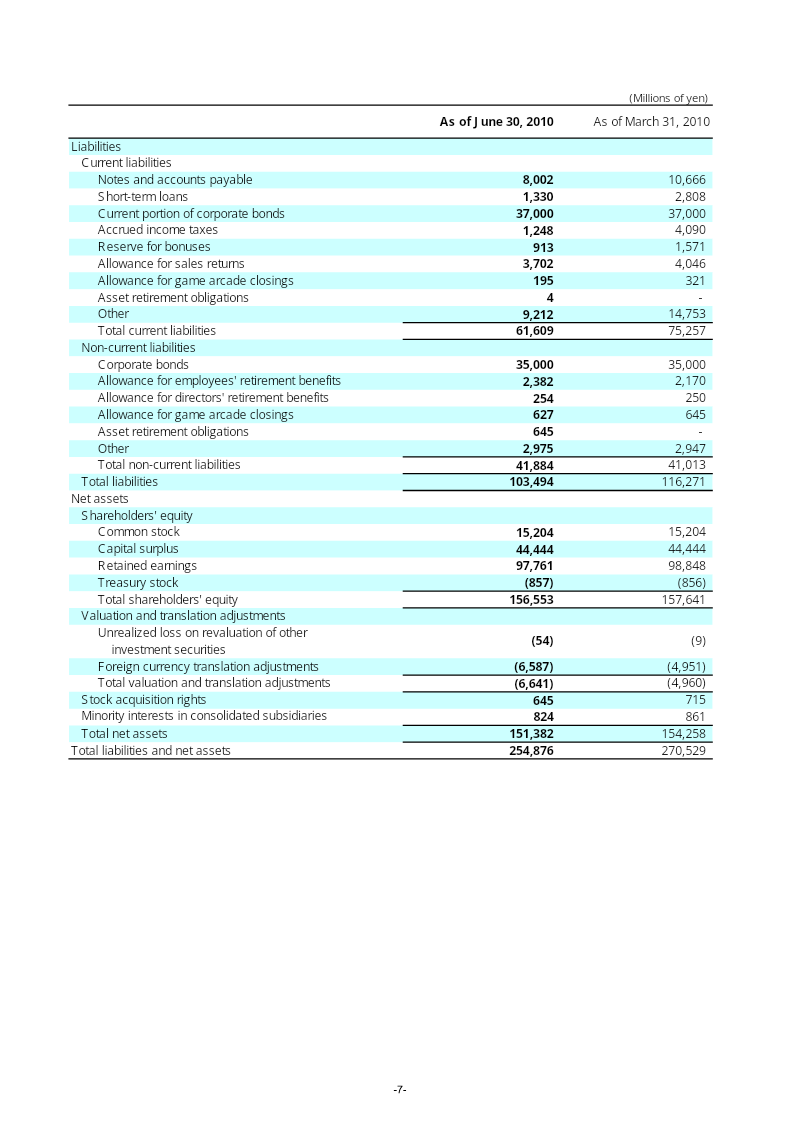

Square Enix Holdings Consolidated Financial Results: Three-Month Period Ended June 30, 2010
Square Enix Holdings reported strong financial growth for the three-month period ending June 30, 2010, marking a significant recovery compared to the same period in the previous year.
- Square Enix achieved a significant financial turnaround for the quarter ending June 30, 2010, reporting a net income of 1,812 million yen compared to a net loss of 1,672 million yen in the same period the previous year.
- Operating income surged by 814.4% year-on-year to reach 5,434 million yen, while net sales grew by 10.7% to 32,540 million yen.
- The Digital Entertainment segment served as the primary growth engine, generating 16,626 million yen in sales and 5,891 million yen in operating income, bolstered by 'DRAGON QUEST MONSTERS: Joker 2,' 'FINAL FANTASY XIII,' and 'Just Cause 2.'



Square Enix Annual Report FY2010
Square Enix achieved record financial performance for the fiscal year ended March 31, 2010, characterized by a 41.7% increase in net sales to ¥192.3 billion and a 130% surge in operating income to ¥28.2 billion.
- Square Enix achieved record financial performance in FY2010, with net sales rising 41.7% to ¥192.3 billion and operating income surging 130% to ¥28.2 billion.
- The acquisition of Eidos Ltd. and the success of international titles like Final Fantasy XIII, Batman: Arkham Asylum, and Just Cause 2 increased overseas revenue from 16.5% to 26.6% of total sales.
- Management initiated a strategic pivot toward a 'network-centric' model, prioritizing smartphone gaming, digital platforms, and user-generated data over traditional physical media.