Just Cause
Game
Documents about Just Cause

Building a Mixing Sandbox for 'Just Cause 4'
The development of the audio mix for Just Cause 4 at Avalanche Studios centered on transitioning from a traditional, compression-heavy approach to a modular, system-driven "sandbox" framework.
- Avalanche Studios transitioned from a dynamics-driven mix in 'Just Cause 3' to a state-based, siloed architecture in 'Just Cause 4' to eliminate audio pumping and CPU-heavy side-chain compression.
- By implementing granular microstate snapshots for vehicle audio, the team reduced the authoring time for a single vehicle mix from several hours to just a few minutes.
- The team abandoned traditional side-chaining and compressor-based mixing in favor of a priority-based system that uses game-design parameters to modulate EQ, balance, and spatial imaging in real-time.

Maximizing Animation and Cinematic Content Workflows for 'Just Cause 4'
The production of Just Cause 4 required the creation of over 7,200 unique animations and 65 minutes of cinematic footage, a massive undertaking managed by a lean technical team.
- Avalanche Studios developed a centralized batch-processing tool driven by JSON configuration files to automate animation exports and transfers between Maya and MotionBuilder, significantly reducing the need for manual DCC interaction.
- To manage the complexity of a AAA open-world title with limited technical animation staff, the team implemented a 'driver root control' system that functions as a high-performance locator, allowing animators to bake and transfer animation across rigs with immediate space-matching functionality.
- The studio optimized locomotion workflows by implementing a distance-threshold script that automatically identifies and tags foot-plant positions by analyzing frame-to-frame world-space movement, effectively filtering out non-planted data.

Vehicle Physics and Tire Dynamics in Just Cause 4
The vehicle physics system in Just Cause 4 was designed to support over 100 diverse vehicle types within a large-scale open-world environment while maintaining a 30Hz simulation rate.
- To maintain stability in a 30Hz simulation, Avalanche Studios implemented friction clamps that prevent the physics model from diverging when applying high levels of grip.
- The team utilized a 'useful mass' heuristic to calculate friction clamping, which determines the ratio of vehicle mass represented by a single tire based on its relative wheel load.
- By decoupling the tire model from strict realism, developers can use steepness in friction curves to simulate 'feel'—where the slope represents grip levels and the leveling off of the curve simulates the sensation of sliding.

Tree's Company: Systemic AI Design in Just Cause 3
The systemic design of artificial intelligence in Just Cause 3 relies on a modular architecture that balances emergent, open-world behavior with the precise requirements of scripted mission content.
- Avalanche Studios utilized a hybrid AI architecture for Just Cause 3 that combined behavior trees for high-level logic with utility functions to rank and select optimal positions or targets based on environmental variables.
- Content designers were empowered to customize AI behavior by filling out exposed parameters in the engine, which were then dynamically read and utilized by the behavior trees at runtime.
- The team implemented modular 'micro-behaviors' as external tree objects, allowing designers to inject specific tasks—such as flying a helicopter to a point—into the main AI logic without requiring custom programming for every scenario.
Honey, Where is My Wingsuit? - Building the Just Cause 3 Animation and Rigging Pipeline
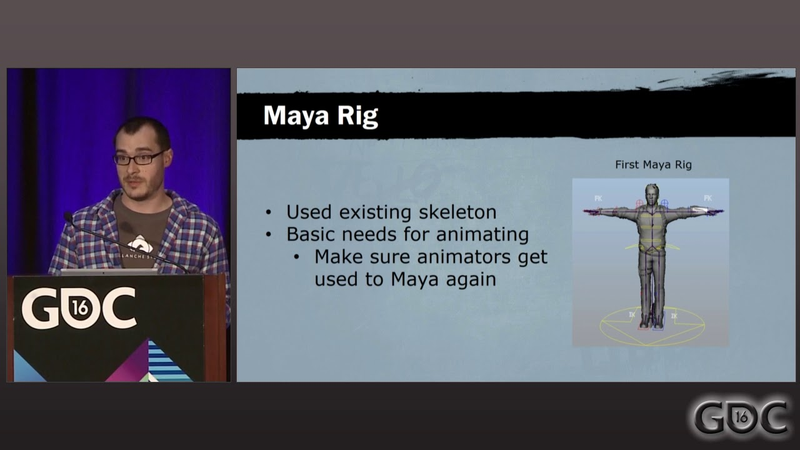
The development of the Just Cause 3 animation and rigging pipeline centered on transitioning from a MotionBuilder-centric workflow to a Maya-based environment to better accommodate the game’s unique hand-keyed mechanics, such as the wingsuit.
- Avalanche Studios implemented a dual-software pipeline for Just Cause 3, transitioning animation workflows between Maya for rigging and MotionBuilder for animation editing using a shared HumanIK (HIK) skeleton system.
- The team utilized a modular rigging architecture where all character types—including humans, animals like cows, and specialized gear like wingsuits—shared a standardized initialization and finalization process to ensure consistency.
- To manage 13,000 lines of English dialogue, the studio used MotionBuilder’s built-in voice device to automate lip-syncing, driving face poses via float data (0 to 1) that the game engine blended at runtime.

Realizing Responsive High Fidelity Character Movement in Just Cause 3
Achieving high-fidelity character movement in Just Cause 3 requires a sophisticated hybrid architecture that prioritizes player responsiveness without sacrificing the visual integrity of authored animations.
- Avalanche Studios achieved responsive character movement in Just Cause 3 by decoupling animation-driven motion from player input, allowing for real-time adjustments to rotation and speed without relying solely on pre-authored animation data.
- To maintain responsiveness during start animations, the team extracted rotation data from the animation and applied a fixed adjustment to the character's facing direction to match the player's target input in real-time.
- The developers used authored angular acceleration curves to smooth character orientation changes, ensuring consistent movement responsiveness across different gameplay scenarios like transitioning from a parachute landing to a run.

De-Gamification - Flexibility to Play Your Way - Extra Credits
De-gamification serves as a critical design methodology that involves the intentional removal or relaxation of extrinsic motivators—such as scores, timers, leaderboards, and resource limitations—to evaluate the core, intrinsic appeal of a game.
- De-gamification is a design methodology that removes extrinsic motivators like scores, timers, and leaderboards to isolate and evaluate the core intrinsic appeal of a game's mechanics.
- Developers use de-gamification as a testing tool to determine if movement, exploration, and interaction are inherently engaging without relying on external validation or performance pressure.
- Removing systemic constraints during development often reveals new creative possibilities, as testers frequently invent their own challenges when freed from rigid objectives.

Comedic Games - Can We Make More Funny Games? - Extra Credits
The primary challenge in creating comedic video games lies in the fundamental conflict between the rigid timing required for humor and the unpredictable nature of interactive player agency.
- The core challenge in game comedy is the conflict between the rigid timing required for humor and the unpredictable nature of player agency.
- Traditional scripted comedy, as seen in titles like Portal, fails to leverage the medium's potential because it relies on removing player control to preserve comedic pacing.
- Effective game comedy should shift toward 'comedy by choice,' where players generate humorous outcomes through their own actions rather than consuming passive, scripted content.