
Harry Potter: Wizards Unite
GameBy Niantic Labs · Released Jun 21, 2019
An augmented reality game set in the Harry Potter universe being developed by Niantic and WB Games San Francisco. "Players will learn spells, explore their real world neighborhoods and cities to discover & fight legendary beasts and team up with others to take down powerful enemies."
Connections
Each row is a game or company named alongside Harry Potter: Wizards Unite, each column a document, oldest first. A mark means that document names it. Select a row to see those documents.
About the game
- Released
- Jun 21, 2019
- Developer
- Niantic Labs
- Publishers
- Warner Bros. Interactive Entertainment, Portkey Games
- Genres
- Role-playing (RPG), Simulator
- Platforms
- Android, iOS
- Links
- Official site, Wikipedia
Game data from IGDB.com
Key figures from the reports
The historical underperformance of Harry Potter: Wizards Unite, which generated only $39.4 million in total lifetime revenue before its 2022 shutdown, served as an early indicator of Niantic's portfolio consolidation strategy.
Game World Observer, 2021 · Niantic Shutting Down Harry Potter: Wizards Unite
The game's initial performance trails other major location-based AR titles, significantly behind the 32.7 million first-week downloads of Pokémon GO and the 3.1 million of Harry Potter: Wizards Unite.
Sensor Tower, 2019 · Minecraft Earth Builds Up 1.4 Million Downloads After U.S. Rollout
Ahead of its U.S. and U.K. launch, Niantic's Harry Potter: Wizards Unite grossed $72,000 in Australia and New Zealand, significantly trailing the $1.6 million Pokémon GO earned in those same markets during its equivalent early-release period.
Sensor Tower, 2019 · Pokémon GO Revenue Reaches $2.6 Billion
Documents about Harry Potter: Wizards Unite
Amateur devs score hits with 38-0, WWDC reactions, May's top games, Orna, jobs, data and more
The mobile gaming industry is currently witnessing a surge in amateur-developed hits, driven by the accessibility of AI-assisted coding tools.
- Amateur developers are achieving viral success with AI-assisted football drafting games like '38-0' and '38-0-0', which secured over 100,000 downloads each in a single weekend with zero marketing spend.
- Honor of Kings dominated May’s top-grossing charts with $161 million in in-app purchase revenue, while 'Last War Survival' saw a significant decline, dropping to 10th place with $82 million.
- Apple’s new developer policy offers free access to its AI foundation models for apps until they reach 2 million first-time downloads, a move aimed at supporting indie developers.
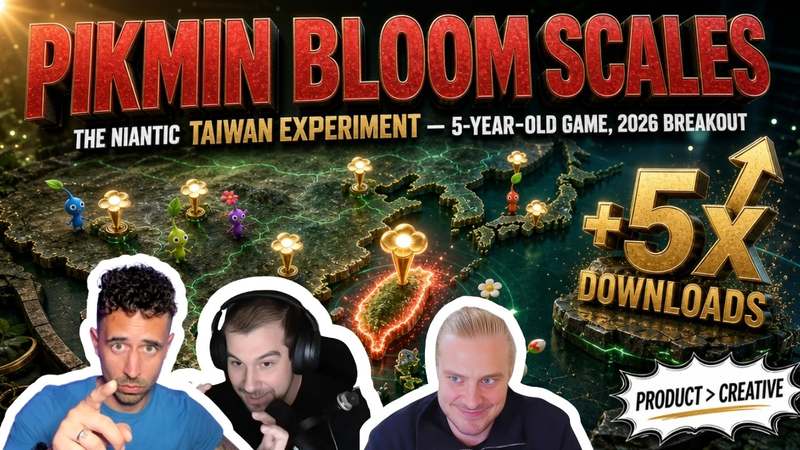
🌸 The Pikmin Bloom Anomaly: How a 5-Year-Old game just hit 5x downloads without UA
Pikmin Bloom has achieved a notable fivefold increase in downloads by prioritizing product-led growth over traditional user acquisition strategies.
- Pikmin Bloom achieved a 5x increase in downloads by shifting from traditional user acquisition to product-led growth strategies.
- The introduction of region-specific mechanics, such as weekly rotating mushroom locations, successfully drove organic discovery and persistent user engagement.
- The game has generated $85 million in lifetime revenue, establishing a stable niche as a casual alternative to more competitive titles like Pokémon GO.

Monster Hunter Now: Has Niantic Finally Found Another Pokémon Go-Sized Hit?
This analysis evaluates the initial performance and potential longevity of Niantic's Monster Hunter Now, comparing its success to Pokémon GO and other location-based AR titles.
- Monster Hunter Now has successfully established itself in the top 200 grossing apps in the US, marking a significant improvement over Niantic’s previous title, Peridot, which failed to maintain its initial ranking.
- The game’s success is driven by its adaptation of the established Monster Hunter franchise, which has sold over 94 million copies globally and gained significant Western recognition through console titles like Monster Hunter World.
- Location-based AR games see higher adoption in Japan than in the US, with three such titles currently in the Japanese top 20, compared to only two in the US market.

Mobile Harry Potter Games: Dissecting 3 Unique IP Interpretations
This analysis dissects three prominent mobile Harry Potter games: Harry Potter: Hogwarts Mystery, Harry Potter: Puzzles & Spells, and Harry Potter: Magic Awakened, examining their unique interpretations of the IP, core mechanics, and monetization strategies.
- The Harry Potter IP does not guarantee success, as evidenced by the failure of Niantic’s AR title, Harry Potter: Wizards Unite, proving that gameplay mechanics must effectively embody the franchise's spirit.
- Harry Potter: Magic Awakened, developed by NetEase, has gained significant global momentum following its success in the Asian market, challenging the long-standing dominance of Hogwarts Mystery.
- Magic Awakened distinguishes itself through a hybrid genre approach, combining real-time strategy, RPG elements, and collectible card battler mechanics with a unique storybook visual style.

Who Owns the Metaverse: Mostly Men, That's Who
Zuckerberg's rebrand of Facebook to Meta triggered a surge of metaverse enthusiasm in late 2021, and this newsletter essay asks who is positioned to own the emerging space.
- Leadership in the metaverse is heavily male-dominated, with only one woman holding a top position among the 41 companies in the Roundhill Ball Metaverse ETF (RBME).
- A broader analysis of 142 metaverse-related firms, including private entities like Epic Games, identified only seven women in leadership roles.
- Institutional ownership of the metaverse is highly concentrated, as Vanguard and BlackRock hold significant stakes in 36 and 34 of the 41 RBME portfolio companies, respectively.
Niantic Shutting Down Harry Potter: Wizards Unite
Niantic announced in November 2021 that it would shut down Harry Potter: Wizards Unite, launched in 2019, after the game failed to approach the commercial scale of its flagship Pokémon GO.
- Scopely has agreed to acquire Niantic’s game development business for $3.5 billion, gaining control of major titles including Pokémon GO, Monster Hunter Now, and Pikmin Bloom.
- Niantic’s game portfolio, which generates over $1 billion in annual revenue and maintains 30 million monthly active users, will continue to be led by Kei Kawai and Ed Wu post-acquisition.
- Following the sale, Niantic will pivot to focus on geospatial AI and AR technology through a new standalone entity, Niantic Spatial, funded by $250 million in capital.
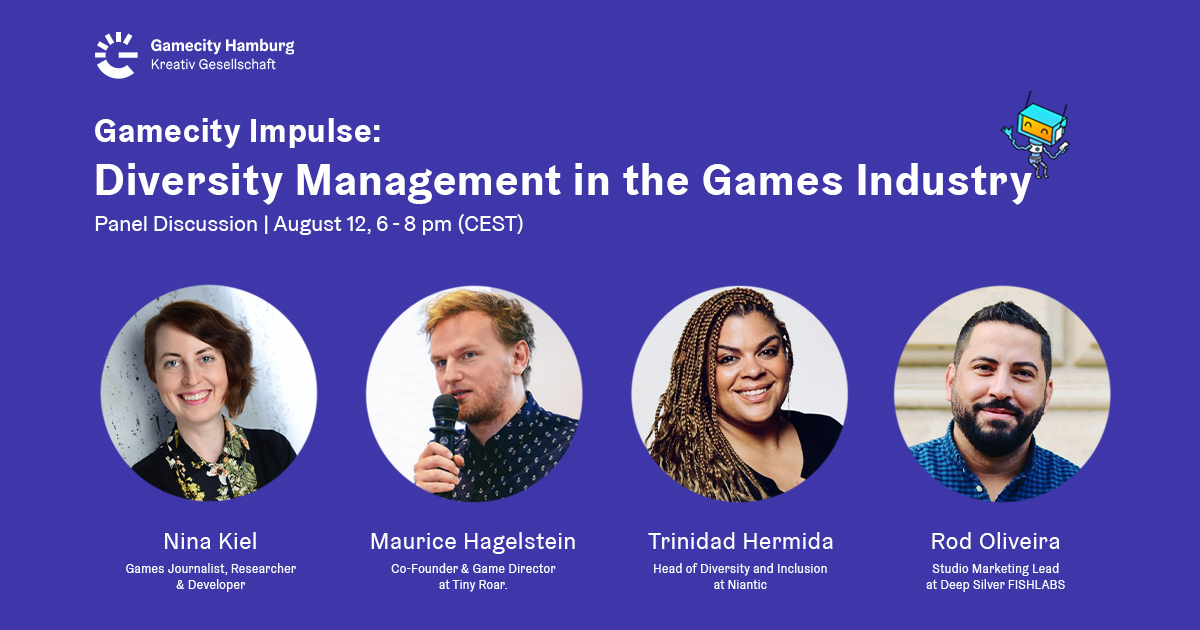
Gamecity Impulse: Panel-Discussion on Diversity Management in the Games Industry
Gamecity Hamburg announced a panel discussion on diversity management in the games industry, held on August 12, 2021 from 6 to 8 pm CEST as part of its digital "Gamecity Impulse" series.
- The global gaming audience has reached an estimated 2.2 billion people, creating a significant disconnect between the diversity of players and the composition of the development teams creating their content.
- Industry experts from Niantic, Deep Silver FISHLABS, and Tiny Roar identified the normalization of diversity as a critical core standard for the games industry.
- The German games industry has formalized diversity commitments through the 'Hier spielt Vielfalt' declaration, though integration into daily operations and creative processes remains a significant challenge.
Location-based Games as Exergames: From Pokémon to The Wizarding World
Location-based games function as effective tools for promoting mild physical activity, primarily through casual walking, though they generally fail to facilitate moderate or strenuous exercise.
Pokémon GO Has Best Year Ever in 2019
Niantic's Pokémon GO posted its strongest year to date in 2019, grossing an estimated $894 million in worldwide player spending according to Sensor Tower Store Intelligence estimates.
- Pokémon GO achieved its highest annual revenue since its 2016 launch, generating $894 million in gross player spending during 2019.
- The game ranked as the fifth highest-earning mobile game globally in 2019, trailing only behind titles like Candy Crush Saga and Honor of Kings.
- Revenue growth in 2019 was driven by consistent live operations and in-game events, specifically the introduction of Team Rocket in July, which led to $116 million and $126 million in revenue for August and September respectively.
Minecraft Earth Builds Up 1.4 Million Downloads After U.S. Rollout
Minecraft Earth, Mojang's location-based augmented reality game, generated 1.4 million downloads across the App Store and Google Play in the week following its November 12, 2019 U.S. launch, according to Sensor Tower Store Intelligence data.
- Following its November 12, 2019, U.S. launch, Minecraft Earth generated 1.4 million downloads in one week, bringing its total early access downloads to approximately 2.5 million.
- The game's initial performance trails other major location-based AR titles, significantly behind the 32.7 million first-week downloads of Pokémon GO and the 3.1 million of Harry Potter: Wizards Unite.
- The United States market dominated the launch week, accounting for 1.2 million downloads (86.2% of the total) and $86,000 in gross revenue (92.8% of the total).

Using Licensed IPs in Mobile Games: 3 Things You Need to Know
Third-party IPs have become a major force in mobile gaming, with 30% of the US top 100 grossing games and nearly 25% of the top 200 built on licensed properties, based on GameRefinery Market Explorer data.
- Licensed IP integration is most effective in genres like RPGs and location-based games, where lore and character depth naturally align with core mechanics, whereas casual genres like Match3 often succeed without third-party IP.
- An IP must actively support the game's feature-set; for example, RPGs require an IP with a wide roster of distinct characters and rich lore to successfully drive collection and development mechanics.
- The demographic appeal of the chosen IP must align with the target audience for the game's specific mechanics to avoid alienating players or creating a mismatch between the brand's tone and the game's complexity.

Harry Potter: Wizards Unite – Gameplay and Features
Niantic's follow-up to Pokémon GO, Harry Potter: Wizards Unite, is analyzed here shortly after its mid-2019 launch, with attention to its gameplay loop, monetization, and feature set relative to Pokémon GO and Jurassic World Alive.
- Pokémon GO dominates the AR/location-based mobile gaming market, accounting for 93% of the subgenre's total IAP revenue on US iOS.
- The AR/location-based genre remains a niche segment, representing only approximately 2.6% of total IAP revenues within the US iOS market.
- Harry Potter: Wizards Unite utilizes a core gameplay loop centered on collecting 'foundables' to fill a Registry, which rewards players with currency for character progression via a three-class profession system.
Companies behind it
As the documents state it.