Guitar Hero
Game
8 documents in the library are about Guitar Hero, from writers such as Deconstructor of Fun, The Game Business and Dataspelsbranschen. Each has a summary and key insights with the page they come from.
Connections
The documents about Guitar Hero on the inner ring, the other games and companies they name on the outer one. Select a cover to see it up close and open it in a new tab; drag to move, pinch or Ctrl + scroll to zoom.
Documents about Guitar Hero
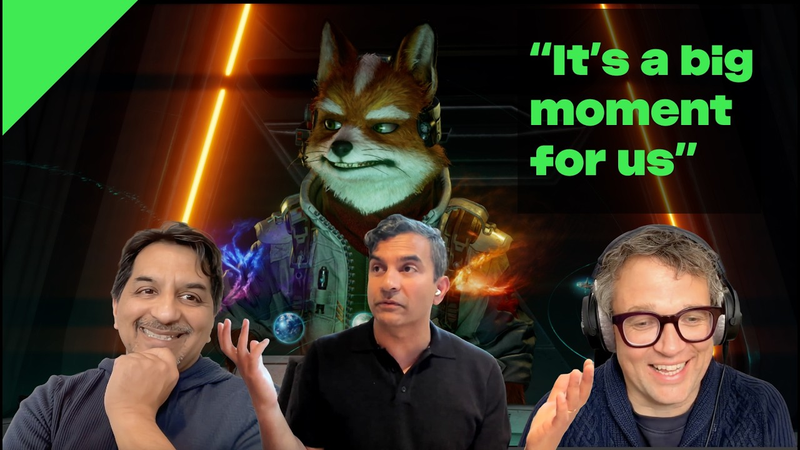
Star Fox developer Velan: How to survive as a North American game studio
Operating within the high-cost North American game development landscape requires a strategic shift away from the traditional, multi-year development cycles that often stifle innovation.
- Studios should adopt a lean, agile development model that prioritizes rapid prototyping and tight feedback loops to avoid the financial risks of multi-year, large-scale projects.
- Financial stability is best achieved by balancing a portfolio of stable, partner-funded AA-scope projects with smaller, self-funded original intellectual properties.
- Operational efficiency relies on maintaining a compact core team of highly skilled talent for creative direction while utilizing strategic outsourcing to manage production scaling.
Are guitar games coming back? The story of RedOctane's return
The gaming industry is currently undergoing a period of significant structural transformation, characterized by both corporate consolidation and a strategic pivot toward sustainable, community-driven development models.
- Embracer Group is reviving the RedOctane brand by merging original staff with open-source rhythm game developers to move away from the annual release model that previously caused market oversaturation.
- The new rhythm game strategy shifts toward a 'forever game' model, prioritizing long-term content updates and direct-to-consumer engagement over traditional retail cycles.
- Publishers are increasingly utilizing game bundles as a strategic tool to extend the lifecycle and reach of titles after initial launch momentum declines.

This is Why the Music Stopped - for Music Games
The music game genre, once a dominant force in the video game industry, has struggled to maintain relevance due to prohibitive licensing costs, market oversaturation, and shifting consumer habits.
- The music game genre collapsed rapidly after 2008, when it accounted for 18% of the U.S. video game market, due to the Great Recession and the decline of expensive, bulky plastic peripherals.
- High production costs are driven by complex music licensing, which requires individual negotiations with record labels and publishers rather than centralized licensing bodies.
- Retailers contributed to the genre's decline by reclaiming shelf space previously dedicated to hardware bundles, forcing a shift away from the physical-first model.

TWIG #321 AppLovin’s SHOCK Acquirer, Monster’s Gone WILD, and Guitar Hero’s $1B CORPSE
The global gaming industry is currently navigating a period of intense structural realignment, characterized by strategic consolidation and a pivot toward high-stakes intellectual property.
- Savvy Games Group’s $3.5 billion acquisition of Scopely signals a shift toward long-term institutional investment from Saudi Arabia, prioritizing permanent industry influence over short-term vanity projects.
- Tripledot acquired AppLovin’s game division for $900 million, reflecting a broader trend of unexpected market consolidation as companies seek to scale operations.
- Supercell is shuttering Space Ape to centralize operations in London, signaling a strategic pivot away from niche puzzle games toward ambitious, real-time action titles.
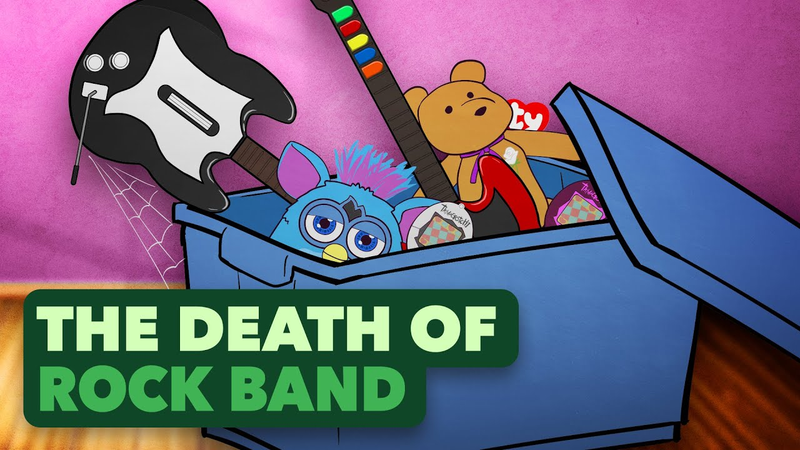
Rock Band: How a Genre Died in 5 Years
The rapid rise and collapse of the rhythm game genre between 2005 and 2010 represents a unique phenomenon in the video game industry, where a multi-billion dollar market segment effectively vanished within five years.
- The rhythm game genre collapsed between 2005 and 2010 due to extreme market oversaturation and a reliance on a hardware-centric business model that became unsustainable.
- Annual sales for the genre plummeted by 50 percent in 2009 as consumer demand for new plastic instrument peripherals evaporated.
- The market was diluted by a flood of spin-offs and band-specific titles, which eroded the appeal of the core experience and led to diminishing returns.
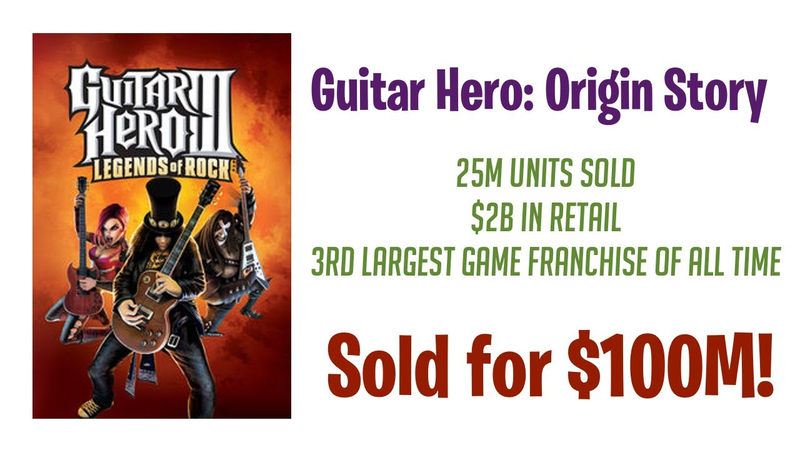
Guitar Hero Origin Story | Lessons Learned with Kai Huang former CEO and Co-Founder of Red Octane
RedOctane emerged as a pivotal force in the mid-2000s gaming landscape by transitioning from an online rental service to a specialized hardware and publishing powerhouse.
- RedOctane achieved financial stability by pivoting from an online rental service to a high-margin hardware business, specifically focusing on niche accessories like dance pads before partnering with Harmonix for Guitar Hero.
- Product pricing should be based on the perceived value delivered to the consumer rather than a cost-plus calculation to maximize profitability.
- To maximize the return on fixed marketing expenditures, companies must execute simultaneous product launches across all platforms and territories to ensure immediate market penetration.

Size DOS Matter: Mattis Delerud of Team DOS talks to Biz during Dare to be Digital
Size Does Matter is a rhythm-action game developed by Team DOS that blends mechanics from titles like Tetris, Super Hexagon, and Guitar Hero.
- Size Does Matter is a rhythm-action game developed in Unity that combines mechanics from Tetris, Super Hexagon, and Guitar Hero for touchscreen devices.
- To circumvent the high costs of licensing mainstream music, the developers source royalty-free soundtracks from emerging electronic artists on platforms like Newgrounds.
- The game utilizes a free-to-play model that includes a base package of eight to ten songs, with additional revenue generated through the sale of artist-specific song packs.

Försäljning av dataspel 2008: Dataspelsbranschens Rapporter
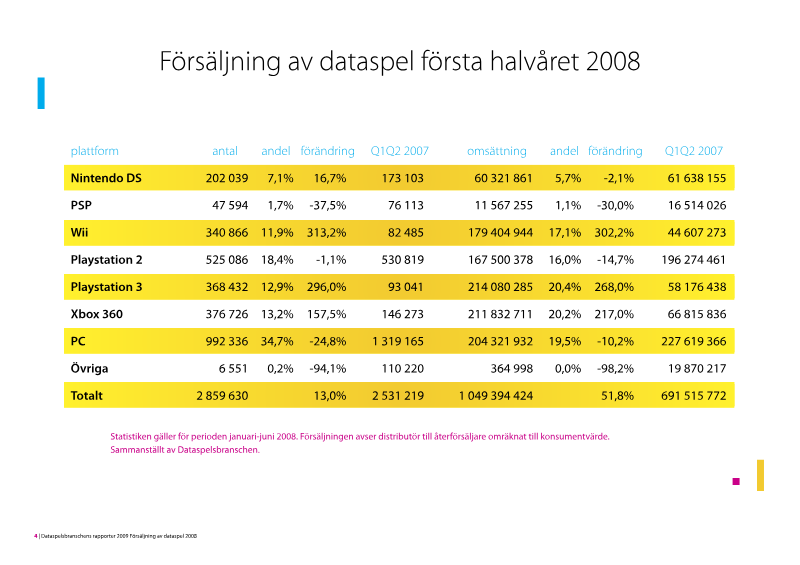
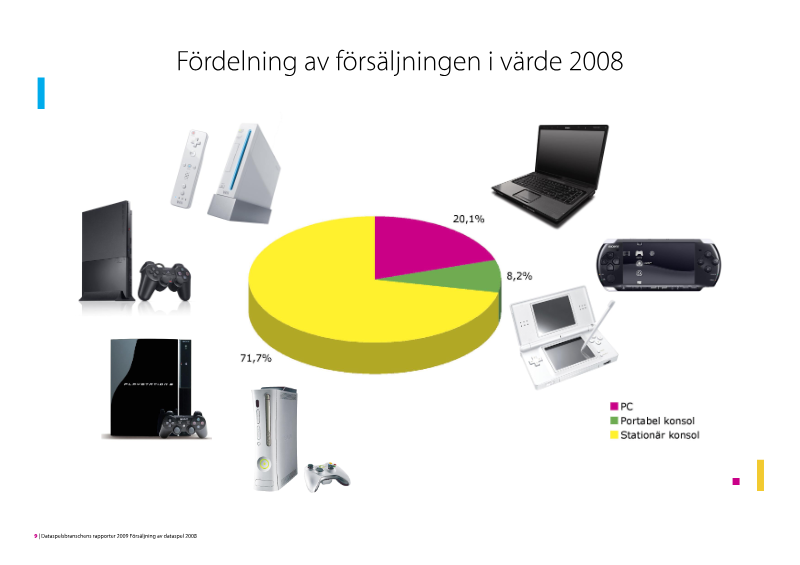
The Swedish video game market experienced a record-breaking year in 2008, with total industry turnover surpassing three billion SEK.
- The Swedish video game market reached a record turnover exceeding 3 billion SEK in 2008, marking a 26 percent increase in total sales value despite the economic recession.
- Growth was primarily driven by major console platforms, specifically the Wii, PlayStation 3, and Xbox 360, which saw significant gains in both volume and revenue.
- While total sales volume remained stable at approximately 7.68 million units, the increase in total value reflects a consumer shift toward higher-priced titles and hardware-bundled software like Wii Fit and Guitar Hero.
Companies behind it
As the documents state it.