Transcript
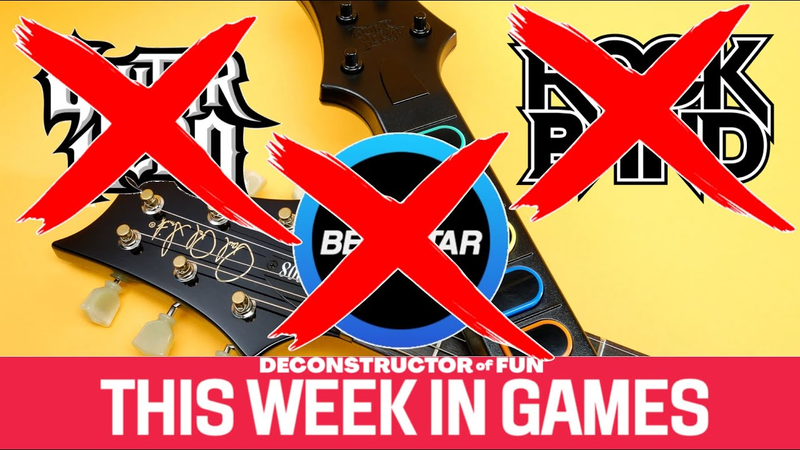
[Music] speaking of other big companies did you guys play rock band or Guitar Hero did you have the 15 guitars in your living room like I did kids are playing it now oh my God he's pulling it out everybody perance no they're you can buy them on [ __ ] Best Buy dude they're actually really well made now and you can boot up the old rock band my kids spent hundreds of dollars getting this thing going but they're actually playing it so that's it was totally oh my God that's amazing I that that looked so much better than the little dinky one I had oh no this thing in 200 it doesn't look like a Fisher Price Toy no amazing first first sitation definitely did Eric on Dragon Force when I was at EA we did this you know you would always go to Barcelona or whatever for the European marketing Summit and they bought out this bar and they put Rock Band on stage and each of your teams would dress up and go and
perform a song in front of everyone and it was like the first time in my life I was like oh my God this is what a rock star feels like we're playing Bon Joy like wanted Dead or Alive everyone's like I was like this okay anyway let's get to the story so Activision has announced Guitar Hero mobile the last iteration of the franchise was 10 years ago it just makes me feel old when we say that I was struck more by the challenge of doing music games on mobile especially given space Apes beat Star that we just talked about since that didn't make the cut into the supercell takeover you know I have some data coming up about you know probably why that is so the world was a little bit more pissed off about the fact that the art in the social post was apparently AI so I took a look at it o yeah it's it's it's like really really bad AI the notes are the wrong colors there are multiple colors on each of the lanes it shows five Lanes which you know it was kind of in the advanced mode of Guitar Hero but
on mobile like very few games actually use that many lanes you know the colors were all wrong harmonics just must be so so so sad so dear marketers I love AI I use it all the time but I don't use it in public assets and if you do you know geez make sure that you have 20 people review this thing before it goes out because I thought this was April Fool's Day I mean GH and then look it's like the same pose of the you know people on this just makes me cry seeing this okay so the bigger issue music games don't make any kind of money and I can't imagine this is what Activision is looking for so I'm super confused this genre is very admon I mean that's why beatstar actually had to shift its entire strategy to go more admon you know that's why the amanotes the magic tiles games do really well because it's all admon I didn't think this is something Activision really wanted to get their hands dirty with I don't think about Activision as an admon driven
company like we were just talking about with triple dot or the voodoo or the other folks so I pulled T1 last 12 months ranked by Revenue Hatsune Miku is the Japanese game so these games crush it in Japan I think everybody knows that they were number one with a whopping $10 million IAP a year beatstar was six million a year country star was 1.3 million this is IAP okay cross to your earlier point about ads being more but not that much more we can see why these games just kind of struggle on that front so I love this brand we just talked about it Crest I'm I'm waiting do do I hear it let's let's hear it yeah totally mice nuts I don't know why they're bothering but yeah I mean it doesn't really seem to fit with a freet to- play business model but you know maybe they have something creative in mind to to to build it out but yeah I mean Guitar Hero Rock Band were really one of the last Innovative things that's
happened in this whole business so so long ago with my startup most recently we looked at a lot of music licensing music games is incredibly expensive yeah the complexity around it though is that there's no like unifying body corre like the NFL and the NFL players Association so you're doing deals for individual [ __ ] songs you know sometimes or all the different record labels right and that gets prohibitively expensive because that's when the minimum guarantees canat you alive right because you're doing MGS for everybody and not to mention licensing fees for everybody and everyone the negotiations were pain in the ass and so part of the reason besides like General fatigue from the consumer was that they ran out of [ __ ] music right there's only so many songs that really can get you up and moving and plucking a [ __ ] plastic guitar right it's like they ran out of music right and they actually oversaturated the market which is a lot of people were saying is they just tried to release it too fast they're competing
against rock band so anyway yeah I mean if you look at it like they've done every major song within the first like two or three years and so they were just kind of like scrambling to find other stuff and that kind of ultimately led to demise you know but plus consumers got bored of having yeah plastic [ __ ] all over their house plastic [ __ ] everywhere so on music licensing you have the label and the publisher so you have to do two different deals and now in today's world many of the music folks will make you do a blanket deal so it's like old school cable where you have to pay a lot of money and only use like 10% of the channels that you watch it's the same thing with music and then what happened was a number of the artists would not agree to appear in a game that had other artists in it and so that's why they started to do solo artists I actually remember specifically and I could be wrong and anybody who's was at harmonics whatever at the time when they did the Metallica thing that was what the end of it right they where they lost so much [ __ ] money on that particular skew not because Metallica is a bad band we
love Metallica but because of all the fees and and guarantees and Manufacturing like that supposedly was the straw the Bro camel's back yeah I think that was one of them and I am a huge Metallica fan and so I actually had a call with the head of the Guitar Hero franchise because I was trying to learn about music for the game I was working on and the nail in the coffin was this topic just music licensing would made it so incredibly incredibly difficult Phil what else did you have on this well I'm first of all I'm just confused that you would give this to Activision rather than King I don't know how like Crash Bandicoot comes out first to like send over to King and not send over this feels like a more obvious fit we also had taptap Revenge 20 years ago so I don't understand why we're Reinventing this there's also have been like other Guitar Hero games so I just I want to see the corporate strategy slide that argues for this if one exists on how you like position this I think there's a separate very interesting story about why Guitar Hero and rock band died because not only did they die they died basically overnight between 2008 and
2009 there was a huge drop in revenue and this fall from grace is [ __ ] insane right because in 2008 the music genre had become the second most popular genre in the United States behind action and half of the players were female incredible right and it's height in 2008 music games were about 18% of the video game market so music games were absolutely killing it I think we all remember rock band and Guitar Hero I mean even if you go back and like watch the office you remember there's a party at Jim's house they're playing rock band it was a part of Pop Culture right it was a part of mainstream and the question is like why did it die and I think part of the explanation that Eric gave like hey you got all this plastic [ __ ] around your house what a waste of of space this isn't going to last long I I would agree that's part of it but I think people forget that 2008 is also when you have the app store and you have freeo playay come out and especially with such a strong female share I would argue that freeo playay killed music games I don't actually think it was any the plastic [ __ ] I would free to play know on get out here are you kidding I totally disagree with that people have
plastic [ __ ] all over their house they collect figurines they collect old consoles they collect everything it's fatigue not to mention 2008 was the Great Recession too like who's going to go out and buy this [ __ ] plastic guitars when the whole [ __ ] world is collapsing actually it's they're gonna play free to playay games right so this also coincided with retail because of the recession retail was getting rid of the Shelf space in the video game aisle because that stuff took up so much space so retailers are basically the ones that killed this and said we don't have room for all of your [ __ ] anymore oh well they have room for DJ Hero much smaller I don't know you only to play the same song so many times and then at the cost of having to buy all the DLC packs or all the individual songs starts to feel old really quick I'm thinking the beat saer played a lot of beat saer really liked it I know it's VR and not this VR different slightly different that's also premium that's it's also premium but if every time I wanted to play something new I had to buy a full new pack pack yeah all right guys we have to wrap it
here thanks everyone and see you next week all right bye guys [Music]
Auto-generated captions from YouTube — names and numbers may be misheard.














Comments