Devil May Cry
Documents about Devil May Cry
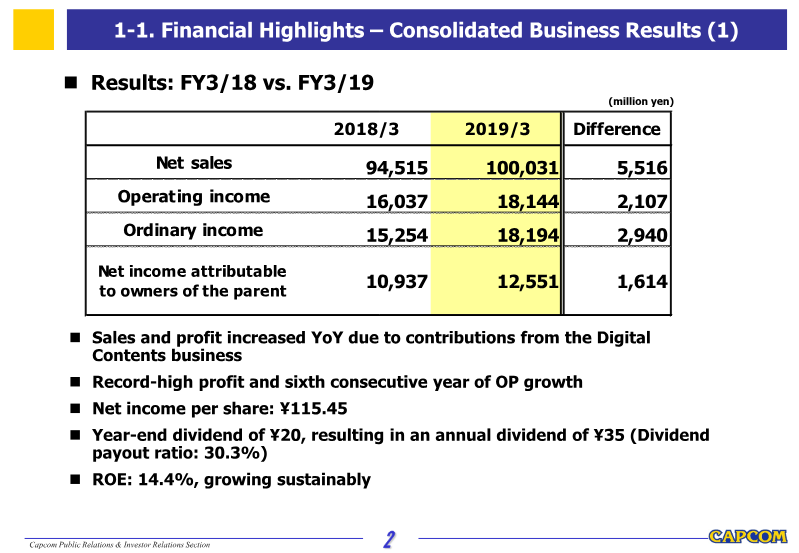
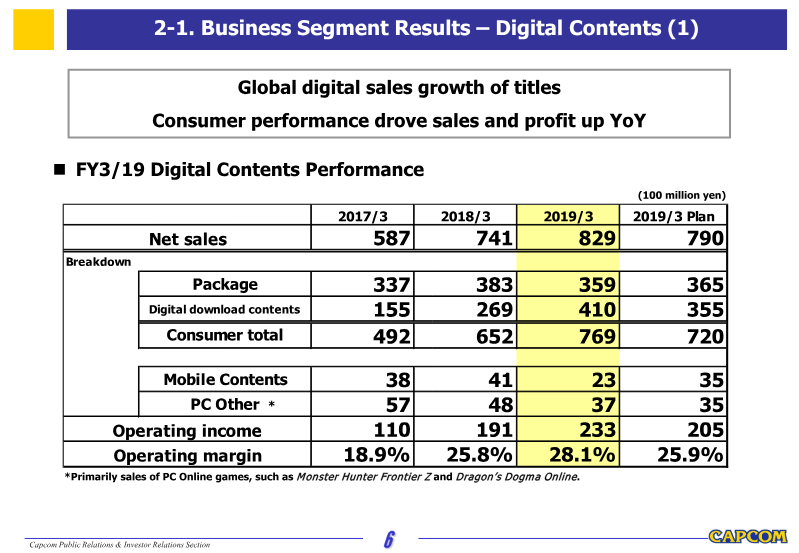

Capcom Financial Highlights: Fiscal Year Ended March 31, 2019
Capcom’s financial results for the fiscal year ended March 31, 2019, demonstrate a period of sustained growth and record-high profitability.
- Capcom achieved its sixth consecutive year of operating income growth, reaching 18.14 billion yen on net sales of 100.03 billion yen for the fiscal year ended March 31, 2019.
- The Digital Contents segment drove performance, with digital distribution accounting for 60.5% of sales and overseas markets representing 85.4% of total revenue.
- Key titles Resident Evil 2 and Devil May Cry 5 exceeded performance expectations, while Monster Hunter: World reached 12 million units in cumulative global sales.
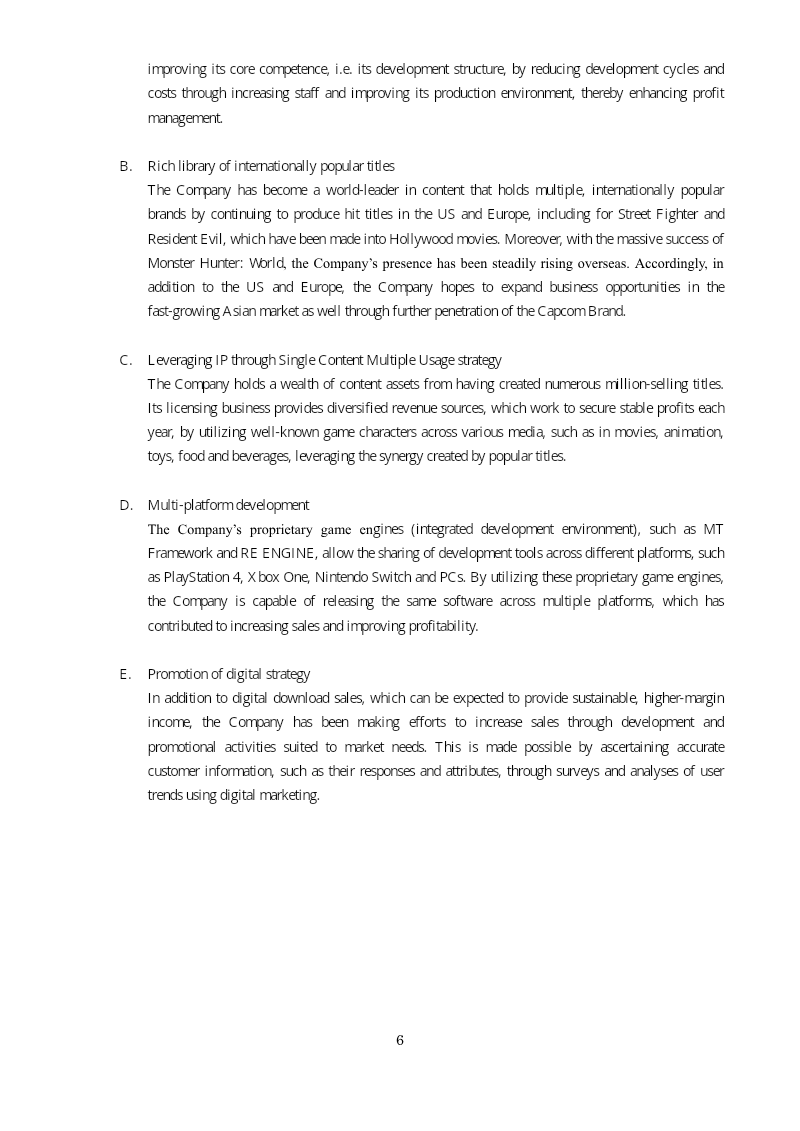
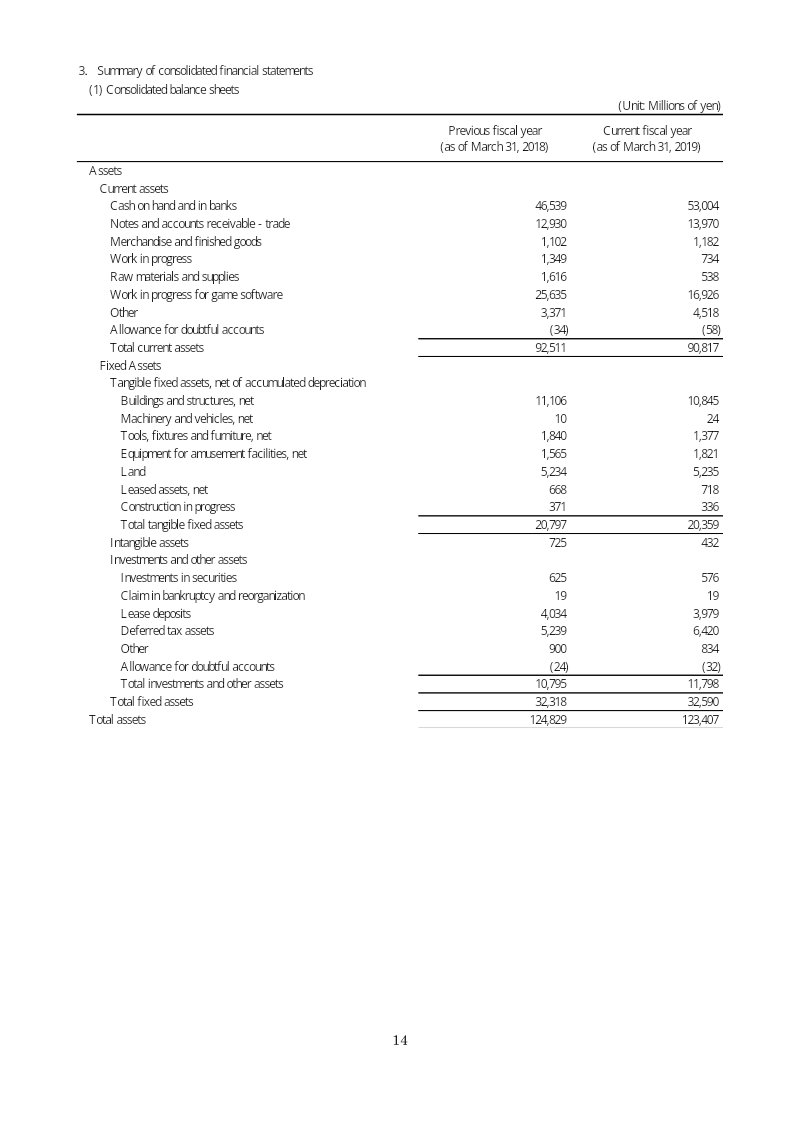
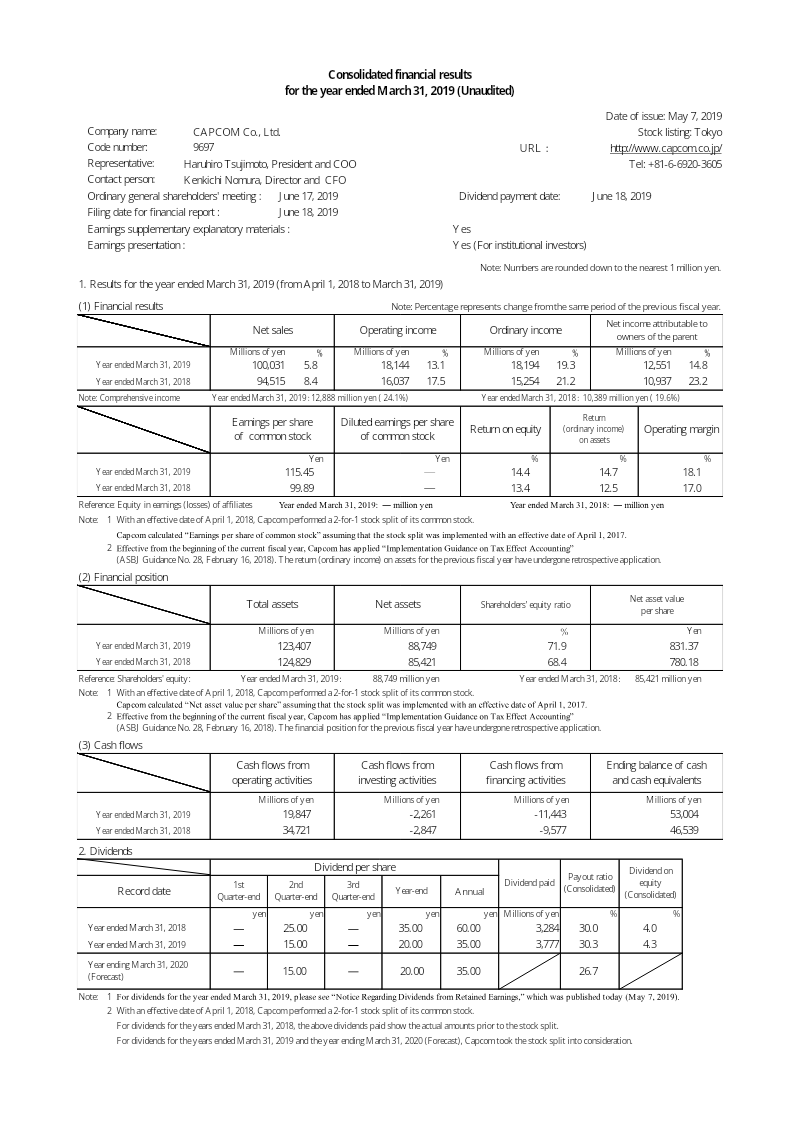
Capcom Consolidated Financial Results for the Year Ended March 31, 2019
Capcom achieved record-breaking financial performance for the fiscal year ending March 31, 2019, characterized by net sales reaching 100,031 million yen and a 14.8 percent increase in net income.
- Capcom achieved record financial performance for the fiscal year ending March 31, 2019, with net sales of 100,031 million yen and a 14.8 percent increase in net income.
- The Digital Contents segment served as the primary growth engine, generating 23,315 million yen in operating income behind the success of Monster Hunter: World, Resident Evil 2, and Devil May Cry 5.
- While digital and arcade operations remained robust, the Amusement Equipments division struggled, resulting in an operating loss that necessitates further operational refinement.
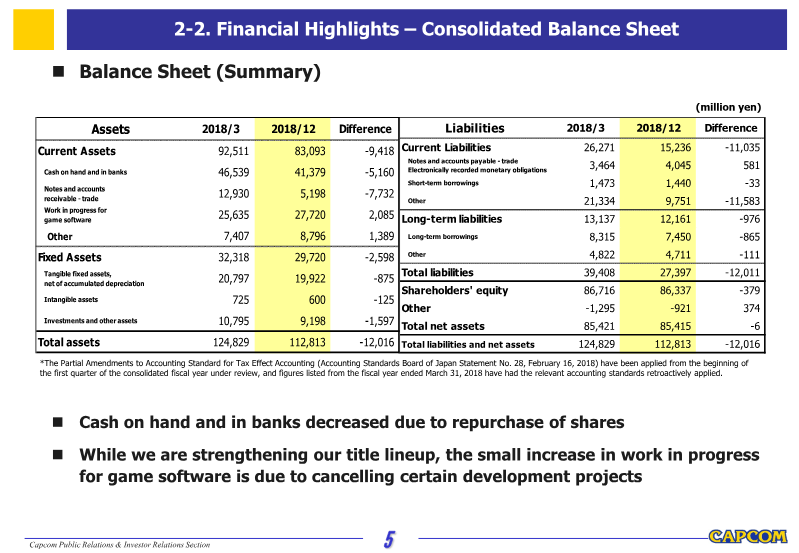
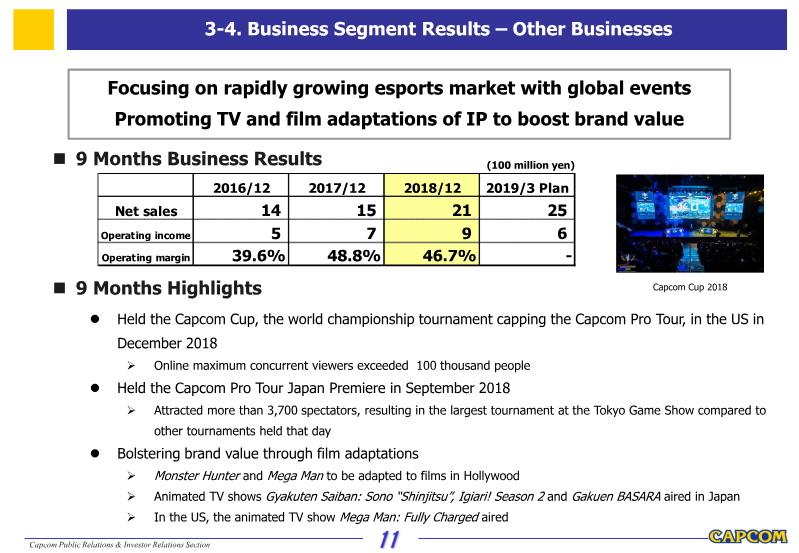
Capcom 3rd Quarter Financial Results: Fiscal Year Ending March 31, 2019
Capcom’s third-quarter financial results for the fiscal year ending March 31, 2019, demonstrate a strong growth trajectory, with the company aiming for its sixth consecutive year of operating income growth and record-high profits.
- Capcom is on track for its sixth consecutive year of operating income growth, reporting 13,461 million yen in operating income on 61,270 million yen in net sales for the nine months ending December 31, 2018.
- The Digital Contents segment is the primary growth engine, generating 15,288 million yen in operating income and achieving a 66.9% digital sales ratio for consumer software.
- Monster Hunter: World remains the company's flagship title, having surpassed 11 million cumulative units sold.
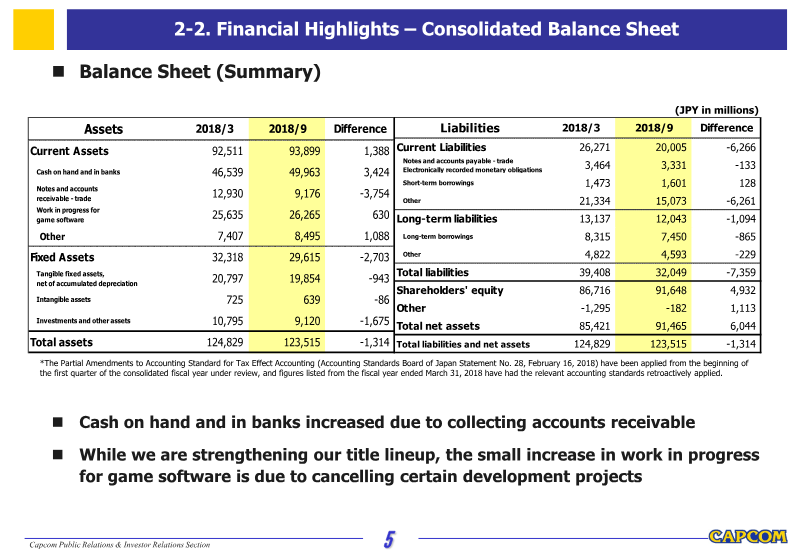
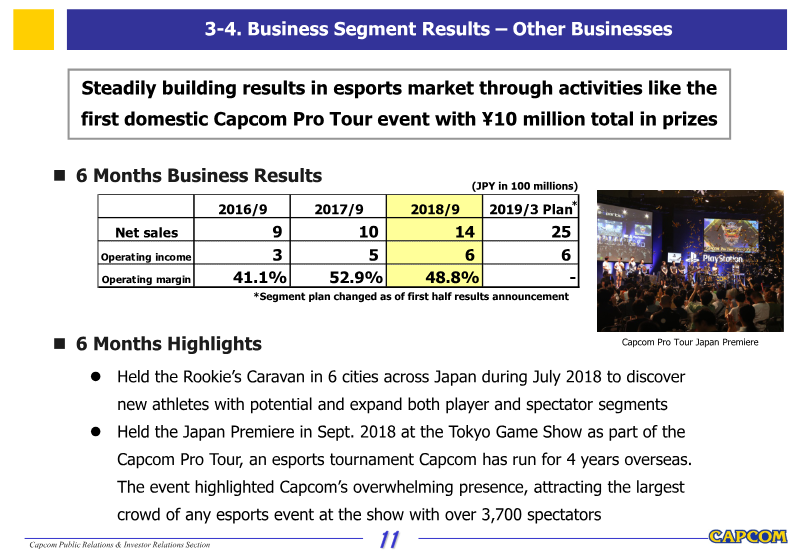
Capcom First Half Report: Fiscal Year Ending March 31, 2019
Capcom’s first-half report for the fiscal year ending March 31, 2019, outlines a period of significant financial growth, driven primarily by the strong performance of its Digital Contents segment.
- Capcom achieved record-high profits for the first half of the fiscal year ending March 31, 2019, with net sales of 43.3 billion JPY and an operating income of 10.5 billion JPY.
- The Digital Contents segment drove financial success, largely fueled by Monster Hunter: World, which reached over 10 million units in cumulative global sales.
- The company is on track for six consecutive years of operating income growth, supported by a strategic shift toward digital distribution and international markets.

Art Direction Bootcamp: How Being Different Makes All The Difference
In this 2015 GDC presentation, Ninja Theory’s visual director Alessandro Taini outlines a philosophy of art direction centered on the pursuit of originality through unconventional creative processes.
- Art direction should prioritize originality by resisting generic industry tropes and avoiding literal keyword-based brainstorming, which often leads to clichéd visual results.
- Creative teams should derive inspiration from non-gaming sources such as fine art, experimental animation, and real-world materials to ensure a distinct and authentic aesthetic.
- Visual direction should function as a 'digital double' of the creator, incorporating personal history and diverse cultural influences to move beyond derivative design.
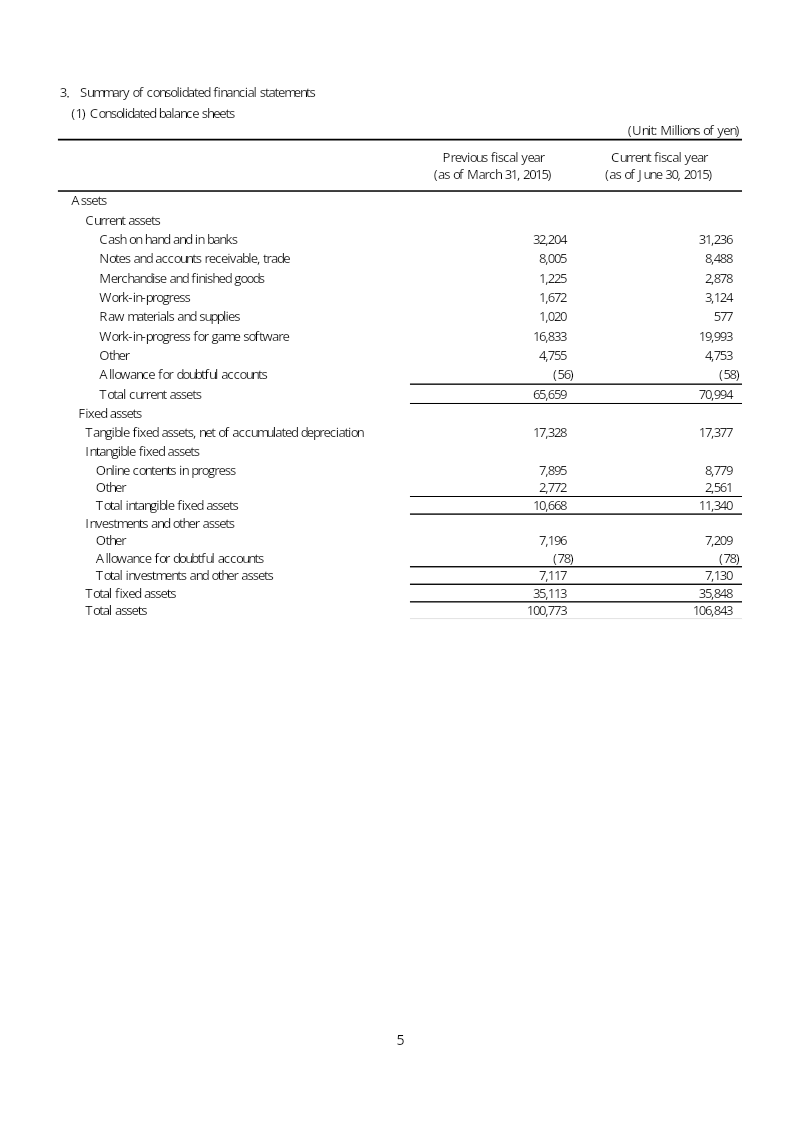
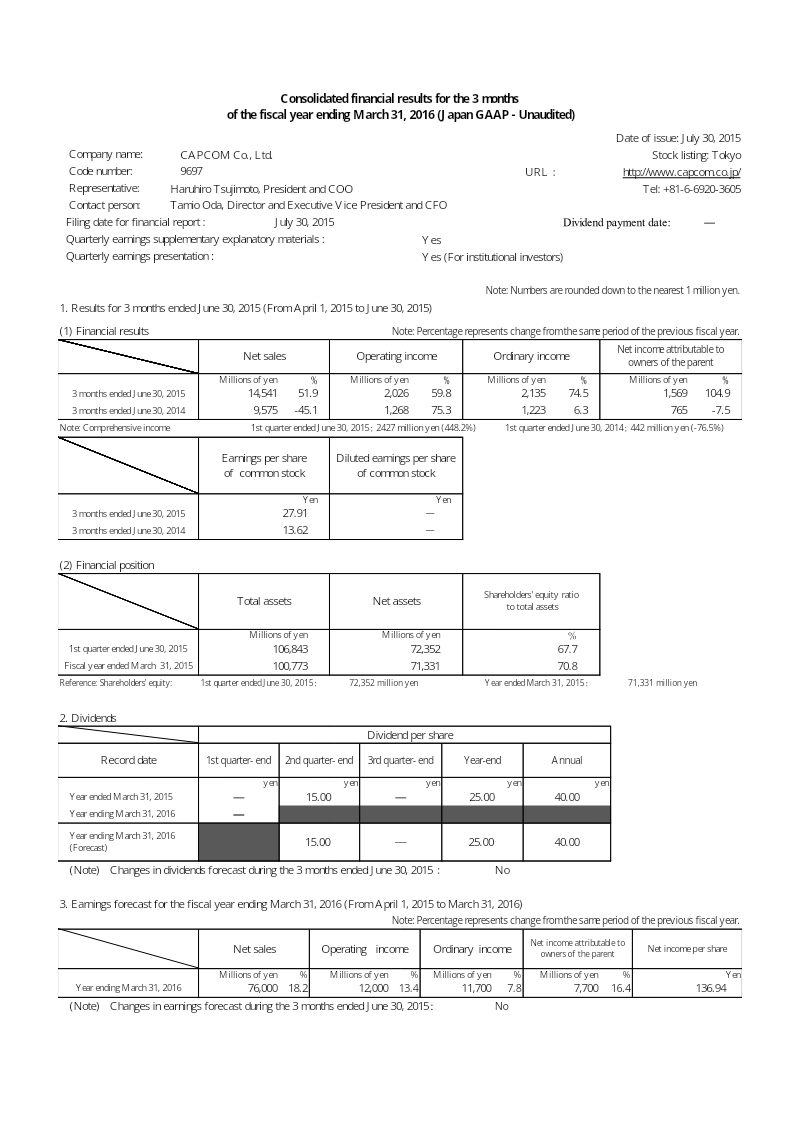
Capcom Consolidated Financial Results: 3 Months Ended March 31, 2016
Capcom’s consolidated financial results for the first quarter of the fiscal year ending March 31, 2016, reflect a period of significant growth driven by strong performance in the amusement equipment sector.
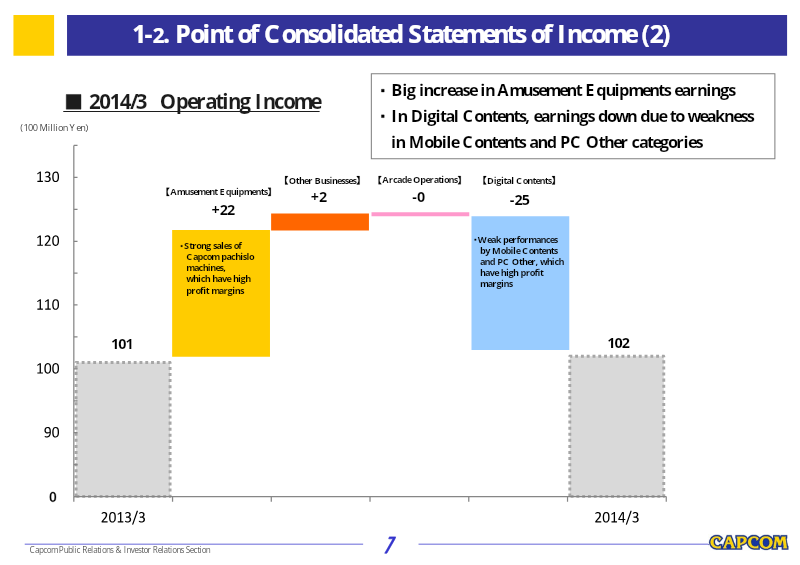
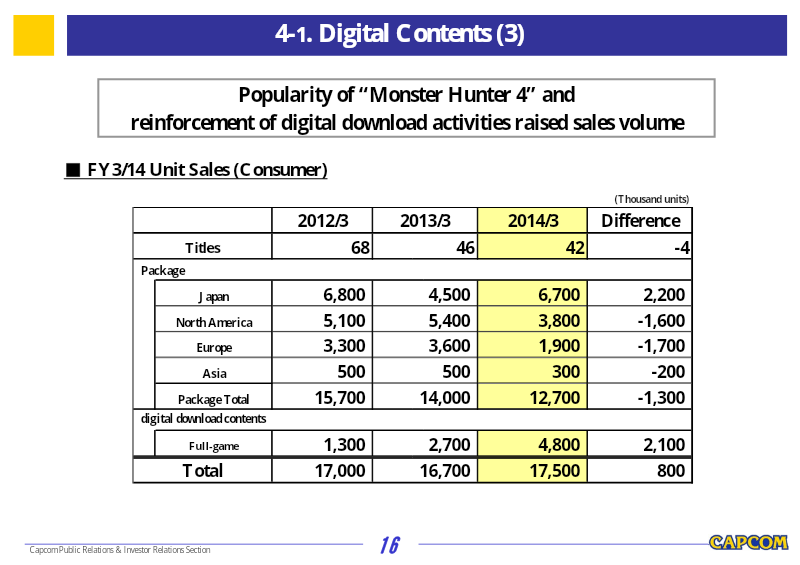

Capcom Financial Highlights: Fiscal Year Ended March 31, 2014
Capcom’s financial results for the fiscal year ended March 31, 2014, reflect a period of growth in net sales and net income, driven primarily by strong performance in the Amusement Equipments segment and robust consumer software sales.


Capcom Financial Highlights: First Half of Fiscal Year Ending March 31, 2014
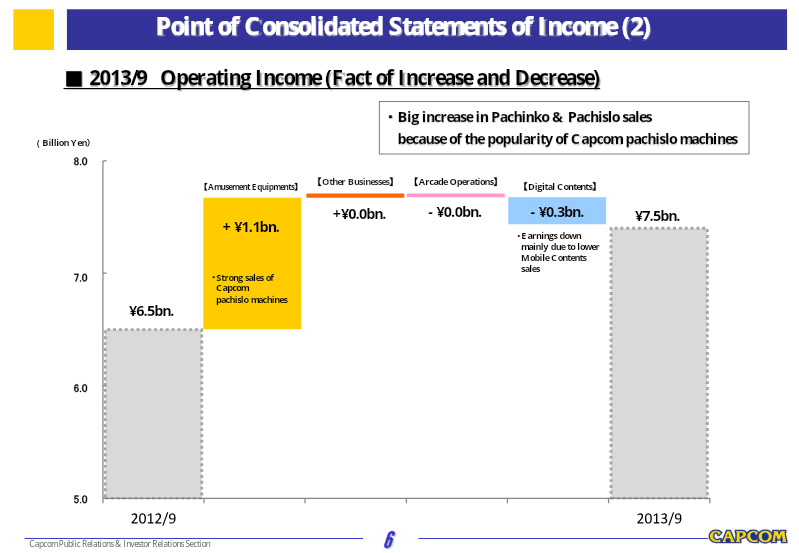
Capcom achieved record-breaking financial performance during the first half of the fiscal year ending March 31, 2014, reporting all-time highs for net sales and all earnings categories.
- Capcom achieved record-breaking financial performance for the first half of the fiscal year ending March 31, 2014, with net sales reaching 53.2 billion yen and net income hitting 4.9 billion yen.
- The Digital Contents segment was a primary growth driver, fueled by the release of Monster Hunter 4, which sold 2.8 million units, and increased revenue from downloadable content.
- The Amusement Equipments segment contributed significantly to earnings, driven by the successful launch of the Devil May Cry 4 pachislo machine, which moved 25,000 units.

Capcom Results of Operations and Strategies: First Half of Fiscal Year Ending March 31, 2014
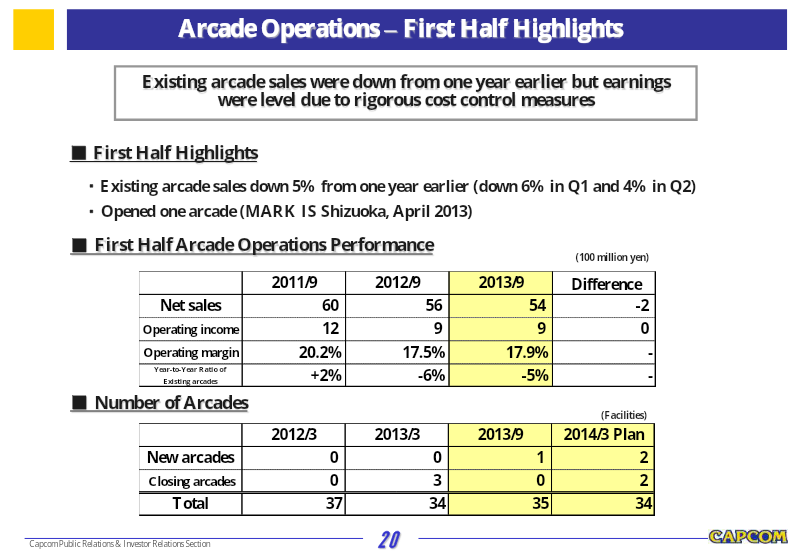
The first half of the fiscal year ending March 31, 2014, reflects a period of growth for Capcom, characterized by record-setting sales and earnings driven primarily by the strong performance of the Digital Contents segment and the Amusement Equipments business.
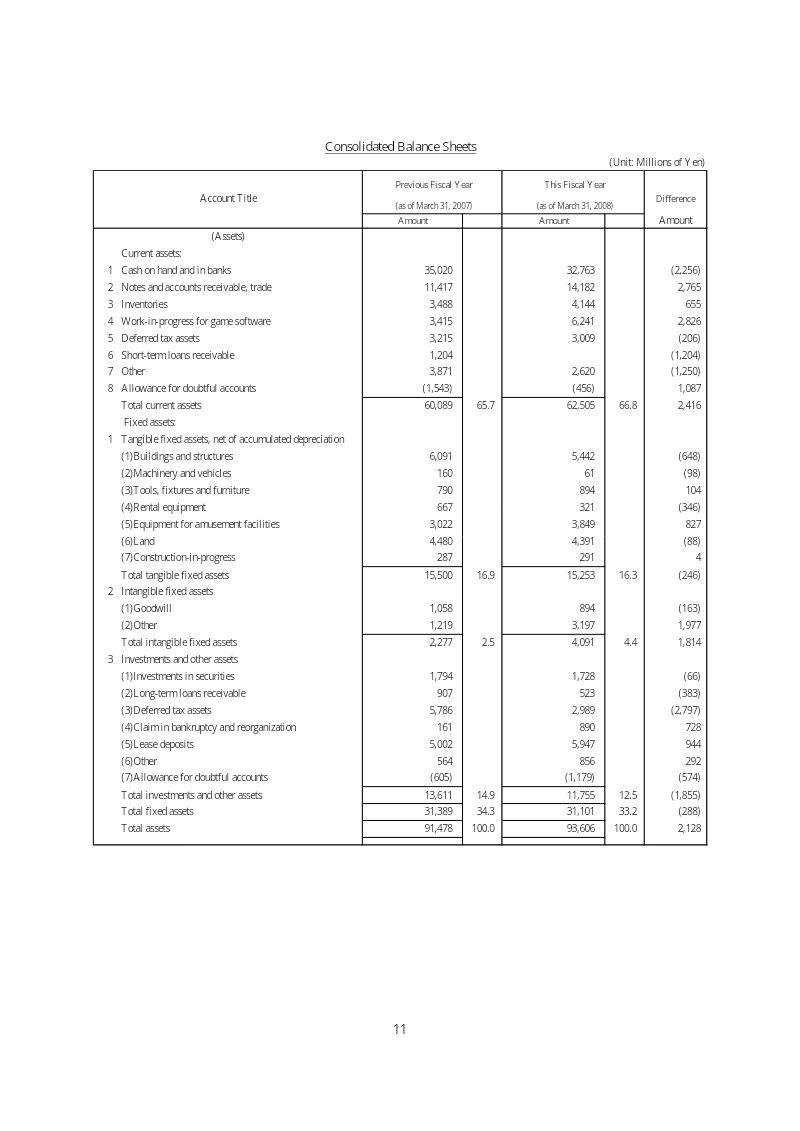
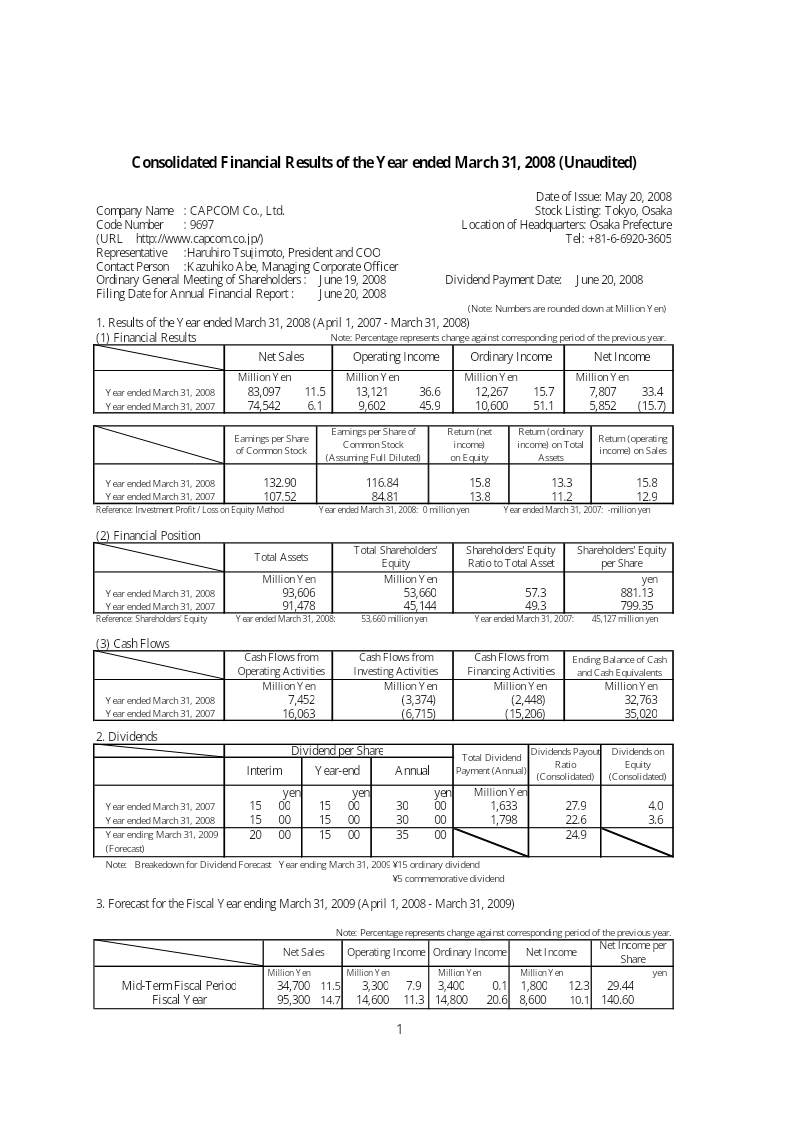
Capcom Consolidated Financial Results: Year Ended March 31, 2008
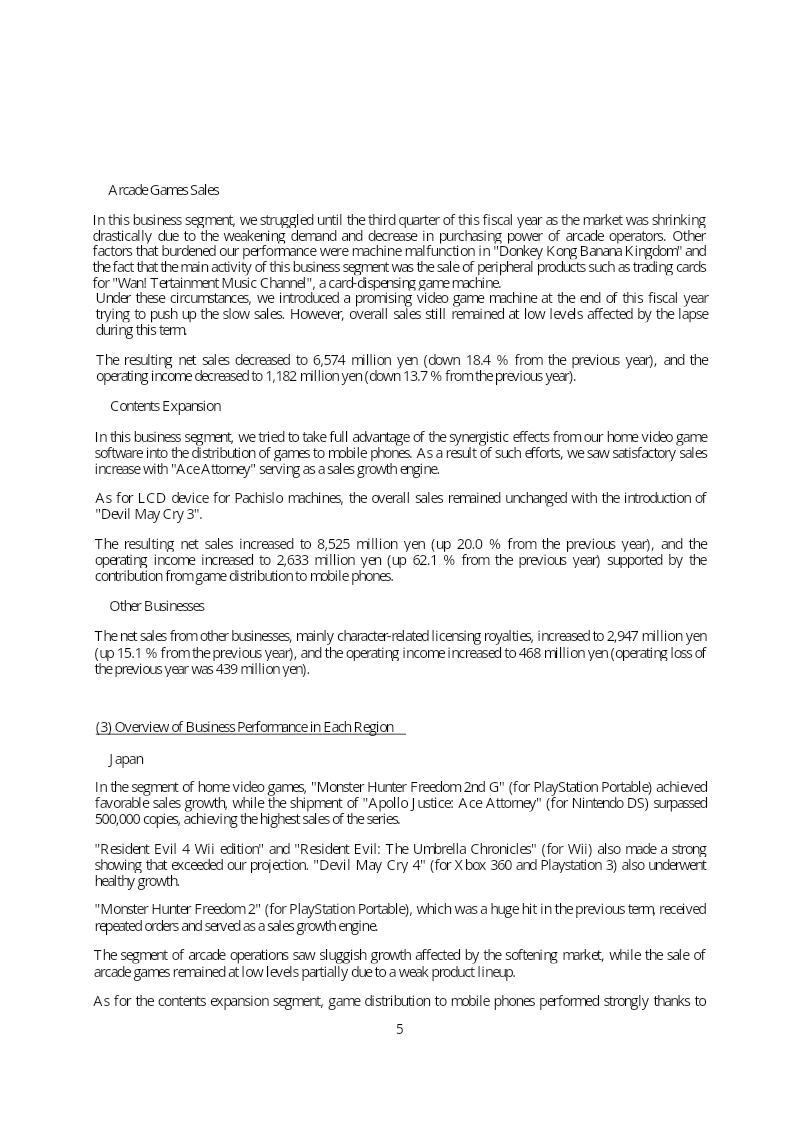
Capcom achieved significant financial growth during the fiscal year ending March 31, 2008, characterized by consolidated net sales of 83,097 million yen and a substantial 36.6 percent increase in operating income to 13,121 million yen.
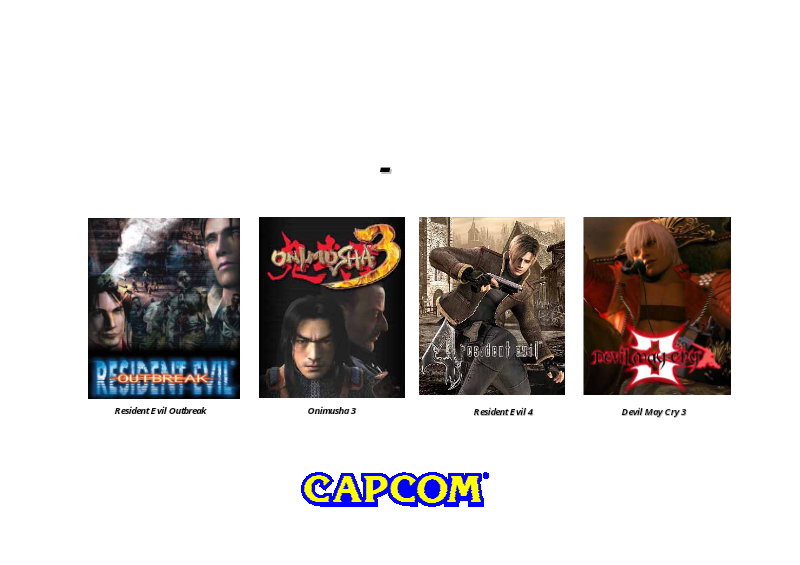
Capcom FY2003 Financial Results: Presentation Material
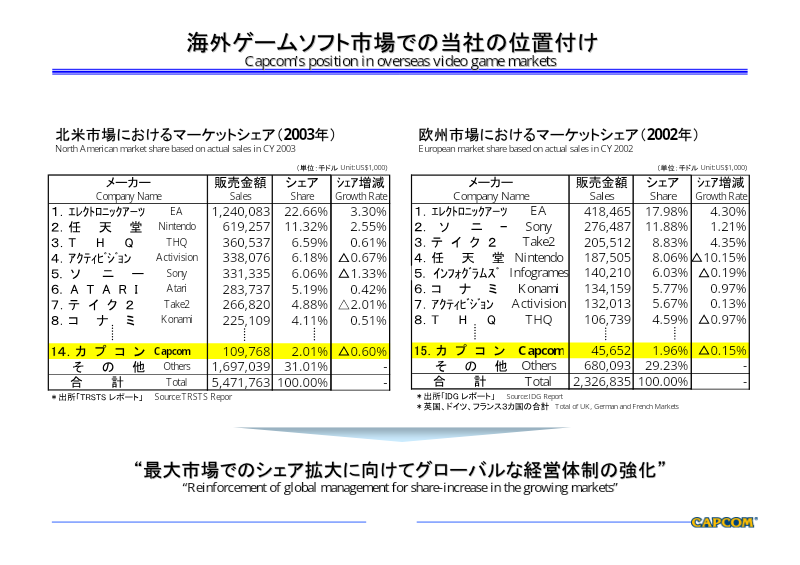
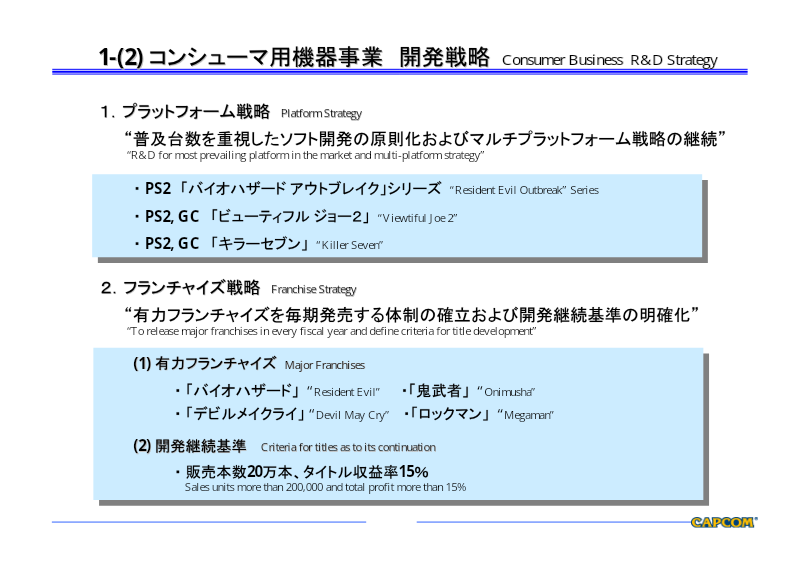
This presentation outlines Capcom’s fiscal year 2003 financial results and strategic roadmap, emphasizing a transition toward global expansion and structural reform.
- Capcom is prioritizing global expansion to address a software sales distribution ratio of 2:5:3 across Japan, North America, and Europe.
- The company is executing a strategic product mix of 70% sequel-based titles and 30% new original intellectual property to balance profitability and growth.
- Since October 2002, Capcom has implemented structural reforms including the reorganization of R&D into specialized divisions and the introduction of a dual-approval quality control system.
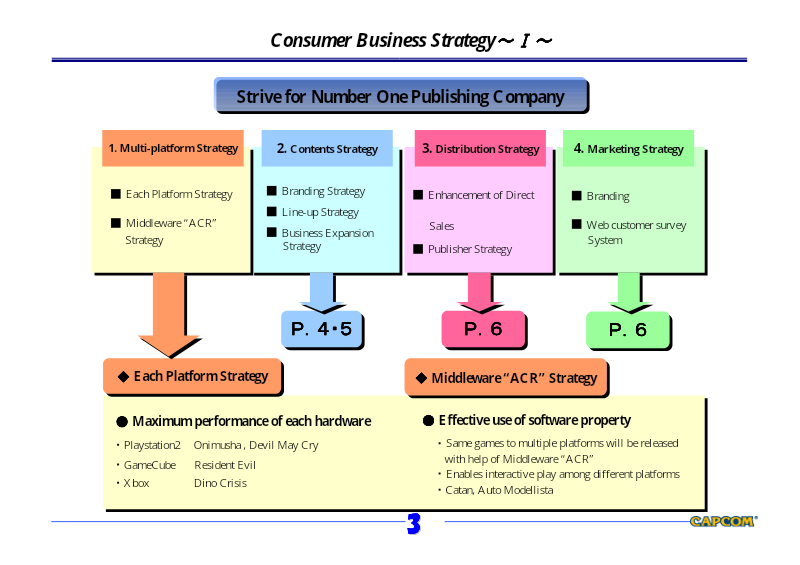
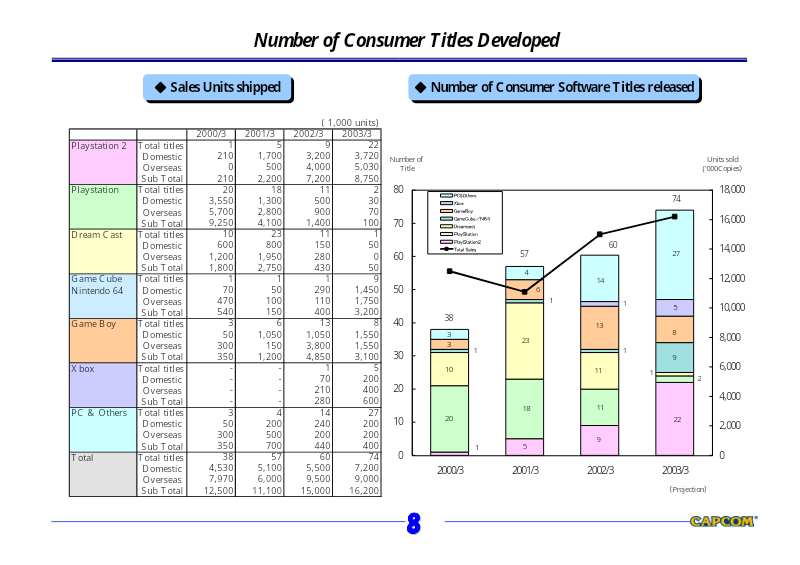
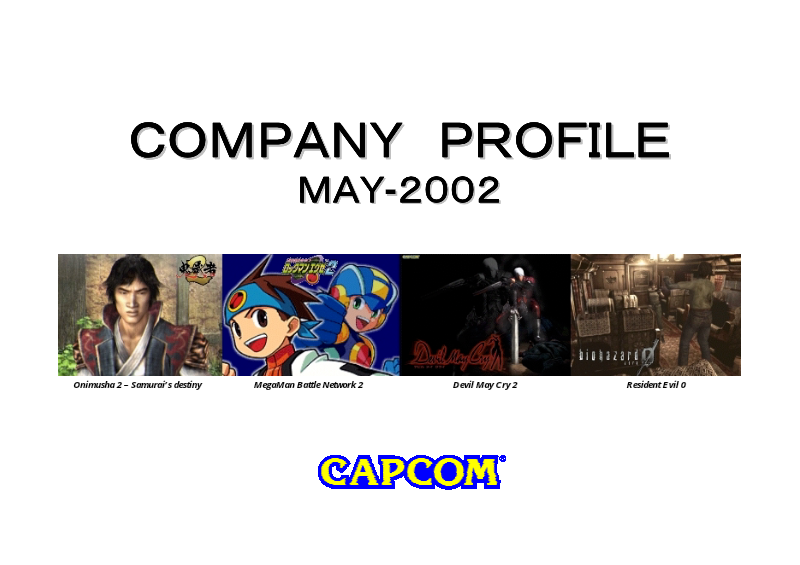
Company Profile: May 2002
This May 2002 corporate profile outlines Capcom’s strategic roadmap, financial standing, and operational objectives within the global video game industry.
- Capcom aims to reach 100 billion yen in net sales and 21 billion yen in operating profit by fiscal year 2004.
- For fiscal year 2001, the company reported 62.7 billion yen in net sales and 9.7 billion yen in operating profit.
- Capcom held a 7.85% share of the Japanese consumer software market and a 3.20% share of the U.S. market as of May 2002.