
Brothers: A Tale of Two Sons
GameBy Starbreeze Studios · Released Aug 7, 2013
Brothers is presented from a third-person view overlooking the two brothers. The brothers are moved individually by two thumbsticks on the controller. The controller triggers also cause the respective brother to interact with the game world, such as talking to a non-player character or grabbing onto a ledge or object.
Connections
Each row is a game or company named alongside Brothers: A Tale of Two Sons, each column a document, oldest first. A mark means that document names it. Select a row to see those documents.
About the game
- Released
- Aug 7, 2013
- Developer
- Starbreeze Studios
- Publisher
- 505 Games
- Genres
- Puzzle, Adventure, Indie
- Platforms
- PlayStation 3, PlayStation 4, Windows Phone, Android, PC (Microsoft Windows), iOS, Xbox 360, Xbox One
- Links
- Official site, Wikipedia
Game data from IGDB.com
Documents about Brothers: A Tale of Two Sons
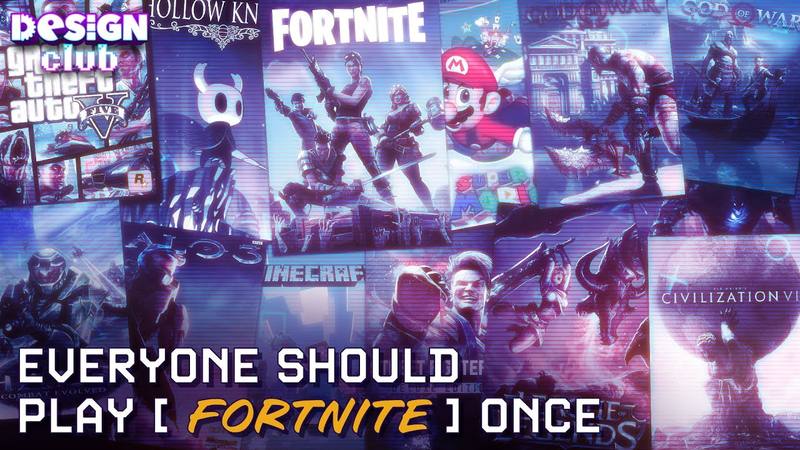
Leveling Up your Game Literacy | Design Club
Game literacy functions as a critical framework for understanding the medium, requiring players to transition from passive consumers to informed observers.
- Game literacy requires transitioning from a passive consumer to an informed observer by intentionally analyzing mechanics, technical execution, and cultural impact across a diverse range of titles.
- Broadening one's gaming portfolio beyond personal preference—including critically acclaimed works, genre-defining hits like Fortnite and Candy Crush, and poorly designed games—is essential for understanding the medium's evolution.
- True literacy is defined by the intellectual capacity to deconstruct how inputs facilitate gameplay loops and storytelling, rather than just possessing reflexive dexterity or 3D navigation skills.

Split Fiction’s Josef Fares on Clair Obscur success, AI fears and EA’s reputation
Josef Fares, the creative director of Hazelight Studios, emphasizes a philosophy of prioritizing creative vision over market data to drive game development.
- Hazelight Studios has achieved significant commercial success by prioritizing creative vision over market data, resulting in 27 million units sold for 'It Takes Two' and 12 million for 'A Way Out'.
- Josef Fares explicitly rejects taking Hazelight public, arguing that the pressure to satisfy stock market stakeholders forces companies to prioritize short-term financial gains over long-term creative quality.
- The studio maintains a staff of approximately 80 employees and operates under a co-op-only design philosophy that intentionally avoids risk-averse, data-driven decision-making.
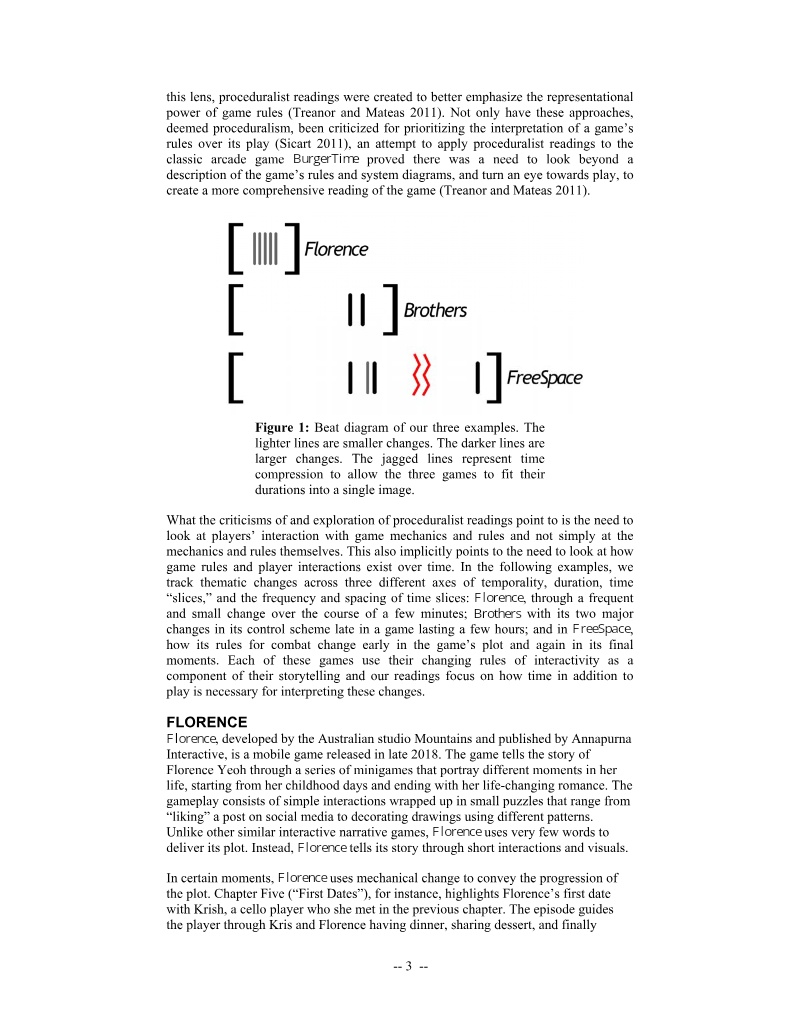
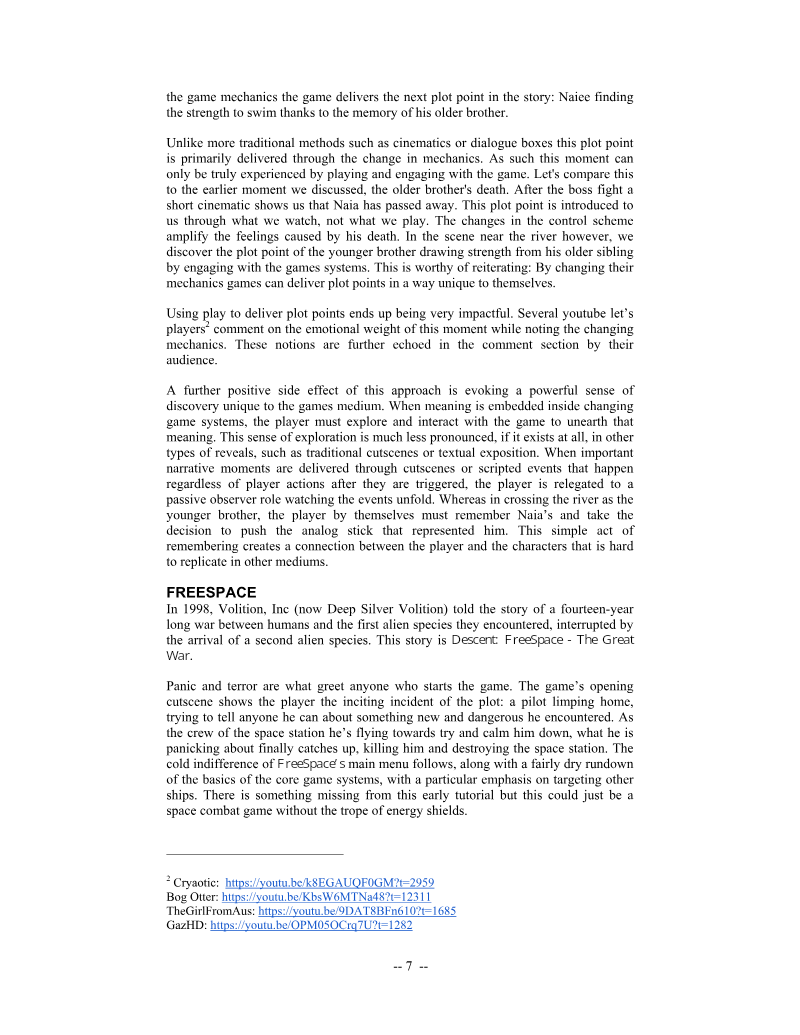
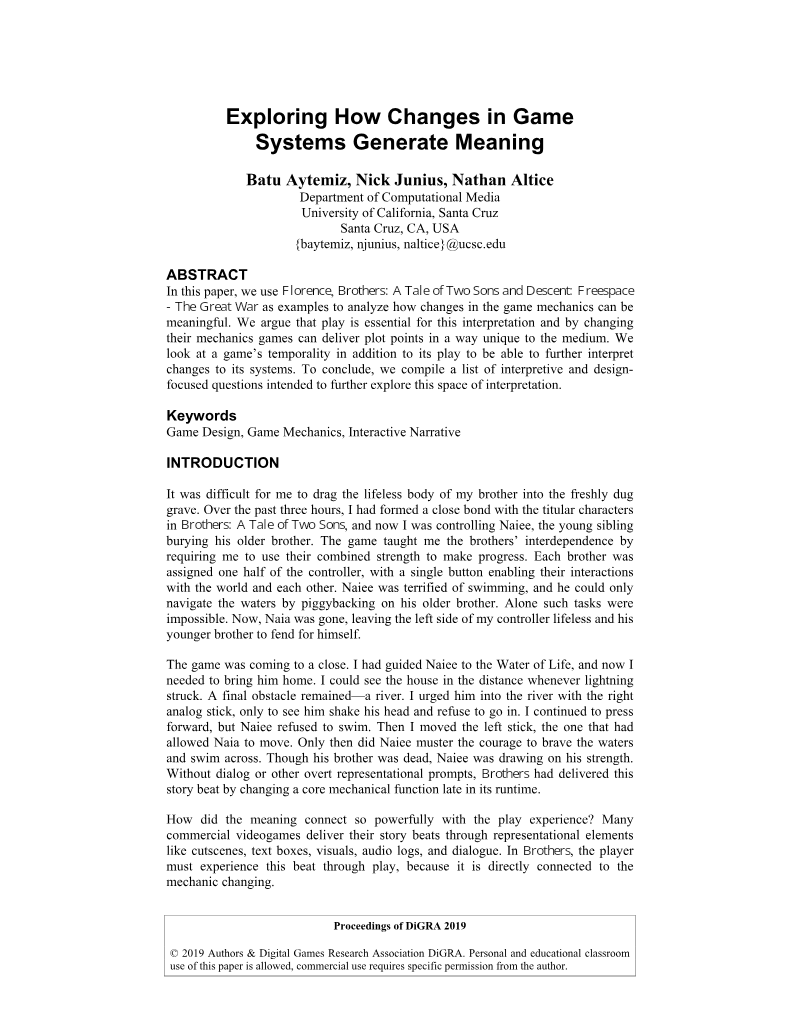
Exploring How Changes in Game Systems Generate Meaning
This paper examines how changes in game mechanics, rather than representational elements such as cutscenes or dialogue, can generate meaning and deliver plot points in ways unique to the medium.
- The paper argues that changes in game mechanics, rather than representational elements like cutscenes or dialogue, can generate meaning and deliver plot points in ways unique to the medium, and that play is essential to interpreting those changes.
- A game's temporal structure, including the timing, frequency, and duration of mechanical shifts, shapes how players understand those changes.
- Close readings of Florence (altering a drag-and-drop puzzle mechanic across a short chapter), Brothers: A Tale of Two Sons (removing half the player's controls late in the game to mirror a sibling's death), and Descent: FreeSpace - The Great War (introducing and withdrawing targeting and shield rules across a long campaign) illustrate these ideas.
Quilting the Meaning: Gameplay as Catalyst of Signification and Why to Co-op in Game Studies
"Quilting the Meaning" argues that meaning in digital games arises chiefly through the cognitive and interpretive work of gameplay, which functions as a hub connecting semantics, narrative, aesthetics, interaction, and mechanics.
- The paper argues that meaning in digital games arises chiefly through the interpretive work of gameplay, which acts as a hub linking semantics, narrative, aesthetics, interaction, and mechanics.
- Its central thesis is that a gameplay-centered perspective can help consolidate a fragmented game studies field in which many partial and sometimes conflicting theories struggle to engage one another.
- A thought experiment built on Street Fighter II illustrates that changing how players act can alter a game's meaning even when its visuals and rules stay identical.
Companies behind it

As the documents state it.