1 free read left. Create a free account for unlimited reading + AI research.
Create free accountWhitepaper DiGRA
1 free read left. Create a free account for unlimited reading + AI research.
Create free accountWhitepaperDiGRA
The authors contend that existing game studies work has paid insufficient attention to change over time and to the player's experience of that change.
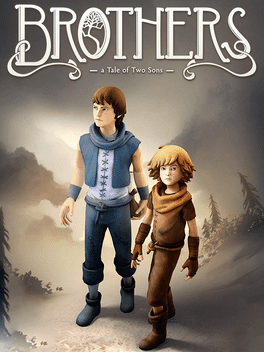
This paper examines how changes in game mechanics, rather than representational elements such as cutscenes or dialogue, can generate meaning and deliver plot points in ways unique to the medium. Its central argument is that play is essential to interpreting these changes, and that a game's temporal structure, including the timing, frequency, and duration of mechanical shifts, shapes how those changes are understood. The authors support this thesis through close readings of three games: Florence, which alters the properties of a drag-and-drop puzzle mechanic across a short chapter; Brothers: A Tale of Two Sons, which removes half of the player's controls late in its runtime to mirror the death of one sibling; and Descent: FreeSpace - The Great War, which introduces and then withdraws combat rules such as targeting and shields at strategically spaced points across a long campaign.
The analysis draws on a body of prior game studies work, including discussions of ludonarrative dissonance, resonance, and harmony, as well as proceduralist approaches to reading games. The authors argue that existing scholarship has focused largely on static mechanics and has paid insufficient attention to change over time and to the player's experience of that change. Their readings suggest that mechanical change can foster a sense of discovery and personal connection that passive forms such as cutscenes rarely achieve, and that the perceived weight of a change depends heavily on the length of the game in which it occurs.
The paper concludes with a set of interpretive and design-focused questions intended to guide both the creation and critique of games that use mechanical change as a storytelling tool. These questions address the assumptions players bring to mechanics, the timing and responsibility for introducing systems, and whether players have immediate access to new rules. The authors present the list as non-exhaustive, offering it as a starting point for further research into play, temporality, and the expressive potential of game systems.
Each row is a game or company this document names, each column a document, oldest first. A mark means that document names it. Select a row to see those documents.
DiGRA · 2022
DiGRA · 2022
DiGRA · 2022
DiGRA · 2022
DiGRA · 2022
DiGRA · 2022

DiGRA · 2022
DiGRA · 2022
DiGRA · 2022
DiGRA · 2022
DiGRA · 2022
DiGRA · 2022
DiGRA · 2018