1 free read left. Create a free account for unlimited reading + AI research.
Create free accountArticle DiGRA
1 free read left. Create a free account for unlimited reading + AI research.
Create free accountArticleDiGRA
The paper argues that playable descent narratives turn traditional katabatic images and motifs into interactive experience. It frames this as a way to create complex emotional experiences.
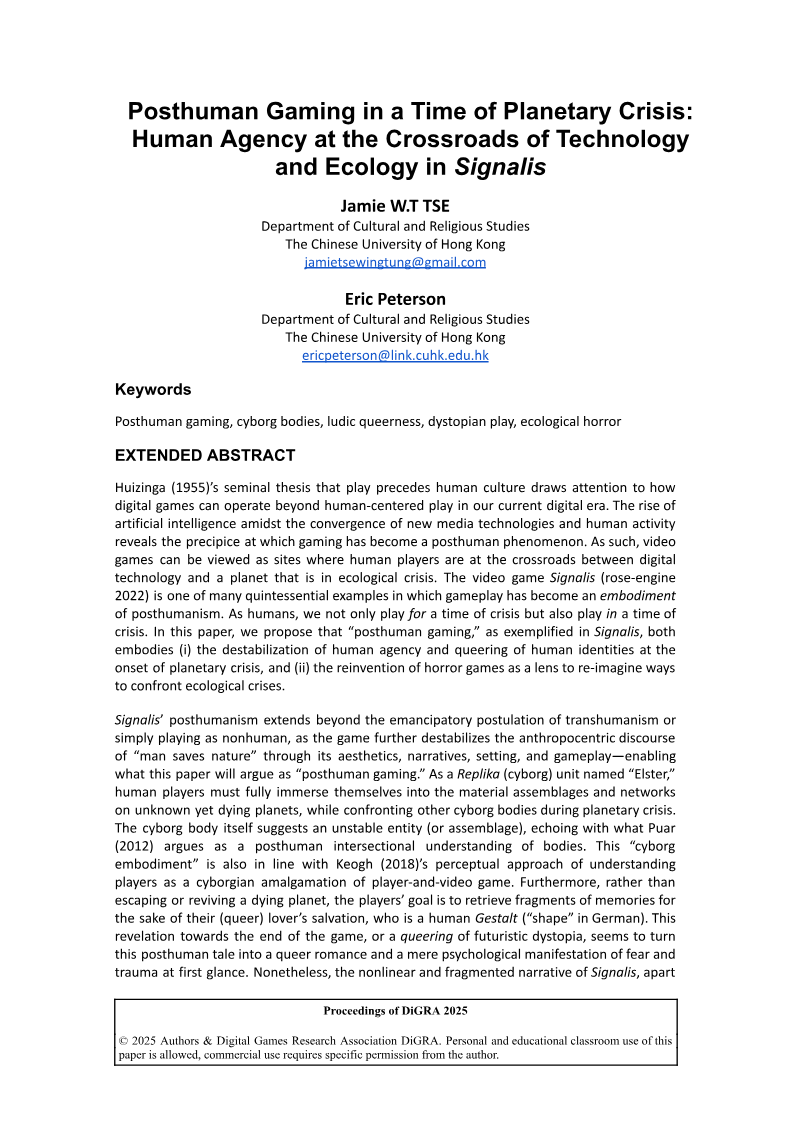
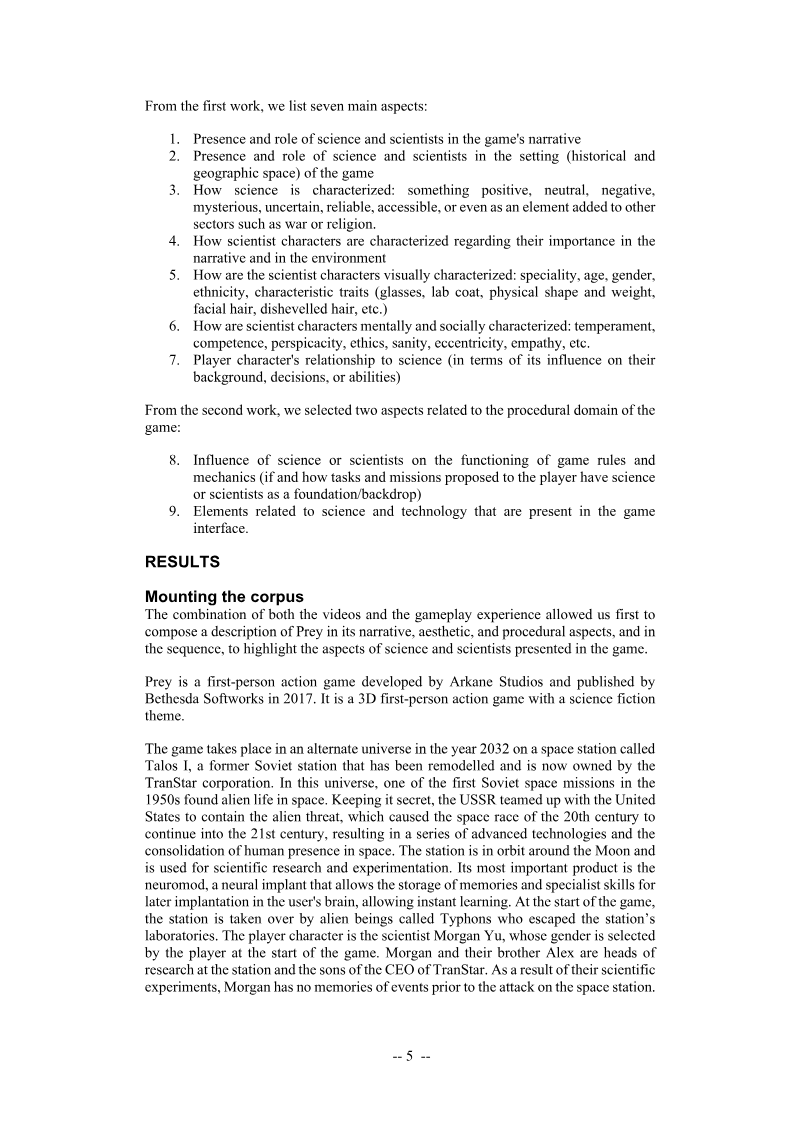
This paper examines how video games engage with katabasis, the mythic descent into the underworld, using a close reading of SIGNALIS (rose-engine, 2022) and comparative analysis of its intertexts. Its central thesis is that playable descent narratives translate traditional katabatic images and motifs into interactive form, creating opportunities for complex emotional experiences. The author situates the study within a broader scholarly tradition on Hell as a chronotope in modern literature and argues that the underground has long served as a structuring principle in games, particularly in roguelikes, dungeon crawlers, and survival horror.
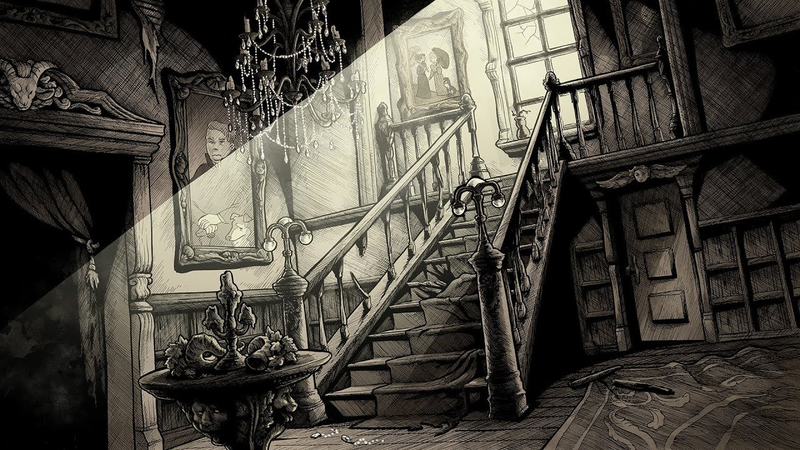
The analysis traces how games such as Rogue, Spelunky, The Binding of Isaac, and Returnal organize progression around descent, while others, including Rayman 3 and The Legend of Zelda: Ocarina of Time, embed underworld sections within larger narratives. Its primary focus is SIGNALIS, which is read as both a literal and metaphorical katabasis. The game's vertical structure, its threshold moments that compel the protagonist Elster downward, and its explicit assertion that "PERHAPS, THIS IS HELL" are interpreted as central to its design. The paper argues that Hell in SIGNALIS is not a destination but the distorted world itself, a self-generated cycle of guilt, decay, and memory loss.
The study finds that SIGNALIS resists comprehension by overwhelming the player with visual, auditory, and textual information, producing an affective experience rather than a purely explanatory one. The author concludes that analyzing the ludic, narrative, and intertextual layers of the game shows how playable katabases can construct complex affective spaces. The work is a conference presentation for DiGRA 2026 and is grounded in close textual analysis and literary theory rather than empirical survey or quantitative data.
 SignalisGame · rose-engine · 2022 · 5 documents
 SpelunkyGame · BlitWorks · 2012 · 17 documents
 The Binding of IsaacGame · Edmund McMillen · 2011 · 18 documents
 The Legend of Zelda: Ocarina of TimeGame · Nintendo Entertainment Analysis & Development · 1998 · 28 documents
 HousemarqueCompany · Finland · founded 1995 · 18 documents
 NintendoCompany · Japan · founded 1889 · 1,628 documents
 Ubisoft ParisCompany · France · founded 1992 · 4 documents
 The Legend of ZeldaGame · Nintendo R&D4 · 1986 · 121 documents
 RaymanGame · Ubi Soft Paris Studios · 1995 · 18 documents
Each row is a game or company this document names, each column a document, oldest first. A mark means that document names it. Select a row to see those documents.
DiGRA · 2026
DiGRA · 2025