1 free read left. Create a free account for unlimited reading + AI research.
Create free accountArticle DiGRA
1 free read left. Create a free account for unlimited reading + AI research.
Create free accountArticleDiGRA
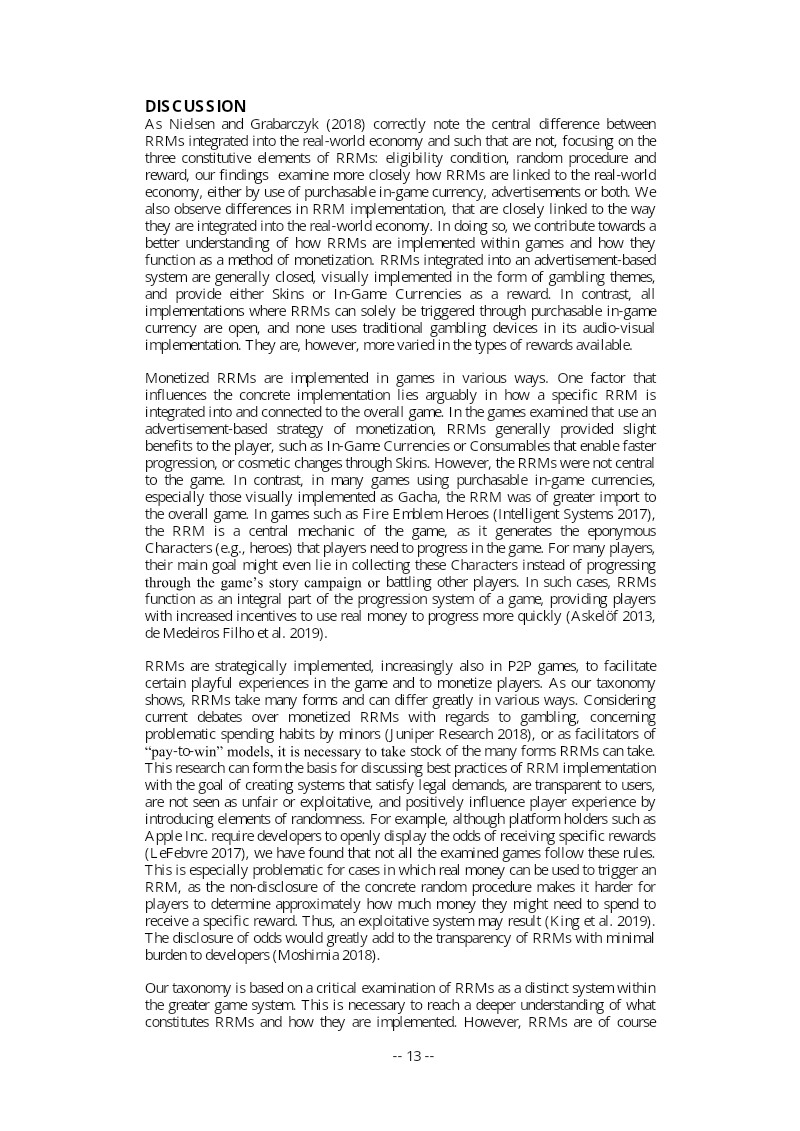
Their live-service model depends on remote servers and periodic updates, which makes archival harder than for traditional software or established media.
This paper examines the copyright implications of preserving gacha games, a genre whose live-service model, reliance on remote servers, and periodic updates make archival far harder than for traditional software or established media like books, music, and film. Its central argument is that technical solutions to gacha preservation, such as emulation, copy-protection circumvention, and reimplementation of server functions, may conflict with copyright law, and that legal exceptions in US and EU frameworks may nonetheless offer room for noncommercial preservation. The scope is limited to US and EU copyright law, with the author suggesting the underlying principles are broadly universal.
The paper distinguishes between two developer responses when a gacha game is sunset: simply shutting down servers, or converting the game to run offline. The most archivally valuable outcome is an offline version, though such conversions are rare and are sometimes sold for a fee to offset development costs. The author notes that removing gacha mechanics in order to preserve a game may significantly alter its core experience, raising questions about how faithfully such a version preserves the original.
On the legal side, the analysis turns to the US fair use doctrine and the EU Computer Programs Directive. Drawing on Lemley's argument that abandoned works should not give rise to market harm claims under the fourth fair use factor, the author suggests that noncommercial modification of a discontinued gacha game may be defensible. Under EU law, alterations necessary for a lawful acquirer to use a program may be permissible, and limited case law may support the view that such reverse engineering cannot be blocked by contract. The author acknowledges that this case law is sparse and that the outcome remains uncertain.
 Genshin ImpactGame · HoYoverse · 2020 · 265 documents
 miHoYoCompany · China · founded 2012 · 96 documents
 CapcomCompany · Japan · founded 1979 · 240 documents
 CygamesCompany · Japan · founded 2011 · 31 documents
 BushiroadCompany · Japan · founded 2007 · 4 documents
 NintendoCompany · Japan · founded 1889 · 1,626 documents
Each row is a game or company this document names, each column a document, oldest first. A mark means that document names it. Select a row to see those documents.
DiGRA · 2026

Game Developers Conference · 2025