1 free read left. Create a free account for unlimited reading + AI research.
Create free account
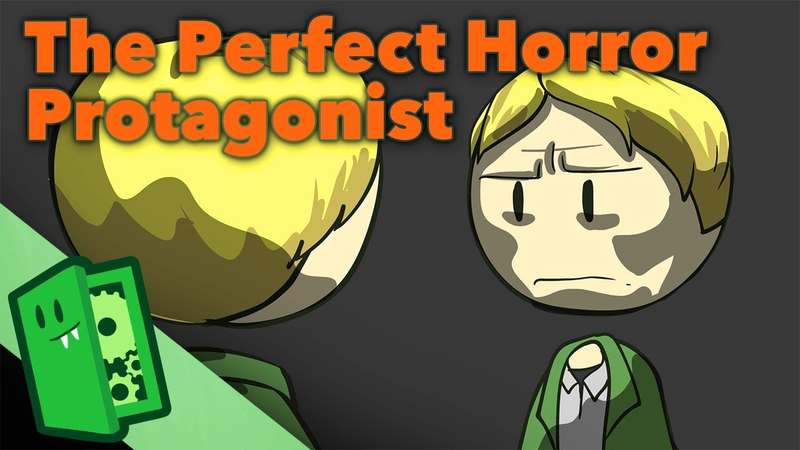
The Perfect Horror Protagonist - Writing a Character for Fun & Terror - Extra Credits
Key insights
6 takeaways- 01Horror protagonists must be relatable, ordinary individuals rather than hyper-competent heroes to ensure the audience can empathize with their vulnerability.
- 02If a character possesses high-level skills like military or police training, they must be systematically disempowered or isolated from support networks to maintain a sense of danger.
- 03Terror is most effective when the narrative is intimate and personal, grounding large-scale threats in individual experiences rather than global catastrophes.
- 04Isolation is a critical narrative tool that strips away collective problem-solving mechanisms, forcing the protagonist to face threats alone.
- 05Characters require strong internal motivations, such as searching for a loved one or confronting repressed memories, to justify why they remain in a life-threatening environment instead of fleeing.
- 06Effective horror narratives must target the protagonist's psyche and their understanding of reality, rather than relying solely on physical threats.
Ask AI about this video
Transcript
Samhain approaches. The year grows dark, and now is the time for terrors, for chilling stories around the fire, for whispered words about the things we dread. Now is the time where we wrap ourselves close in our blankets and embrace the catharsis of fear, knowing that we are perfectly safe. So, let's use this time to add some new thoughts to something we discussed long, long ago. What makes an effective horror protagonist? Horror in art, whether it be in games, books, television, or movies, is an empathetic experience. We must, in some way, feel the terror that the characters are feeling in order for horror to be effective. Without this, we're simply left with an exposition of gore or an exercise in sadism, neither of which is, at its heart, truly horror. Therefore,
we need a vessel to experience that horror through, a protagonist we can empathize with, believe in, and even immerse ourselves in when playing, rather than more passively experiencing horror. So, how do we do this? Well, first, the most obvious point, the more that the protagonist is like us, the more we can empathize with them. This is why characters like Ripley from Aliens or Harry Mason from Silent Hill work so well. Even in extraordinary circumstances, they're still just ordinary people with concerns we can understand. This is why the horror that Sarah Connor feels is more present for many of us than, say, Dutch pushing all those CIA pencils in Predator. But that beloved Arnold character leads us nicely into the second requirement. A horror protagonist has to be vastly weaker than the horror they face. This is why it's so much more terrifying to play as Miku in Fatal Frame than it is to play Alex in Silent Hill 5. Now, that's not to say that you can't have military personnel or law enforcement as your central character, but that means you have to elevate the stakes that much more. I mean, imagine Friday the 13th. If one of your camp counselors just so happen to
be John Rambo, a single dude with a knife just isn't scary in that context anymore. And even if you have your military personnel facing waves of zombies, hordes of aliens, or some cosmic horror, you have to understand that you're going to have to work a little bit harder to disempower them and put us in the audience in the right frame of mind to see something as threatening for such a powerful protagonist. Which leads us to our next point, isolation. Whether it's the Marines from Aliens or the cops in Raccoon City, you have to isolate your protagonist from their support network, especially if that support network is something as powerful and well-armed as the military or the police. Though, even if you've got an ordinary character, why do they always seem to find themselves outside of cell phone reception or stranded in a town cut off from the outside world? Because we as humans are inherently group problem solvers. We act collectively to face threats. So, it's one of the most basic terrors to know that if anything goes wrong, there's no one out there to bail you out. But, okay, you've probably heard most of that before. So, now let's talk about the
traits a horror protagonist needs that are less commonly discussed. First up is something that drives them toward, rather than away from, the horror. I mean, why do they keep going instead of just getting out? And of course, sometimes it's because they're trapped. But, if they have an additional motivation, such as James Sunderland from Silent Hill 2, who starts off looking for his wife and then is later driven by the self-destructive need to find out more about himself and what memories he's repressed, or even Kate from Gone Home looking for her family, our ability to empathize with the character will be stronger. And this additional character motivation keeps the player from having immersion-breaking moments where the character walks past a window that they could easily break or a pile of rubble they could clamber over to get the heck out of dodge. To put it simply, if your character doesn't want to leave, no one asks why they don't. Another key point to think about is that horror just isn't a threat to the physical self. Otherwise, every action movie, war film, and superhero romp would feel like horror. Horror is a threat to something much deeper. That feeling of threat to
the inner self, the personal self-image, or the persona we cling to. True horror comes from eroding the feeling that the world is sane, rational, and makes sense. That we have some control over it, or at least some understanding for the reasons that things occur. This means that your character has to be psychically vulnerable, as well as physically vulnerable. And it's why in horror we see the parent trope so often used. Not only does a child physically disempower a character by them having to protect said child, but it's also one of the easiest ways to make a character psychologically vulnerable. Because most parents want to shield their children from all the terrors of this world. But in a horror setting, it becomes impossible. And along with the physical danger, they now have to face the crushing psychic weight of not being able to protect their child from fear and innocence lost. Which brings us to our last point. For something to be horrific, it has to be personal. A story about a meteor impact that's going to wipe out all life on Earth can be tragic, tense, or even invoke a sense of
dread. But because of its scale, rarely does it create in us a true sense of terror. And that's because terror is more personal than that. Terminators might have nearly wiped out humanity, zombies may have overrun the Earth, but we as an audience still need a story about people and how these calamities relate to them directly in order to move the mega deaths away from just statistics to that terrifying feeling of being trapped in the last bunker while something hungry pounds at the door TO GET IN. OKAY, JEEZ, BUD. WE'LL GO trick-or-treating in a second. But before we all head out to fuel this feline fiend with sugar, there's one last thing before we go. After spending more than 10 years working on Extra Credits, this will be James's last Halloween with us. He's leaving the channel to focus on even grander adventures in his career. But he wanted me to thank you for all of the amazing years he got to tell stories and that he's excited to hear the new writers add their insights to Extra Credits along with all of you. Though luckily, he's
left us with enough scripts that it'll be sometime in the new year before we truly run out of his words. But on a personal note, thank you James for sharing your knowledge and insights with us for the last decade. We're all going to miss you. Good journey, my friend.
Summary
Effective horror protagonists serve as essential vessels for audience empathy, transforming abstract threats into visceral, personal experiences. To foster this connection, characters must be relatable, often functioning as ordinary individuals rather than hyper-competent action heroes. When protagonists possess significant power, such as military or law enforcement training, they must be systematically disempowered or isolated from their support networks to maintain a sense of vulnerability. This isolation is critical, as it strips away the collective problem-solving mechanisms humans rely on, forcing the character to face threats alone.
Beyond physical vulnerability, a compelling horror protagonist requires internal motivation to remain within the dangerous environment. Whether driven by a search for a loved one or a need to confront repressed memories, these personal stakes prevent immersion-breaking questions regarding why the character does not simply flee. Furthermore, true horror extends beyond physical danger to threaten the character’s psyche and their fundamental understanding of a rational world. By targeting the protagonist’s self-image or their ability to protect those they love, creators can erode the character’s sense of control.
Ultimately, horror functions best when it is intimate rather than global. While large-scale catastrophes provide a backdrop for tension, terror is cultivated through personal stories that ground mega-scale threats in individual experiences. By focusing on the psychic and physical fragility of the protagonist, narratives can successfully shift the audience's perspective from observing statistics to feeling the immediate, claustrophobic dread of being hunted. This approach ensures that the horror remains a deeply personal, empathetic experience rather than a mere display of violence.














Comments