Spelunky
GameBy Mossmouth
11 documents in the library are about Spelunky, from writers such as Game Developers Conference, How To Market A Game and AI and Games. Each has a summary and key insights with the page they come from.
Connections
The documents about Spelunky on the inner ring, the other games and companies they name on the outer one. Select a cover to see it up close and open it in a new tab; drag to move, pinch or Ctrl + scroll to zoom.
On Steam
Steam estimates as of 9 Oct 2026. Revenue is premium revenue on Steam only: game sales, without DLC.
- Revenue to date
- $12.5M
- Units sold
- 1.4M
- Last 12 months
- $163K
- 16K units
- Price
- $14.99
- Positive reviews
- 92%
- of 17K reviews
- Peak players
- 2,916
- at the same time
- Followers
- 28K
- Average playtime
- 17 h
| Year | Share of the best year | Revenue | Units |
|---|---|---|---|
| 2019 | $850K | 94K | |
| 2020 | $1.6M | 148K | |
| 2021 | $637K | 67K | |
| 2022 | $336K | 34K | |
| 2023 | $279K | 26K | |
| 2024 | $193K | 21K | |
| 2025 | $175K | 16K | |
| 2026 so far | $128K | 12K |
On Steam since Aug 8, 2013 · Developer MossmouthSteam store page
Documents about Spelunky

Next Level: A Warm and Encouraging Introduction to Procedural Generation
The primary purpose of this analysis is to review Dr. Mike Cook’s book, Next Level: Making Games That Make Themselves, while providing a broader update on the state of artificial intelligence within the global video game industry as of May 2026.
- Xbox has discontinued its Copilot AI tool for mobile and console, following a largely unnoticed PC launch last year, as new head Asha Sharma staffs the leadership team with four members from Microsoft's CoreAI.
- Blender faced user backlash for accepting a corporate donation from AI company Anthropic, and while they announced they were surprised and need to address AI intersection, they are keeping the money as a one-off donation.
- Roblox introduced 'Roblox Reality,' a hybrid architecture using a video generation layer and AI models to re-render existing games for higher visual fidelity, a concept previously pitched by Stadia in 2019 for style transfer.

Interview: Edmund McMillen and Tyler Glaiel on the remarkable success of Mewgenics
Mewgenics, a tactical roguelike strategy game, achieved significant commercial success by selling one million copies within its first week of release.
- Mewgenics achieved significant commercial success by selling one million copies within its first week of release.
- Self-publishing allowed the developers to maintain complete creative control and avoid the misaligned incentives often associated with traditional corporate publishing structures.
- The project successfully evolved from a simple cat-breeding simulation into a complex, turn-based strategy title, sustaining high concurrent player counts post-launch.
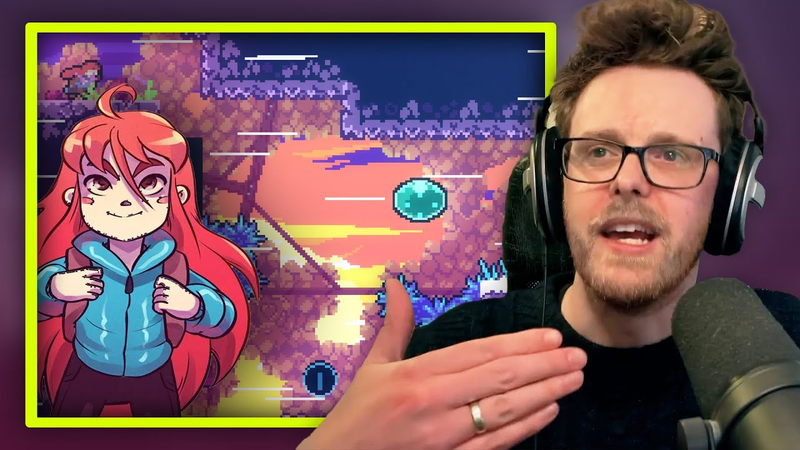
Why Some Games Just FEEL Good For Some Reason — Mark Brown @GMTK
Game feel, often referred to as game juice, serves as a foundational element in game development that dictates how responsive, satisfying, and immersive a player’s interaction with a title is.
- Game feel is a multi-sensory experience that requires the integration of responsive movement, sound design, particle effects, and animation to create a cohesive, living environment.
- Developers should dedicate significant time to tuning core mechanics, such as jump height and gravity, in a simple prototype environment before building out complex levels.
- Sound design is a critical component of game feel that should be implemented early in development, as even simple effects provide essential feedback that informs the player's experience.
How New Genres Are Invented
The primary purpose of this analysis is to provide a strategic framework for indie game developers to innovate and achieve commercial success while minimizing the risks associated with creating novel game genres.
- New genres typically emerge from free mods or small, quick experiments rather than long-term, high-budget development cycles.
- Developers should validate novel concepts by releasing free prototypes or game jam projects to test market interest before committing to full-scale production.
- Only 11% of the top 400 indie games released in 2022 were considered true, novel genre mashups, indicating that Steam audiences generally prefer variations on established formulas over entirely original concepts.
Breaking the Ankh: Deterministic Propagation Netcode in 'Spelunky 2'
The implementation of online multiplayer in Spelunky 2 centers on the challenge of maintaining a responsive, low-latency experience within a resource-constrained environment.
- The Spelunky 2 team pivoted from a deterministic propagation netcode to a refined rollback system that uses virtual memory to manage state swaps, avoiding the high computational cost of frequent data copying.
- To enable reliable rollback, the developers refactored the entire game simulation to eliminate side effects and shared data dependencies, ensuring the engine could handle deterministic state transitions.
- The implementation of replay technology allowed the team to transform unreproducible bugs into deterministic scenarios, significantly accelerating the debugging process and facilitating the scaling of global server infrastructure.
One More Run: The Making of 'Spelunky 2'
Spelunky 2 serves as a deliberate evolution of the roguelike genre, functioning as a framework that prioritizes high interactivity, destructible environments, and emergent gameplay.
- Spelunky 2 was developed with a focus on preserving the core 'spiky' design philosophy of the original, which prioritizes player agency and a world that feels indifferent to the player rather than purely focused on progression.
- The development team utilized custom internal tools to manage complexity, including a system to set game variables, record replays, and manipulate camera and time settings, which served both as a testing suite and a source for marketing assets.
- Level design for the sequel was managed through externalized files edited in text editors with custom flags, a process the developer found more efficient than building a dedicated in-game editor.
How Spelunky Got Its Procedural Hook and Actually Got Finished
The development of the influential roguelite Spelunky serves as a primary case study for two critical aspects of game design: the creation of emergent procedural systems and the disciplined skill of project completion.
- Complex emergent gameplay is best achieved by overlapping simple, transparent rules rather than building sophisticated artificial intelligence.
- The 'last 10% is the last 90%' rule defines the critical difficulty of final development stages, requiring disciplined project management to reach completion.
- To overcome mid-project fatigue, developers should scale down content rather than restarting to fix early imperfections.
One More Run: The Making of Spelunky 2
The development of Spelunky 2 serves as a case study for indie game design, emphasizing the value of iterating on established genres and the viability of sequels within the independent sector.
- Indie developers should prioritize finishing their primary project over starting new ideas; if a new concept arises during development, write it down to clear it from your system rather than abandoning the current game.
- Releasing a sequel is a viable strategy for indie developers because players often prefer more of a familiar, beloved genre rather than constant novelty, and established IP significantly simplifies the marketing and press outreach process.
- Trailers serve as a critical early-development tool to gather unvarnished feedback from the public, allowing developers to identify issues like art style reception before the game is finalized.
The Casual (but Regal) Swipe: Creating Game Mechanics in Reigns
The design philosophy behind Reigns centers on the concept of efficient laziness, utilizing a minimalist swipe-based interface to bridge the gap between casual player input and the profound, often fatal consequences of ruling a kingdom.
- Reigns utilizes a minimalist, swipe-based interface to translate simple casual input into high-stakes narrative consequences, prioritizing player-driven storytelling over complex numerical optimization.
- The game employs a probabilistic-driven narrative engine that dynamically selects cards based on the kingdom's current state, ensuring a fluid and infinite gameplay loop.
- Development relies on a flexible, spreadsheet-based architecture that balances linear narrative elements with randomized outcomes to allow for emergent mechanics and unique death conditions.
The Spelunky HD Postmortem
The development of the platformer-roguelike hybrid Spelunky illustrates the strategic value of iterative prototyping and the transition from freeware projects to commercial console releases.
- The freeware version of Spelunky served as a refined prototype that provided the foundation and confidence to develop the larger Xbox Live Arcade (XLA) version.
- Spelunky's level generation utilizes a 4x4 grid system where a path is drawn from the top entrance to the bottom exit, with individual rooms populated by templates based on the game area and path requirements.
- The transition to the XLA version involved moving away from the Braid engine after a month and a half of development due to code complexity and unnecessary features like time-rewinding.
The Auteur Myth - Lone Visionaries... and Their Teams - Extra Credits
The gaming industry frequently suffers from the auteur myth, a persistent misconception that complex video games are the product of a single, visionary creator.
- Modern game development is an inherently collaborative process that relies on the specialized contributions of dozens or hundreds of professionals, including programmers, artists, designers, and sound engineers.
- The 'auteur myth'—the misconception that games are the product of a single visionary—obscures the reality of team-based production and creates unrealistic expectations for aspiring developers.
- Attributing success to a single individual often ignores the essential contributions of contractors and part-time specialists who are frequently necessary to achieve high-quality output in both indie and AAA sectors.