1 free read left. Create a free account for unlimited reading + AI research.
Create free accountWhitepaper DiGRA
1 free read left. Create a free account for unlimited reading + AI research.
Create free accountWhitepaperDiGRA
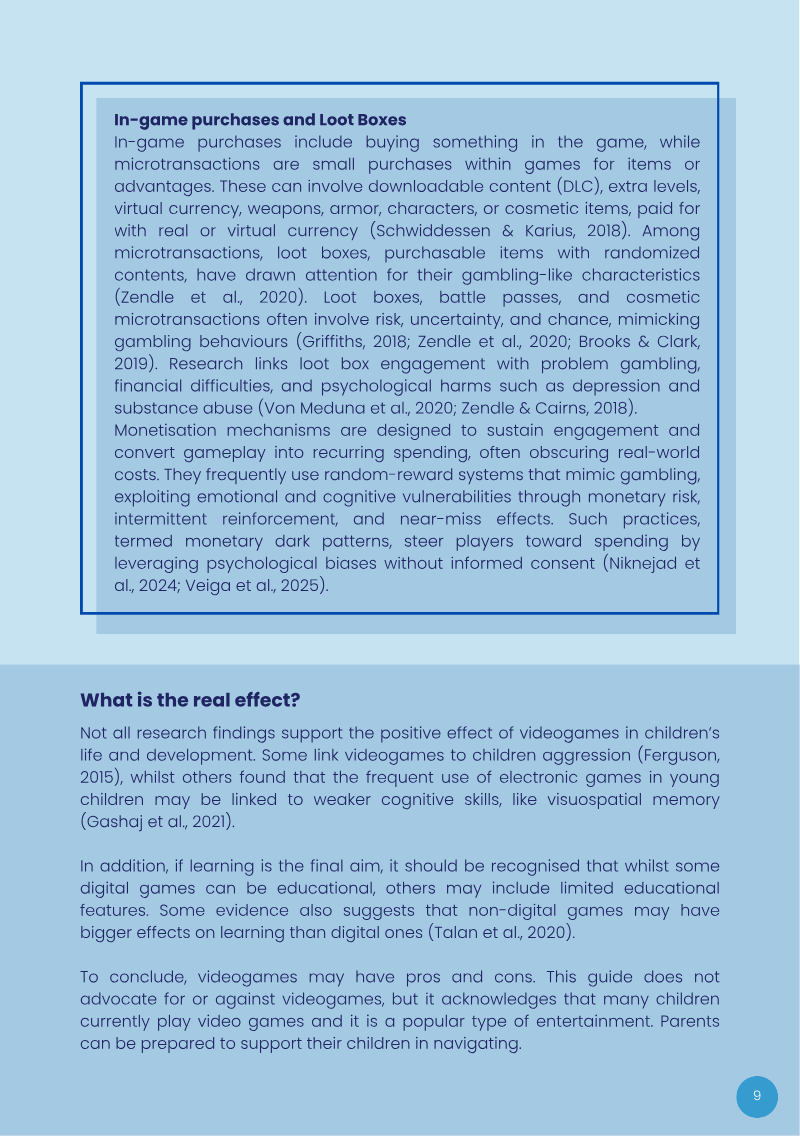
The study examines how gambling-like elements in video games, problematic gaming, and online gambling influence one another among adolescents.
This study examines how engagement with gambling-like elements in video games, problematic gaming, and online gambling influence one another over time among adolescents. Its central thesis is that these behaviors reinforce each other across different layers of the gaming ecosystem rather than developing in isolation. The authors address three gaps in prior research: the tendency to study only one type of gambling-like element (usually loot boxes), the predominance of one-directional models, and inadequate control for confounding variables.
The analysis draws on a three-wave annual self-report panel of Flemish secondary school students recruited from 12 schools, beginning in winter 2021-2022. The analytic sample includes 1,832 adolescents who participated in at least two waves, with a mean baseline age of 13.64 years and 46% boys. Engagement was assessed across three dimensions: elements within games (opening free loot boxes, buying loot boxes, selling loot box items, and spinning prize wheels), entire game genres (spending money in social casino games), and activities around games (watching loot box and gambling streams). Problematic gaming was measured with the Dutch-validated Gaming Disorder Scale for Adolescents, and online gambling with a monetary-gambling frequency inventory. The authors estimated a latent change model controlling for sociodemographic characteristics and parental mediation of gaming.
Findings show that the behaviors co-occur within each wave and that small-to-moderate directional effects emerge across waves. Problematic gaming most consistently predicted subsequent increases in within-game and around-game engagement (β = .09 to .13). Around-game engagement in turn predicted later increases in online gambling (β = .13). The composite within-game engagement score had no significant prospective effect on online gambling or problematic gaming, although purchasing loot boxes did show an effect in supplementary item-level analyses. All significant paths persisted after accounting for the control variables.

DiGRA · 2026

DiGRA · 2026



DiGRA · 2026



DiGRA · 2026



DiGRA · 2026



DiGRA · 2026



DiGRA · 2026

DiGRA · 2026



DiGRA · 2026



DiGRA · 2026

DiGRA · 2026
DiGRA · 2026
DiGRA · 2026